Walk through any decent Cars and Coffee in 2026 and you will still find the usual old-iron faithful—air-cooled Porsches, fox-body Mustangs, square-body Chevys, maybe a Miata on sticky tires with brake dust baked into every wheel spoke.
Walk through any decent Cars and Coffee in 2026 and you will still find the usual old-iron faithful—air-cooled Porsches, fox-body Mustangs, square-body Chevys, maybe a Miata on sticky tires with brake dust baked into every wheel spoke. But the daily drivers parked around the edges tell a different story now. Toyota Prius Primes, Ford Maverick Hybrids, Hyundai Ioniq 5s, Tesla Model 3s, Kia EV6s, Honda CR-V Hybrids, and plug-in Wrangler 4xes are showing up with the same roof racks, all-weather mats, and bug-splattered front ends that used to belong to Accords and GTIs. For a lot of enthusiasts, the “project car” is still gasoline-powered—but the vehicle getting maintained every weekend is increasingly a hybrid, plug-in hybrid, or EV. That shift has forced a full reset in 2026 DIY car maintenance, and the biggest story is not just better tools or better service info. It is the way enthusiast communities are teaching each other how to work smarter, safer, and with a healthy respect for high voltage.
The DIY garage has changed, but it has not disappeared
There was a moment, maybe five or six years ago, when plenty of enthusiasts assumed EVs would kill driveway wrenching outright. No oil changes, fewer moving parts, sealed battery packs, dealer software locks—end of story. In practice, that has not happened. What changed instead is what gets done at home and how it gets done.
Most of the service tasks owners actually face on 2026 hybrids and EVs still look familiar to anyone who has maintained a modern daily. Tires wear. Brakes still need inspection, even if regenerative braking stretches pad life. Cabin air filters clog. Suspension bushings age. Coolant service matters. Wiper systems fail. Underbody panels get ripped off by parking blocks. Corrosion still attacks connectors, brake hardware, and ground points in snow states. And 12-volt batteries—yes, even in EVs—still create no-start headaches that strand people in grocery store parking lots.
On many popular electrified daily drivers, the routine ownership workload is still very DIY-friendly:
- Tesla Model 3 and Model Y: cabin air filters, tire rotations, brake cleaning in rust-belt climates, 12-volt battery service on older examples, suspension wear items, and heat pump or HVAC diagnostics that often begin with owner-led inspections.
- Toyota Prius and Prius Prime: engine oil and filter service on hybrid models, engine and inverter coolant checks, brake slide service, EGR and intake maintenance on older generations, and routine chassis inspection.
- Ford Maverick Hybrid: oil changes, transmission fluid service planning, brake inspections, wheel bearing and suspension checks, and keeping an eye on cooling system condition under truck use.
- Jeep Wrangler 4xe: engine maintenance plus plug-in hybrid cooling and charging system checks, making it a poster child for the “both worlds at once” ownership experience.
- Hyundai Ioniq 5 and Kia EV6: reduction gear fluid discussions, coolant service planning, 12-volt support issues, suspension wear inspections, and common consumables.
The difference is that enthusiasts are now separating maintenance into two categories: low-voltage mechanical service and high-voltage restricted work. That line matters. A lot.
In old-school DIY culture, confidence could sometimes outrun judgment. On modern hybrids and EVs, that is how you get hurt—or how you destroy an expensive component. The healthier community mindset in 2026 is not “I can fix anything.” It is “I know what I can safely service at home, and I know when to stop.” That is a real sign of the enthusiast space maturing, not fading.
What home mechanics can realistically handle on hybrids, PHEVs, and EVs
If you spend time on model-specific forums, subreddit tech threads, Discord groups, and local community garage nights, the most valuable advice is usually not about exotic battery surgery. It is about hybrid and EV maintenance at home that prevents the boring failures owners actually deal with every year.
Routine service is still the backbone
For hybrid owners, routine internal combustion maintenance remains part of the picture. A 2026 Toyota RAV4 Hybrid or Honda CR-V Hybrid still needs engine oil, filters, spark plugs on schedule, coolant monitoring, and accessory inspections. Plug-in hybrids like the Toyota Prius Prime or Jeep Wrangler 4xe can be trickier because the gas engine may run less often, which means owners sometimes underestimate age-related fluid degradation and condensation issues. “Low mileage” does not always mean “low service need.” Time still matters.
For EV owners, the maintenance list is shorter, but not zero:
- Tire rotations and alignment checks are critical because EV curb weights and instant torque can eat tires fast.
- Brake inspections matter because light regenerative use can allow rust and seized slide pins to sneak up on owners who assume pads last forever.
- Cabin filters often load up quickly, especially on vehicles with strong HVAC systems and recirculation use.
- Suspension and steering wear can show up sooner on heavy crossovers and performance EVs.
- Thermal management systems still need visual inspection for leaks, contamination, or damage.
That last point is a good one to underline. A modern EV battery pack may be sealed and off-limits for DIY disassembly, but the surrounding cooling hoses, radiators, pumps, fittings, and underbody shields are not magic. They can be inspected the same way any experienced home mechanic would inspect a modern turbocharged car’s cooling system.
The 12-volt system is still the gateway to a lot of problems
One of the more amusing realities of electrified ownership is how many dramatic “my EV is dead” stories trace back to the humble 12-volt battery. In community tech groups, 12-volt support and replacement procedures have become a standard knowledge base item. It is not glamorous, but it is useful. On several EV and hybrid platforms, weak 12-volt supply can trigger bizarre fault behavior, charging issues, or no-ready conditions that feel much scarier than the actual root cause.
That has made battery testers, low-amp maintainers, scan tools, and service-mode walkthroughs common topics at meetups. Ten years ago, somebody might show up asking how to do front pads on a WRX. In 2026, somebody else is asking how to safely support the low-voltage system on an Ioniq 5 while troubleshooting parasitic draw. Same DIY spirit, different hardware.
Where enthusiast communities are stepping up
The best adaptation in 2026 is not happening at dealerships. It is happening in shared spaces: maker garages, co-op workshops, local EV clubs, marque-specific Facebook groups, and independent shops willing to host “tech night” sessions. The modern enthusiast community has realized that high-voltage cars require a more structured knowledge-sharing culture.
That means fewer legends and more process.
Community garages are getting smarter about tools and training
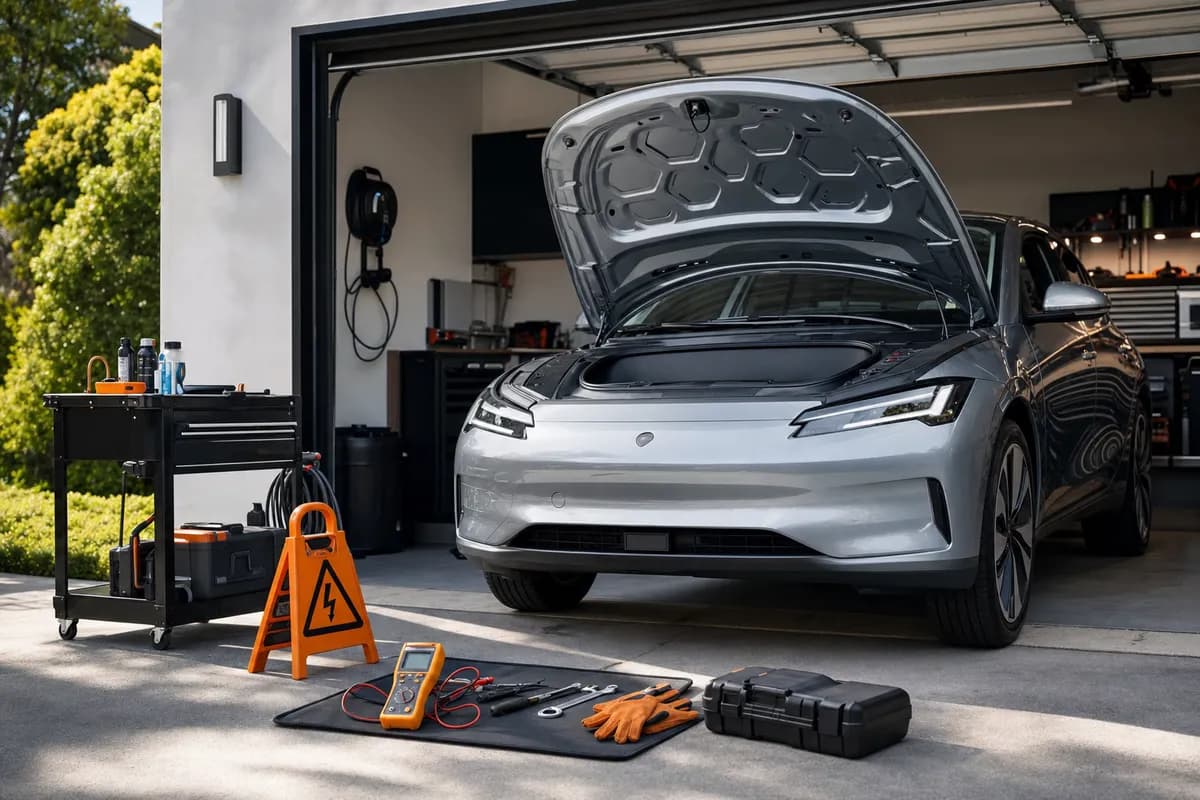
A decent enthusiast community garage in 2026 does not just have jack stands, a tire machine, and a wall of 10 mm sockets. It increasingly has:
- CAT III or CAT IV-rated digital multimeters from known brands
- Insulated gloves and basic PPE for awareness, not as a license to perform forbidden repairs
- Scan tools that can read hybrid and EV-specific modules
- Clearly marked “no high-voltage disassembly” rules
- Lifting procedures for battery-floor vehicles with jack point guides posted on the wall
- Emergency disconnect location charts for common models
- Service manual subscriptions shared among members where legally permitted
That last item is huge. On many 2026 vehicles, the difference between a safe brake job and an expensive mistake is simply knowing the required procedure. Some EVs and hybrids require brake service mode before pad replacement. Some need precise lift-point usage to avoid underbody battery damage. Some PHEVs route cooling hardware or HV cabling through areas where old habits can get you into trouble fast.
Enthusiast groups are also leaning more heavily on independent shop collaboration. A lot of seasoned techs are willing to teach owners where the safe boundary is: inspect here, measure here, service this, but do not unplug, cut, probe, or disassemble that orange-cabled system unless you have factory training and the right safety workflow. That kind of mentoring may be the most important piece of the whole movement.
Forums are replacing bravado with checklists
Old forum culture could be hit-or-miss. One guy with a grainy photo album and unlimited confidence could become the authority overnight. In the electrified era, the best communities are more disciplined. Sticky posts now routinely include:
- Model-specific lift and jacking points
- 12-volt disconnect or support procedures
- Brake service mode instructions where applicable
- Approved fluid specifications for gear reduction units and cooling systems
- Warnings on salvage-title battery damage and flood exposure
- Clear “stop here and seek a pro” guidance for high-voltage faults
That sounds less romantic than the old internet, but it is a lot more useful. It also lowers the barrier for newer enthusiasts. Somebody buying a used 2026 Model Y, Mustang Mach-E, or Prius Prime as their first DIY daily driver can learn a lot faster when the community has already organized the basics into a real ownership playbook.
Why high-voltage safety has become the new badge of competence
Let’s be blunt: the biggest myth in electrified DIY culture is that courage equals capability. It does not. If anything, the rise of hybrids, PHEVs, and EVs has made restraint one of the most important skills a home mechanic can have.
High-voltage safety for DIY mechanics begins with understanding that orange cables, battery enclosures, inverter internals, and many HV connectors are not “learn as you go” systems. Depending on the architecture, you may be dealing with 200 to 800 volts. That is not a stronger version of 12-volt car work. It is a different category of hazard entirely.
Even among trained techs, proper high-voltage disable procedures involve model-specific service information, lockout/tagout practices, meter verification, PPE, and waiting periods for capacitor discharge. For the average enthusiast at home, that means the smart move is usually to stay outside the HV boundary unless you have formal training and the correct equipment.
The strongest DIY mechanic in 2026 is not the one who tears into a battery pack on a Saturday afternoon. It is the one who knows exactly which jobs are safe in a home garage—and leaves the rest alone.
That does not make hybrid and EV ownership non-DIY. It just changes the code of honor. In the same way a good engine builder respects torque specs and cleanliness, a good electrified-car owner respects system boundaries. You can still do a lot at home. You just do it with more planning and less ego.
Practical safety habits every community now pushes
- Never assume a vehicle is “off” in the same way a gasoline car is off.
- Do not probe, disconnect, or handle orange high-voltage cables or connectors casually.
- Use factory or professional service information before lifting, braking, or cooling-system service.
- Confirm whether the car requires a maintenance or brake service mode before routine work.
- Inspect underbody battery protection after any impact, curb strike, or road debris event.
- Treat flood-damaged or salvage electrified vehicles with extreme caution.
- When in doubt, hand the HV-related portion of the job to a qualified shop.
Honestly, these are just good shop habits translated into a new era.
The new daily-driver playbook for 2026 owners
If you want a realistic 2026 daily driver ownership guide for electrified cars, it looks less like a rebellion against modern complexity and more like a smart division of labor.
Do the routine maintenance yourself. Learn the model-specific procedures. Buy better information before you buy more tools. Build relationships with an independent shop that respects enthusiasts. Join a local group where somebody has already made the mistakes you are trying to avoid. And understand that the ownership win is not proving you can service everything. It is keeping your car reliable, safe, and affordable over the long haul.
For many owners, the sweet spot breaks down like this:
- DIY-friendly: tires, brakes with proper procedures, filters, 12-volt battery replacement, underbody inspections, suspension components, wipers, wheel bearings, low-voltage diagnostics, and fluid services clearly covered by service information.
- Conditional DIY: cooling system service, gear-reduction fluid changes, and model-specific electrical diagnosis if you have the service data and experience.
- Professional territory: battery pack opening, inverter or charger internal repairs, HV cable repairs, isolation fault diagnosis, and any work requiring formal high-voltage disable and verification procedures beyond the owner-level process.
That is not a compromise. That is the modern enthusiast maintenance model.
Verdict: the DIY spirit is alive—just more disciplined
The real story in 2026 DIY car maintenance is not that enthusiasts are giving up on wrenching because hybrids and EVs are too complicated. It is that the culture is getting sharper. Community garages are posting lift diagrams next to toolboxes. Forums are sharing service-mode procedures instead of chest-thumping. Meetups are trading scanner data, tire-wear patterns, coolant specs, and charging-system lessons with the same energy people used to spend debating spark plugs and carb jets.
And that is a good thing.
As daily drivers evolve, enthusiast communities are proving they can evolve too. Hybrid and EV maintenance at home is absolutely possible for a huge portion of routine ownership, as long as owners respect the line between serviceable systems and true high-voltage danger zones. The home garage is not dead. It is just better informed, better connected, and finally learning that real competence includes knowing when not to turn the wrench.
For anyone buying a hybrid, plug-in hybrid, or EV as their next commuter, that is the takeaway: you do not need to abandon DIY culture. You just need a new playbook, a smarter community, and a lot less tolerance for guesswork around high voltage.
Affiliate disclosure: This article contains affiliate links. RevvedUpCars may earn a small commission on qualifying purchases at no extra cost to you.