BYD’s May 2026 surge is colliding with Europe’s 2026 EV boom and China’s 61% shift, reshaping what U.S. buyers may get in 2027.
BYD’s latest numbers are not just big. They are a warning shot to the world’s largest legacy carmakers. In May 2026, the Chinese automaker’s global expansion landed just as Europe’s EV market accelerated and China’s shift away from gasoline hit a new threshold.
That combination matters far beyond China and the EU. It is raising pressure on Toyota, Honda, and Volkswagen now, and it could shape what American buyers see in showrooms by 2027.
BYD’s global expansion in May 2026 is getting harder to dismiss
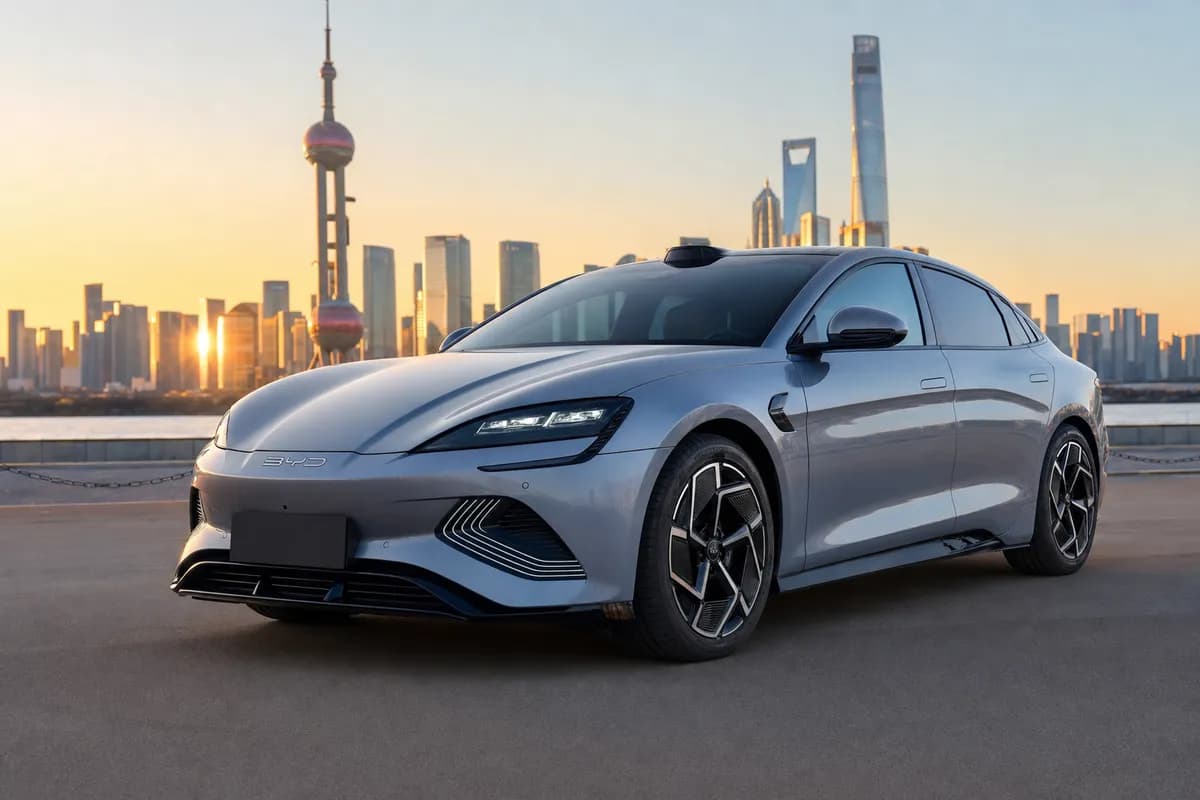
The core story is simple: BYD is no longer just dominating at home. It is using scale in batteries, plug-in hybrids, and full EVs to push into Europe, Southeast Asia, Latin America, Australia, and parts of the Middle East at the same time.
That matters because BYD global expansion May 2026 is happening with a broader lineup than many rivals. The company is not relying on one halo model. It is spreading risk across affordable hatchbacks, compact crossovers, midsize sedans, and SUVs, while also selling plug-in hybrids in markets where charging still lags.
Key BYD nameplates driving that push include:
- Seagull/Dolphin Mini as a low-cost urban EV
- Dolphin in the compact hatchback class
- Atto 3 in the small crossover segment
- Seal as a Tesla Model 3 rival
- Seal U and related SUV variants for Europe-focused family buyers
- Song Plus/Seal U DM-i plug-in hybrids where fuel savings matter more than full electrification
BYD’s advantage is not only price. Its vertical integration gives it unusual control over batteries, power electronics, and vehicle assembly. That lets it move faster on cost cuts than many incumbents that still depend heavily on supplier networks built around combustion vehicles.
Legacy brands have scale too, but their scale is tied to older profit centers. Toyota and Honda still lean heavily on hybrids and internal-combustion sales. Volkswagen has EV volume in Europe and China, but it is under margin pressure and still trying to streamline software, battery sourcing, and platform costs.
Europe’s 2026 EV market is strengthening, not stalling
The European market is central to this story because it remains the most politically committed major auto region outside China. After a slower, uneven patch in parts of 2024 and 2025, the 2026 European EV market is showing stronger momentum again, helped by tighter CO2 rules, more affordable models, and expanding fleet demand.
Battery-electric market share in several major European countries has rebounded as buyers gain more choices below the premium tier. Plug-in hybrids also remain relevant in parts of the market, but the strategic direction is clear: automakers that cannot compete on EV pricing and supply will lose ground.
For BYD, Europe is attractive for three reasons:
- Regulation favors lower-emission fleets, forcing brands to sell more EVs or pay the price
- Consumers are moving beyond early adopters, creating demand for lower-cost mainstream EVs
- Weak spots at legacy brands are visible, especially in software, affordability, and battery costs
Volkswagen remains BYD’s most direct European rival among the three brands in this article. The German giant still has meaningful EV volume with models such as the ID.3, ID.4, ID.7, and Skoda Enyaq-related products. But BYD is attacking the same broad middle of the market with newer chemistry, aggressive pricing, and a wider ability to pivot between EV and PHEV demand.
Toyota and Honda face a different problem. Both companies built their European reputations on efficient gasoline and hybrid cars, but Europe is moving faster toward full EV adoption than either brand initially planned for. Toyota has expanded beyond the bZ4X with newer EV efforts, and Honda is rebuilding its EV strategy as well, but neither company yet matches BYD’s breadth or urgency in Europe.
China’s EV share at 61% shows how fast the gas-car market is collapsing
The most alarming data point for incumbents may be China itself. A China EV share 61% result, counting battery-electric and plug-in hybrid vehicles together, shows that gasoline-only cars are no longer the default growth engine in the world’s largest auto market.
That number changes the argument. This is no longer about whether EVs will eventually replace combustion cars in China. It is about how quickly foreign automakers can adapt before their old business model becomes structurally uncompetitive.
Why the 61% figure matters:
- Combustion vehicles are losing relevance faster than many global planners expected
- Chinese brands are gaining scale and cash flow from new-energy vehicles
- That scale can be exported into Europe and other regions
- Foreign brands risk being trapped between premium imports and low-cost local rivals
Toyota, Honda, and Volkswagen all know China is no longer a market where brand strength alone protects volume. Local players move faster on refresh cycles, digital features, and price adjustments. BYD, Geely, Chery, SAIC, and others are not only competing on value. In many segments, they are now setting the pace.
Volkswagen is especially exposed because China has long been one of its most important profit and volume pillars. Toyota and Honda also face pressure, especially in segments where efficient gasoline sedans once sold in huge numbers. As Chinese buyers move toward EVs and range-extended or plug-in products, those legacy strongholds look less secure.
When China reaches 61% EV share, the issue for global automakers is not future disruption. It is present-tense erosion.
Why Toyota, Honda, and Volkswagen are under pressure now
The pressure is not just competitive. It is strategic. These companies have to fund the transition to EVs while still defending profits from internal-combustion and hybrid models in markets that are moving at different speeds.
BYD has a cleaner industrial story. It built around batteries and electrified platforms, then expanded outward. Legacy automakers have to unwind factories, supply chains, dealer expectations, and product plans built for the old mix.
Here is where the gap is showing most clearly in Toyota Honda Volkswagen EV competition:
- Cost structure: BYD’s battery integration helps it defend pricing in a way many rivals cannot
- Speed: Chinese automakers refresh products faster and react quickly to demand swings
- Portfolio balance: BYD can sell both EVs and PHEVs across many classes without looking transitional
- Regional flexibility: It can push affordable EVs into Europe while using hybrids or PHEVs where infrastructure is weaker
Toyota still has one major near-term shield: hybrids remain strong in the U.S. and many global markets. Honda has some of the same protection, though at smaller scale. Volkswagen’s shield is different, with a larger direct EV presence, but that also means it feels pricing pressure more directly when Chinese brands gain ground.
The real risk for all three is that waiting no longer looks prudent. In Europe, delayed EV execution can mean regulatory pain and market-share losses. In China, it can mean outright irrelevance in core segments.
What this means for the 2027 U.S. EV market outlook
American buyers will not see a carbon copy of China or Europe in 2027. Tariffs, trade policy, tax-credit rules, charging gaps, and consumer preferences will keep the U.S. market distinct. But the global shifts happening now will still shape the 2027 U.S. EV market outlook.
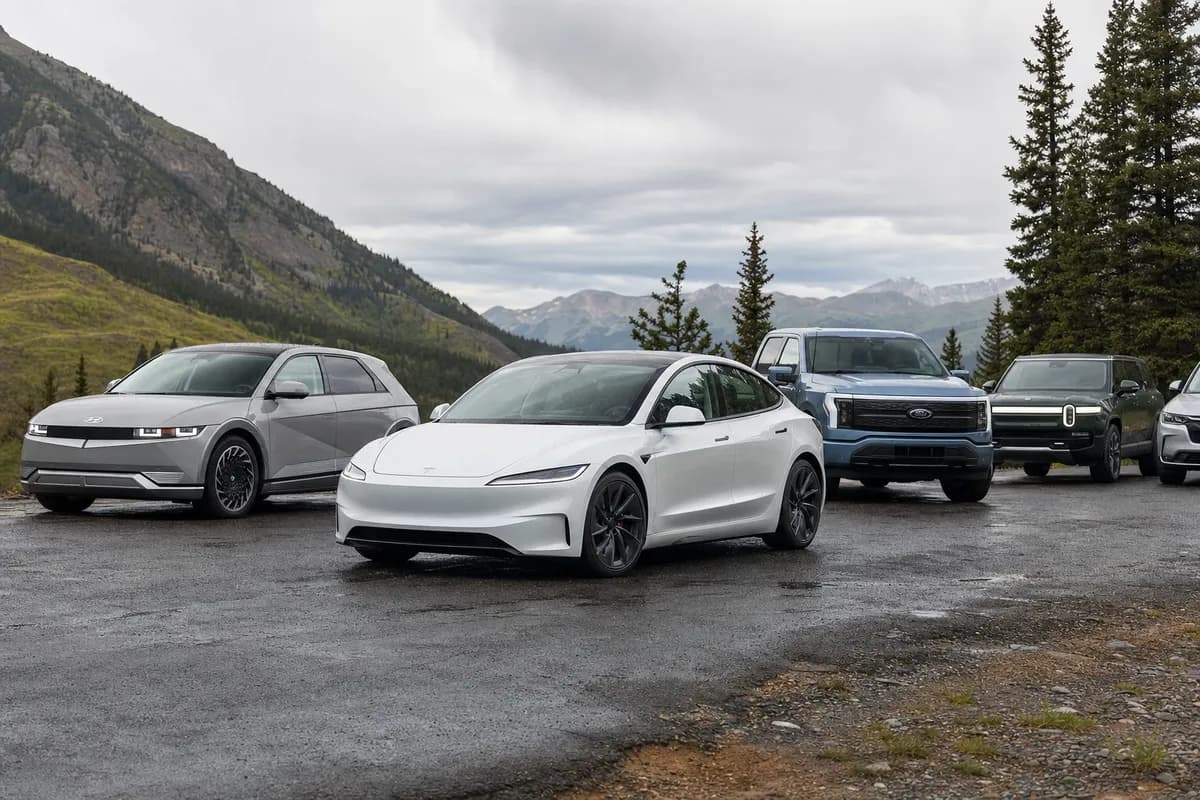
Even if BYD remains largely blocked from direct U.S. passenger-car sales, its impact can still reach American consumers indirectly. Pressure from BYD and other Chinese brands in Europe, Asia, and Latin America could force Toyota, Honda, Volkswagen, Tesla, GM, Ford, and Hyundai to rethink pricing, product timing, and battery strategy for the U.S.
Likely effects for U.S. buyers in 2027 include:
- More aggressive pricing on mainstream EVs and plug-in hybrids
- Greater focus on lower-cost battery chemistries such as LFP
- Faster rollout of compact and midsize EV crossovers rather than only premium or oversized models
- Stronger hybrid and PHEV defenses from Toyota and Honda as they buy time on full EV scale
- Volkswagen pushing harder on value-oriented EVs to protect global volume
The U.S. market may also get more “globalized” in design even when Chinese brands are absent from the sticker. Features, battery formats, packaging efficiency, and cost targets are increasingly being set by competition in China and Europe. Detroit, Japan, and Germany can ignore that only at their own expense.
Verdict: BYD’s rise is a global pressure test, not a regional story
BYD’s momentum in May 2026 matters because it lines up with two bigger market signals. Europe’s EV demand is strengthening again, and China’s 61% EV share shows the center of gravity has already shifted away from gasoline faster than many incumbents expected.
For Toyota, Honda, and Volkswagen, that means the transition is no longer something to manage gradually. It is now a live competitive test across pricing, speed, software, and battery economics. Some will adapt. Some will lose ground.
For U.S. buyers, the main takeaway is straightforward. The battle now unfolding in China and Europe is likely to produce better, cheaper, and more efficient electrified vehicles in America by 2027, even if BYD itself remains mostly outside the market. That may be the clearest sign yet that the global auto industry’s next phase has already begun.
Affiliate disclosure: This article contains affiliate links. RevvedUpCars may earn a small commission on qualifying purchases at no extra cost to you.