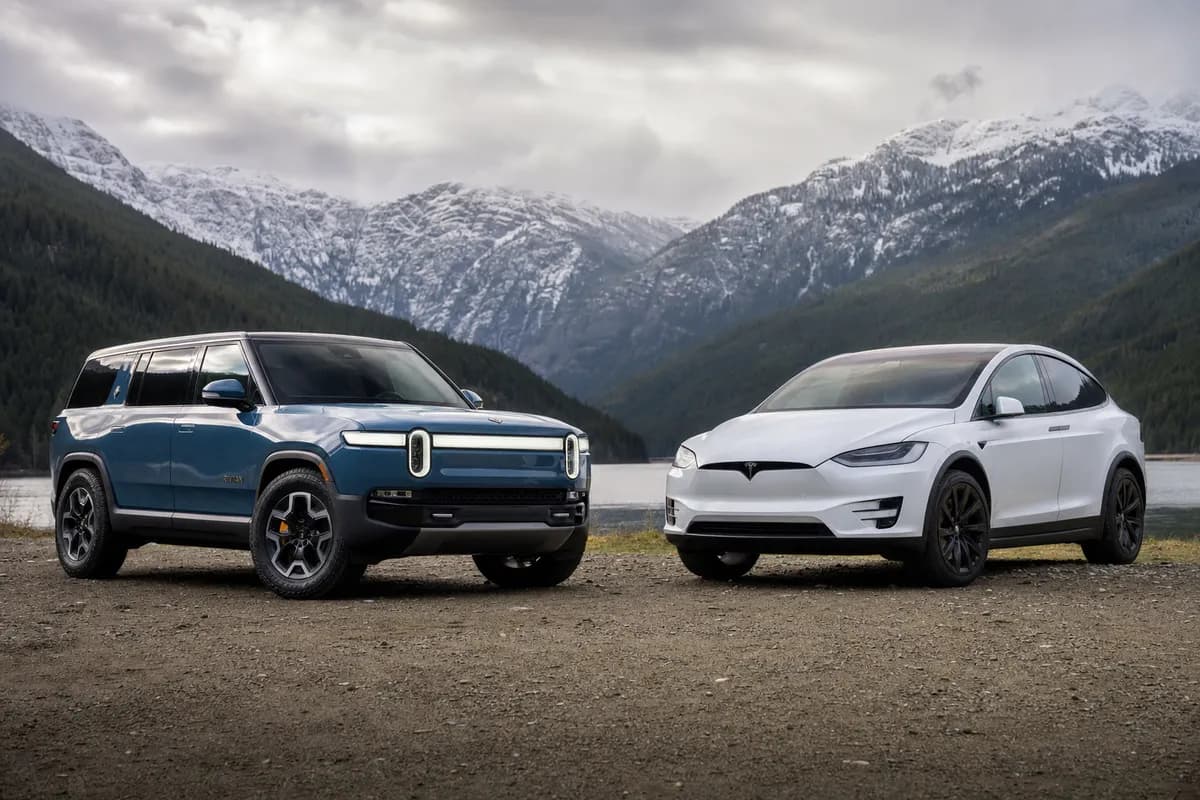
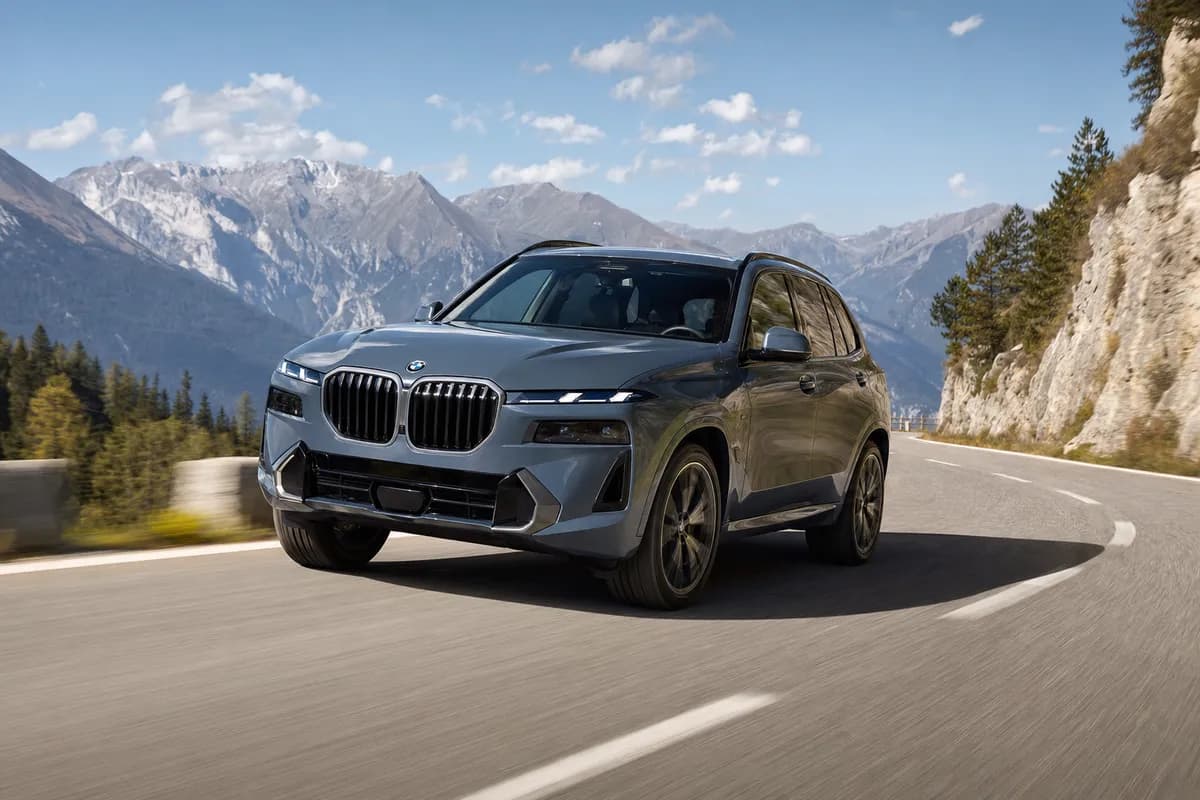
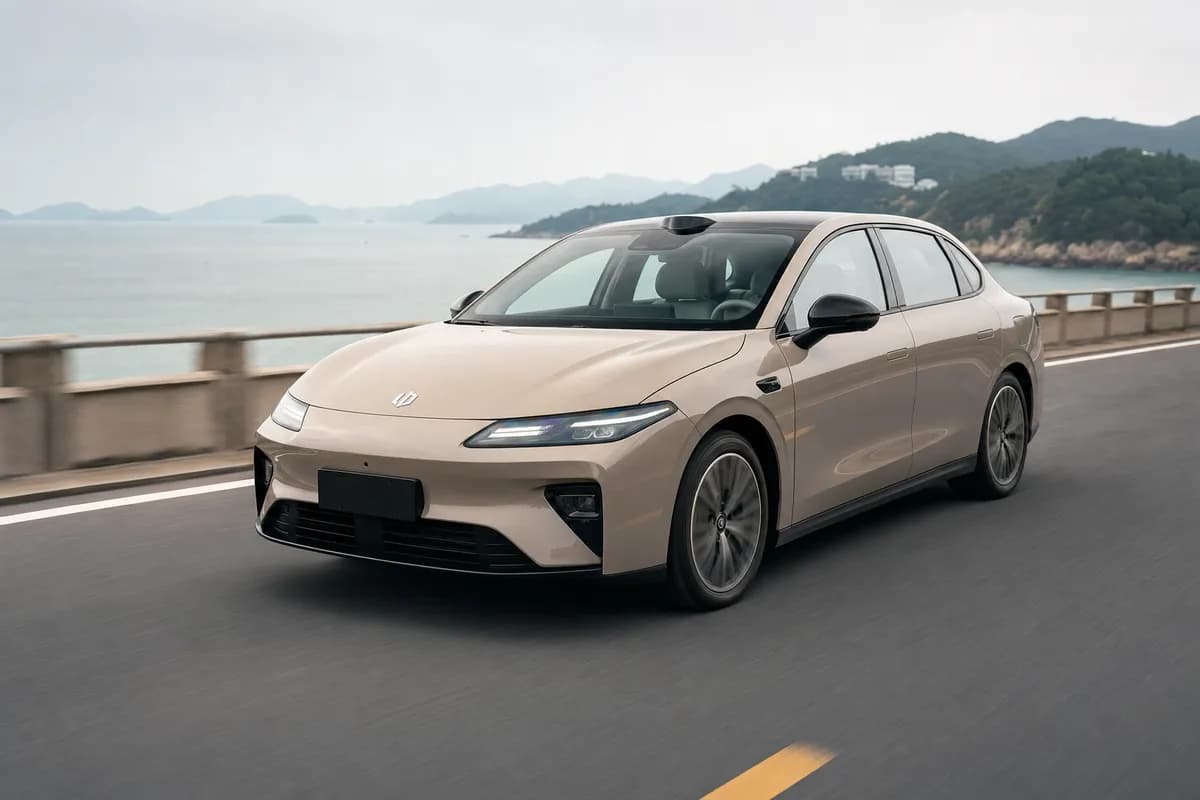
The Tesla Model X used to have this fight won before the bell rang. It was the weird, brutally quick, falcon-doored electric SUV from the future, and everything else looked like it had arrived by fax. Not anymore.
The Tesla Model X used to have this fight won before the bell rang. It was the weird, brutally quick, falcon-doored electric SUV from the future, and everything else looked like it had arrived by fax. Not anymore. The 2025 Rivian R1S has matured into the electric SUV for people who own boots, dogs, trailers, muddy bikes, and occasionally make questionable decisions near trailheads. The 2025 Tesla Model X remains the quicker, sleeker, more efficient family missile. So which one deserves your driveway: the polished Silicon Valley spaceship or the Colorado-expedition brick with torque?
Power, Range, and the Numbers That Separate the Adults from the Brochure Artists
Let’s start with the obvious: both of these machines are obscenely powerful by normal SUV standards. A Toyota Land Cruiser looks at their torque figures and quietly reconsiders its life choices.
The 2025 Tesla Model X comes in two main flavors: Model X All-Wheel Drive and Model X Plaid. The standard dual-motor AWD model is rated at around 670 horsepower, does 0-60 mph in 3.8 seconds, and carries an EPA-estimated range of about 329 miles. Step up to the Plaid and you get a tri-motor setup with 1,020 horsepower, a claimed 0-60 mph time of 2.5 seconds with rollout subtracted, and roughly 314 miles of EPA-estimated range. That is not an SUV acceleration figure. That is a roller coaster with cupholders.
The 2025 Rivian R1S counters with broader mechanical variety. The Dual-Motor version makes about 533 horsepower and 610 lb-ft of torque, good for roughly 0-60 mph in 4.5 seconds. The Performance Dual-Motor lifts output to about 665 horsepower and 829 lb-ft, cutting the sprint to around 3.4 seconds. The big news is the updated Tri-Motor R1S, which makes about 850 horsepower and 1,103 lb-ft of torque, with a claimed 0-60 mph time of 2.9 seconds. The incoming Quad-Motor version goes even more feral, with Rivian quoting more than 1,000 horsepower.
Range depends heavily on battery pack and wheel choice. Rivian offers Standard, Large, and Max battery configurations, with the longest-range R1S variants stretching to roughly 410 miles in the best configuration, while performance-focused models land lower. The R1S Tri-Motor with Max pack is rated around 371 miles. Tesla’s Model X range is more straightforward: approximately 329 miles for the AWD and 314 miles for the Plaid.
- Quickest: Tesla Model X Plaid, 0-60 mph in 2.5 seconds claimed.
- Longest range: Rivian R1S with Max battery, up to roughly 410 miles depending on configuration.
- Most balanced performance: Rivian R1S Tri-Motor, because 850 hp and real trail talent is a spicy combination.
- Best efficiency play: Tesla Model X AWD, lighter on electrons and smoother on long highway runs.
On paper, Tesla still owns the drag strip. But Rivian has built the better portfolio. You can spec an R1S as a family-friendly dual-motor SUV, a long-range adventure rig, or a tri-motor torque monster that can embarrass sports sedans and then crawl over rocks afterward. The Model X is faster. The R1S is broader.
Road Manners: Spacecraft vs Trail Weapon
The Model X is the sharper road car, and pretending otherwise would be nonsense. It sits lower, feels more aerodynamic, and delivers its speed with that eerie Tesla smoothness: no drama, no build-up, just instant forward violence. The Plaid is particularly ridiculous. Flatten the accelerator and your passengers make noises usually reserved for turbulence and medical procedures.
Steering is quick, body control is tidy for something this large, and the low center of gravity helps the Model X disguise its mass. It is not a driver’s car in the Porsche Cayenne sense, but it is shockingly effective as a point-and-squirt machine. On fast pavement, the Tesla feels like it wants to vaporize distance. The Rivian wants to conquer terrain.
The R1S is heavier-feeling, taller, and more upright. That’s because it is, fundamentally, built like a serious SUV. It rides on an adjustable air suspension and can raise itself to deliver up to roughly 14.9 inches of ground clearance. That is not “soft-roader with cladding” clearance. That is “yes, officer, I can explain why I’m on this service road” clearance.
Off-road, the comparison becomes unfair in the other direction. The Rivian R1S offers multiple drive modes for terrain, serious approach and departure geometry, and a wading depth of more than 3 feet. It can tow up to 7,700 pounds. The Model X can tow up to 5,000 pounds, which is useful, but it is not a backcountry appliance. It has air suspension, yes, but nobody sensible is taking those falcon-wing doors and low-profile tires into the kind of ruts where the Rivian starts grinning.
The Tesla Model X is what you drive to the ski lodge. The Rivian R1S is what you drive past the ski lodge when the road turns into a rumor.
On-road comfort is close. The Tesla is quieter at highway speeds and generally more settled on clean pavement. The Rivian’s latest suspension tuning is much improved over earlier versions, but it still has a rugged, upright character. That’s not a flaw; it’s the point. It feels substantial, like the chassis was designed by people who know what recovery boards are for.
Interior, Space, and Daily Family Survival
This is where the contest gets personal. The Tesla Model X cabin is minimalist to the point of stubbornness. You get a vast windshield, a large central touchscreen, a digital driver display, available yoke or conventional steering depending on configuration and market timing, and very few physical controls. Some people call it clean. Others call it a UX experiment that escaped containment.
The big party trick is still the falcon-wing rear doors. They are dramatic, useful in tight spaces when they work perfectly, and still a little theatrical in a “please don’t do this in a rainstorm” way. Kids love them. Adults pretend not to. The Model X can be configured with five, six, or seven seats, with the six-seat layout being the most premium and easiest to access. Maximum cargo capacity is about 92 cubic feet depending on seating configuration, including useful front trunk space.
The Rivian R1S has a more traditional three-row SUV cabin, and in many ways it is better for it. The design is warm, premium, and outdoorsy without dressing up like a camping catalog. Materials feel sturdy and expensive: vegan leather, ash wood trim, excellent storage solutions, and a command-style driving position. It seats seven as standard, and cargo capacity rises to about 105 cubic feet with the rear rows folded. The split tailgate is also brilliant for sitting, loading gear, or pretending you’re more rugged than you actually are.
Third-row comfort? Neither is a minivan, because apparently society still resists the obvious answer. The Rivian’s third row is usable for kids and shorter adults, with decent headroom and access. The Tesla’s third row is more dependent on seating configuration and passenger size. In six-seat form, the Model X is easier to move through, but the Rivian feels more SUV-authentic and less compromised by its shape.
- Best cabin tech: Tesla Model X, especially for screen responsiveness, route planning, and app ecosystem.
- Best storage and adventure practicality: Rivian R1S, thanks to boxier packaging and more cargo room.
- Best second-row theater: Tesla Model X, because falcon doors still have main-character energy.
- Best family SUV feel: Rivian R1S, because it behaves like a real three-row utility vehicle, not a performance sedan inflated with ambition.
The one annoyance with Rivian: like Tesla, it leans heavily on screen-based controls. The interface is attractive and improving, but I still want more hard buttons in a vehicle designed for gloves, dirt, snow, and actual life. Tesla gets away with this because it has spent years conditioning owners to accept everything through glass. Rivian should know better.
Charging, Software, and Ownership Reality
Tesla’s strongest weapon is not the Plaid powertrain. It is the charging ecosystem. The Model X plugs directly into Tesla’s Supercharger network, and that remains the gold standard for reliability, route integration, and sheer ease. Peak DC fast charging is up to 250 kW, and the car’s navigation system preconditions the battery and routes you with ruthless competence. You do not think about charging in a Tesla as much as you simply follow instructions. It’s almost annoyingly good.
Rivian has improved quickly. The R1S supports DC fast charging at up to roughly 220 kW, depending on battery and conditions, and Rivian’s own Adventure Network chargers are excellent where available. More importantly, Rivian owners are gaining access to compatible Tesla Superchargers via NACS adapters, with native NACS ports expected as the industry transition continues. That narrows Tesla’s once-huge advantage, but it does not erase it. Tesla’s charging integration remains cleaner.
Software is another Tesla advantage, though not the clean sweep it used to be. Tesla updates are frequent, features are deep, and the app is superb. Navigation, charging, climate control, phone-as-key, camera functions, and entertainment are polished from years of iteration. Rivian’s software has become genuinely good, with slick mapping, useful drive modes, camping features, pet comfort, and regular over-the-air updates. But Tesla still moves faster and feels more seamless.
Driver assistance is where the language gets slippery. Tesla offers Autopilot, Enhanced Autopilot where available, and Full Self-Driving Capability as an option, though despite the name, it does not make the vehicle autonomous. Supervised operation is still required. Rivian’s Driver+ system covers adaptive cruise and lane-centering functions on mapped roads. Tesla’s system is more ambitious; Rivian’s is more conservative. Which one you prefer depends on your appetite for beta-testing the future while doing 70 mph next to a cement truck.
Pricing shifts often, because apparently EV pricing departments now operate like crypto exchanges. At the time of writing, the 2025 Tesla Model X starts around the low-$80,000 range, with the Plaid typically in the mid-$90,000 range before options. The 2025 Rivian R1S starts in the mid-$70,000 range for the Dual-Motor Standard setup, while higher battery packs, Performance Dual-Motor, Tri-Motor, and premium options can push it comfortably past $100,000.
Neither is cheap. Both can qualify differently for incentives depending on configuration, purchase structure, and evolving federal rules, so check current eligibility rather than trusting a dinner-party EV expert named Brandon. Insurance will be expensive. Tires will not be cheap. Depreciation is still the EV wild west. Welcome to luxury electric SUV ownership: silent thrust, loud invoices.
Verdict: Buy the Rivian Unless You Live on Highways and Brag About 0-60 Times
The 2025 Tesla Model X is still the better electric road-trip appliance. It is faster in Plaid form, more efficient, better supported by charging infrastructure, and more mature digitally. If your life is highways, school runs, airports, and the occasional smug launch-control demonstration, the Model X is brutally effective. The AWD model is the smart Tesla pick; the Plaid is the hilarious one.
But the 2025 Rivian R1S wins this showdown because it is the better SUV. Not the better EV party trick. Not the better acceleration meme. The better SUV. It tows more, carries more, clears more, seats seven with less weirdness, and feels engineered for lives that extend beyond pavement and software menus. It has character, capability, and the kind of physical honesty the Model X lost somewhere between falcon doors and steering yokes.
Choose the Tesla Model X AWD if you want the easiest ownership experience, the best charging network, excellent range, and absurdly quick performance without stepping up to Plaid. Choose the Model X Plaid if your family SUV must be able to humble supercars and slightly rearrange your organs.
Choose the Rivian R1S Dual-Motor Large or Max Pack if you want the best all-around electric family adventure SUV. Choose the R1S Tri-Motor if you want the sweet spot of range, violence, and genuine off-road hardware. That’s the one I’d have.
Final call: Tesla wins the software-and-speed contest. Rivian wins the SUV contest. And in an electric adventure SUV showdown, that makes the 2025 Rivian R1S the one to buy.
Affiliate disclosure: This article contains affiliate links. RevvedUpCars may earn a small commission on qualifying purchases at no extra cost to you.