Know the cold-weather amps, lithium storage tips, and safety rules so you can pick the right jump tool and fix a dead battery fast.
A dead battery never picks a convenient place to quit. The right tool in the boot turns a stranded-driver problem into a five-minute fix.
Jump Starter vs Jumper Cables: Independence Wins, but Cables Still Have a Job
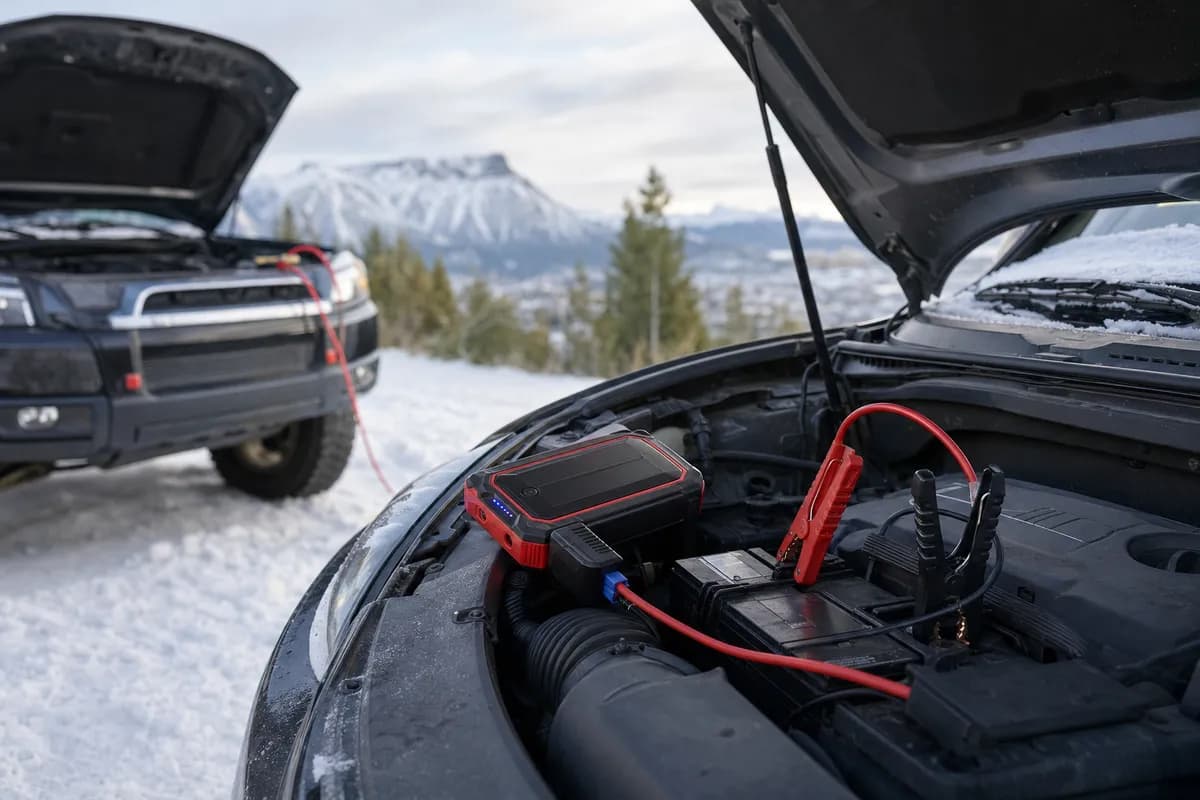
The core difference is simple: jumper cables need another running vehicle, while a portable jump starter brings its own power source. In a dark apartment garage, an empty trailhead lot, or a frozen work parking lot, that independence is worth far more than the extra cost.
Modern lithium packs have also become compact enough to live in a glovebox-sized emergency kit. A quality unit can jump-start a vehicle several times on one charge, run as a USB-C power bank, and often includes a flashlight and safety-protected clamps.
| Tool |
What You Need |
Best Situation |
Main Limitation |
| Lithium jump starter |
Charged jump pack |
Solo drivers, travel, remote parking, winter emergencies |
Needs periodic charging and dislikes extreme heat or cold |
| Traditional jumper cables |
A second vehicle with a healthy battery |
Home garages, family fleets, helping another driver |
Useless when no donor vehicle is available |
| Heavy-duty cables plus jump pack |
A charged pack or donor vehicle |
DIY drivers who want maximum flexibility |
Takes up more boot space |
My recommendation for most DIY drivers in 2026 is to carry both. Make the lithium jump pack your primary rescue tool, then keep a decent set of cables for helping friends, dealing with a deeply discharged battery, or working around a pack that was forgotten on the shelf.
Cheap cables are false economy. The skinny, stiff sets sold in bargain bins may technically conduct power, but their small wire gauge creates voltage drop and heat. Look for copper or copper-clad aluminum cables with substantial clamps, flexible insulation, and enough length to reach between awkwardly parked vehicles.
How Many Amps Do I Need to Jump Start a Car?
Portable jump starter ratings can be confusing because brands commonly advertise peak amps, not the sustained current available at the clamps. Peak ratings remain useful for comparing models from reputable manufacturers, but do not treat a “4,000-amp” pocket pack as the equivalent of a 4,000-amp shop booster.
For a normal gasoline commuter car, a known-brand 1,000-amp lithium pack is usually the sensible entry point. Larger engines, diesels, old batteries, and winter starts demand more reserve, so step up rather than buying the smallest pack that claims it can work.
| Vehicle Type |
Practical Jump-Pack Rating |
Examples of Suitable Packs |
Real-World Advice |
| Motorcycles, ATVs, small gasoline engines |
500–1,000 peak amps |
NOCO Boost Plus GB40, GOOLOO GP80 |
Use a compact pack, but verify it has the correct clamp lead. |
| Most 4-cylinder and V6 gasoline cars |
1,000–1,500 peak amps |
NOCO Boost X GBX45, Hulkman Alpha 65 |
The sweet spot for most daily drivers. |
| V8 gasoline trucks and SUVs |
1,500–2,000 peak amps |
NOCO Boost X GBX55, Hulkman Alpha 85 |
Buy extra capacity if you tow, travel, or see freezing weather. |
| Light-duty diesel pickups |
2,000–3,000 peak amps |
NOCO Boost HD GB70, NOCO Boost X GBX75 |
Check the manufacturer’s stated diesel displacement limit. |
A 2.0-liter turbo four-cylinder does not need a massive commercial booster under normal conditions. But a 6.7-liter diesel on a sub-freezing morning is a very different load, especially when its batteries are weak rather than merely discharged.
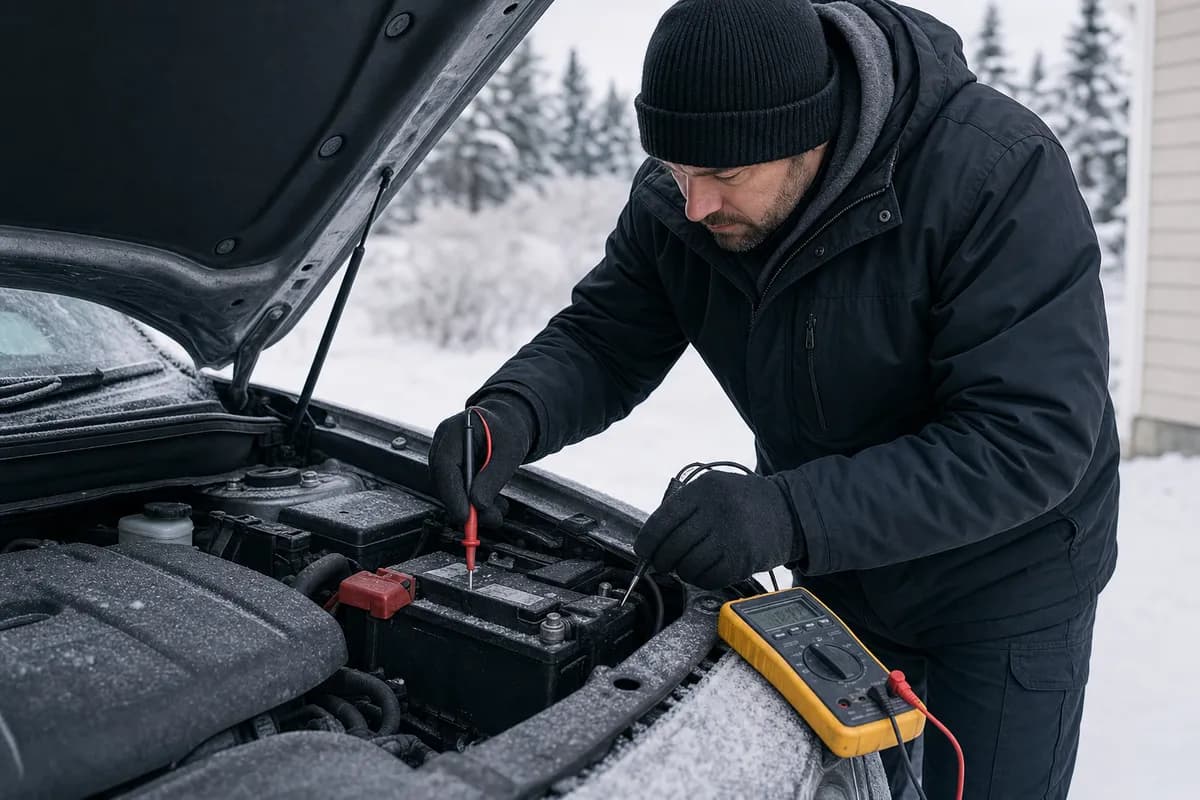
Battery condition matters as much as engine size. A jump pack can wake up a healthy battery that was drained by an interior light, but it cannot permanently cure a sulfated battery, bad alternator, corroded cable, or starter pulling excessive current.
A lithium jump starter cold-weather warning is not marketing fine print. Lithium cells lose available power as temperatures fall, and a pack left overnight at 0°F may deliver much less cranking assistance than it did during a warm summer test.
Keep the pack inside the cabin rather than in an exposed pickup bed or unheated boot when serious winter weather is expected. If it has been sitting in the cold, warm it in the house or cab for a while before attempting a start.
- Check the charge every three to six months. Recharge before the indicator falls too low; do not store it empty.
- Follow the maker’s storage range. Most lithium packs prefer a cool, dry location, away from direct sun and heat.
- Do not leave it on the dashboard. Summer interior temperatures can damage cells, swell a battery pack, and shorten its service life.
- Inspect the clamps and cable. Replace the unit if the insulation is split, the clamp springs are weak, or the case is swollen.
- Use the supplied or approved charger. USB-C charging is convenient, but use a power source with the wattage the manufacturer specifies.
In Texas, heat is the bigger enemy. I have seen battery packs and conventional 12-volt batteries cooked by months under a windshield. In northern states, cold is the immediate problem, but storing a pack indoors between trips still gives it the best chance of being ready.
A portable jump starter should also have reverse-polarity protection, spark-resistant clamps, and a manual override mode that is clearly explained in its manual. That override is for a battery so flat that the pack cannot detect it; it is not a button to press casually.
Jumper Cable Safety Guide: The Correct Connection Order
Jumper cables remain useful, but they require more discipline than a smart lithium pack. Both vehicles should be in Park or Neutral, parking brakes set, accessories off, and the vehicles positioned so they do not touch.
- Connect the red clamp to the positive terminal of the dead battery.
- Connect the other red clamp to the positive terminal of the donor battery.
- Connect one black clamp to the donor battery’s negative terminal.
- Connect the final black clamp to a clean, unpainted engine or chassis ground on the disabled vehicle, away from the battery and fuel system.
- Start the donor vehicle, wait a minute or two, then try the disabled vehicle for no more than a few seconds at a time.
- Remove the cables in reverse order once the vehicle starts.
Why use a chassis ground instead of the dead battery’s negative post? Batteries can release hydrogen gas, and keeping the final connection away from the battery reduces the chance of a spark near that gas.
Never jump a visibly cracked, leaking, frozen, or swollen battery. Do not connect cables to an EV’s high-voltage components, either. Hybrid and EV owners should use only the designated 12-volt jump points in the owner’s manual, because the low-voltage battery is the system you are trying to wake up.
If the vehicle starts but the battery warning light stays on, or it dies again soon after, stop treating it as a jump-start issue. The charging system, battery, or connections need diagnosis.
The Boot-Kit Verdict
For the average driver, the best portable jump starter 2026 can offer is not a flashy peak-amp number. It is the ability to start your own vehicle safely, without waiting for a stranger, tow truck, or helpful neighbor.
Buy a reputable 1,000- to 1,500-amp lithium pack for a typical gasoline car, or a 2,000-amp-plus model for bigger trucks and diesels. Keep it charged, protect it from temperature extremes, and pair it with quality cables if you have room.
That combination covers almost every real-world roadside scenario. More importantly, it gives you the confidence to help another driver without gambling on flimsy cables or a mystery-brand battery pack.
Frequently Asked Questions
Is a portable jump starter better than jumper cables?
For most drivers, yes, because a portable jump starter works without another vehicle nearby. Jumper cables still make sense as a backup and are useful when helping someone else, but they depend on a healthy donor vehicle and correct hookup procedure.
How many amps do I need to jump start a 4-cylinder car?
A reputable 1,000-amp lithium jump pack is a solid choice for most 4-cylinder gasoline cars. A 1,500-amp unit adds useful reserve for cold weather, turbocharged engines, aging batteries, and repeated start attempts.
Will a lithium jump starter work in freezing weather?
It can, but available output drops as temperatures fall. Keep the pack in the cabin when possible, warm it before use, and choose a higher-capacity model if you routinely deal with below-freezing starts.
Can I leave a lithium jump starter in my car all year?
You can, but extreme heat and cold will shorten its life and reduce its reliability. Store it in a protected cabin compartment, check its charge every few months, and bring it indoors during long periods of severe weather when practical.
Get the latest car reviews in your inbox
Join thousands of car enthusiasts. No spam, unsubscribe any time.





Comments
Leave a comment