Learn essential vehicle safety tips and use our car recall checklist to stay ahead of recalls like Chrysler Pacifica & curtain airbags. Save money and stay safe!
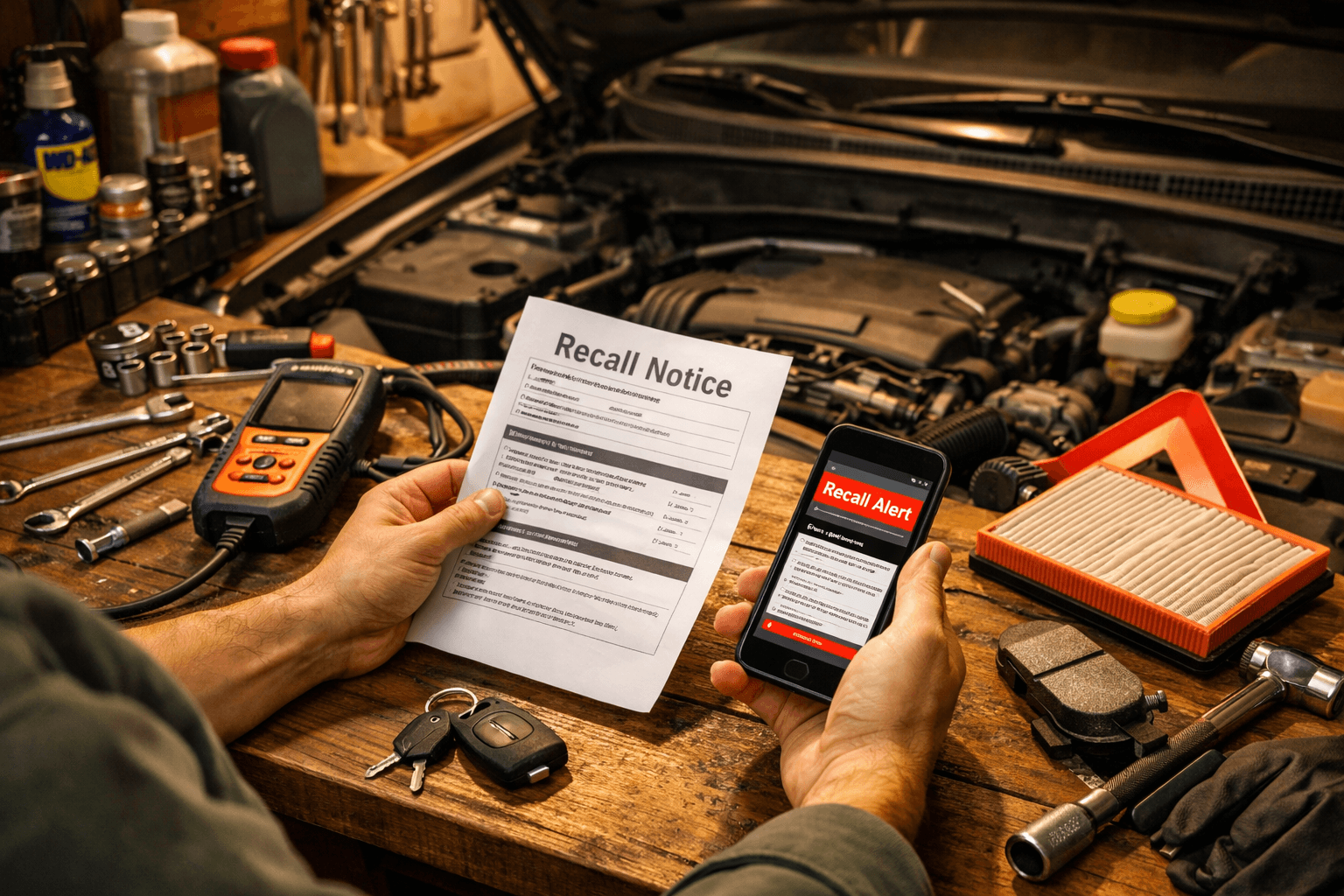
You’re buckling the kids into the back seat when you hear about a recall on the news. Suddenly you’re wondering, “Was that my van?” That’s where a solid car recall checklist comes in — because ignoring a recall isn’t just paperwork, it’s your family’s safety riding on four tires.
I’ve seen folks roll into my old shop with airbag lights on for months because “the dealer never called.” Meanwhile, that airbag might not deploy in a crash. Today I’m walking you through how to protect yourself from auto recalls, what to do if you own something like a Chrysler Pacifica recall vehicle, and how to stay ahead of the next one.
What You'll Need
- Tools: 17-digit VIN (from dashboard or registration), smartphone or computer, 10 minutes of your time
- Parts/Materials: None — recall repairs are FREE
- Time: 10 minutes to check, 1–3 hours for dealer repair
- Difficulty: 🔧 (1/5 — easier than checking tire pressure)
- Dealer Cost: $0 (by law) vs DIY Cost: $0 — You Save: Potentially $1,000s in avoided repairs or injuries
Why This Matters — Your Car Recall Checklist Could Save a Life
A recall means the manufacturer screwed up. Plain and simple. Maybe it’s a fuel pump that fails and stalls at highway speed. Maybe it’s a curtain airbag recall advice situation where the airbag might not deploy — or worse, deploy randomly.
In 20 years of wrenching, I’ve seen ignored recalls turn into totaled cars and hospital visits. And here’s the kicker: recall repairs are free, but the damage from ignoring them isn’t.
You should check for recalls at least twice a year — I tell folks spring and fall, like changing smoke detector batteries. Also check before road trips and before buying or selling a vehicle.
Before You Start
⚠️ WARNING: If your recall involves airbags, fuel leaks, steering, or brakes, limit driving until it’s fixed. Those aren’t “wait until next oil change” problems.
Grab your VIN — it’s visible through the windshield on the driver’s side dash or on your registration. Head to NHTSA.gov Recall Lookup and punch it in. You can also check the manufacturer’s site directly.
If you drive something like a Pacifica or Palisade, don’t assume you’ll get a letter. We covered recall steps in this Hyundai Palisade recall guide — and plenty of owners found out online before the mail showed up.
Don’t DIY recall repairs involving airbags, advanced driver systems, or emission reprogramming. Modern cars — especially with software updates like we discussed in Future Proof Car Tech 2026 — often require dealer-level scanners.
Step-by-Step Guide
-
Locate Your VIN
Stand outside the car and look at the lower driver-side windshield corner. Write down all 17 characters exactly.
Pro Tip: Double-check for O vs 0 — that mistake wastes time.
-
Check the NHTSA Database
Enter the VIN at NHTSA.gov. It will list open recalls specific to your vehicle — not just your model year.
-
Call the Dealer Service Department Directly
Give them your VIN and recall number. Ask if parts are in stock.
Pro Tip: Ask, “How long will the repair take, and do you offer a loaner?” Be polite but firm.
-
Schedule ASAP
Don’t wait for “a convenient time.” Airbag and fuel system recalls should be handled within weeks, not months.
-
Keep Documentation
Save the repair invoice showing recall completed. This protects resale value and proves compliance.
-
Check Again in 6 Months
New recalls happen constantly. With new car prices climbing — as we talked about in New Car Prices 2026 May Rise Again — protecting what you own makes more sense than ever.
Common Mistakes to Avoid
- Ignoring “minor” recalls. I’ve seen software updates fix transmission hesitation that later destroyed $4,000 gearboxes.
- Assuming used cars are clear. Dealers sometimes sell vehicles with open recalls. Always run your own car recall checklist before buying.
- Throwing away recall letters. That “junk mail” might mention a fire risk.
- Delaying airbag recalls. Curtain airbag recall advice: treat it like a ticking clock. Airbags degrade over time.
- Paying for recall repairs. Recalls are federally mandated free repairs. If someone charges you, that’s a red flag.
When to Call a Professional
If your vehicle shows symptoms — stalling, warning lights, brake softness — alongside a recall notice, call immediately. Don’t diagnose it yourself.
A fair price for recall work? $0. If the dealer tries to upsell unrelated services, ask for a written estimate and separate the recall repair from maintenance.
Ask: “Is this repair 100% covered under the recall?” and “Will this update affect my warranty?” If they get vague, push back.
For deeper research, check Consumer Reports recall updates and verify technician credentials through ASE.com.
Recommended Products
- Carfax Car Care App (Free): Tracks recalls automatically by VIN.
- OBD2 Scanner — BlueDriver ($120): Great for checking codes before and after recall work.
- Physical Maintenance Folder ($15): Old-school, but I still keep one in my glovebox.
- Battery Maintainer — NOCO Genius 1 ($30): If your recall requires a long software update, keeping voltage stable prevents module glitches.
Do This
- Run your car recall checklist every 6 months
- Fix safety recalls immediately
- Keep documentation for resale
- Ask direct questions at the service desk
Don't Do This
- Ignore airbag or fuel system recalls
- Assume the dealer will always notify you
- Pay out of pocket for recall repairs
- Delay repairs before a road trip
DIY Difficulty: 🔧 1/5
Money Saved: Potentially $1,000+ in avoided repairs and safety risks
Staying on top of recalls isn’t complicated — it just takes 10 minutes and a little discipline. A simple car recall checklist can mean the difference between a safe stop and a scary headline.
You’ve got this. Check your VIN tonight, schedule what needs fixing, and keep your family protected. Drop questions in the comments if you’re unsure about a specific recall — especially if you’re dealing with a Chrysler Pacifica recall or need curtain airbag recall advice.
Stay safe out there, and remember — a $20 repair manual saves a $2,000 repair bill.
Disclosure: This article may contain affiliate links. If you make a purchase through these links, we may earn a small commission at no extra cost to you. This helps support RevvedUpCars.com and keeps Mike's toolbox stocked.
Learn more.
Get the latest car reviews in your inbox
Join thousands of car enthusiasts. No spam, unsubscribe any time.





Comments
Leave a comment