U.S. EV sales inched up in Q2 2026, but hybrids surged. Learn how that midyear shift affects your 2027 RAV4 Hybrid, CR-V Hybrid, and EV timing.
U.S. shoppers did start coming back to EVs in the second quarter of 2026. But hybrids kept moving faster, and that split now says more about 2027 buying decisions than any single monthly sales spike.
For buyers looking at the 2027 Toyota RAV4 Hybrid, Honda CR-V Hybrid, Ford Escape, Hyundai Ioniq 5, or a Tesla Model Y 2027 purchase, the market is sending a clear signal: many Americans still want electrification, just with less charging risk and less price pressure.
Q2 2026 showed EV stabilization, not a full breakout
The latest U.S. EV sales Q2 2026 data points to a market that regained some footing after a choppy start to the year. Battery-electric vehicle sales rose year over year in the second quarter, helped by incentives, heavier discounting, and stronger supply of mainstream crossovers.
That matters, because 2025 ended with a tougher environment for EVs than many automakers expected. Higher transaction prices, uneven charging access, and consumer caution slowed momentum, especially outside early-adopter markets.
Even with the Q2 rebound, EV growth did not match the pace of hybrids. Traditional hybrids and plug-in hybrids kept winning over buyers who wanted better fuel economy without fully changing how they refuel on road trips, commutes, or apartment-based living.
This is the central midyear shift: EV demand recovered enough to show the segment still has depth, but the hybrid demand surge 2026 has become the bigger volume story.
Why hybrids are outpacing EVs in 2026
Hybrids are benefiting from a simple market reality. They solve a real consumer problem right now, while many EVs still ask buyers to accept tradeoffs around charging speed, home installation, public infrastructure, or winter range.
For many households, a hybrid feels like the low-risk version of electrification. Buyers get better mileage in stop-and-go driving, lower fuel bills, and a familiar ownership experience.
There are also product reasons hybrids are surging faster than EVs:
- Price discipline: Hybrid trims often land closer to what mainstream compact and midsize SUV shoppers already expect to pay.
- No charging dependency: Buyers in apartments, older neighborhoods, or multi-car households can skip the home-charging question entirely.
- Strong resale confidence: Hybrids now look proven, not transitional, especially from Toyota and Honda.
- Fuel-economy gains without behavior change: Drivers can cut gas use without planning around chargers.
- Inventory breadth: More brands now offer hybrid versions of their highest-volume crossovers.
That helps explain why the 2026 market has felt more favorable to vehicles like the Toyota RAV4 Hybrid and Honda CR-V Hybrid than to some lower-volume EVs. Buyers are not rejecting electrification. They are choosing the form of it that creates the least friction.
What this means for the 2027 Toyota RAV4 Hybrid, CR-V Hybrid, and Ford Escape
If you are shopping mainstream compact SUVs for 2027, hybrids may be the safest bet in the market. The next-wave buyer is not asking for the boldest technology shift. The buyer is asking for lower operating costs, reliability, and fewer compromises.
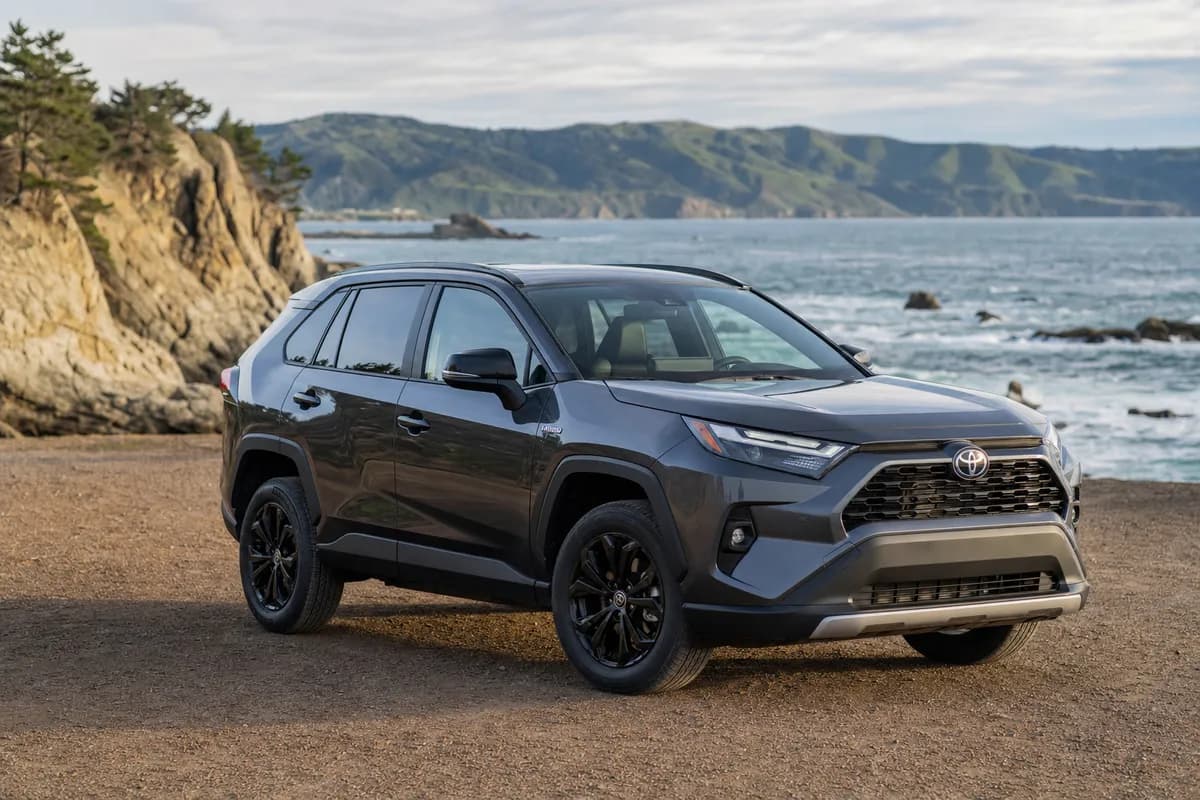
The 2027 Toyota RAV4 Hybrid is especially well positioned if Toyota maintains its usual formula: strong fuel economy, widely available trims, and a pricing strategy that keeps the hybrid version within reach of high-volume family buyers. Toyota has already benefited from years of hybrid credibility, and that advantage looks even stronger in a market that now rewards practicality over novelty.
The Honda CR-V Hybrid sits in much the same lane. It appeals to buyers who want a comfortable, space-efficient crossover with a powertrain that improves everyday efficiency without changing their routine. If EV demand remains uneven across regions, Honda's hybrid-heavy approach should continue to look well judged.
The Ford Escape faces a more complicated setup. Ford still has a role in the hybrid conversation, but the Escape has not held the same default position in the segment as the RAV4 and CR-V. For 2027, Ford's challenge is straightforward: make sure the Escape remains competitive on price, efficiency, and dealer availability while the market keeps favoring familiar two-row hybrid SUVs.
For shoppers cross-shopping these models, the practical advantages are easy to summarize:
- RAV4 Hybrid: likely strongest resale confidence and broadest shopper trust.
- CR-V Hybrid: strong balance of comfort, packaging, and easy daily use.
- Escape Hybrid: potential value play if Ford prices it aggressively.
Why the Hyundai Ioniq 5 and Tesla Model Y still matter
The hybrid surge does not mean EVs are fading from the shortlist. It means EVs now have to win on a more disciplined set of buying criteria, especially total cost, charging convenience, and real-world usability.
The Hyundai Ioniq 5 remains one of the strongest examples of what a modern EV can do right. Its packaging, charging capability, and crossover practicality continue to make it one of the more convincing alternatives for buyers who are truly ready to plug in at home and use DC fast charging when needed.
The Tesla Model Y is still central to the segment because it remains one of the few EVs with genuine mainstream scale in the U.S. market. A Tesla Model Y 2027 purchase decision will likely come down to three things: pricing, tax-credit eligibility or equivalent incentives, and whether buyers still see Tesla's charging ecosystem as enough of a convenience edge to outweigh growing competition.
Both the Model Y and Ioniq 5 benefit when shoppers have access to home charging. Without that, the ownership case gets much harder, even if the monthly payment looks competitive. That is one reason hybrids have widened their appeal in 2026.
For buyers comparing hybrid and EV options in late 2026 and early 2027, the decision often looks like this:
- Choose a hybrid if you drive long distances often, cannot easily charge at home, or want lower risk on resale and winter usability.
- Choose an EV if you have reliable home charging, mostly local driving, and access to pricing or lease deals that narrow the cost gap.
- Wait if you expect better incentives, improved charging access, or a new-generation model that fixes a current compromise.
Should I buy an EV or hybrid in 2026? The buyer verdict for 2027
The most useful answer to should I buy an EV or hybrid 2026 is no longer ideological. It is situational. The Q2 data suggests the market is rewarding buyers who match the powertrain to their real use case, not to the trend cycle.
If you want the least complicated path into electrified driving, a hybrid is the strongest default choice heading into 2027. That especially applies to high-volume compact SUVs like the RAV4 Hybrid and CR-V Hybrid, where fuel savings, usability, and resale confidence line up cleanly.
If you are deciding between waiting for a full EV or buying now, ask yourself three questions:
- Can you charge easily at home or at work?
- Will your daily driving let you avoid frequent public charging?
- Are current EV prices or lease offers strong enough to offset depreciation and infrastructure uncertainty?
If the answer to two or three of those is yes, vehicles like the Hyundai Ioniq 5 and Tesla Model Y still make sense. If not, the hybrid market is giving buyers a very attractive off-ramp from gasoline without the commitment of going fully electric.
The bigger takeaway from U.S. EV sales Q2 2026 is not that EVs failed to recover. They did recover, at least modestly. The more meaningful shift is that hybrids have become the center of gravity for mainstream electrification, and that will shape what sells best in 2027.
For most shoppers, that means the smartest move is not to wait for the market to settle. It is to buy the powertrain that fits your driveway, your commute, and your budget today.
Affiliate disclosure: This article contains affiliate links. RevvedUpCars may earn a small commission on qualifying purchases at no extra cost to you.