BYD reportedly outsold Toyota in Singapore in 2024, challenging longtime Japanese dominance. Can BYD electric vehicles reshape Asia’s mature EV markets?
Singapore’s car market is one of Asia’s hardest to crack. Yet BYD electric vehicles reportedly outsold Toyota there in 2024, marking a sharp shift in a market long defined by Japanese reliability, dealer strength and high ownership costs.
BYD Singapore sales move ahead of Toyota
Land Transport Authority registration data for 2024 showed BYD registering 6,191 passenger cars in Singapore, ahead of Toyota’s 5,736. That gave BYD roughly 14.4% of the new-car market, versus about 13.3% for Toyota.
The result matters because Toyota has been one of Singapore’s defining mainstream brands for decades. Its reputation for dependable, efficient cars has suited a market where a Certificate of Entitlement, or COE, can cost more than the vehicle itself.
BYD’s rise was not simply a narrow battery-electric win. It became the country’s best-selling passenger-car brand overall, ahead of manufacturers selling petrol, hybrid and electric vehicles.
| Brand |
Singapore registrations, 2024 |
Approximate market share |
Core Singapore proposition |
| BYD |
6,191 |
14.4% |
Broad battery-electric range, aggressive pricing and improving local retail reach |
| Toyota |
5,736 |
13.3% |
Established dealer network, strong resale confidence and hybrid-led efficiency |
| BMW |
5,042 |
11.7% |
Premium positioning, broad combustion and electric portfolio |
The figures reflect registrations, not necessarily retail orders placed during the same calendar year. They are still a useful measure in Singapore, where registrations are closely watched because vehicle supply is tightly controlled and ownership is unusually expensive.
Why the Singapore EV market has shifted so quickly
Electric cars accounted for 33.6% of new registrations in Singapore in 2024, according to government data. That was a major increase from 18.1% in 2023, showing that the market moved faster than many established Asian markets.
Government policy has created the conditions for that shift. Singapore aims to phase out new registrations of diesel cars and taxis from 2025, then new registrations of internal-combustion-engine cars from 2030. The national target is for all vehicles to run on cleaner energy by 2040.
Buyers can also access incentives through the EV Early Adoption Incentive and Vehicular Emissions Scheme, subject to prevailing caps and eligibility rules. Those schemes do not make EVs cheap, but they can narrow the transaction-price gap in a market distorted by COE premiums and taxes.
- Charging access is expanding: Singapore has a target of 60,000 charging points by 2030, including chargers in public car parks and private developments.
- Running costs are visible: Electricity can be cheaper than petrol per kilometre, particularly for high-mileage private-hire and fleet users.
- EV choice has widened: Buyers can now choose compact crossovers, sedans, MPVs and premium EVs rather than accepting a small number of early-market models.
- COE economics change the purchase decision: When the right to own a car is extremely costly, buyers may place greater value on newer technology and lower operating costs over a 10-year ownership cycle.
Singapore is therefore not a conventional volume market. Its annual sales are limited by COE quotas, but it is a high-value, highly visible test bed for manufacturers that want to prove they can compete beyond China.
How BYD electric vehicles found an opening
BYD’s advantage is scale. The company makes batteries, electric motors, power electronics and many other major components in-house, giving it greater control over cost than automakers that buy more of those parts from suppliers.
Its Blade Battery, based on lithium iron phosphate chemistry, has become a central part of its sales pitch. LFP batteries generally offer lower material costs and strong cycle life, though they can have lower energy density than some nickel-rich alternatives.
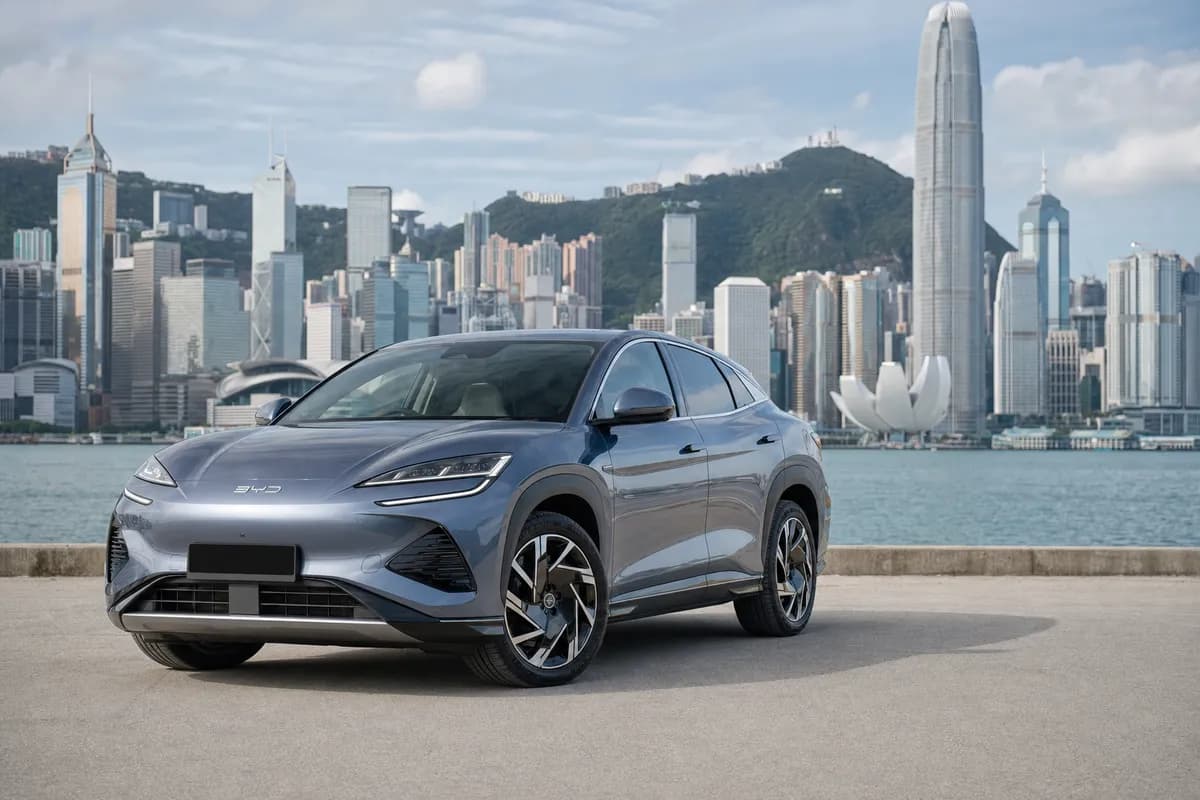
In Singapore, BYD has built a range around models that address the market’s most popular body styles. The Atto 3 compact SUV has been a key volume vehicle, while the Dolphin hatchback, Seal sedan and M6 electric MPV have given the brand more price points and use cases.
That breadth is crucial. An EV maker cannot permanently displace an incumbent by selling one fashionable crossover; it needs cars for households, private-hire drivers, fleet operators and buyers moving up from mainstream Japanese models.
BYD has also benefited from timing. Toyota’s global electrification strategy has emphasized hybrids, plug-in hybrids and hydrogen alongside battery-electric vehicles. That approach suits many markets, but it leaves Toyota with fewer mainstream EV choices where demand has rapidly swung toward full electric cars.
BYD’s Singapore result is less about one model defeating Toyota and more about a full EV portfolio arriving just as policy, charging and buyer demand began to align.
Toyota is not absent from electrification. Its hybrid lineup remains highly relevant, including models such as the Corolla Cross Hybrid and Yaris Cross Hybrid in many Asian markets. But hybrids do not qualify for the same zero-tailpipe-emission status as battery EVs, and Singapore’s policy direction increasingly favors the latter.
Can BYD repeat this across Asia’s mature markets?
Singapore offers a meaningful signal, but it is not a simple template for the wider Asia EV market. The city-state has dense urban driving patterns, high fuel and ownership costs, relatively short travel distances and strong state influence over transport policy.
Japan, South Korea, Taiwan and Hong Kong each present different barriers. Japan has a deeply entrenched domestic industry and a large hybrid base. South Korea is dominated by Hyundai and Kia. Taiwan’s charging and import conditions differ, while Hong Kong has its own tax-driven market structure.
| Market factor |
Singapore |
Japan |
South Korea |
| Market structure |
COE-limited, high-cost urban market |
Large domestic market with strong local brands |
Large domestic market led by Hyundai and Kia |
| EV adoption driver |
Incentives, policy targets and urban suitability |
Gradual transition from hybrids and kei cars |
Domestic EV manufacturing and charging investment |
| Key challenge for Chinese EV brands |
Maintaining resale value and service confidence |
Brand loyalty, dealer networks and local standards |
Competing with established domestic EV leaders |
Chinese brands also face questions that do not disappear with a strong sales year. Buyers in mature markets will judge long-term durability, software support, parts supply, crash performance, battery warranties and resale values over many years, not just the initial purchase price.
Trade policy is another risk. The European Union has imposed additional tariffs on Chinese-built EVs, while other governments are examining how to support domestic manufacturing and reduce supply-chain dependence. Asia has not developed one unified response, but market access cannot be assumed.
Still, BYD has a stronger international case than many newer EV entrants. It sells at scale, has a deep manufacturing base, produces its own batteries and is expanding production outside China, including in Thailand, Brazil and Hungary. Local assembly can eventually reduce tariff exposure and help brands adapt cars to regional needs.
Verdict: a real disruption, not yet a permanent handover
BYD taking the lead over Toyota in Singapore is a genuine milestone. It proves an EV-first Chinese manufacturer can beat a Japanese incumbent in a wealthy, demanding Asian market without relying solely on a luxury badge or a niche product.
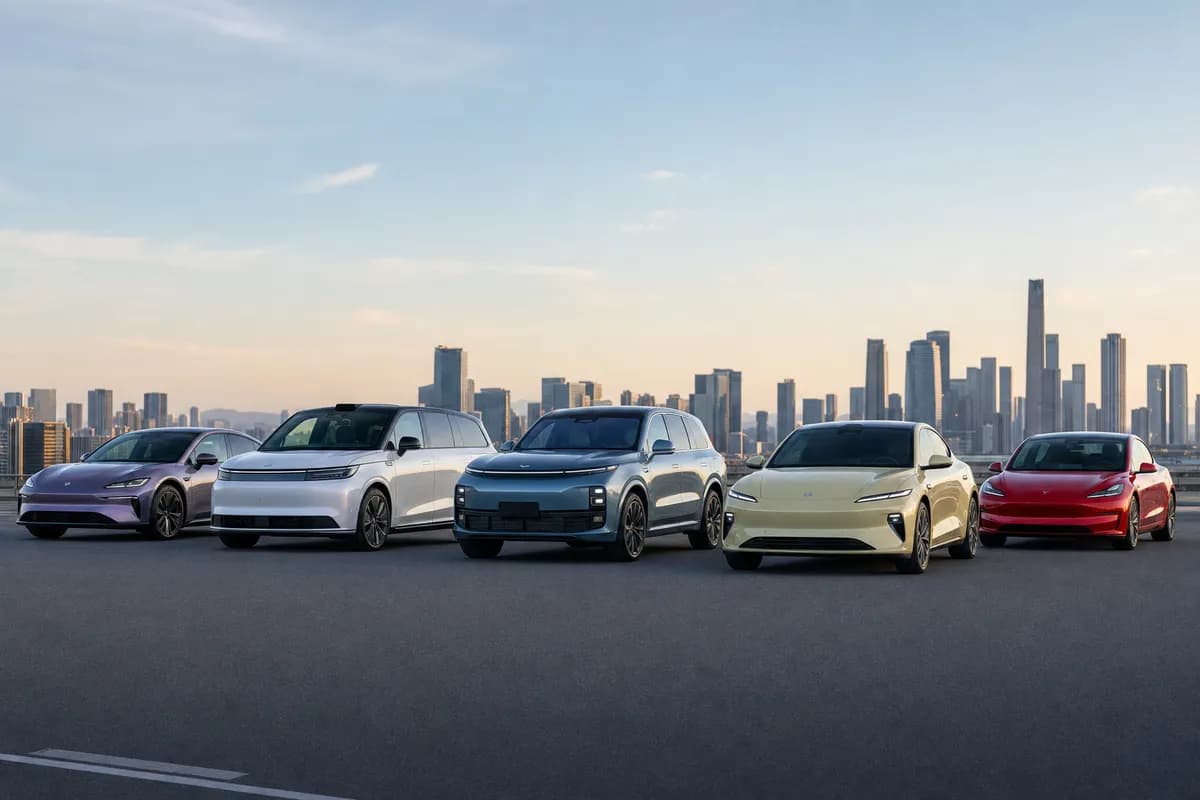
But Singapore is a small and unusual market. BYD must sustain its lead through changing COE prices, tougher competition from Tesla, European brands and other Chinese manufacturers, and the far harder task of building lasting confidence in servicing and resale value.
The larger lesson is clear: established Asian markets are no longer protected by legacy alone. If EV demand accelerates and local policies reward zero-emission vehicles, Toyota’s hybrid strength may not be enough to hold off companies that can offer compelling battery-electric cars at competitive prices.
Frequently Asked Questions
Did BYD really outsell Toyota in Singapore?
Yes. BYD registered 6,191 cars in Singapore during 2024, compared with Toyota’s 5,736, based on Land Transport Authority registration data reported locally. The result placed BYD first among passenger-car brands for the year.
What is the best-selling BYD electric car in Singapore?
The BYD Atto 3 compact electric SUV has been one of the brand’s most important volume models in Singapore. Its combination of crossover practicality, battery-electric range and mainstream pricing helped establish BYD before the company expanded with the Dolphin, Seal and M6.
Why are EVs becoming popular in Singapore?
Government incentives, a growing charging network and the country’s 2030 end date for new internal-combustion car registrations are accelerating EV interest. Singapore’s short daily driving distances and high petrol costs also make battery-electric ownership more practical for many drivers.
Can BYD beat Toyota across Asia?
BYD can challenge Toyota in selected EV-led markets, but repeating Singapore’s result across Asia will be difficult. Toyota retains major advantages in brand trust, hybrid technology, dealer coverage and long-term resale confidence, especially in Japan and Southeast Asia.
Get the latest car reviews in your inbox
Join thousands of car enthusiasts. No spam, unsubscribe any time.



Comments
Leave a comment