Learn how to spot dealership pricing tricks and avoid dealer markups with expert car buying tips for 2026. Save money on your next vehicle purchase!
You found the perfect SUV, shook hands on the price, and then the finance office slid a new sheet across the desk with an extra $3,995 in “market adjustments.” That sinking feeling? Yeah, that’s dealership pricing tricks in action.
I’ve watched customers come into my old shop furious after signing deals they didn’t fully understand. In 2026, with average car payments pushing $800 a month, one sneaky add-on can cost you thousands over the life of a loan. The good news? Once you know what to look for, you can shut it down fast.
In this guide, I’ll break down the most common dealership pricing tricks, how the FTC auto warning rules play into this, and the smartest car buying tips 2026 shoppers should use to avoid dealer markups. No finance degree required — just common sense and a backbone.
What You'll Need
- Tools: Smartphone calculator, notebook, copy of your pre-approval, online pricing printouts (KBB, Edmunds, dealer ads)
- Parts/Materials: Pre-approved auto loan (credit union preferred), written out-the-door quote
- Time: 2–4 hours at dealership; several days of prep research
- Difficulty: 🔧🔧 (Mostly mental toughness)
- Dealer Cost: Hidden add-ons $1,500–$5,000 vs DIY Prep Cost: $0–$25 — You Save: $1,500+
Why Dealership Pricing Tricks Matter
Ignore dealership pricing tricks, and you can overpay by $2,000 to $10,000 — no exaggeration. I’ve reviewed contracts where a $32,000 truck quietly turned into $39,500 after fees, paint protection, nitrogen tires, and extended warranties got baked in.
Worse, you’re paying interest on those extras for 60 to 84 months. That $2,000 add-on can become $2,600+ with financing. It’s like putting a $5 air freshener on your credit card and paying for it until 2033.
The Federal Trade Commission rolled out stronger guidance on deceptive pricing (what many call the FTC auto warning crackdown) aimed at stopping bait-and-switch ads and fake mandatory add-ons. You can read more directly from the Federal Trade Commission. But rules don’t stop every shady practice — informed buyers do.
And with rising vehicle prices — just look at what’s happening across segments like in this Volkswagen 2026 models breakdown — dealers know demand is still strong. That’s when markups creep in.
Before You Start
⚠️ WARNING: Never sign anything labeled “worksheet” or “buyer’s order” unless the full out-the-door price is clearly listed. Verbal promises mean nothing once ink hits paper.
Get pre-approved through a credit union before you step on the lot. Dealer financing can be competitive — but I’ve seen them mark up loan rates by 1–2%. On a $35,000 loan, that’s $1,200–$2,000 in extra interest.
Bring printed screenshots of advertised pricing. If the ad says $29,995, that number should be honored — minus legitimate tax, title, and registration.
If you’re trading in a vehicle, read our Trade In Car Tips 2026 guide first. Dealers love to inflate the new car price while over-allowing on trade to make you feel like you “won.” It’s shell game math.
And if the car has an open recall, check it yourself at NHTSA.gov. Don’t rely on a salesperson’s word.
Step-by-Step Guide
-
Demand the Out-the-Door (OTD) Price
Ask: “What’s the total out-the-door price including all fees?” Not monthly payment. Not down payment. Total. If they dodge, that’s your first red flag.
-
Break Down Every Line Item
Look for items like:
- Market Adjustment ($2,000–$10,000)
- Dealer Prep ($495–$1,295)
- VIN Etching ($199–$499)
- Paint Protection ($895–$1,995)
- Nitrogen Tires ($149–$399)
Pro Tip: Nitrogen is 78% of the air you’re already breathing. I’ve filled thousands of tires with plain shop air. They’re fine.
-
Challenge “Mandatory” Add-Ons
Say clearly: “I’m not paying for this. Remove it.” Many add-ons are pure profit. I’ve seen $50 worth of door edge guards sold for $699.
-
Separate Negotiations
Negotiate vehicle price first. Then trade-in. Then financing. When bundled, it’s easy for dealership pricing tricks to hide inside payment math.
-
Watch the Finance Office Shuffle
This is where extended warranties, GAP, wheel protection, and service plans appear. Some are useful — most are overpriced.
Example: Extended warranty offered at $3,200. Dealer cost? Often under $1,500. You can negotiate these just like the car.
-
Compare Against Market Reality
Research models like the 2026 Toyota C-HR or 2026 Ford Electric Truck before shopping. If a hot model has supply shortages, some markup may be market-driven — but it should be disclosed upfront, not buried.
-
Be Ready to Walk
The strongest move in your toolbox isn’t a wrench — it’s your car keys. Stand up, thank them, and leave. I’ve had readers call me saying the dealer phoned them back within 24 hours dropping $1,500 off.
Common Mistakes to Avoid
1. Shopping by Monthly Payment
I’ve seen this in the shop a hundred times. A buyer celebrates a $550 payment but doesn’t realize it’s stretched over 84 months. That’s how $30,000 cars become $42,000 obligations.
2. Skipping the Contract Review
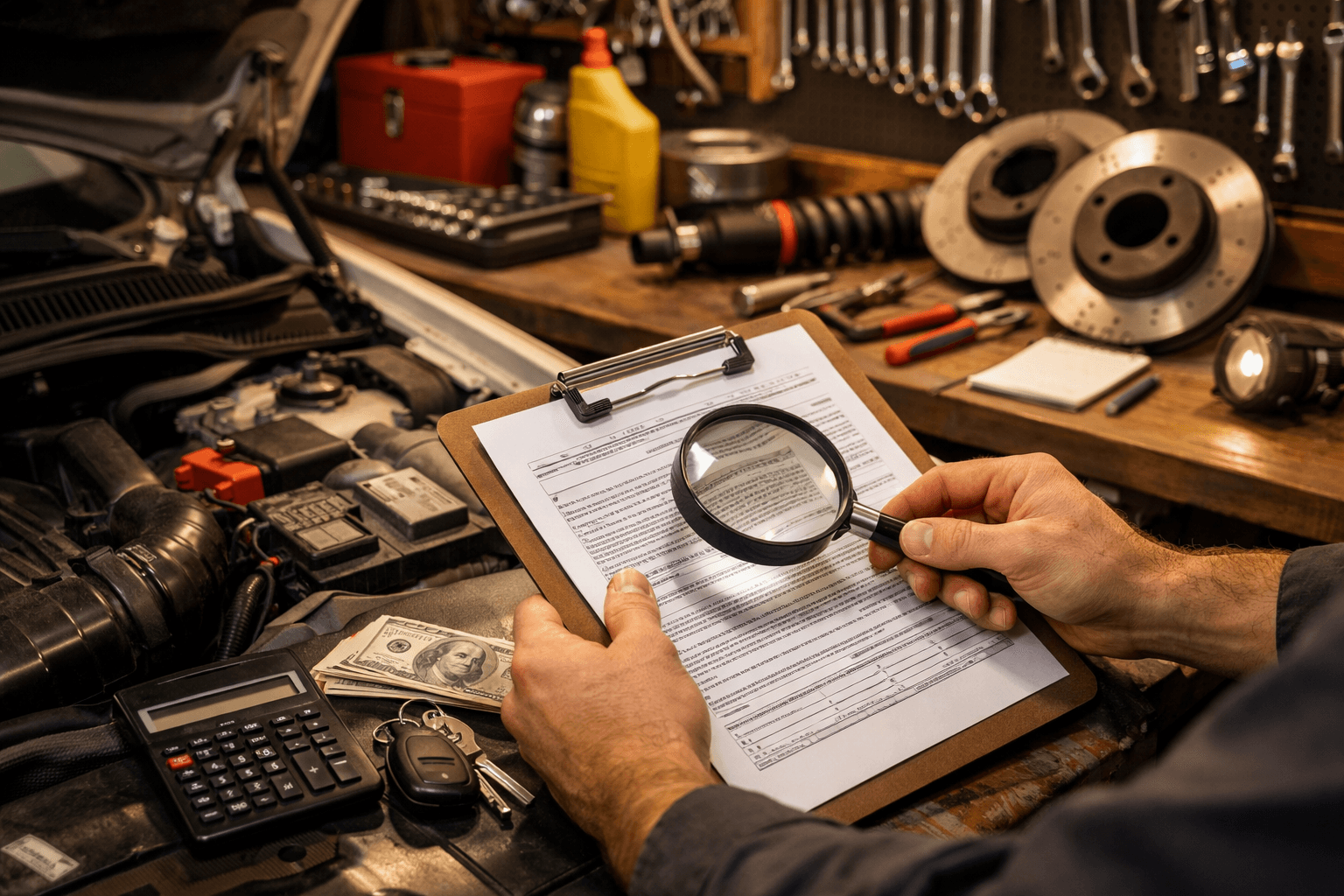
If you don’t read every line, you’ll miss prepaid maintenance or protection packages added without clear discussion.
3. Assuming Add-Ons Are Required
Unless it’s tax, title, or state registration, it’s usually negotiable. Period.
4. Letting Urgency Win
“This deal is only good today.” That’s sales pressure. Cars aren’t rare sneakers. There’s always another one.
5. Ignoring FTC Auto Warning Protections
The FTC auto warning rules are designed to reduce bait-and-switch pricing. If the advertised price suddenly changes without explanation, document it. Screenshot everything.
When to Call a Professional
If the paperwork feels overwhelming, consider hiring a car-buying service or broker. Typical cost: $300–$600 flat fee. That can save you $2,000 or more in avoided dealer markups.
If you suspect deceptive practices, file a complaint with the FTC or your state attorney general. Dealers take that seriously.
Fair documentation fee? Usually $100–$500 depending on state law. Anything pushing $800–$1,000 deserves scrutiny.
Red flags at a dealership:
- Refusing to provide written OTD pricing
- Changing numbers after you agree
- Pressure to finance through them only
- “Mandatory” protection packages
If you're financing, compare loan terms using calculators from trusted sources like Consumer Reports.
Recommended Products
1. Credit Union Pre-Approval (What I Use)
My local credit union regularly beats dealer rates by 1%. On $30,000, that’s $900–$1,500 saved.
2. OBD2 Scanner (Budget: $40–$120)
Before buying used, scan it yourself. I like the BlueDriver Bluetooth scanner. Cheap insurance.
3. Vehicle History Report ($25–$40)
Carfax or AutoCheck. One flood car avoided pays for it ten times over.
4. Pre-Purchase Inspection ($100–$200)
Have an independent shop look it over. In 20 years of wrenching, I’ve caught hidden accident damage dealers “forgot” to mention.
Mike's Quick Reference
Do This
- Demand out-the-door pricing in writing
- Get pre-approved financing first
- Screenshot advertised prices
- Walk away if numbers change
Don't Do This
- Negotiate based on monthly payment
- Assume add-ons are mandatory
- Skip reading the full contract
- Let pressure rush your decision
DIY Difficulty: 🔧 2/5
Money Saved: $1,500–$5,000 per purchase
Dealership pricing tricks only work when buyers feel rushed or uninformed. Slow it down, control the numbers, and remember — you’re the one bringing the money to the table.
Use these car buying tips 2026 shoppers need, lean on the FTC auto warning protections when necessary, and don’t be afraid to walk. That’s how you avoid dealer markups and keep thousands in your own pocket.
You’ve got this. And if a finance manager tries to sell you $399 nitrogen air again, just smile and think of me shaking my head in the garage. Leave your questions below — I read every one.
Stay sharp out there, and remember — a $20 repair manual saves a $2,000 repair bill.
Disclosure:Learn moreGet the latest car reviews in your inbox
Join thousands of car enthusiasts. No spam, unsubscribe any time.





Comments
Leave a comment