Sarah Greenfield examines if global conflict will stall US auto sales 2026. A concise, data-driven market analysis and urgent forecast—read now!
In this article
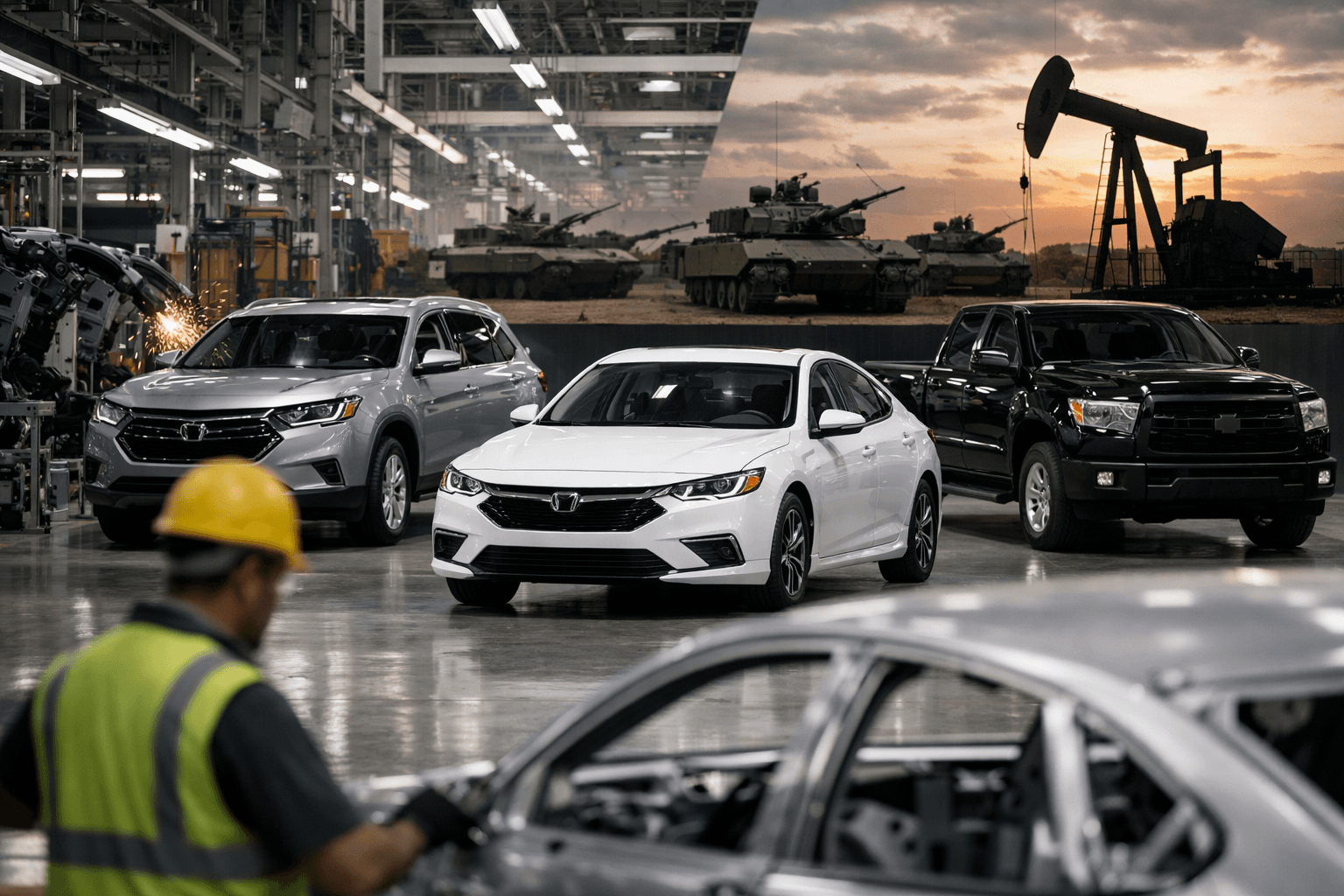
U.S. auto sales are on pace for a modest rebound in 2026 — but escalating geopolitical tensions are raising fresh questions about whether that recovery will hold. Analysts are now debating how US auto sales 2026 will respond if global conflicts disrupt oil markets, supply chains, or consumer confidence the way they have in past crises.
As of March 2026, forecasters including Cox Automotive and S&P Global Mobility estimate annual sales could reach 16.2 to 16.5 million units, up from roughly 15.6 million in 2025. However, renewed instability in the Middle East and persistent trade frictions between the U.S. and China have injected volatility into energy prices and manufacturing inputs. The key question: does war still stall car buying in America — or has the industry become more resilient?
History suggests the answer is nuanced. Having covered three product cycles and one pandemic shutdown, I can tell you this industry absorbs shocks better than it used to — but only up to a point.
The Headlines
What: Analysts assess how global conflicts could affect U.S. vehicle demand in 2026
Who: U.S. automakers, global suppliers, oil markets, policymakers
Impact: Higher fuel prices and supply disruptions could dampen consumer demand
Key Number: 16.5 million — projected 2026 U.S. light-vehicle sales (estimated)
What Happened
Oil prices climbed above $95 per barrel in early March following expanded conflict in the Middle East, according to Reuters. Meanwhile, shipping insurance rates in key trade corridors have increased, raising logistics costs for automakers that rely on global supply chains.
Although no major U.S. assembly plants have shut down, several suppliers have warned of longer lead times for semiconductors and wiring harnesses. Automakers including Ford, GM, and Toyota have not revised official 2026 production guidance as of this week. However, executives acknowledged “elevated volatility” during recent investor calls.
“We’ve built more regional redundancy into our supply chain since 2020,” a Ford executive said during a March investor update, according to company filings. “But we are monitoring commodity exposure closely.”
At the same time, consumer sentiment dipped in February, per University of Michigan data, with respondents citing fuel prices and geopolitical uncertainty. That matters because vehicle purchases are highly confidence-sensitive — second only to housing in average transaction value.
Why It Matters
The modern U.S. auto market is less vulnerable to sudden collapse than it was during the 1973 oil embargo or even the 2008 financial crisis. However, it is more exposed to global supply networks and commodity pricing. Therefore, the risk isn’t necessarily an immediate sales crash — it’s margin compression and affordability strain.
Average transaction prices remain above $47,000, according to Cox Automotive estimates. Meanwhile, financing costs are elevated, and as we’ve reported in Why $800 Car Payment Is the New Normal, monthly payments have climbed into historically high territory. Add a spike in gasoline toward $4.50 per gallon, and consumers may delay purchases or shift toward hybrids and compact SUVs.
Advertisement
Additionally, EV adoption complicates the picture. Higher oil prices typically boost EV demand. Yet battery materials like lithium and nickel are globally traded commodities vulnerable to geopolitical disruption. In other words, war can both help and hurt electrification momentum.
The Bigger Picture
To understand US auto sales 2026, we need historical perspective. During the Gulf War in 1991, U.S. light-vehicle sales dipped roughly 7%. After 9/11, sales initially fell but rebounded sharply due to zero-percent financing incentives. In 2008, the issue wasn’t war — it was financial system collapse — and sales plunged below 11 million units.
However, today’s industry is structurally different. Automakers carry leaner inventories thanks to lessons from the pandemic semiconductor shortage. Moreover, they prioritize higher-margin trucks and SUVs, which accounted for nearly 80% of U.S. sales in 2025, according to EPA and manufacturer data.
Trade policy also plays a role. Ongoing U.S.–China tensions, highlighted in disputes like the BYD Formula 1 bid and broader trade clash, could influence tariffs on EVs and components. Furthermore, the Biden administration’s domestic manufacturing incentives under the Inflation Reduction Act continue shaping sourcing decisions, according to the U.S. Department of Energy.
The non-obvious insight: short-term conflict often accelerates long-term structural shifts. The 1970s oil shocks birthed fuel economy standards. The pandemic accelerated EV and software-defined vehicle investment. If instability persists, expect even more regionalized production and battery localization.
What the Competition Is Doing
Ford is leaning into hybrid trucks like the F-150 PowerBoost, betting consumers want fuel flexibility without full EV commitment. GM, by contrast, continues pushing Ultium-based EV rollouts while trimming sedan exposure. Toyota maintains its hybrid-heavy portfolio, positioning itself defensively against fuel volatility.
Meanwhile, Volkswagen’s strategy — detailed in our analysis of Volkswagen’s 2026 EV push — reflects Europe’s more aggressive electrification mandates. In contrast, Tesla remains uniquely insulated from gasoline price swings but vulnerable to battery material costs and global shipping routes.
Additionally, Chinese automakers like BYD face tariff barriers in the U.S., limiting their direct impact here. However, price competition abroad can squeeze margins for global players such as Hyundai and Stellantis, indirectly influencing U.S. investment decisions.
Who wins in a conflict-driven slowdown? Historically, companies with strong balance sheets and flexible manufacturing — think Toyota and BMW — outperform. Highly leveraged startups or niche EV brands tend to struggle.
What It Means for You
If you’re shopping in 2026, the biggest variable isn’t vehicle availability — it’s affordability. Rising fuel prices may increase demand for hybrids, tightening inventory in that segment. Therefore, buyers considering electrified models should compare incentives carefully and review guidance like our EV vs Hybrid 2026 guide.
Additionally, don’t expect automakers to flood the market with discounts unless sales materially weaken. Inventory levels have normalized but remain disciplined compared to pre-2020 oversupply. That means fewer fire-sale incentives unless consumer confidence drops sharply.
However, if oil retreats and tensions stabilize by mid-year, pent-up demand could keep US auto sales 2026 near forecast levels. In that scenario, waiting may not yield dramatically lower prices.
What to Watch Next
First, monitor oil prices and Federal Reserve interest rate policy. Sustained crude above $100 per barrel would meaningfully shift consumer behavior. Second, track automaker earnings calls in April and July for production guidance revisions.
Moreover, keep an eye on supplier health and shipping data. Disruptions often show up in parts shortages before they hit dealership lots. Finally, watch monthly SAAR (seasonally adjusted annual rate) reports; a sustained drop below 15.5 million would signal real demand erosion.
The Upside
Higher fuel prices could accelerate hybrid and EV adoption
Stronger domestic production investment under IRA policies
Automakers now carry leaner, more resilient inventories
Consumer demand remains supported by steady employment levels
The Concerns
Oil spikes could dent SUV and truck demand
Commodity inflation may raise vehicle prices further
Consumer confidence is highly sensitive to geopolitical shocks
Global supply chains remain exposed to shipping disruptions
Sarah's Industry Impact Rating: 6.5/10
This matters because: sustained geopolitical instability could reshape pricing, powertrain demand, and production strategies over the next two years.
The trajectory of US auto sales 2026 will depend less on headlines and more on duration. Short conflicts create volatility; prolonged instability changes buying behavior. Automakers are better prepared than they were a decade ago — but they can’t fully insulate buyers from fuel and financing pressures.
My view: expect turbulence, not collapse. If history is a guide, Americans may delay purchases for a quarter or two — then adapt. The industry’s resilience will be tested again, but it’s unlikely to break unless energy or credit markets seize up. That’s the line to watch.
Disclosure: This article may contain affiliate links. If you make a purchase through these links, we may earn a small commission at no extra cost to you. This helps support RevvedUpCars.com. Learn more.
Affiliate disclosure: some links on this page earn us a commission at no extra cost to you.
Mike Wrenchworth is the guy you call when something breaks, rattles, or makes a noise it shouldn’t. With 20 years as an ASE-certified master technician and a decade running his own independent shop in Austin, Texas, Mike has seen every automotive disaster imaginable—and fixed most of them. Now he shares his hard-won wisdom with RevvedUpCars readers, covering everything from basic maintenance to weekend restoration projects. Mike believes in doing it right the first time, buying quality tools, and never skipping the torque wrench. His garage currently houses a work-in-progress 1969 Camaro, a bulletproof Toyota Land Cruiser, and whatever his wife is driving this week. Mike’s philosophy: every car can be a great car with proper maintenance and a little mechanical sympathy.
Get the latest car reviews in your inbox
Join thousands of car enthusiasts. No spam, unsubscribe any time.



Comments
Leave a comment