Hyundai’s new three-row EV goes head-to-head with the Kia EV9 and Volvo EX90—can the Ioniq 9 win on space, range, and comfort?
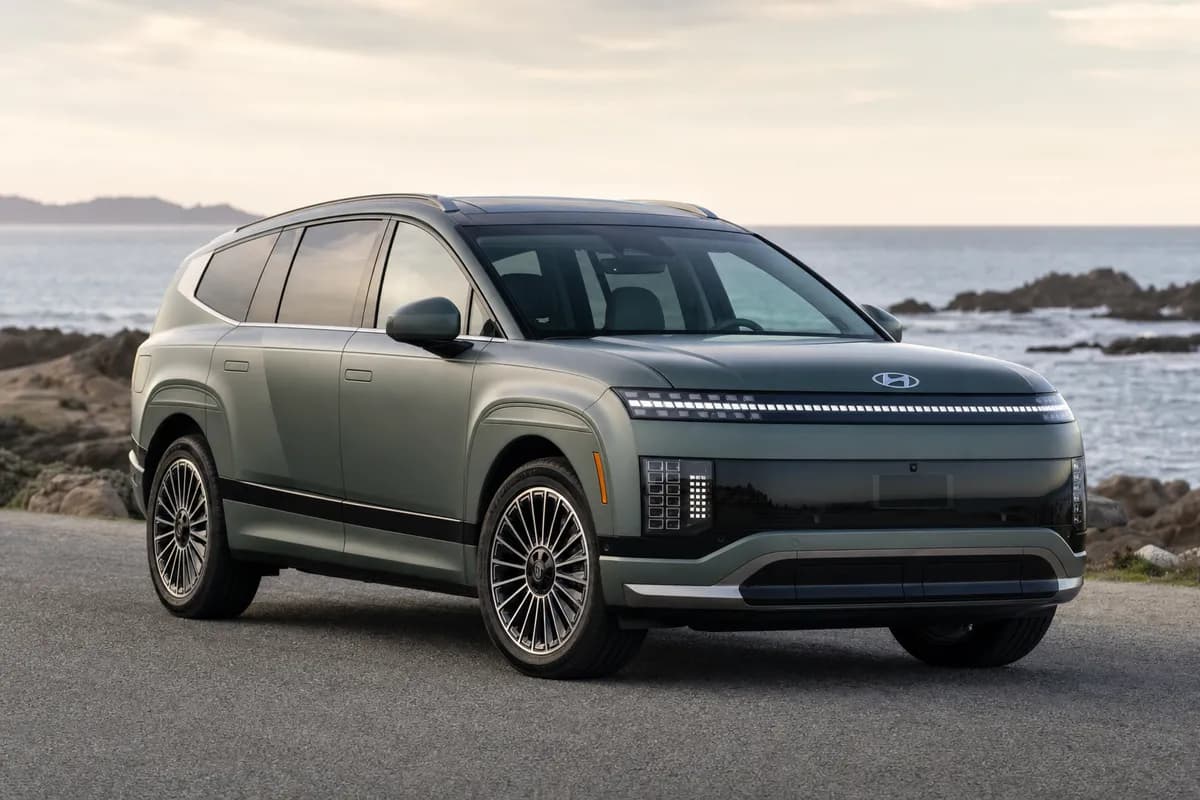
Big three-row EVs are getting serious. The 2026 Hyundai Ioniq 9 is Hyundai’s boldest family hauler yet, and it arrives aimed straight at the Kia EV9 and the pricier Volvo EX90. After the first drive, the verdict is already taking shape: this is not just an EV9 with a different badge.
A bigger, sleeker flagship with the right priorities
The 2026 Hyundai Ioniq 9 review starts with a simple fact: Hyundai knows exactly what this SUV needs to do. It must carry six or seven people, deliver real highway range, charge quickly, and avoid feeling like a bus. On first impression, the Ioniq 9 gets most of that right.
It rides on Hyundai Motor Group’s familiar E-GMP architecture, the same 800-volt bones that underpin the Kia EV9, but the execution is different. The Ioniq 9 leans harder into aerodynamic efficiency and lounge-like comfort, with a softer shape, cleaner airflow, and a less blocky silhouette than the EV9. Hyundai says that matters, and on paper it does.
U.S.-spec figures point to a 110.3-kWh battery and a lineup that includes rear-wheel-drive and dual-motor all-wheel-drive versions. Output ranges up to roughly 422 horsepower in Performance AWD trim, with Hyundai quoting 0-60 mph in about 4.9 seconds for the quickest model. That is properly quick for something this large, even if nobody is cross-shopping a three-row EV for drag-strip heroics.
The more relevant number is range. Hyundai’s early estimate lands at up to 335 miles for the most efficient version, which immediately puts it in the fight. The Kia EV9 tops out at around 304 miles in U.S. spec, while the Volvo EX90 is rated at about 310 miles depending on trim.
Range and charging: Hyundai may have found the sweet spot
This is where the Ioniq 9 makes its strongest case. In a three-row electric SUV comparison, range matters more than bragging rights, because these vehicles are family road-trip machines. Every extra mile reduces charging stress when you are carrying kids, bags, and everyone’s bad mood.
If Hyundai’s estimated 335-mile figure holds up in the real world, the Ioniq 9 will have a meaningful advantage over the EV9 and a useful edge over the EX90. That does not make it a miracle machine. Large EVs still burn through energy at interstate speeds, and adding passengers plus cargo never helps. But Hyundai appears to have done the sensible engineering work rather than chasing gimmicks.
Charging should also be a genuine strength. Like other E-GMP models, the Ioniq 9 supports 350-kW DC fast charging, with Hyundai quoting a 10-to-80 percent time of around 24 minutes under ideal conditions. That is excellent for this class and remains one of the group’s biggest advantages over many rivals.
- 2026 Hyundai Ioniq 9: up to 335 miles estimated, 110.3-kWh battery, 800-volt fast charging
- 2025 Kia EV9: up to 304 miles EPA, 800-volt fast charging, boxier shape hurts efficiency
- 2025 Volvo EX90: around 300-310 miles EPA depending on trim, premium cabin, slower charging curve in practice than Hyundai/Kia’s best efforts
The EV9 is still a road-trip champ because it charges so quickly, but the Ioniq 9 may be the better long-distance tool if its extra range survives contact with reality. The EX90 looks upscale and sophisticated, but as a Volvo EX90 competitor, the Hyundai counters with more practical charging hardware and less premium-brand tax.
Family space: less style compromise than you might expect
The danger with sleek electric SUVs is obvious. They promise aero gains, then punish third-row passengers with a roofline better suited to fashion than human anatomy. The Ioniq 9 mostly avoids that trap.
First-drive impressions suggest Hyundai has packaged this cabin intelligently. It offers three rows with available six- or seven-seat layouts, a flat floor, and generous second-row space. The third row looks usable for actual adults on shorter trips, which is more than can be said for plenty of so-called seven-seat SUVs.
Hyundai also sweats the details that matter when this thing becomes a family appliance. Storage is abundant, the center console layout is practical, and the cabin has the airy, open design you want in a large EV. It feels less aggressively styled than the EV9 inside, but also less likely to annoy you after six hours on the highway.
Against the Kia EV9, the Ioniq 9 trades some visual drama for a calmer, more premium-adjacent atmosphere. Against the Volvo EX90, it likely gives up some material richness and badge cachet, but it claws back points with smarter packaging and what should be a far friendlier price. That matters, because families do not strap children into a logo.
- Ioniq 9 advantage: roomy cabin, promising third-row usability, practical storage
- EV9 advantage: bolder design, proven packaging, excellent family-friendly layout
- EX90 advantage: richer luxury feel, Scandinavian minimalism, stronger brand prestige
On the road: comfort first, but not a complete snooze
The early Hyundai Ioniq 9 first drive reports point to a vehicle tuned for serenity, not sport. Good. A three-row electric SUV weighing well over 5,000 pounds should not pretend to be a hot hatch. Hyundai appears to understand that better than some rivals who confuse stiffness with sophistication.
Ride quality is a highlight. The Ioniq 9 feels composed, quiet, and deliberately cushioned, the sort of SUV that shrugs off broken pavement without jiggling everyone in the back. Wind noise also seems well managed, and that matters in an EV, where the absence of engine sound exposes every cheap acoustic shortcut.
Steering is predictable and light, and body control is tidy enough for a big family hauler. No, it is not especially playful, and yes, the EV9 GT-Line arguably feels a bit more eager in the first few corners. But Hyundai has made the more mature choice here. On a 400-mile day, nobody will wish the suspension were harsher.
Performance is more than adequate. The dual-motor versions have the instant shove buyers expect, and the top trims are fast enough to merge, pass, and embarrass unsuspecting minivans with zero drama. Still, the real selling point is refinement. The Ioniq 9 sounds like the one you would choose for a long interstate run, not a showroom test loop.
Ioniq 9 vs Kia EV9 vs Volvo EX90: which one actually makes sense?
This is the heart of the matter. The Ioniq 9 vs Kia EV9 debate will be unavoidable because the two share so much underneath. But they do not feel aimed at the exact same buyer.
The EV9 is the extrovert. It is boxier, cooler-looking to some eyes, and already proven as one of the best family EVs on sale. If you love its styling and can live with a bit less range, it remains a superb pick.
The Ioniq 9 is the calmer, arguably smarter sibling. It appears to offer better aero, more range, a softer ride, and a more soothing long-distance character. For many families, those are the right priorities.
The Volvo EX90 plays a different game. It is more overtly premium, more expensive, and more dependent on buyers valuing the badge and cabin ambiance enough to overlook Hyundai’s likely advantage in price-per-mile and charging performance. The EX90 is handsome and upscale, but the Ioniq 9 may be the rational buyer’s answer to it.
If the EV9 is the stylish disruptor and the EX90 is the Scandinavian luxury statement, the Ioniq 9 is shaping up as the one that quietly nails the brief.
Verdict: Hyundai may have built the best all-round three-row EV
Based on these first-drive impressions, the 2026 Ioniq 9 looks like Hyundai at its most disciplined. It does not chase the EV9’s visual swagger or the EX90’s luxury-brand mystique. Instead, it attacks the fundamentals: range, charging, space, comfort, and everyday usability.
That is the right strategy. In this corner of the market, buyers do not need theater. They need a big EV that can haul a family, cover real miles, and leave everyone less exhausted at the end of the day.
So, can it beat the Kia EV9 and Volvo EX90 on range, family space, and road-trip comfort? On early evidence, yes—or at least it has the clearest path to doing so. If final pricing stays sensible and the real-world efficiency backs up Hyundai’s claims, the Ioniq 9 will not just be a credible new entry. It may become the three-row EV to beat.
Get the latest car reviews in your inbox
Join thousands of car enthusiasts. No spam, unsubscribe any time.



Comments
Leave a comment