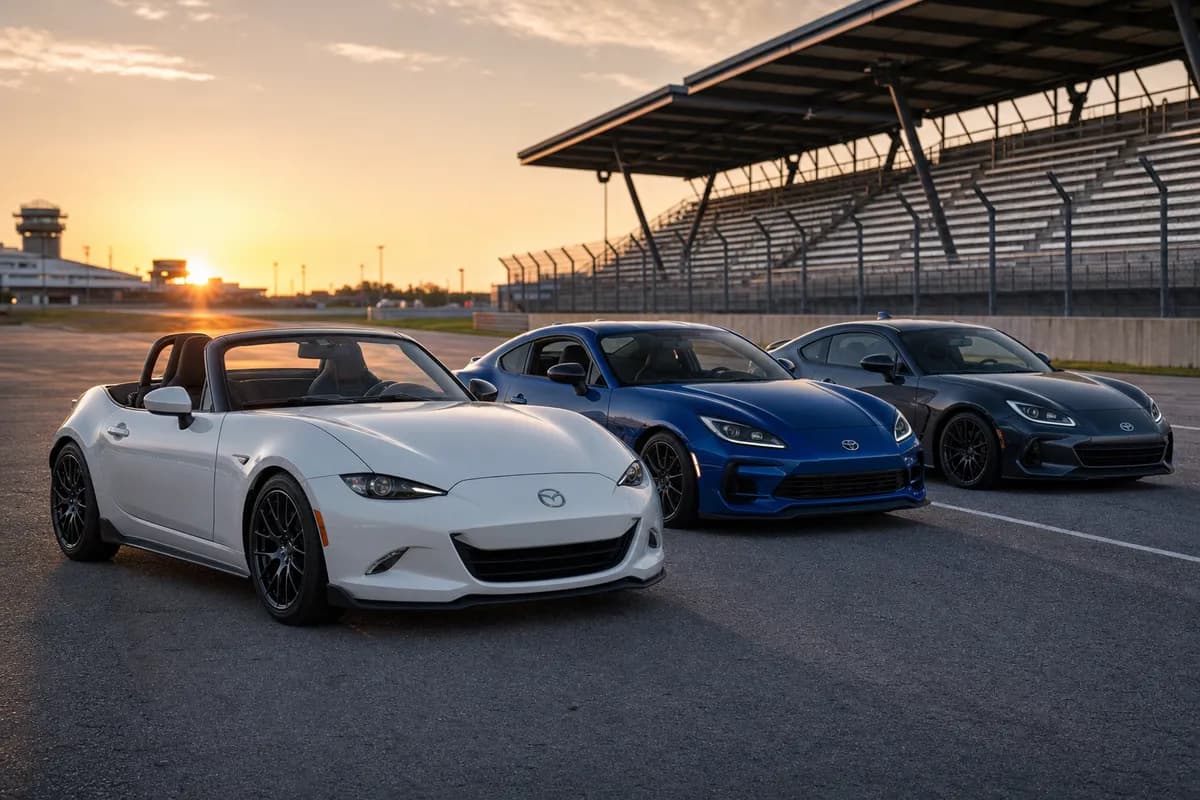
In 2026 and 2027, Miata ND3, GR86, and BRZ owners are upgrading with smart DIY choices, safer roll-bars, and street-legal track-ready parts.
Something interesting is happening in paddocks and garage bays this year. The newest lightweight rear-drive crowd is getting faster, smarter, and more restrained at the same time.
Instead of chasing giant wings, crackle tunes, and social-media noise, owners of the 2026 Mazda Miata ND3, 2026 Toyota GR86, and 2026 Subaru BRZ are building better track-day cars the old-fashioned way. They are starting with brake fluid, alignment, tires, safety, and clean, street-legal car modifications that actually improve lap consistency.
The New Lightweight RWD Community Has a Different Priorities List
The modern affordable track car setup has shifted away from “mods first, maintenance later.” That is good news, because the ND3 Miata, GR86, and BRZ all respond best when the basics are sorted before power adders ever enter the chat.
These cars also hit a sweet spot in 2026. They are light by modern standards, rear-drive, available with manual transmissions, and still simple enough for a motivated owner to service at home. That combination is fueling a broader lightweight RWD community built around local autocross, HPDE events, canyon runs, and daily-driven reliability.
On paper, they are closer than many buyers realize. A soft-top ND3 Miata Club still lives around the 2,400-pound mark, while a GR86 or BRZ typically lands just under or around 2,900 pounds depending on trim and transmission. The Toyota and Subaru twins make more torque and offer extra cabin and cargo room, but the Mazda counters with lower mass, lower consumable costs, and a reputation for turning every input into immediate feedback.
- 2026 Mazda Miata ND3: Lowest weight, lowest consumable load, excellent steering feel, easiest on tires and brakes.
- 2026 Toyota GR86: More space, more power than the Miata, strong aftermarket, very track-friendly chassis balance.
- 2026 Subaru BRZ: Similar hardware to GR86 with its own suspension tuning flavor, equally strong DIY ownership case.
That is why the current wave of owners is skipping gimmicks. They want a car they can drive to the track, run hard all day, and drive home without a tow strap, hearing loss, or a ticket.
Start With Brake Fluid, Pads, and Inspection Discipline
If you are shopping for 2026 Miata track day mods or 2027 GR86 BRZ DIY maintenance tips, start here. Fresh high-temperature brake fluid is still the best dollar-for-dollar upgrade in the hobby.
Factory fluid is fine for commuting, but repeated heavy stops can boil it fast. Once that happens, the pedal gets long, confidence disappears, and your lap day is over. A full flush with a quality DOT 4 fluid from a reputable brand is cheap insurance for any of these cars.
- Brake fluid: High-temp DOT 4 for any car seeing HPDE or mountain use.
- Pads: Track-capable street pads or a dedicated track pad set, depending on event frequency.
- Lines and hardware: Inspect rubber hoses, caliper slider pins, pad wear, and rotor thickness before every event.
- Wheel torque: Re-check after the first heat cycle on track.
The Miata’s lighter weight means it is generally gentler on pads and rotors than the GR86 and BRZ. That said, all three cars can overwork factory-oriented pads on a hot day with an aggressive driver. If you do more than one or two novice events a year, a dual-purpose pad becomes money well spent.
While you are under the car, check the easy stuff that strands people. Look for fluid seepage, cracked dust boots, uneven pad transfer, tire shoulder wear, loose splash shields, and cooked wheel-bearing grease. Most “mystery track problems” are plain maintenance items that got ignored until the first hard session exposed them.
Alignment and Tire Strategy Matter More Than Flashy Parts
Ask experienced drivers what makes these cars faster without ruining them, and the answer is almost always alignment and tires. This is where a modest budget can produce a huge improvement in front-end bite, mid-corner stability, and tire life.
Factory street alignment settings usually protect fuel economy and tire wear for average drivers. They do not maximize grip at the edge of the tire on a road course. A mild track-focused alignment keeps the car civil on the highway while giving the outside shoulders a fighting chance.
- Front camber: More negative camber helps preserve the outer shoulder during hard cornering.
- Toe: Small toe changes sharpen turn-in or improve stability, but too much will eat tires fast.
- Rear settings: Keep the rear planted and predictable rather than chasing a twitchy rotation setup.
- Corner consistency: A balanced setup beats a dramatic one for mixed street and track use.
The GR86 and BRZ often benefit noticeably from front camber solutions because they carry more nose weight and more total mass than the Miata. The ND3 Miata also likes camber, but its lower weight means it can often feel happy on a slightly less aggressive tire and alignment package while staying playful and forgiving.
Tire strategy is where many tasteful builds separate themselves from tacky ones. Instead of stuffing on the widest possible wheel and creating rubbing, tramlining, and goofy fitment, smart owners choose a tire that matches the car’s weight and power. A lighter car on a sensible 200-treadwear tire often delivers more fun, lower costs, and better communication than an over-tired setup that hides mistakes until it suddenly does not.
- Pick one wheel-and-tire package for daily use and one for events if budget allows.
- Track hot pressures, not just cold pressures.
- Rotate often, especially on the GR86 and BRZ if front shoulders are taking a beating.
- Replace old tires by age as well as tread depth. Heat cycles matter.
Roll-Bar Safety, Convertibles, and the Rules You Need to Read First
This is the section too many people skim. If you own a Miata and plan to attend HPDE events, roll-bar rules are not optional reading.
Many track organizations require a properly designed roll bar for convertibles, and some have very specific clearance tests involving helmet height and the line between the windshield frame and bar. A style bar or cosmetic hoop is not a safety device. In some cases, it can be worse than useless because it looks compliant while offering little real protection.
For ND3 Miata owners, the smartest move is to buy a roll bar from a known manufacturer with documented fitment for the current chassis and broad event acceptance. Then verify the rules with the exact organization you plan to run with. One club’s pass may be another club’s fail.
- Read the rulebook before buying parts.
- A decorative “style bar” is not a track roll bar.
- Helmet clearance matters as much as bar presence.
- Padding must be proper motorsport-rated material where required.
GR86 and BRZ owners do not face the convertible-specific issue, but safety still matters. Good seats, correct seating position, fresh helmets, and attention to pedal spacing and floor-mat security all count. The cleanest builds are often the safest because nothing loose, improvised, or badly installed gets left in the car.
Street-Legal Mods That Actually Improve the Car Without Getting Tacky
The June 2026 trend toward legal, tasteful upgrades makes sense because enforcement is tighter and buyers are more educated. People want modifications they can live with every day, pass inspection where applicable, and explain without embarrassment.
That usually means focusing on parts that improve heat management, control, and durability rather than noise for its own sake. A subtle cat-back exhaust, if legal in your state and not obnoxious on the highway, can be fine. But most owners are getting bigger gains from cooling support, alignment hardware, quality dampers, and bushing health.
- Worthwhile: Brake fluid, pads, stainless pedal feel improvements where appropriate, alignment parts, quality dampers, oil temperature monitoring, legal axle-back or cat-back systems, dedicated wheels.
- Questionable: Extreme lowering, excessively loud exhausts, fake aero, oversized wings on stock power, bargain coilovers, flashy tow hooks left on permanently.
- Usually a mistake for beginners: Chasing horsepower before seat time, cooling, and braking are sorted.
The best part of this movement is that it is DIY-friendly. Oil changes, brake bleeding, pad swaps, diff and gearbox service, wheel rotation, and basic inspections are all manageable jobs for an engaged owner with decent tools. That makes the affordable track car setup formula more sustainable, especially as consumable prices keep climbing.
And yes, there is still room for personality. A clean wheel choice, a restrained ride height, a quality steering wheel, and a subtle exhaust note can make the car feel special. The trick is building a car that looks like it belongs on pit lane, not in a discount parts catalog.
Verdict: The Smart Money Is on Better Fundamentals, Not Bigger Ego Mods
The 2026 Miata ND3, GR86, and BRZ are creating one of the healthiest enthusiast scenes we have seen in years. They are affordable enough to attract new drivers, capable enough to reward skill, and simple enough to keep alive with solid home-garage habits.
If you want the formula in one line, here it is: flush the brake fluid, choose the right pads, get a real alignment, run sensible tires, follow safety rules, and keep your street-legal car modifications clean and functional. That approach is why the new lightweight RWD community is growing, and why these cars are becoming the default answer for enthusiasts who want track-day fun without building something loud, fragile, or tacky.
Fast is fun. Reliable is faster. And tasteful never goes out of style.
Affiliate disclosure: This article contains affiliate links. RevvedUpCars may earn a small commission on qualifying purchases at no extra cost to you.