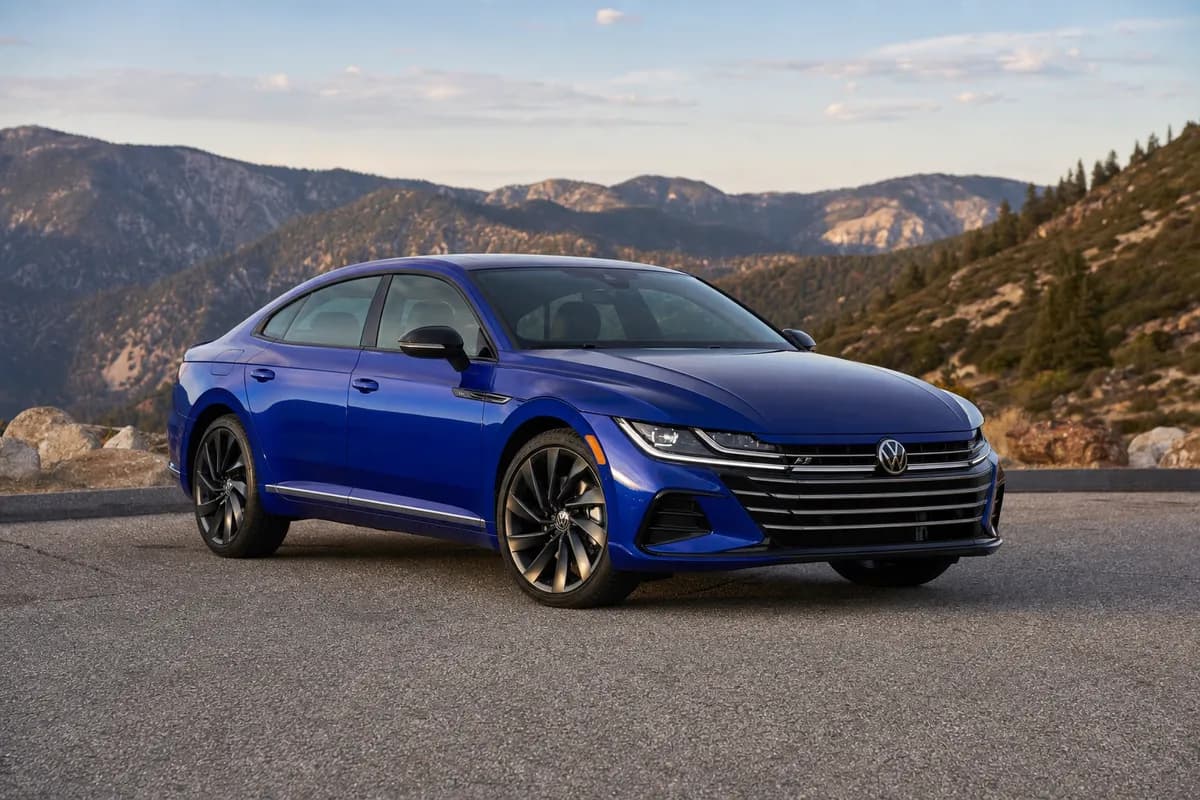
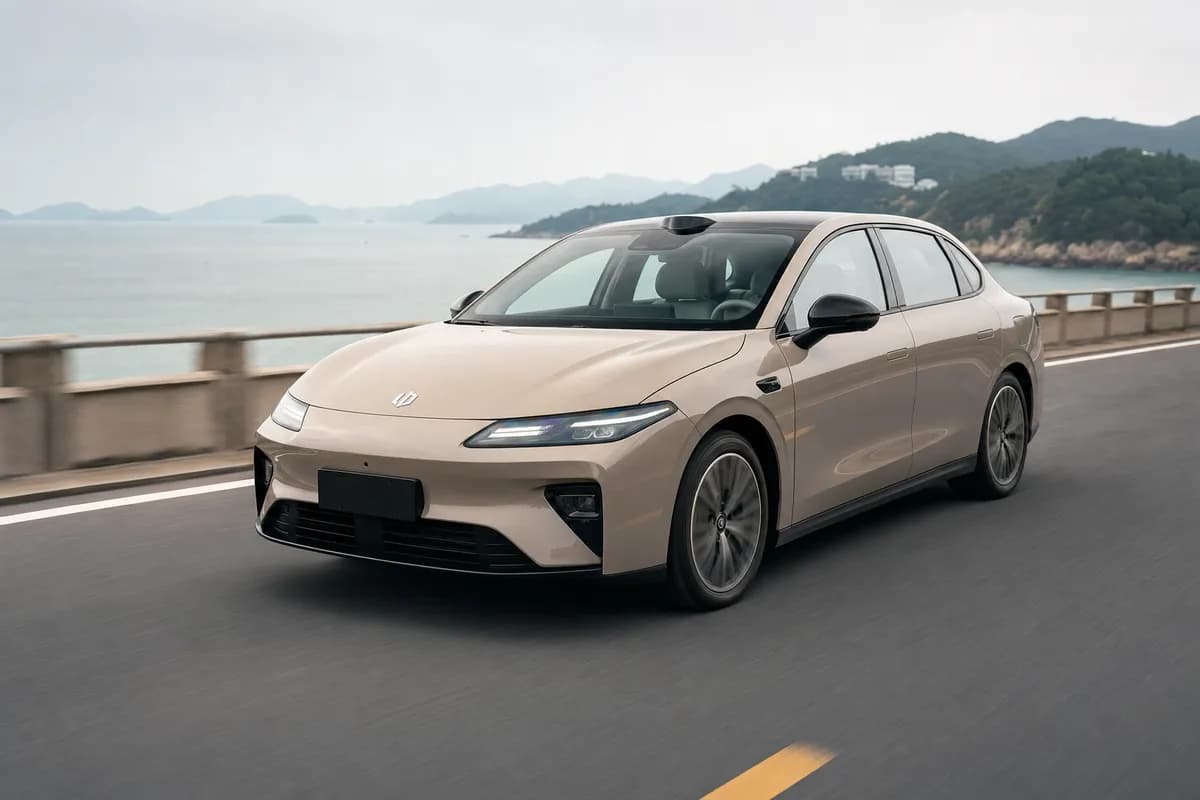
The 2024 Volkswagen Arteon arrives wearing a tailored suit and a faintly guilty expression, as if it knows America would rather buy yet another gray crossover with the emotional range of a filing cabinet. Officially, Volkswagen calls it a sedan.
The 2024 Volkswagen Arteon arrives wearing a tailored suit and a faintly guilty expression, as if it knows America would rather buy yet another gray crossover with the emotional range of a filing cabinet. Officially, Volkswagen calls it a sedan. Technically, it is a fastback liftback. Spiritually, it is the car VW builds when it remembers it can do more than sensible. After a first drive, the big question is not whether the Arteon looks good. It does. The question is whether there is enough substance beneath that long hood, frameless glass, and coupe-ish roofline to justify a near-luxury price tag in a market that barely remembers sedans exist.
What Is the 2024 Volkswagen Arteon, Really?
The Arteon is Volkswagen’s flagship car in the United States, and for 2024 it keeps the formula simple: a turbocharged 2.0-liter four-cylinder engine, a 7-speed dual-clutch automatic transmission, and standard 4Motion all-wheel drive. Output is a very healthy 300 horsepower and 295 lb-ft of torque, which is not “sporty for a Volkswagen.” It is genuinely quick.
This is the same basic EA888 engine family that has done heroic work across the Volkswagen Group, including in the Golf R. In the Arteon, it is tuned less like a caffeinated hot hatch and more like an executive express with a gym membership. Peak torque arrives early, the DSG snaps through ratios cleanly, and the all-wheel-drive system keeps the front tires from doing the embarrassing one-wheel samba that still plagues too many powerful front-drive-based sedans.
For 2024, the Arteon lineup is not complicated. In the U.S., the key trims are SEL R-Line and SEL Premium R-Line, with pricing landing roughly in the high-$40,000 to low-$50,000 range depending on destination and equipment. That means the Arteon is not hunting Honda Accords and Toyota Camrys anymore. It is staring across the parking lot at the Audi A5 Sportback, BMW 430i Gran Coupe, Acura TLX, Genesis G70, and perhaps a heavily optioned Toyota Crown.
On paper, the VW makes a persuasive case. Independent instrumented testing has put the current 300-hp Arteon at around 4.6 seconds from 0-60 mph and about 13.3 seconds in the quarter-mile. That is properly brisk. It is quicker than an Audi A5 Sportback 45 TFSI, quicker than a BMW 430i xDrive Gran Coupe, and right in the neighborhood of the late, lamented Kia Stinger GT. Yes, the Stinger GT’s twin-turbo V6 had more theater, but the Arteon is no rolling accessory. It moves.
First Drive: Fast, Fluent, and More Mature Than Fun
The first thing you notice from behind the wheel is how well the Arteon gathers speed without fuss. There is a tiny pause as the turbo wakes and the DSG chooses its moment, then the car lunges forward with that elastic, torque-rich shove Volkswagen does so well. It does not bark or snarl. It simply compresses distance. The engine note is purposeful but restrained, which is either sophisticated or slightly dull depending on whether your idea of excitement involves exhaust pops and neighbor complaints.
In normal driving, the dual-clutch gearbox behaves better than some older VW DSG units that could be clumsy at parking-lot speeds. It still prefers clean inputs. Creep along indecisively and it can feel a little mechanical, because it is mechanical. Drive it with intent and it rewards you with quick, decisive shifts. Sport mode sharpens the responses without turning the car into a twitchy parody of performance.
The 4Motion all-wheel-drive system is the Arteon’s secret weapon. With nearly 300 lb-ft of torque arriving low in the rev range, front-wheel drive would have turned this car into a torque-steer symposium. Instead, the Arteon digs in and goes. Coming out of tight corners, you can feel power being shuffled rearward enough to keep the chassis composed. It is not a rear-drive hooligan like a BMW 3 Series used to be before everything got heavier, wider, and angrier, but it is secure, fast, and confidence-inspiring.
The steering is accurate but not chatty. Volkswagen has tuned in enough weight to make the car feel substantial, yet the front tires are not sending handwritten letters through the rim. If you want intimate road feel, buy a used Alfa Romeo Giulia and keep your mechanic’s number laminated. The Arteon is more about high-speed fluency. It settles into a sweeping road beautifully, especially with the adaptive damping set to Comfort or Normal. In Sport, body control tightens, but the ride on larger wheels can become a little terse over broken pavement.
That matters because the Arteon is a big car: 191.5 inches long on a 111.9-inch wheelbase. It is longer than an Audi A5 Sportback and feels more relaxed at speed than most compact sport sedans. It is not a canyon scalpel. It is a grand tourer wearing a VW badge, which is both its charm and its commercial problem. Americans hear “Volkswagen” and think Jetta payments, not $50,000 fastback sophistication.
Cabin and Practicality: The Hatchback Trick Changes Everything
Here is where the Arteon stops merely being pretty and starts being clever. That long, sloping rear glass is not just styling theater. It lifts with the trunklid, revealing a huge cargo opening and 27.2 cubic feet of space behind the rear seats. Fold the rear seats and cargo volume expands to about 56 cubic feet. That is crossover-adjacent practicality without the driving position of a bar stool.
For comparison, an Acura TLX offers only about 13.5 cubic feet of trunk space. A Genesis G70 is even tighter. The Audi A5 Sportback is usefully practical at around 21.8 cubic feet, but the Arteon still out-hauls it. This is the car’s killer app: it looks like a sleek sedan, drives like a refined fastback, and swallows luggage like it moonlights as an estate car.
Rear-seat space is also excellent. With roughly 40 inches of rear legroom, the Arteon treats adults in the back like valued humans rather than warranty claims. The roofline looks dramatic from outside, but headroom remains acceptable unless your passengers are built like NBA forwards in motorcycle helmets. Long trips are absolutely in this car’s wheelhouse.
The front cabin is handsome, restrained, and very Volkswagen. That means the basics are right: supportive seats, logical sightlines, good driving position, and a sense that everything has been assembled by people who own measuring tools. But it also means the design lacks the visual drama you might expect at this price. An Audi A5 feels richer. A Genesis G70 feels more special. Even the Acura TLX has a more cockpit-like attitude, though Acura’s touchpad infotainment system remains an ergonomic prank.
The Arteon’s digital instrument cluster is crisp, and the infotainment system includes the usual modern necessities: wireless smartphone integration, navigation on upper trims, and a premium audio system on the SEL Premium R-Line. But Volkswagen’s current obsession with touch-sensitive controls deserves a firm glare. The haptic sliders and glossy touch areas look clean in press photos and feel less brilliant when you are trying to adjust temperature on a bumpy road. Real knobs are not nostalgia. They are civilization.
How It Stacks Up Against Rivals
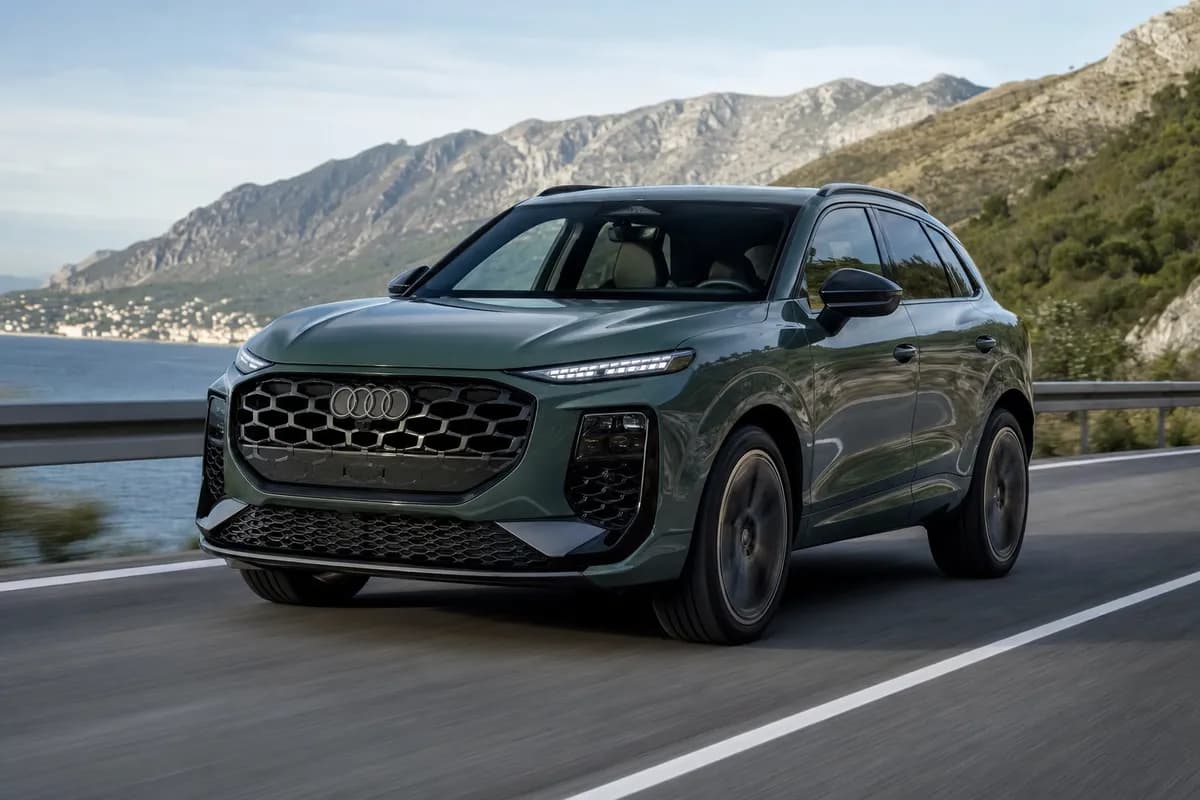
The Arteon lives in a strange and shrinking corner of the market: premium-adjacent, performance-leaning, practical fastbacks. Its most natural rival is the Audi A5 Sportback 45 TFSI, which uses a 2.0-liter turbo four rated at 261 horsepower and 273 lb-ft. The Audi has the better badge and a more upscale cabin, but the Volkswagen is roomier, more powerful, and usually better value when similarly equipped. If you care what the neighbors think, buy the Audi. If you care what your luggage thinks, buy the VW.
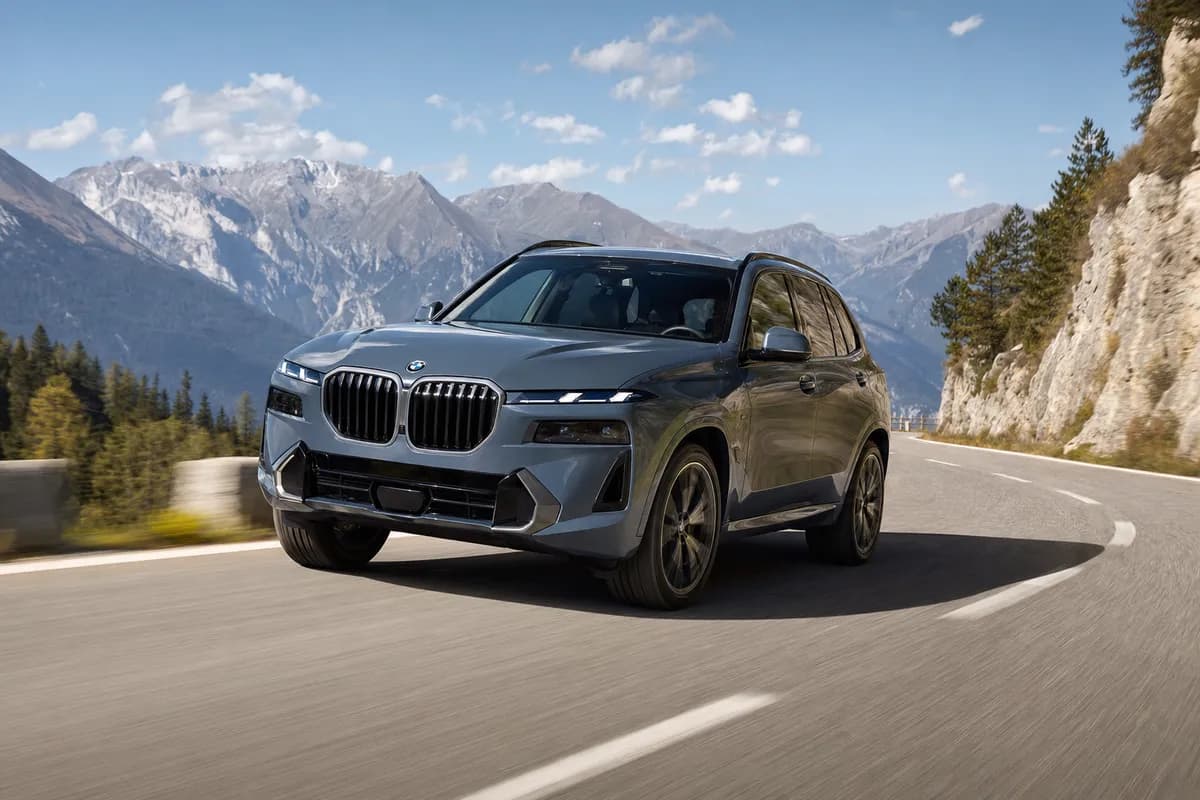
The BMW 430i xDrive Gran Coupe brings rear-drive-based architecture and sharp styling, though “sharp” here may also describe the grille trauma. Its 2.0-liter turbo makes 255 horsepower and 295 lb-ft, and it is polished, balanced, and expensive. The BMW feels more athletic in its bones, but the Arteon is quicker in some real-world testing and more spacious. The BMW wins on badge heat and chassis purity. The VW wins on stealth and usefulness.
The Acura TLX A-Spec SH-AWD makes 272 horsepower from its turbocharged 2.0-liter and has a superb all-wheel-drive system, but it is heavy and oddly tight inside for such a large sedan. The TLX looks fantastic and feels robust, yet its trunk is small and its acceleration trails the Arteon. The TLX Type S, with 355 horsepower, is the emotional pick, but it costs more and drinks harder.
The Genesis G70 3.3T is the enthusiast’s mischief-maker, with 365 horsepower and a rear-drive attitude the Arteon simply does not have. It is quicker, louder, and more charismatic. It is also much smaller, with a cramped rear seat and a tiny trunk. If you rarely carry adults or cargo, the Genesis is more fun. If you have a life involving suitcases, dogs, children, golf clubs, or dignity, the Arteon makes more sense.
Then there is the ghost of the Kia Stinger GT. The Stinger was the Arteon’s natural sparring partner: liftback practicality, available all-wheel drive, and a powerful engine. The Stinger GT’s 368-hp twin-turbo V6 made it the more exciting car, but Kia has pulled the plug. Used Stingers remain tempting, but a new Arteon offers warranty security, better cabin refinement, and a more understated image. Whether that image is classy or forgettable depends on your tolerance for subtlety.
Fuel Economy, Comfort, and Ownership Reality
The Arteon’s EPA ratings are respectable for a 300-hp all-wheel-drive car: about 22 mpg city, 31 mpg highway, and 25 mpg combined. That is better than most V6-powered rivals and competitive with luxury-brand turbo fours. On a relaxed highway run, the Arteon feels like it could lope across states without raising its voice or your blood pressure.
Ride comfort is generally strong, especially considering the car’s performance. The adaptive chassis control gives the Arteon a broader personality than a fixed-damper setup would. Comfort mode softens impacts nicely, while Sport mode trims excess body motion. It never becomes a sports sedan in the old-school hydraulic-steering, rear-drive, oversteer-on-demand sense, but it is composed and fast enough to embarrass plenty of cars with more aggressive marketing departments.
The weak point is value perception. At roughly $50,000, the Arteon is expensive for a Volkswagen, and buyers with that budget often want a luxury badge or an SUV. A loaded Volkswagen Atlas Cross Sport is easier to explain at a dinner party. An Audi A5 is easier to justify emotionally. A BMW key fob still does social climbing better than any VW roundel, even if the Arteon is the more practical machine.
But there is another side to that equation: rarity. You will not see yourself coming and going in an Arteon. It has presence without shouting, speed without juvenile theatrics, and practicality without crossover surrender. In a market drowning in lifted appliances, that counts for something.
Verdict: More Than a Pretty Face, But Not for Everyone
The 2024 Volkswagen Arteon is absolutely more than just a stylish sedan. It is a rapid, refined, deeply practical liftback that happens to look terrific. Its problem is not capability. Its problem is convincing buyers to pay luxury money for a Volkswagen badge.
After a first drive, the Arteon’s appeal is obvious but specific. It is for the buyer who wants space, speed, all-weather confidence, and elegant design without joining the crossover herd. It is not the most emotional car in the class, and it does not have the cabin richness of an Audi or the rear-drive sparkle of a BMW. The steering could talk more. The touch controls should be sentenced to community service. And the price means you need to actually want this car, not merely stumble into it while shopping for a Passat replacement.
Still, the Arteon has the rare quality of feeling like a car built for adults who still enjoy driving. It is quick enough to be exciting, comfortable enough for daily use, and practical enough to make most sedans look like compromised fashion statements. The hatchback cargo area is a masterstroke, the 300-hp powertrain finally gives the styling the muscle it always deserved, and the whole thing cruises with the calm authority of a much more expensive grand tourer.
Would I buy one at full sticker over an Audi A5 Sportback? If badge prestige and interior gloss matter most, no. Would I buy one with a meaningful discount over a smaller, slower luxury rival? Absolutely. The sweet spot is a well-equipped SEL R-Line or SEL Premium R-Line if the price gap is modest and you value the extra comfort features.
The 2024 Volkswagen Arteon is not a mass-market hero. It is too niche, too elegant, and too rationally irrational for that. But for the right driver, it is one of the most interesting cars Volkswagen sells: a handsome fastback with real pace, real space, and just enough defiance to make every anonymous crossover look like it gave up too soon.
Affiliate disclosure: This article contains affiliate links. RevvedUpCars may earn a small commission on qualifying purchases at no extra cost to you.