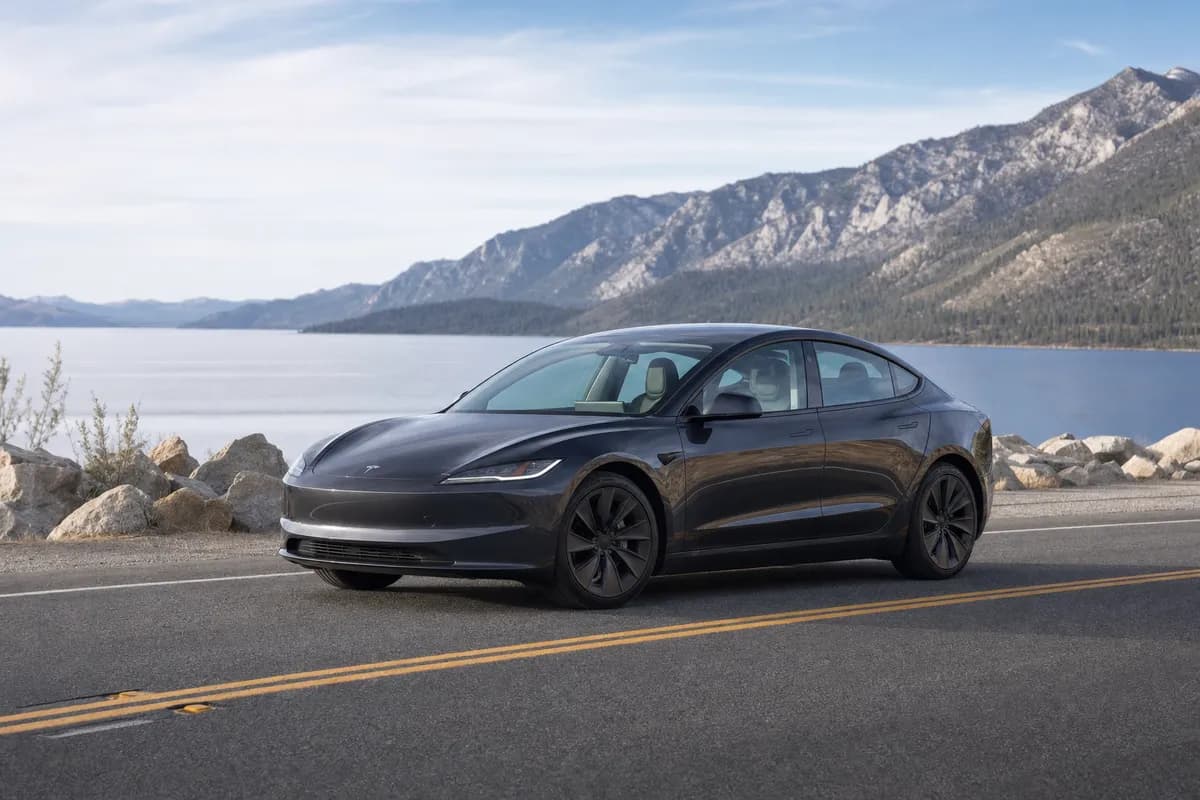
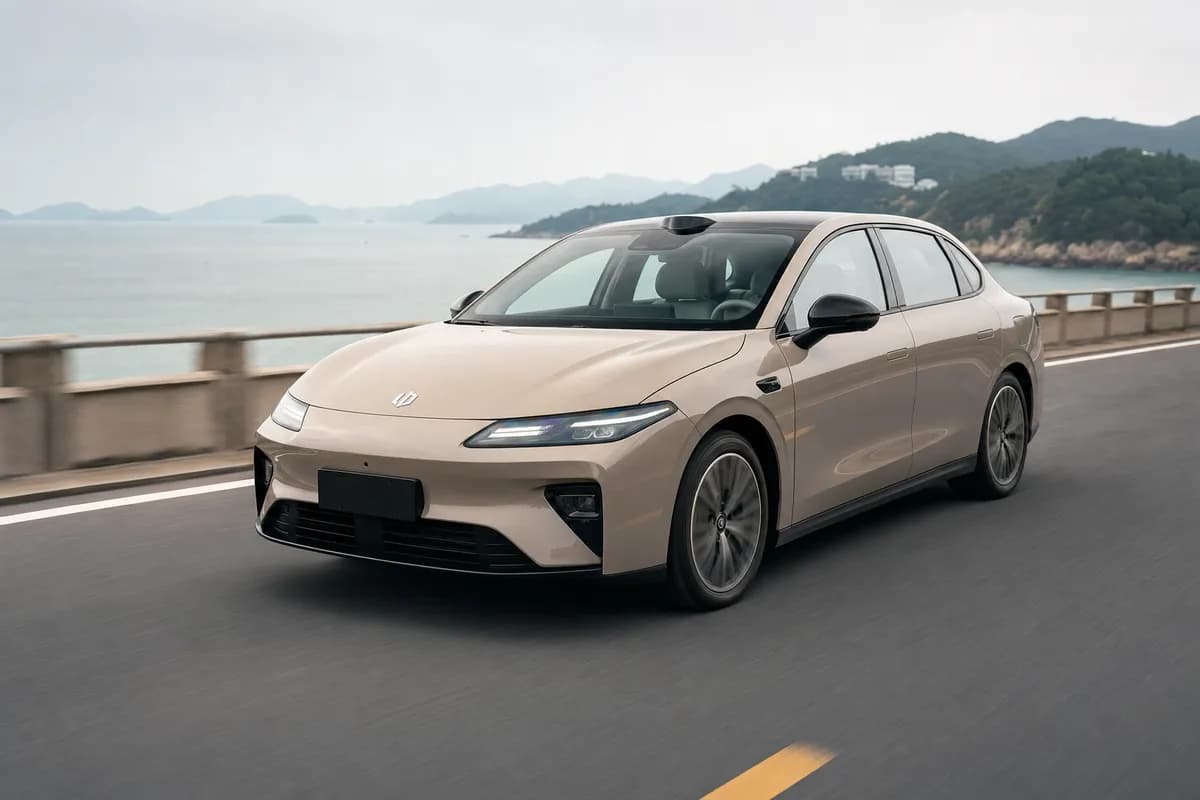
The 2024 Tesla Model 3 is no longer the scrappy electric disruptor. It is now the default answer, the iPhone of EVs, the car every rival targets and still somehow fails to embarrass.
The 2024 Tesla Model 3 is no longer the scrappy electric disruptor. It is now the default answer, the iPhone of EVs, the car every rival targets and still somehow fails to embarrass. After extended daily use, fast charging, highway slogs, rain-soaked commuting, back-road abuse, and enough software updates to make a German infotainment engineer sweat, the refreshed Model 3 proves something important: Tesla did not reinvent its sedan for 2024, but it did sand off many of the irritating edges that used to make ownership feel like beta testing with cupholders.
This is still not a perfect car. The missing indicator stalks are a self-inflicted wound. The cabin can feel too clever for its own good. Tire wear can get ugly if you drive it like the instant-torque hooligan it encourages you to be. But judged where it matters for an EV buyer — performance, range, charging, efficiency, and long-term dependability — the 2024 Model 3 remains the car the Hyundai Ioniq 6, Polestar 2, BMW i4, and every legacy-brand EV sedan must explain itself against.
What Changed for 2024: Quieter, Tighter, Less Like a Startup Project
The 2024 Model 3 refresh, commonly nicknamed “Highland,” is not a full redesign. It rides on the same basic platform, but Tesla revised enough of the car to make it feel meaningfully more mature. The exterior gets slimmer headlights, cleaner bumpers, and a lower-drag shape. Tesla quotes a drag coefficient as low as 0.219, which is excellent and one reason the Model 3 continues to punch above its battery size on real-world range.
The bigger improvement is inside. Older Model 3s could feel like a tech demo wrapped in a rental-car cabin. The 2024 car is calmer. There is more acoustic glass, better sealing, revised suspension tuning, and a noticeably quieter ride at highway speeds. Road roar is still present on coarse pavement, especially with larger wheels, but the old tinny boom has been dialed back. At 70 mph, the car now feels more like a proper premium sedan and less like a very fast appliance with loose trim.
The dashboard remains aggressively minimal. Almost everything runs through the central touchscreen: speed, climate, drive modes, mirrors, steering wheel adjustment, wipers, and glovebox. The screen is sharp, responsive, and still the benchmark for EV interface speed. But Tesla’s obsession with deleting physical controls has gone too far with the removal of steering column stalks. Indicators are now buttons on the steering wheel, and gear selection is handled on-screen or via overhead backup controls. It works, mostly. On a roundabout, it is daft. Anyone who says otherwise is either a Tesla shareholder or has never signaled while unwinding steering lock.
Still, build quality has improved. Panel alignment on recent examples is generally better than the Tesla horror stories of 2018-2020. Interior rattles are less common. The doors close with a more expensive thud. The seats remain excellent for long drives, with supportive padding and good heating. Ventilated front seats on higher trims are a welcome addition, and the rear screen gives passengers climate and entertainment controls. It is not Mercedes-luxury, but it no longer feels like Tesla forgot the car part of the electric car.
Performance: Still the Benchmark for Effortless Speed
The 2024 Model 3 lineup varies by market, but in the U.S. the key versions are the rear-wheel-drive Model 3, the Long Range All-Wheel Drive, and the updated Model 3 Performance. The numbers tell the story clearly.
- Model 3 Rear-Wheel Drive: 272 miles of EPA-estimated range, 0-60 mph in about 5.8 seconds, 125 mph top speed, lithium iron phosphate battery in many markets.
- Model 3 Long Range All-Wheel Drive: up to 341 miles of EPA-estimated range, 0-60 mph in about 4.2 seconds, dual-motor traction, 250 kW peak Supercharging capability.
- Model 3 Performance: 303 miles of EPA-estimated range, 0-60 mph quoted at 2.9 seconds with rollout subtracted, adaptive damping, larger brakes, performance seats, and a 163 mph top speed.
The basic rear-drive car is the sensible one, and it is not slow. A 5.8-second sprint to 60 mph used to be hot-hatch territory, and the Model 3 delivers it without noise, drama, or a launch procedure named after a reptile. Around town, it feels lively because electric torque arrives instantly. You squeeze the accelerator and the car simply goes, cleanly and without gearbox theatrics.
The Long Range AWD is the sweet spot. It has enough punch to make a BMW 330i feel like it left a spark plug at home, but it also carries the best range figure in the lineup. Its all-wheel-drive traction makes wet launches brutally effective, and the dual-motor setup gives the car that classic Tesla party trick: passengers going quiet mid-sentence because their neck muscles just received an audit.
The Performance is hilarious and slightly antisocial. Tesla’s 2.9-second 0-60 mph claim uses rollout subtraction, so in the real world you should think low-threes, not witchcraft. That is still absurd for a compact electric sedan. A BMW i4 M50 is quick, with 536 hp and a manufacturer-quoted 3.7-second 0-60 mph time. The Tesla is lighter-feeling, sharper off the line, and less formal about its violence. The BMW has richer steering and a nicer cabin. The Tesla has the stronger charging ecosystem and the better efficiency. Choose your religion.
The 2024 chassis revisions matter. Earlier Model 3s could feel jittery, particularly on 19-inch wheels. The refreshed car is more settled, with better body control and less nervous vertical motion. The Long Range is the best-riding version. The Performance, with its adaptive dampers and larger wheels, is firmer but finally has the hardware to justify the badge. It turns in quickly, grips hard, and exits bends with the smug traction of a car that knows combustion engines are wasting time turning crankshafts.
Steering remains accurate rather than communicative. It tells you where the front tires are pointed, not what they are feeling. A Polestar 2 has more heft and a BMW i4 has more traditional driver feedback, but neither makes daily pace as easy as the Model 3. The Tesla’s low center of gravity, compact footprint, and instant throttle response make it devastatingly effective. Not romantic, exactly. More like a scalpel with Wi-Fi.
Range, Charging, and Efficiency: This Is Where Tesla Still Hurts Rivals
The most important long-term performance metric for an EV is not 0-60 mph. It is how far the car goes, how honestly it uses energy, and how painless it is to recover miles on the road. This is where the Model 3 continues to dominate the ownership experience.
In mixed driving, the 2024 Model 3 is impressively efficient. Real-world energy use commonly lands in the mid-to-high 3 miles per kWh range, and careful drivers can do better. On the highway at 70-75 mph, expect range to fall, as it does in every EV, but the Model 3 remains one of the best sedans for aerodynamic efficiency. The Hyundai Ioniq 6 is its closest mainstream rival here, and that car is genuinely excellent, offering up to 361 miles of EPA-estimated range in its SE Long Range rear-drive configuration. The Hyundai also charges very quickly on an 800-volt architecture when connected to a strong DC fast charger.
But Tesla’s trump card is not just peak charging speed. It is charging reliability. The Supercharger network remains the gold standard for route planning, uptime, plug-and-charge simplicity, and geographic coverage. The Model 3’s navigation preconditions the battery before fast charging, tells you how many stalls are open, and estimates arrival state of charge with uncanny confidence. You do not need three apps, a prayer, and a customer service call from a parking lot behind a vape shop.
The Long Range and Performance can peak at up to 250 kW on compatible Superchargers. The rear-drive version typically peaks lower, around 170 kW, but its efficiency and battery chemistry still make it easy to live with. On a road trip, the practical rhythm is simple: arrive low, charge to 60-80 percent, leave. Chasing 100 percent on a DC fast charger is slow and usually pointless unless your next leg crosses a charging desert.
The rear-drive Model 3’s lithium iron phosphate battery is a major ownership advantage where fitted. LFP chemistry is generally more tolerant of regular 100 percent charging than nickel-rich packs, and Tesla recommends charging that version fully on a regular basis for calibration. Long Range and Performance owners should live mostly in the 70-80 percent daily charging zone, saving 100 percent for trips. That is not a flaw; it is EV ownership hygiene.
Compared with the Polestar 2, the Model 3 feels more efficient and easier to road-trip. Compared with the BMW i4, it gives up some cabin richness but claws back time at chargers. Compared with the Ioniq 6, the Tesla’s cabin is simpler and its charging curve may not always match Hyundai’s best-case speed, but the Supercharger experience is still the calmer bet for most drivers.
Reliability and Long-Term Wear: Better, But Not Bulletproof
Tesla reliability is a strange subject because the powertrain is often excellent while the ownership annoyances can be maddeningly silly. The 2024 Model 3 benefits from years of production learning. The motors are well-proven, the battery management system is sophisticated, and the car has far fewer consumable parts than a gasoline sedan. There is no oil change, no timing belt, no transmission service, no exhaust system, no starter motor, and no turbocharger waiting to financially mug you at 90,000 miles.
Routine maintenance is refreshingly light. Tesla recommends periodic tire rotation, cabin air filter replacement, brake fluid checks, and brake cleaning in regions that use road salt. Because regenerative braking handles so much deceleration, brake pads and rotors can last a long time, although corrosion can become an issue if the friction brakes are rarely used. The car’s one-pedal driving is excellent, smooth, and easy to modulate.
The main running-cost villain is tires. EVs are heavy and torquey, and the Model 3 encourages rapid launches like a bad friend holding your credit card. A Long Range AWD weighs roughly around 4,000 pounds depending on specification, and the Performance is harder still on rubber. Owners who rotate tires regularly and avoid launch-control theatrics can see decent life. Drivers who treat every traffic light like a drag strip should budget accordingly. Performance tires are not cheap, and physics does not care that your car has vegan upholstery.
Battery degradation is typically modest when the car is charged sensibly. Many older Model 3s show early range loss followed by a long plateau, with degradation often reported in the high single digits after substantial mileage, though results vary by climate, charging habits, and pack type. The 2024 warranty coverage is reassuring: the basic vehicle warranty is 4 years or 50,000 miles, while the battery and drive unit coverage is 8 years, with mileage limits commonly 100,000 miles for rear-drive versions and 120,000 miles for Long Range and Performance models in the U.S., including a minimum 70 percent battery retention guarantee.
Known pain points? Tesla’s service experience is inconsistent. Mobile service can be brilliant for small jobs. Collision repair can be expensive and slow. Parts availability has improved but still varies. Minor software glitches happen, usually fixed by rebooting or an over-the-air update. The touchscreen dependency means a frozen display is more disruptive than it should be, although core driving functions remain protected by redundancy. Door handles can freeze in winter climates if neglected. Frameless windows need clean seals. These are not deal-breakers, but they are the unglamorous realities behind the acceleration videos.
The 2024 refresh appears better assembled than the early Model 3s, but buyers should still inspect delivery carefully. Check paint finish, door alignment, trim fit, wheel condition, glass, and interior rattles. Tesla has improved; it has not become Lexus overnight. A Toyota Camry Hybrid will still likely be the cockroach of reliability, surviving the apocalypse while sipping regular unleaded. But the Model 3 is now mature enough that reliability concerns should not scare away a buyer who understands EV ownership.
Living With It: Brilliant Daily Tool, Occasionally Too Clever
As a daily driver, the 2024 Model 3 is superb because it removes friction from driving. You walk up, it unlocks. You get in, press the brake, and go. The climate can be preconditioned from your phone. The navigation is excellent. The sound system in the upgraded trims is strong. Over-the-air updates can add features, refine behavior, or fix annoyances without a dealer visit. Sentry Mode and dashcam recording are useful, though they consume energy when parked.
The storage is better than the sleek sedan shape suggests. The rear trunk is wide and deep, the underfloor storage is useful, and the front trunk remains handy for charging cables or small bags. Rear-seat space is decent, though the low floor and sloping roof can leave taller passengers with knees-up posture. The Ioniq 6 feels airier in back; the BMW i4 feels more cocooned and premium; the Tesla feels the cleanest and most digital.
Autopilot remains a useful driver-assistance system when treated as assistance, not a chauffeur. Adaptive cruise and lane centering work well on highways, though the system can still be too cautious or occasionally abrupt. Full Self-Driving capability is a separate, expensive conversation, and despite the branding, the car is not autonomous. Buy it for what it does today, not for a robotaxi fantasy promised at a cocktail party in 2016.
The Model 3’s greatest trick is not that it feels futuristic. It is that after a week, most gasoline cars feel weirdly old-fashioned, like mailing a letter to start your dishwasher.
The annoyances remain very Tesla. No Apple CarPlay or Android Auto. Wiper automation can be flaky. The lack of physical climate buttons will irritate some drivers. The indicator buttons are the biggest ergonomic misstep, especially in markets with roundabouts. Minimalism is fine; deleting good controls to prove a point is Silicon Valley theater.
Verdict: The 2024 Model 3 Is Still the EV Sedan to Beat
The 2024 Tesla Model 3 is not the most luxurious electric sedan. That is the BMW i4’s argument. It is not the quirkiest or most design-led. Polestar has that covered. It is not the aero-range specialist with ultra-fast 800-volt charging in perfect conditions. The Hyundai Ioniq 6 wants that crown. But the Tesla remains the best overall blend of performance, efficiency, charging access, software, running costs, and real-world usability.
The version to buy is the Model 3 Long Range All-Wheel Drive. It has the range, the traction, the speed, and the charging speed without the tire-shredding excess of the Performance. The rear-drive car is the value hero and perfectly adequate for most commuters, especially with home charging. The Performance is the one you buy because restraint is for people who alphabetize herbal tea.
Reliability is no longer the scary unknown it once was. The 2024 Model 3 feels better built, mechanically mature, and easier to recommend for long-term ownership. It still demands tolerance for Tesla’s control-interface stubbornness and uneven service network, but the fundamentals are strong. Low maintenance, proven motors, competitive battery warranty, excellent efficiency, and the Supercharger network make it one of the safest EV bets on the market.
Final verdict: the 2024 Tesla Model 3 is not flawless, but it is ruthlessly good. If you want a compact electric sedan that is quick, efficient, relatively affordable to run, and genuinely capable of replacing a gasoline car without turning road trips into a charging-site scavenger hunt, this is still the benchmark. The rivals are closer than ever. They are not, however, ahead.
Affiliate disclosure: This article contains affiliate links. RevvedUpCars may earn a small commission on qualifying purchases at no extra cost to you.