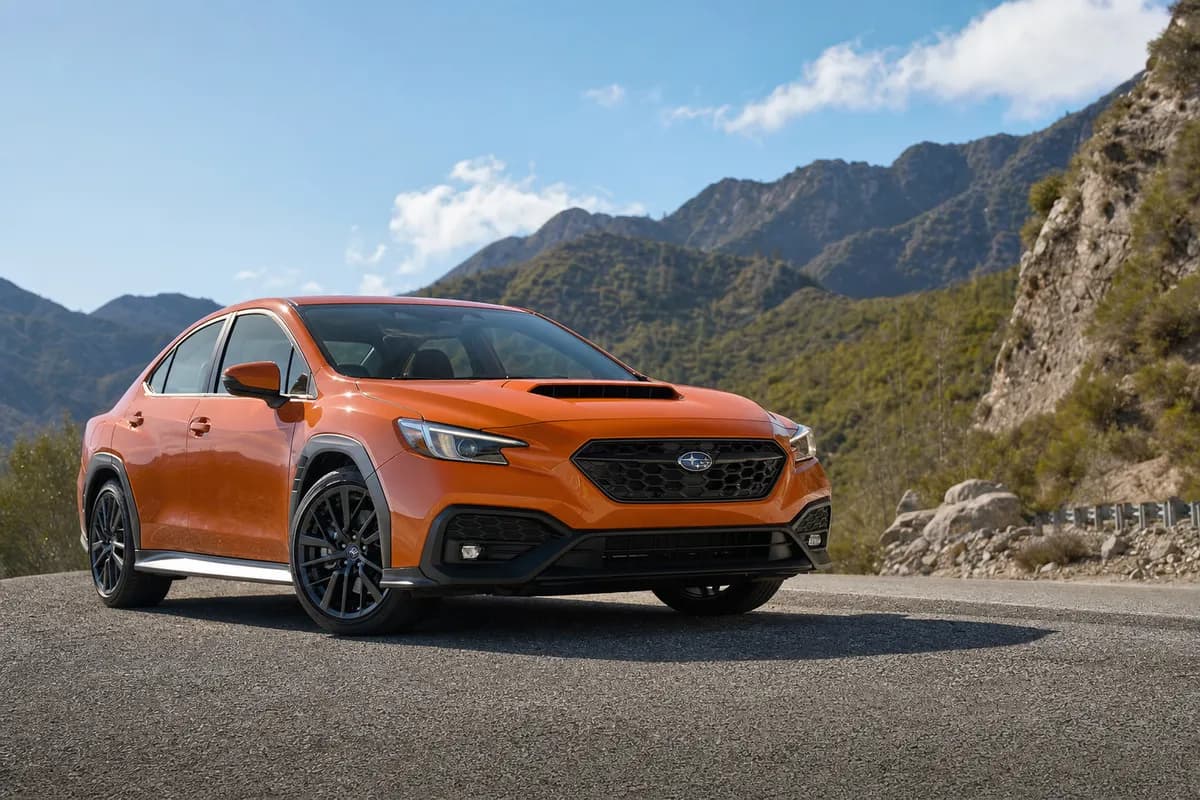
The 2024 Subaru WRX is still the car you buy when you want a rally-flavored sedan with a manual gearbox, real all-wheel drive, and enough everyday usefulness to avoid explaining yourself to sensible adults.
The 2024 Subaru WRX is still the car you buy when you want a rally-flavored sedan with a manual gearbox, real all-wheel drive, and enough everyday usefulness to avoid explaining yourself to sensible adults. After living with it through commuting, highway slogs, wet back roads, winter filth, grocery runs, and the occasional deeply immature on-ramp attack, the WRX remains exactly what Subaru has always promised: fast enough, tough enough, practical enough, and just uncivilized enough to feel alive. It is not the most polished sport compact. It is not the quickest for the money. It is absolutely not pretty in the conventional sense. But as a long-term companion, the 2024 WRX makes a compelling case by doing the one thing many modern performance cars have forgotten: it stays interesting after the honeymoon ends.
Performance: Not a Numbers Monster, But Still a Proper Weapon
The 2024 Subaru WRX uses a 2.4-liter turbocharged flat-four producing 271 horsepower at 5,600 rpm and 258 lb-ft of torque from 2,000 to 5,200 rpm. Those figures are unchanged from the latest-generation WRX’s debut, and yes, internet warriors still enjoy pointing out that this car has only three more horsepower than the old 2.0-liter WRX. That misses the point. The larger FA24 engine is broader, calmer, and more flexible. It feels less like a hand grenade with a boost gauge and more like an engine designed to survive actual ownership.
With the standard six-speed manual, the WRX is good for roughly 0-60 mph in the mid-5-second range when launched with intent and mechanical sympathy temporarily disabled. Quarter-mile runs land around the low-14-second mark at just under 100 mph. That puts it behind a Volkswagen Golf R, which brings 315 horsepower and a dual-clutch transmission to the knife fight, and also behind the Honda Civic Type R in outright pace. But the WRX claws back dignity with traction. In rain, snow, gravelly corners, and cold pavement, the Subaru’s symmetrical all-wheel drive gives it a level of shove and confidence that front-drive rivals simply cannot match.
Our long-term impression is that the engine’s character gets better with familiarity. It is not theatrical. It does not shriek like the Civic Type R’s 2.0-liter turbo, and it does not have the premium polish of the Golf R’s EA888. But the WRX’s boxer-four has real midrange muscle, quick boost response, and enough torque spread to make third gear your best friend on a back road. Keep it between 3,000 and 5,500 rpm and it punches hard without feeling stressed.
The manual transmission is the one to buy. Full stop. Subaru offers the so-called Subaru Performance Transmission, which is corporate-speak for a CVT that has been trained to impersonate a conventional automatic. In the WRX GT, the CVT pairs with adaptive dampers and drive modes, and it is better than old Subaru CVTs by a large margin. But “better than terrible” is not the same as “desirable.” The manual gives the WRX its pulse. The shifter is slightly rubbery, the clutch take-up is forgiving, and the gearing suits real roads. It is not a Miata gearbox, but it is honest hardware in a market increasingly allergic to driver involvement.
The 2024 model year also matters because Subaru finally made EyeSight driver-assist technology standard on manual-transmission WRX models. That means adaptive cruise control, lane departure warning, pre-collision braking, and related safety features are now available without forcing buyers into the CVT. This is not glamorous, but on a long-term test, it is huge. A performance sedan you can drive hard on Sunday and trust in traffic on Monday is the whole point.
Chassis and Handling: Grip, Grit, and a Little Bit of Grumble
The WRX’s best feature is not the engine. It is the way the chassis lets you use the engine. Subaru’s all-wheel-drive system gives the car a planted, mechanical feel that separates it from the hot-hatch crowd. The steering is quick and accurate, if a little short on old-school hydraulic texture. Turn-in is sharp, body control is good, and the car rotates more willingly than its sensible sedan shape suggests.
This is not a delicate car. It does not dance like a Toyota GR86, nor does it carve with the scalpel precision of a Civic Type R. The WRX is more booted, braced, and ready to hit a bad road at speed without calling its lawyer. On broken pavement, it feels in its element. That is the Subaru trick. You stop worrying about perfect conditions and start enjoying the fact that this thing can keep hammering when the road surface turns feral.
The standard suspension tuning walks a respectable line. It is firm, but not punishing. The WRX has enough compliance to handle frost heaves and patched city streets, though sharp impacts can produce a thump through the cabin. Compared with the previous-generation VA WRX, the current VB-chassis car feels stiffer, calmer, and less frantic. It has grown up without becoming boring, which is not easy. Ask Mitsubishi how that goes. Oh wait, you cannot, because the Lancer Evolution is dead and we are still bitter.
The big new talking point for 2024 is the WRX TR. This trim sits near the top of the range and adds meaningful hardware: Brembo brakes with six-piston front calipers and two-piston rear calipers, 19-inch wheels, Recaro front seats, retuned suspension, and no sunroof to save weight and preserve headroom. It is not an STI replacement, no matter how hard Subaru’s marketing department squints at it. There is no center differential control, no big power bump, and no wild homologation-special energy. But as a track-day-capable WRX with better brakes and better seats, the TR is the enthusiast pick if you have the budget.
Braking performance in the standard WRX is adequate for aggressive street use, but repeated hard stops expose the limits of the factory setup. The pedal stays predictable, but the car’s weight and all-weather mission mean it is not a featherweight hero. The TR’s Brembos solve the fade concern and give the car the stopping hardware its chassis always deserved. If you drive mountains often, or if you plan even occasional track use, the TR is worth serious consideration.
The WRX is not the fastest sport sedan you can buy. It is the one that still wants to play when the weather turns ugly and the road turns worse.
Practicality and Cabin Life: Better Than the Badge Snobs Admit
The 2024 Subaru WRX is a compact sedan, but it behaves like a usable daily driver rather than a weekend toy wearing four doors as a disguise. The back seat is adult-friendly enough for real trips, the trunk measures 12.5 cubic feet, and the low beltline gives the cabin a pleasantly airy feel. Visibility is excellent by modern standards, which is another way of saying Subaru has not yet sacrificed outward vision on the altar of “aggressive design language.” Bless them.
The driving position is spot-on. The seats in Premium and Limited trims are supportive enough for spirited driving without becoming medieval over long distances. The TR’s Recaros are better still, especially if you value lateral support, though broader drivers may want a test sit before signing paperwork. The rear seats fold, child seats fit without family drama, and the WRX remains one of the few performance cars that can handle hardware-store errands without making you borrow a crossover.
The interior design is functional rather than fancy. The centerpiece is Subaru’s 11.6-inch vertical touchscreen on most trims, while the base model uses a dual-screen layout. Apple CarPlay and Android Auto are included, with wireless functionality on higher trims. The large screen looks impressive at first, but not every function deserves to be buried in glass. Climate controls still have physical temperature toggles, thankfully, but fan-speed adjustments and some secondary controls require touchscreen interaction. That is annoying in January with gloves on, and it remains annoying in July when you just want more air without negotiating with a tablet.
Material quality is acceptable, not luxurious. Soft-touch surfaces appear where they matter, but there are hard plastics and some hollow-feeling trim pieces. The Golf GTI and Golf R feel more sophisticated inside. The Civic Si and Civic Type R have cleaner ergonomics and a smarter cabin layout. The WRX counters with durability, visibility, and a sense that you can get in wearing muddy boots without committing a social crime.
Road noise is present, especially on the available summer performance tires. At highway speeds, the WRX is louder than a Mazda3 Turbo and less refined than a Golf R. But it is not unbearable. Over long distances, the car settles into a slightly coarse but livable rhythm. The engine drones a little under load, tire roar comes through on rough asphalt, and wind noise is moderate. If your idea of a sports sedan is a BMW 3 Series with a heated steering wheel and hushed glass, the Subaru will feel agricultural. If your last fun car had coilovers and an aftermarket exhaust, the WRX will feel like a Lexus.
Long-Term Ownership: Fuel Economy, Costs, and Daily Reality
Here is where the WRX becomes a more complicated recommendation. On paper, the manual 2024 WRX is rated by the EPA at 19 mpg city, 26 mpg highway, and 22 mpg combined. The CVT does slightly worse in some configurations, with ratings around 18 mpg city and 25 mpg highway. In mixed long-term use, expect low-20s unless you have the self-restraint of a monastery librarian. Drive it hard, and the WRX drinks premium fuel with enthusiasm.
That fuel economy is not impressive when a Honda Civic Si can return around 31 mpg combined and still be genuinely fun. The Volkswagen GTI also beats the WRX at the pump while offering a more refined cabin. Even the Mazda3 Turbo, though less engaging and automatic-only, feels more premium and can be easier to live with if you prioritize comfort over corner-exit traction. The Subaru’s counterargument is simple: none of those cars deliver the same standard all-wheel-drive confidence with a manual transmission.
Maintenance is straightforward. Subaru recommends regular oil changes at 6,000-mile intervals under normal use, and owners who drive hard or deal with extreme weather often shorten that interval. The FA24 engine has so far proven less high-strung than the old EJ engines that built Subaru’s reputation and occasionally detonated it. Still, this is a turbocharged performance car. Warm it properly, use quality oil, do not ignore fluids, and resist the urge to install bargain-bin engine tunes from someone named “boostwizard93.”
Tire costs depend heavily on trim and wheel size. The common 18-inch setup uses 245/40R18 performance rubber, which is not ruinously expensive but will not be economy-car cheap. The TR’s 19-inch tires raise the replacement bill and may worsen ride quality on broken pavement. If you live anywhere with real winter, budget for winter tires. The WRX on summer tires in snow is a golden retriever on a frozen lake: enthusiastic, but not necessarily in control. On proper winter rubber, though, it becomes one of the most satisfying cold-weather performance cars under $45,000.
Reliability expectations are cautiously optimistic. The current-generation WRX has not shown the widespread catastrophic drama that haunted modified examples of earlier generations, though long-term durability always depends on how owners treat them. The driveline feels robust, the clutch is easy to manage, and the body structure has a solidity that suits daily punishment. Interior rattles can appear over rough roads, and the infotainment system occasionally reminds you that software is now the weakest part of many cars. Mechanically, however, the WRX gives the impression of a machine built to be used rather than merely admired.
Trims and Rivals: Which WRX Should You Buy?
The 2024 WRX lineup includes Base, Premium, Limited, TR, and GT trims. The Base model gets you the core experience, including the turbo engine, manual gearbox, and all-wheel drive, but the smaller screen and more basic equipment make it feel a little rental-counter in 2024. The Premium is the sweet spot for most buyers, adding the larger infotainment screen, better wheels, heated front seats, and a more complete daily-driver spec.
The Limited adds nicer upholstery, upgraded lighting, and additional comfort features. It is the grown-up WRX, and there is no shame in that. The TR is the driver’s choice thanks to the Brembos, Recaros, and suspension upgrades. The GT is CVT-only, which makes it the oddball. Its adaptive dampers are genuinely appealing, and its drive modes give the WRX more breadth, but forcing the automatic on the most expensive trim feels like Subaru tripping over its own shoelaces.
Against competitors, the WRX occupies a strange but valuable niche. The Honda Civic Si is cheaper, more efficient, and has a sweeter shifter, but it is down on power at 200 horsepower and front-wheel drive only. The Hyundai Elantra N brings 276 horsepower, a rowdy personality, and available dual-clutch speed, but its styling is even more extroverted than the Subaru’s plastic-clad haunches, and traction can be an issue in poor weather. The Volkswagen GTI is more refined and quicker with the DSG, but front-drive. The Golf R is the premium answer with 315 horsepower and all-wheel drive, but it costs far more and has an infuriating control interface. The Toyota GR Corolla is the closest spiritual rival: 300 horsepower, manual, all-wheel drive, and manic energy. It is also tighter inside, pricier, and harder to find without dealer nonsense.
The WRX wins by being available, usable, and honest. It gives you all-wheel-drive performance without luxury-car pricing. It has flaws you can name and forgive, rather than flaws disguised as “premium user experiences.” That counts for more than spec-sheet perfection.
Verdict: The WRX Still Makes Sense, If You Know What You’re Buying
The 2024 Subaru WRX is not a baby STI, and anyone expecting one will come away grumbling into their flat-brim hat. It is also not a plush sport sedan, a fuel-sipping commuter, or a drag-strip hero. What it is, after long-term use, is a deeply capable, entertaining, weatherproof performance sedan with real practicality and a manual transmission that still matters.
Its weaknesses are clear: fuel economy is mediocre, the cabin lacks polish, the infotainment can be fussy, and the exterior cladding still looks like the design team got paid by the pound of black plastic. The CVT version should be approached only by people who absolutely cannot drive stick or who desperately want the GT’s adaptive dampers. But the core manual WRX, especially in Premium or TR form, remains one of the most compelling enthusiast daily drivers on sale.
If you want maximum lap-time credibility, buy a Civic Type R. If you want a more refined all-weather missile and have the cash, buy a Golf R. If you want unfiltered chaos, hunt down a GR Corolla and prepare for dealer markups. But if you want one car that can commute, corner, survive winter, carry friends, run errands, and still make a damp back road feel like a special stage, the 2024 Subaru WRX is still the blue-collar hero with mud on its boots and boost in its lungs.
Final verdict: The 2024 Subaru WRX is imperfect, thirsty, slightly rough around the edges, and all the better for it. Buy the manual Premium if you want the best value. Buy the TR if you drive hard enough to justify the brakes. Skip the GT unless you are allergic to clutch pedals. The WRX remains a rare thing in 2024: a practical performance car that actually feels like it was built for drivers, not focus groups.
Affiliate disclosure: This article contains affiliate links. RevvedUpCars may earn a small commission on qualifying purchases at no extra cost to you.