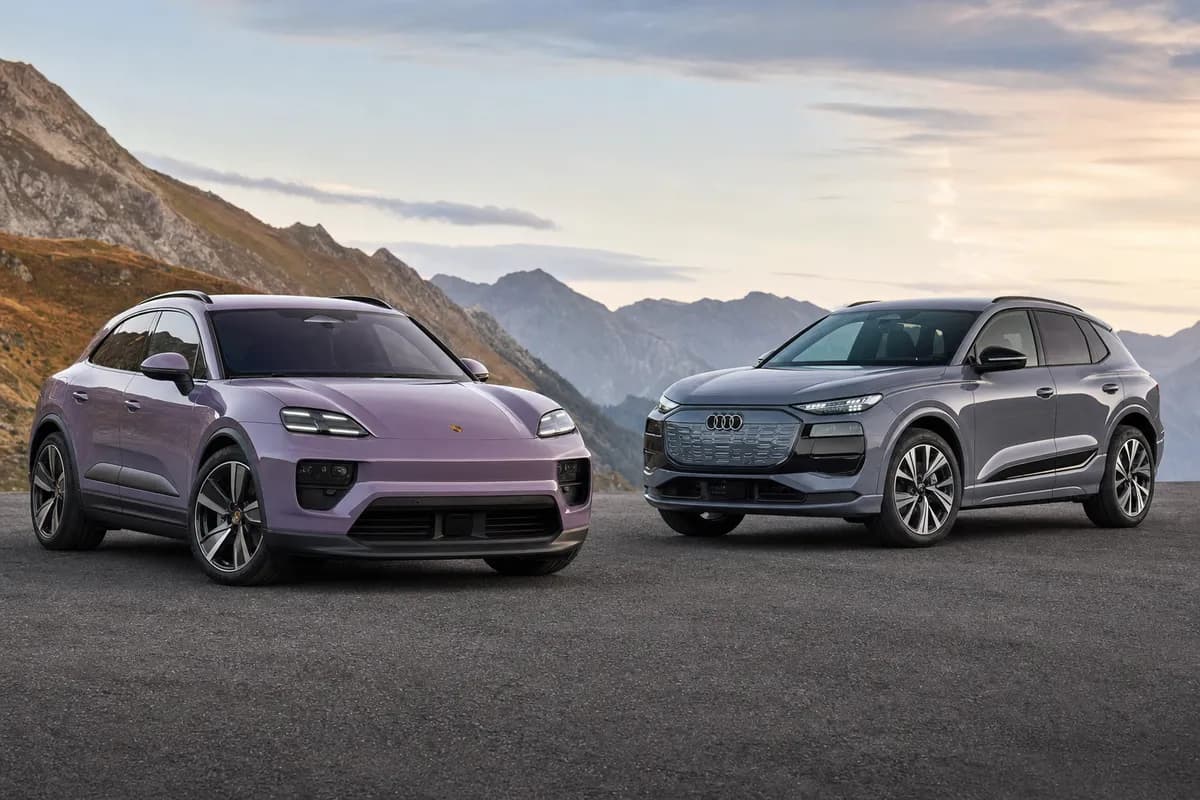
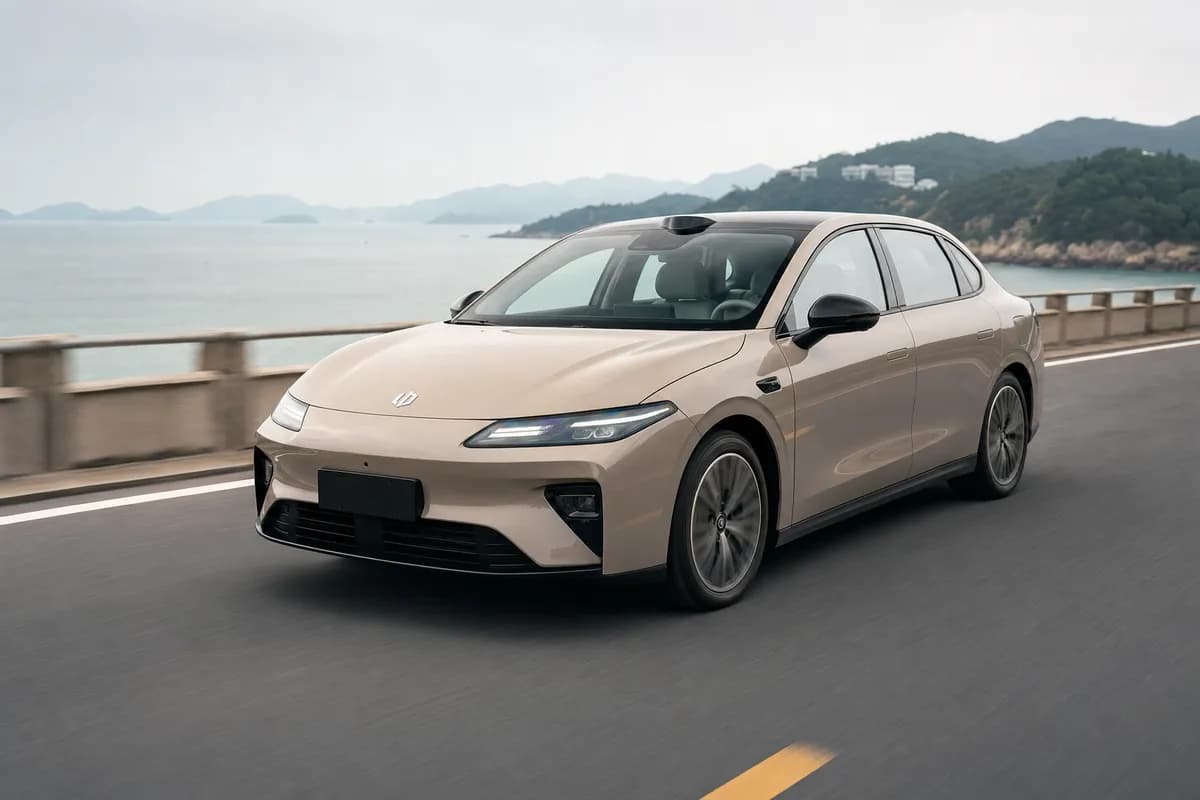
The 2025 Porsche Macan EV and Audi Q5 e-tron wear premium German badges, plug into the same electric future, and aim at buyers who want an SUV with polish rather than punishment. But do not be fooled by the family resemblance.
Here is the quick positioning:
- Porsche Macan EV: five-seat premium electric SUV, performance-first, 800-volt architecture, up to 630 hp in Macan Turbo form.
- Audi Q5 e-tron: six- or seven-seat electric SUV for China, comfort-first, MEB-based, up to about 302 hp in quattro form.
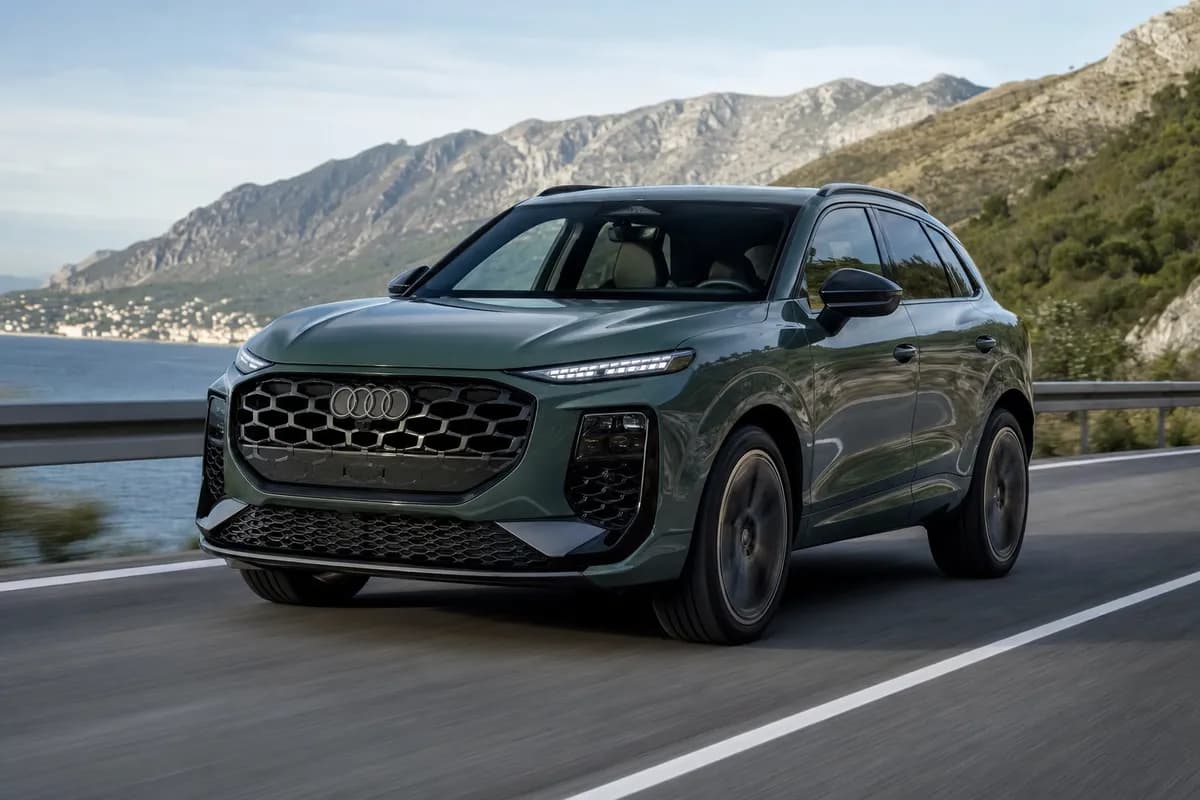
- Closest true Audi rival to the Macan EV: Audi Q6 e-tron, not the Q5 e-tron. But the Q5 e-tron still matters if you are shopping in China and want a premium electric SUV with more seats.
Dimensionally, the Audi plays the bigger card. The Q5 e-tron is roughly 4,876 mm long with a wheelbase of around 2,965 mm, giving it the packaging advantage for family use. The Porsche Macan EV is shorter at about 4,784 mm, but it sits on a generous 2,893 mm wheelbase and uses its footprint for stance, dynamics, and packaging rather than third-row duty.
In plain English: if you need to haul grandparents, children, and everyone’s overpacked luggage, the Audi starts with a natural advantage. If you care how a car rotates into a corner, how it launches, and whether it feels expensive at 70 mph and at seven-tenths on a mountain road, the Porsche is already clearing its throat.
Performance: The Macan EV Is a Sports Car in Hiking Boots
The Porsche Macan EV does not tiptoe into electrification. The launch range includes the Macan 4 and Macan Turbo, with later variants broadening the lineup. The Macan 4 produces up to 402 hp and 479 lb-ft with overboost, good for a claimed 0-60 mph in 4.9 seconds. That is already quick enough to embarrass plenty of old-school performance SUVs.
Then there is the Macan Turbo, which is Porsche being Porsche: unnecessary, deeply satisfying, and not remotely apologetic. It makes up to 630 hp and 833 lb-ft of torque with launch control, ripping from 0-60 mph in 3.1 seconds. Top speed is 161 mph. For context, that puts it in the same acceleration conversation as a BMW iX M60, Mercedes-AMG EQE SUV, and some startled sports sedans wondering why the school-run Porsche just left them inhaling electrons.
The Audi Q5 e-tron is not playing that game. In typical higher-output 50 e-tron quattro form, it produces around 225 kW, or roughly 302 hp, with dual-motor all-wheel drive. Acceleration to 100 km/h is generally quoted around the high-six-second range depending on specification. The rear-drive versions are calmer still, with about 150 kW, or roughly 201 hp.
That is perfectly adequate for commuting, school runs, and gliding through urban traffic. But against the Macan EV, the Q5 e-tron is bringing a polite handshake to a knife fight.
The Porsche also has the chassis hardware to back up the numbers. Depending on trim and options, the Macan EV offers Porsche Active Suspension Management, adaptive air suspension, an electronically controlled rear differential, and rear-axle steering. It also has a low center of gravity, wide tires, and Porsche’s usual obsession with steering response. The result is an electric SUV that should feel smaller and angrier than its curb weight suggests.
The Audi is tuned more softly. Its MEB bones prioritize packaging efficiency and easy manners. That is not an insult. A family SUV should not ride like a bar stool falling down stairs. But the Audi’s mission is comfort, not corner-exit violence. It will cruise, absorb, and behave. The Porsche will goad you into taking the long route home, then charge you for tires later. Fair trade.
Performance verdict: The Audi Q5 e-tron is quick enough. The Porsche Macan EV is properly fast. If driving matters, this round is not close.
Battery, Range, and Charging: Porsche Has the Better Electric Tool Kit
The Macan EV uses a 100 kWh gross battery, with about 95 kWh usable. More importantly, it uses an 800-volt electrical architecture, allowing DC fast charging at up to 270 kW when connected to a suitable charger. Porsche quotes a 10-80 percent charge in about 21 minutes. That is the sort of charging speed that turns a road-trip stop from “full family crisis” into “coffee, restroom, leave.”
EPA range for the Macan EV depends on trim. The Macan 4 Electric is rated at up to around 308 miles, while the Macan Turbo Electric sits around 288 miles. WLTP figures in Europe are higher, as usual, because WLTP has a sunnier imagination than American highway testing. Still, the Macan’s efficiency and usable range are competitive for a performance-oriented premium SUV.
The Audi Q5 e-tron typically uses an 83.4 kWh battery in long-range China-market versions. Official Chinese CLTC range ratings can reach around 560 km for rear-drive models and roughly 520 km for quattro versions, depending on trim and wheel package. But CLTC is an optimistic test cycle. Treat those figures like a dating profile photo: not fake exactly, but definitely flattering.
In real mixed driving, especially at highway speeds, the Q5 e-tron’s usable range will likely fall well below the headline CLTC number. Its 400-volt MEB charging setup also cannot match the Porsche’s maximum charge rate. Depending on specification and charger, the Q5 e-tron generally sits closer to the 100-125 kW DC fast-charging class, with typical 10-80 percent stops taking noticeably longer than the Macan’s best-case 21-minute sprint.
This matters. Premium EV buyers are no longer impressed by a big screen and a plug. They want charging speed, thermal management, route planning, and repeatable performance. Porsche’s PPE platform is simply newer, more expensive, and more capable here. It is the difference between having a sharp power tool and a perfectly nice cordless screwdriver.
- Macan EV battery: 100 kWh gross, approximately 95 kWh usable.
- Macan EV peak DC charging: up to 270 kW.
- Macan EV 10-80 percent charging: about 21 minutes under ideal conditions.
- Q5 e-tron battery: commonly 83.4 kWh in long-range variants.
- Q5 e-tron charging: slower 400-volt MEB-based system, generally around 100-125 kW peak depending on version.
If your driving is mostly urban and you charge at home, the Audi’s slower fast charging may not bother you. If you road-trip, drive hard, or simply hate waiting next to a malfunctioning charger while eating a tragic sandwich, the Porsche is the superior EV.
Cabin and Practicality: Audi Wins the Seats, Porsche Wins the Vibe
The Audi Q5 e-tron’s strongest argument is simple: space. It offers six- and seven-seat configurations, making it much more useful for larger families than the five-seat Macan EV. Its long wheelbase and boxier proportions give passengers more breathing room, particularly in the second row. The third row is still best suited to children or flexible adults with forgiving knees, but at least it exists. In the Porsche, it does not.
The Q5 e-tron cabin follows modern Audi convention: clean design, digital displays, quality materials in the right places, and a generally calm atmosphere. It is not as jewel-like as an A8, nor as radical as a Mercedes EQ cabin, but it feels premium enough. Depending on trim, expect a digital instrument cluster, a central infotainment screen around 11.6 inches, available head-up display tech, and the kind of ambient lighting that makes every night drive feel faintly like a boutique hotel lobby.
The Porsche Macan EV counters with a richer, more driver-focused cockpit. It uses a 12.6-inch curved digital instrument cluster, a 10.9-inch central touchscreen, and an optional passenger display. Porsche has also improved the infotainment system with quicker responses, better EV route planning, and app integration. Crucially, the driving position is excellent. Porsche understands that a steering wheel, pedals, and seat are not random furniture; they are the triangle of happiness.
Practicality is not bad in the Macan EV. It has around 18 cubic feet of cargo space behind the rear seats, expanding to about 46.5 cubic feet with the seats folded, plus a small front trunk of roughly 2.9 cubic feet. It can also tow up to about 4,409 pounds when properly equipped. That is genuinely useful, especially for bikes, small trailers, and lifestyle accessories owned by people who say “adventure” a lot.
But the Audi is the more rational family machine. It has the bigger body, more seating configurations, and a calmer cabin for passengers who do not want every on-ramp treated like qualifying at Spa. If you are chauffeuring kids, in-laws, and possibly a golden retriever with boundary issues, the Q5 e-tron makes sense.
Still, “makes sense” is not the same as “feels special.” The Macan EV feels like a Porsche product from the driver’s seat. The Audi feels like a premium Volkswagen Group electric SUV, because under the skin, that is largely what it is. Comfortable? Yes. Classy? Mostly. Memorable? Less so.
Price, Rivals, and Value: The Audi Is Cheaper, the Porsche Feels Pricier for a Reason
The 2025 Porsche Macan EV is not cheap, because Porsche has never confused itself with a charity. In the U.S., pricing starts around the mid-to-high $70,000 range before options, with the Macan 4 sitting around $78,800 before destination and the Macan Turbo climbing to roughly $105,300 before Porsche’s famously enthusiastic options list gets involved. Add air suspension, rear-axle steering, bigger wheels, upgraded audio, premium paint, and suddenly your “compact SUV” is wearing a six-figure suit.
The Audi Q5 e-tron is priced very differently in China, where transaction prices and incentives vary heavily by region and trim. Historically, it has occupied a lower band than the Macan EV, often competing more with upper-trim Volkswagen ID.6 models, Nio family SUVs, Li Auto range-extenders, and other China-market premium EVs than with Porsche’s performance machinery. On value and passenger capacity, the Audi has a credible case.
But against global rivals, the Porsche’s pricing looks less insane than it first appears. A Mercedes-Benz EQE SUV can easily push deep into premium territory. A BMW iX is quick, luxurious, and visually challenging enough to make small children ask difficult questions. A Genesis Electrified GV70 is excellent value but lacks the Porsche’s charging architecture and dynamic edge. A Tesla Model Y Performance is much cheaper and very quick, but it does not have the Macan’s cabin quality, steering feel, or brand theater. And the Audi Q6 e-tron, the Macan’s true platform cousin, is the more natural cross-shop if you want Audi luxury with PPE hardware.
The Q5 e-tron’s problem is not that it is bad. It is that the EV market has moved savagely fast. A premium badge is no longer enough when Chinese brands like Nio, Zeekr, Li Auto, and Xpeng are throwing huge screens, rapid software updates, air suspension, and lounge-like interiors into the fight at aggressive prices. In that crowd, the Audi needs to win on trust, design restraint, and dealer experience. That is useful, but not thrilling.
The Porsche, meanwhile, has a clearer identity. It is expensive because it delivers things that are expensive to engineer: huge power, sophisticated suspension, 800-volt charging, strong brakes, repeatable performance, and steering that does not feel like it was calibrated during a lunch break.
Verdict: Buy the Audi for the Family, Buy the Porsche for Yourself
The 2025 Porsche Macan EV wins this comparison as the premium electric SUV you actually want to drive. It is faster, sharper, more advanced, and more convincing as a luxury performance product. The Macan Turbo is outrageously quick, but even the Macan 4 has enough punch to make the Audi Q5 e-tron feel sleepy. Add the Porsche’s 800-volt charging, strong range, excellent driving position, and serious chassis hardware, and the result is not subtle.
The Audi Q5 e-tron still has a job. If you are in a market where it is sold, need six or seven seats, want a quieter family EV, and care more about comfort than cornering balance, it is the more practical choice. It is roomier, likely cheaper, and less demanding. For family logistics, that matters. Not every school run needs launch control and rear-axle steering.
But as a premium electric SUV rivalry, the Porsche lands the harder punches. The Audi is sensible, spacious, and pleasant. The Porsche is desirable. That is the difference between a car you justify on a spreadsheet and one you keep looking back at after you park.
Final call: Choose the Audi Q5 e-tron if you need maximum seats and family practicality in China. Choose the 2025 Porsche Macan EV if you want the better electric SUV, the better driver’s car, and the one that actually earns its premium badge.
Affiliate disclosure: This article contains affiliate links. RevvedUpCars may earn a small commission on qualifying purchases at no extra cost to you.