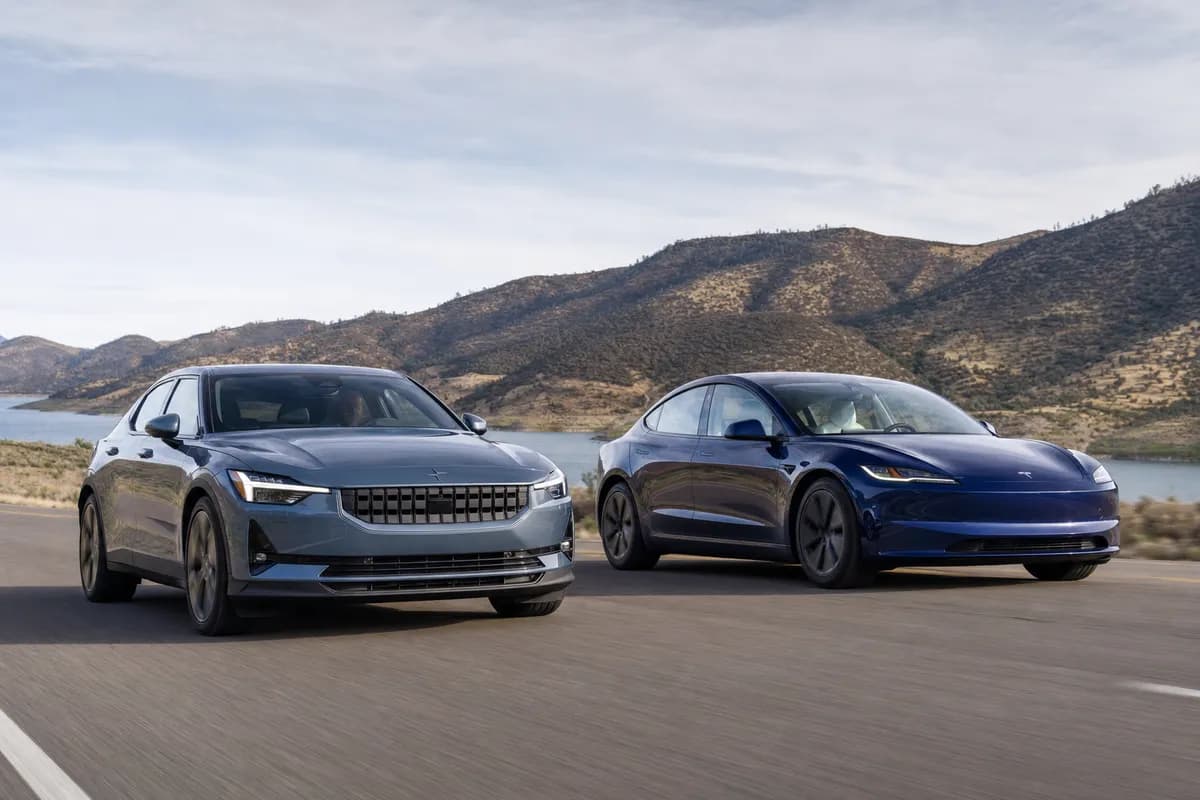
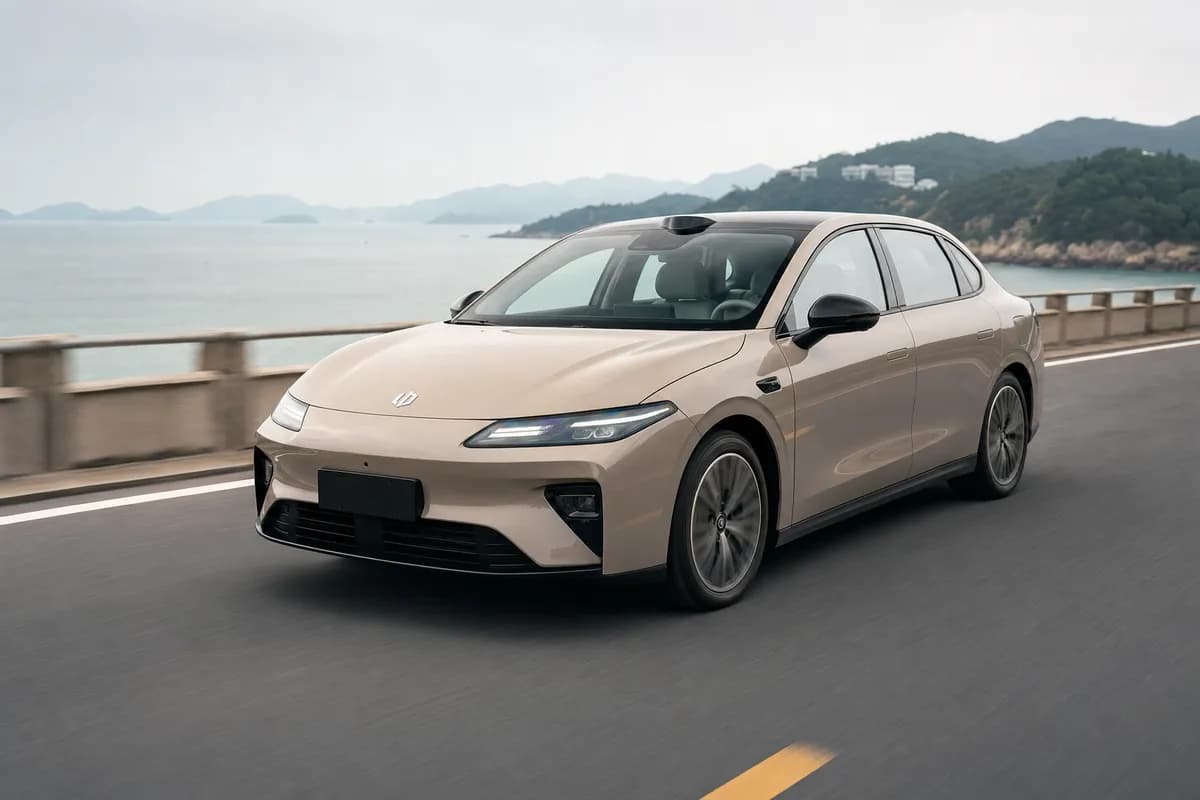
The Polestar 2 and Tesla Model 3 are the electric sedans for people who have moved past the “will it run out of charge?” phase and into the much more interesting question: “Which one deserves my money?” For 2024, this fight gets properly spicy.
- Polestar 2 Long Range Single Motor: rear-wheel drive, 299 hp, 361 lb-ft, 0-60 mph in 5.9 seconds, up to 320 miles EPA range, starting around $49,900.
- Polestar 2 Long Range Dual Motor: all-wheel drive, 421 hp, 546 lb-ft, 0-60 mph in 4.3 seconds, up to 276 miles EPA range, starting around $55,300.
- Polestar 2 Dual Motor with Performance Pack: 455 hp, 0-60 mph in 4.1 seconds, Brembo front brakes, manually adjustable Öhlins dampers, 20-inch wheels, and reduced range depending on wheel and tire setup.
Tesla’s 2024 Model 3 lineup is leaner and more brutal on value:
- Tesla Model 3 Rear-Wheel Drive: 0-60 mph in 5.8 seconds, 272 miles EPA range, starting around $38,990.
- Tesla Model 3 Long Range All-Wheel Drive: 0-60 mph in 4.2 seconds, up to 341 miles EPA range, starting around the high-$40,000 range.
- Tesla Model 3 Performance: 0-60 mph in 2.9 seconds with rollout subtracted, 303 miles EPA range, adaptive dampers, track-oriented hardware, and pricing around the mid-$50,000 range.
On paper, Tesla starts throwing elbows immediately. The Model 3 Long Range AWD undercuts or closely matches the Polestar 2 Dual Motor on price, beats it on range, and matches it on acceleration. The base Model 3 is dramatically cheaper than the base Polestar 2, though the Tesla is less powerful and has a smaller range figure than the Polestar’s 320-mile single-motor car.
Then there’s the tax-credit mess. In the U.S., Tesla’s eligibility has shifted with battery sourcing and trim changes, while the China-built Polestar 2 generally misses out on the federal purchase credit, though lease deals can sometimes pass along commercial clean-vehicle incentives. Translation: check the exact VIN and current rules before signing. EV incentives change faster than a startup’s press release strategy.
Driving: The Polestar Has Soul, the Tesla Has Speed
The 2024 Polestar 2 is the driver’s car for people who still like cars to feel like cars. Its steering has actual weight. Its body control is tight. Its brake pedal feels conventional and trustworthy. You sit in it, not on it, and the whole thing has that dense, Swedish-engineered confidence that makes a Volvo feel like it was carved from a bridge support.
The switch to rear-wheel drive in the Polestar 2 Single Motor is the big story. The old front-drive version had enough torque to make the front tires squirm like they’d been caught lying on a résumé. The 2024 rear-drive car puts power down cleanly, rotates more naturally, and feels calmer when you’re pushing through a fast bend. With 299 hp, it is not slow. In fact, for daily driving, it’s the sweet spot of the Polestar range.
The Dual Motor Polestar 2 is properly quick. With 421 hp and 546 lb-ft, it hits 60 mph in 4.3 seconds, which is firmly in “humble your neighbor’s V8” territory. Add the Performance Pack and you get 455 hp, Öhlins dampers, Brembo brakes, gold seatbelts, and the faint sense that someone in Gothenburg has a track-day habit. The hardware is excellent, but the manually adjustable dampers are a nerdy delight and a real-world nuisance. Crawling under your car to tweak suspension settings is charming on a Caterham. On a premium EV sedan, it feels like cosplay.
The Tesla Model 3, by contrast, is less romantic and more clinical. The refreshed 2024 car rides better than before, with improved damping and more isolation from road noise. That matters because the old Model 3 could feel like it had been suspended on tightly wound sarcasm over broken pavement. The Highland update smooths the worst edges without turning it soft.
In a straight line, Tesla wins. The Model 3 Long Range AWD’s 4.2-second 0-60 mph time is already quicker than almost anyone needs. The Model 3 Performance is just rude: 2.9 seconds to 60 mph with rollout subtracted, adaptive dampers, bigger brakes, stickier tires, and software that lets it do credible track work. Not “Porsche Taycan Turbo GT” credible, but certainly enough to make a BMW M340i look nervously at its lease paperwork.
But speed is not the same as feel. The Model 3’s steering is accurate but a bit digital, and its brake blending is competent rather than charismatic. The Polestar feels heavier because it is heavier, but also more substantial. If you enjoy the sensation of a car taking a set in a corner and communicating through the chassis, the Polestar talks more. The Tesla just gets there first, checks its phone, and asks what took you so long.
Driving verdict: Buy the Tesla if acceleration, efficiency, and point-to-point pace matter most. Buy the Polestar if you want weight, texture, and a car that feels engineered by humans rather than optimized by a spreadsheet with a superiority complex.
Range and Charging: Tesla Still Owns the Long Game
This is where the Tesla Model 3 lands its cleanest punch. The 2024 Model 3 Long Range AWD is rated at up to 341 miles by the EPA. The rear-drive version is rated at 272 miles, and the Performance comes in at 303 miles. More importantly, Teslas tend to be exceptionally efficient in real-world driving, especially at moderate speeds. The Model 3’s aero, powertrain tuning, heat-pump integration, and route planning are still among the best in the business.
The Polestar 2 has improved dramatically. The Long Range Single Motor’s 320-mile EPA estimate is a legitimate achievement, especially considering the car’s more upright stance and heavier feel. The Dual Motor’s 276-mile figure is decent but not dazzling, and the Performance Pack’s larger wheels and stickier tires can cut further into that number. Physics remains undefeated, and 20-inch performance tires are not range enhancers, no matter how gold the brake calipers are.
Charging is the bigger divide. The 2024 Tesla Model 3 uses Tesla’s North American Charging Standard connector and plugs directly into the Supercharger network. That means excellent route planning, preconditioning, reliable chargers, and the blissful absence of app-juggling in a freezing parking lot while a CCS station blinks at you like a haunted printer.
Peak DC fast-charging numbers vary by trim, but the Model 3 Long Range can charge at up to 250 kW on compatible Superchargers. The rear-drive Model 3 peaks lower, around 170 kW, but its smaller, efficient battery still makes road-tripping painless.
The 2024 Polestar 2 uses a CCS port. The Single Motor can peak at up to 205 kW under ideal conditions, while Dual Motor versions have typically charged at lower peak rates depending on battery configuration. In practice, the Polestar charges quickly enough, but the experience depends heavily on the public charging network you use. Electrify America, EVgo, ChargePoint, and others have improved, but Tesla’s network remains the gold standard for consistency. Everyone else is still trying to turn “charger unavailable” into a lifestyle brand.
Polestar is moving toward Tesla network access and NACS adoption, but for a 2024 buyer, the native Tesla experience remains cleaner and more confidence-inspiring. On a daily commute, both cars are easy. On a 700-mile interstate blast, the Tesla makes the plan and executes it. The Polestar asks you to be a little more involved.
Range and charging verdict: Tesla wins. The Polestar 2 Single Motor’s 320-mile rating is strong, but the Model 3 Long Range’s 341 miles and Supercharger integration make it the superior road-trip weapon.
Cabin, Tech, and Practicality: Normal Versus Minimalist
The Polestar 2 cabin is a lovely place if you like your car interior to resemble, well, a car interior. There is a proper driver display. There are familiar controls. The portrait-oriented 11.2-inch center screen runs Android Automotive with Google Maps built in, and it works well. Not “pretty good for a car system” well. Actually well. Voice commands are useful, navigation is clear, and the interface does not require a sacred blood oath to adjust basic functions.
Material quality in the Polestar is also strong. The design is calm, architectural, and premium without shouting. The available vegan upholstery, reconstructed wood trim, and panoramic roof give it a cool boutique-hotel vibe. Add the Plus Pack and you get niceties such as a Harman Kardon audio system, heated rear seats, heated steering wheel, and upgraded interior materials, depending on configuration.
The problem is space. The Polestar 2 rides on a platform with internal-combustion roots, and you feel that in the cabin. The center tunnel is bulky. Rear legroom is acceptable rather than generous. The roofline pinches headroom. For a car that technically competes with the Model 3, it feels more compact inside. The liftback hatch is useful, though, and gives it a practicality edge over a conventional trunk shape. Cargo space is about 14.3 cubic feet behind the rear seats, expanding significantly with the seats folded, plus a small front trunk.
The Tesla Model 3 cabin is the opposite philosophy: delete everything that isn’t a screen, then delete a few things that probably should have stayed. The refreshed 2024 Model 3 has a cleaner interior, better materials, acoustic glass, improved seats, ambient lighting, ventilated front seats on many trims, and an 8-inch rear touchscreen for passengers. It is quieter and more refined than before. This is not a small update; it makes the old car feel a generation older.
But Tesla also removed the steering-column stalks. Turn signals now live as buttons on the steering wheel. Gear selection is handled on the screen, with backup controls overhead. Some owners will adapt quickly. Others will spend the first week signaling left while trying to cancel right and quietly questioning civilization. On roundabouts, it is a design decision that deserves a stern talking-to.
Infotainment is Tesla’s kingdom. The 15.4-inch center display is fast, crisp, and loaded with excellent mapping, charging integration, streaming apps, games, and vehicle controls. Tesla’s software ecosystem is still the slickest in the EV world. Apple CarPlay and Android Auto? No. Tesla does not care, and frankly, it has enough native functionality that most owners stop complaining. Mostly.
The Model 3 is also roomier than the Polestar, especially in the rear seat. Its low floor and long wheelbase help passenger space, and cargo volume is excellent when you include the deep underfloor storage and front trunk. It is a better family car than its sleek shape suggests.
Driver-assistance tech is a philosophical brawl. Tesla includes basic Autopilot, which handles adaptive cruise and lane centering well on highways. Full Self-Driving capability costs extra and remains a supervised driver-assistance system, despite the name doing its best impression of a lawsuit magnet. Polestar’s Pilot Pack offers adaptive cruise, Pilot Assist lane support, blind-spot monitoring, rear cross-traffic alert, and a 360-degree camera depending on configuration. It is less theatrical than Tesla’s setup, but also less likely to make absurd promises at dinner parties.
Cabin verdict: Tesla has the better software, space, and efficiency of packaging. Polestar has the better control layout, richer traditional feel, and a cabin that does not treat turn-signal stalks as an outdated social construct.
Verdict: Which Electric Sedan Should You Buy?
The 2024 Polestar 2 is the car I want to like more, and in some ways, I do. It has character. It feels expensive in the old-fashioned sense: dense, calm, carefully tuned. The rear-drive Single Motor model is the best Polestar 2 yet, with 299 hp, 320 miles of range, and handling balance the earlier car badly needed. The Dual Motor is quick, the Performance Pack is genuinely engaging, and the hatchback practicality gives it a useful twist against the sedan-shaped Tesla.
But buying advice is not a poetry contest. It is about spending your money wisely.
The 2024 Tesla Model 3 is the better overall EV. The Long Range AWD is the killer spec: up to 341 miles of EPA range, 0-60 mph in 4.2 seconds, excellent efficiency, more interior space, better charging access, and pricing that makes the Polestar look expensive. The refreshed cabin is quieter and more mature, the ride is improved, and the software remains the industry benchmark. Yes, the no-stalk control layout is annoying. Yes, the brand’s overpromising around autonomy deserves every raised eyebrow it gets. But as a daily electric sedan, the Model 3 is devastatingly hard to beat.
If you are cross-shopping the Hyundai Ioniq 6, BMW i4, Kia EV6, or Genesis Electrified GV70, the same split applies. The Tesla is the rational EV answer. The Polestar is the emotional premium alternative. The BMW i4 feels more luxurious and more traditionally sporty, but costs more when equipped properly. The Hyundai Ioniq 6 charges brilliantly and rides well, but lacks the Tesla’s ecosystem and the Polestar’s upscale cool. The Polestar 2 sits in that appealing middle ground: more distinctive than a Tesla, less expensive than a loaded German, and more satisfying to drive than its spec sheet suggests.
So here is the clean call.
- Buy the 2024 Tesla Model 3 Long Range AWD if you want the best all-around electric sedan: range, charging, performance, software, value, and resale confidence.
- Buy the 2024 Polestar 2 Long Range Single Motor if you want a premium EV with real steering feel, a proper driver display, useful hatchback practicality, and enough range to stop apologizing.
- Skip the Polestar 2 Performance Pack unless you genuinely care about the hardware. It is cool, but the Tesla Model 3 Performance is quicker and better suited to drivers who want maximum pace per dollar.
- Avoid choosing purely on brand image. Tesla’s image is loud; Polestar’s is quiet. Neither matters as much as your charging reality and how the controls feel after a week.
Final verdict: The Polestar 2 is the better car to sit in, steer, and feel good about in a design-conscious parking lot. The Tesla Model 3 is the better EV to own. In this mid-size electric sedan clash, the Polestar wins the heart, but the Tesla wins the keys.
Affiliate disclosure: This article contains affiliate links. RevvedUpCars may earn a small commission on qualifying purchases at no extra cost to you.