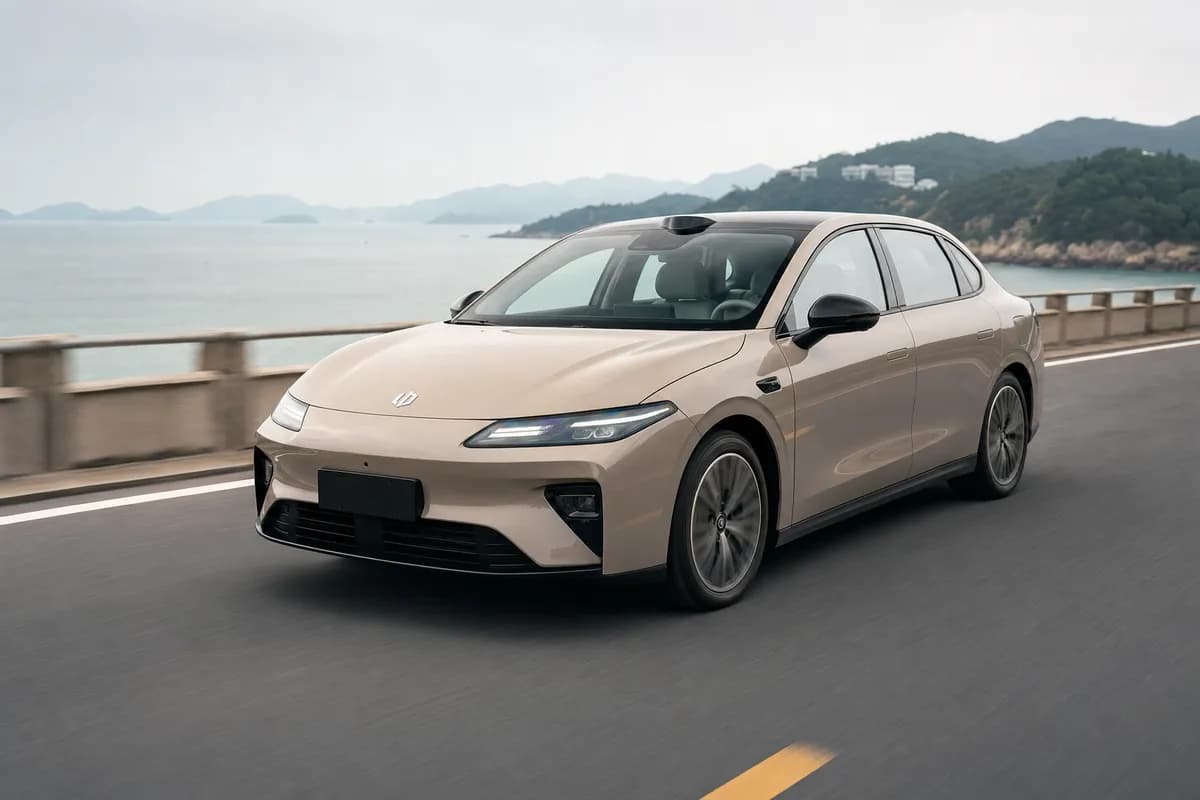
The 2024 Peugeot 3008 arrives with the kind of confidence you only get when a brand knows it has finally built the car it always wanted to build.
The 2024 Peugeot 3008 arrives with the kind of confidence you only get when a brand knows it has finally built the car it always wanted to build. Gone is the slightly upright family crossover with a sharp suit; in comes a sleeker, fastback-bodied SUV with concept-car lighting, a 21-inch curved dashboard display, and — crucially — a full-electric version promising up to 700 km of WLTP range. Peugeot calls it a new chapter. I call it the moment the 3008 stops merely chasing the Volkswagen Tiguan, Hyundai Tucson, Kia Sportage and Nissan Qashqai, and starts picking a fight with premium-ish electric crossovers like the Tesla Model Y, Renault Scenic E-Tech and Volkswagen ID.4.
Design: Peugeot Finally Goes Full Concept Car
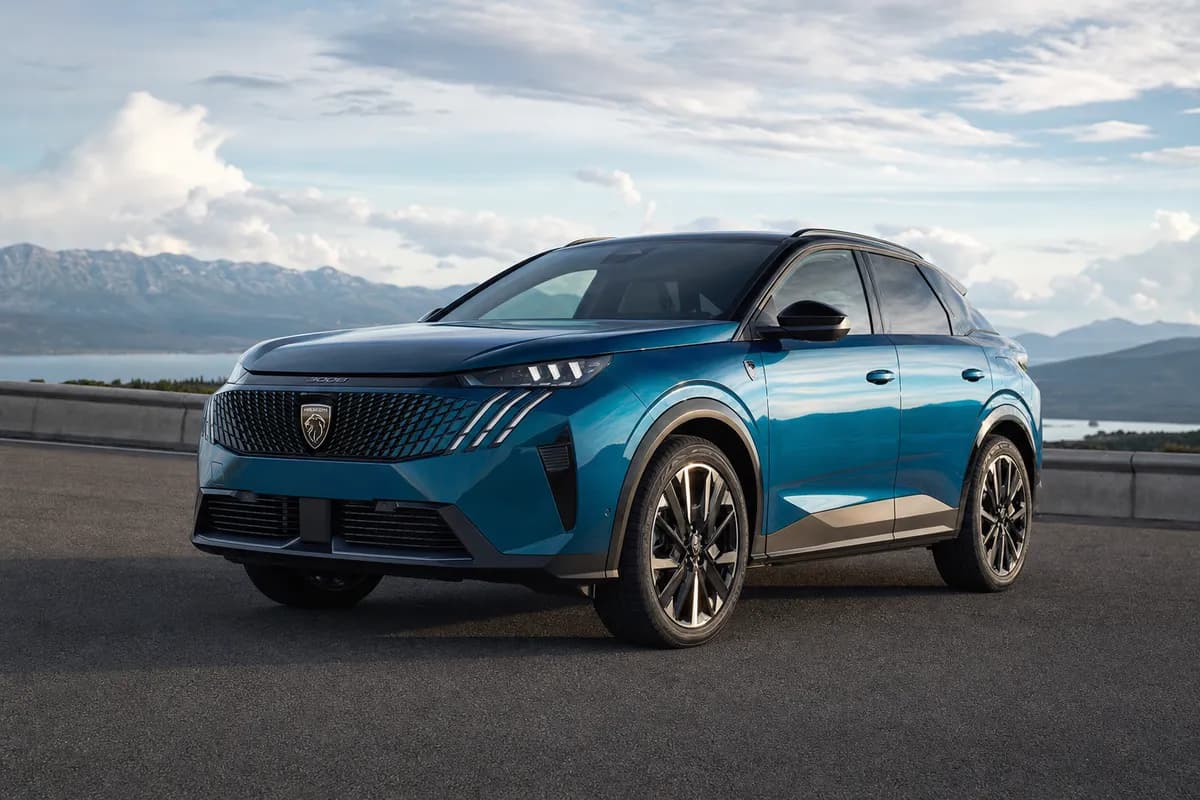
The 2024 Peugeot 3008 is not a cautious redesign. It has been pulled lower, stretched visually, and sharpened until the old car looks like it turned up wearing hiking boots to a fashion week afterparty. Peugeot has adopted what it calls a “fastback SUV” silhouette, which is marketing-speak for a crossover with a sloping roofline and just enough practicality left to avoid divorce proceedings.
Dimensionally, the new 3008 is roughly 4.54 metres long, 1.89 metres wide and 1.64 metres tall, with a wheelbase of about 2.73 metres. That puts it squarely in the compact-to-mid-size family SUV zone, but the proportions are more dramatic than the boxier Volkswagen Tiguan and less anonymous than the Nissan Qashqai. It looks expensive, which is half the battle in this class.
The front end wears Peugeot’s latest triple-claw light signature, with slim LED headlamps and a grille treatment that blends into the bodywork rather than sitting there like a plastic radiator intake from 2012. The rear is cleaner and more muscular, with a full-width black trim panel and three-claw tail-lamps. Depending on trim, wheel sizes run up to 20 inches, which will delight photographers and irritate anyone living near potholes.
Where the old 3008 succeeded was in making mainstream money feel premium. This new one doubles down. It is less conservative than a Tiguan, less gimmicky than some Korean rivals, and more distinctive than most electric SUVs under luxury-brand pricing. Peugeot has always been good at exterior theatrics; here, the theatre finally has the technology backstage to support the headline act.
The new 3008 looks like Peugeot stopped asking what Volkswagen would do and started asking what a French brand should do: be stylish, slightly defiant, and just practical enough to get away with it.
Powertrains: Hybrid First, Electric With Serious Range
The big story is the Peugeot E-3008, the fully electric version built on Stellantis’ new STLA Medium platform. That matters because this is not an old combustion crossover with batteries shoved under the floor like an afterthought. It is the first model from Stellantis to use this architecture, and Peugeot is making some properly ambitious claims.
At launch, the core E-3008 uses a front-mounted electric motor producing around 210 hp and a 73 kWh battery pack, with an official WLTP range of up to 525 km. That is already competitive. For context, a Volkswagen ID.4 Pro is in the same general zone depending on specification, while the Renault Scenic E-Tech Long Range claims up to 625 km WLTP. Tesla’s Model Y Long Range remains a benchmark for real-world efficiency and charging-network convenience, but Peugeot is no longer miles off the pace.
The version everyone will quote in the brochure, and rightly so, is the upcoming long-range E-3008 with a larger battery of around 98 kWh and an official range target of up to 700 km WLTP. That is a serious number. Not “city EV doing errands” serious — proper motorway-family-holiday serious. Peugeot also plans a dual-motor all-wheel-drive variant with around 320 hp, giving the 3008 a performance edge for buyers who want winter traction or simply enjoy deploying unnecessary torque with a straight face.
Charging is competitive rather than class-destroying. The E-3008 supports DC fast charging at up to 160 kW, with a claimed 20 to 80 percent charge in about 30 minutes. That is good, though not heroic. Hyundai and Kia’s 800-volt cars, such as the Ioniq 5 and EV6, still make much of the class look like it is sipping electricity through a cocktail straw. But for a family SUV, 160 kW is useful enough, provided the charging curve holds up in the real world.
For buyers not ready to go electric, Peugeot also offers the 3008 with a 136 hp mild-hybrid petrol powertrain paired to a six-speed dual-clutch automatic gearbox. It uses a small electric motor integrated into the transmission to support low-speed running and improve efficiency. No, it will not make your commute feel like a sci-fi film. But it should offer lower fuel use than a conventional petrol engine without the faff of plugging in.
Plug-in hybrid options are expected in the wider 3008 family, depending on market, but Peugeot’s centre of gravity has clearly shifted. The electric model is the star, the hybrid is the pragmatic understudy, and diesel — once the lifeblood of French family motoring — has effectively been shown the door with a polite but firm “merci, and don’t come back.”
Interior: The 21-Inch i-Cockpit Is Flashy, But Mostly Sensible
Inside, Peugeot has installed its latest Panoramic i-Cockpit, dominated by a 21-inch curved display that stretches across the top of the dashboard. It combines digital instruments and infotainment in one sweeping panel, positioned high and forward in the driver’s line of sight. It looks fantastic — genuinely showroom-stopping — and gives the 3008 a cabin more dramatic than the Volkswagen Tiguan’s sensible German office and more refined than the button-light chaos of some rivals.
Peugeot’s compact steering wheel remains. This is divisive, because of course it is. Some drivers love the go-kart feel and high-mounted display. Others find the wheel blocks the instruments unless they sit like a praying mantis. If you are considering a 3008, do not just read the brochure and nod sagely. Sit in one. Adjust the wheel. Adjust the seat. If the i-Cockpit works for your body shape, it feels special. If it does not, it will irritate you every single day.
The cabin design is more layered and premium than before, with fabric, soft-touch surfaces and ambient lighting doing the heavy lifting. Peugeot has also retained its customisable i-Toggles, which are touch-sensitive shortcut buttons for functions such as navigation, phone, climate or media. They are better than burying everything in a touchscreen, though physical climate controls would still be preferable because, and I will keep saying this until the industry repents, jabbing at a screen to demist a windscreen is not progress.
Practicality has not been sacrificed completely on the altar of style. Boot capacity is around 520 litres, which is similar to the outgoing model and competitive for the class. A Hyundai Tucson offers more outright luggage space in some versions, and a Skoda Karoq remains the choice if you value square-edged utility over visual drama. But the 3008 should cope easily with weekly shopping, airport runs and the usual family cargo of bags, bottles, scooters and mysterious sticky objects.
Rear-seat space is respectable rather than limousine-like. The sloping roofline means taller passengers may find less headroom than in a boxier SUV, but legroom is strong enough for family use. Peugeot has been clever here: the car looks sleeker without becoming useless. That sounds like faint praise, but in the crossover world it is rarer than it should be.
Technology and Driving: Comfort With a Sharper Edge Than Most
Peugeot has not positioned the 3008 as a performance SUV, and that is wise. Nobody buying a family crossover should be pretending they are one apex away from Le Mans glory. Still, the brand has historically managed to make its better cars feel lighter and more alert than the class norm. The 3008 needs to maintain that, especially now that EV mass is part of the equation.
The electric versions use a battery-underfloor layout, which should help keep the centre of gravity low. Expect the E-3008 to feel more planted than the mild-hybrid petrol model, though also heavier. The standard front-drive E-3008 with 210 hp should be brisk enough for family use, with instant torque making city driving effortless and motorway overtakes clean. The 320 hp dual-motor model will be the one for drivers who want extra punch, but do not expect hot-hatch mischief. This is still an SUV, not a 208 GTi reborn in platform shoes.
Ride quality will be the real test. Peugeot’s recent cars have generally found a good compromise between body control and comfort, but big wheels and heavy batteries can expose chassis tuning faster than a wet roundabout exposes cheap tyres. If Peugeot gets the damping right, the 3008 could feel more polished than a Tesla Model Y, which is quick and efficient but not exactly a masterclass in low-speed compliance.
The driver-assistance suite is suitably modern. Depending on trim and market, the 3008 offers adaptive cruise control, lane-keeping assistance, blind-spot monitoring, parking assistance and semi-automated driving functions. Peugeot’s latest systems also include connected navigation features that can plan charging stops for the electric model. That sounds mundane until you have tried planning an EV road trip through three apps, two broken chargers and one service station where the only working plug is being used by a taxi driver eating a sandwich with the calm of a monk.
Trim structure varies by market, but Peugeot typically keeps the range refreshingly simple with versions such as Allure and GT. Allure generally covers the essentials — the big screen, safety kit, efficient powertrains — while GT adds the visual drama and luxury touches buyers actually want when they are spending serious money. As ever, be careful with options. A stylish Peugeot can turn from good value to premium-priced very quickly if you start ticking boxes like you are decorating a yacht.
Rivals: The 3008 Is No Longer Just Fighting Family SUVs
The previous Peugeot 3008 spent most of its life fighting the Volkswagen Tiguan, Nissan Qashqai, Hyundai Tucson, Kia Sportage and Ford Kuga. The new one still does, especially in mild-hybrid form, but the E-3008 drags Peugeot into a much tougher electric arena.
Against the Volkswagen ID.4, the Peugeot has a more interesting interior and sharper design, though Volkswagen’s EV experience and packaging are proven. Against the Renault Scenic E-Tech, the Peugeot counters with a bolder cabin and the promise of that 700 km long-range version, though Renault’s family-car heritage and clever practicality are not to be dismissed. Against the Tesla Model Y, the Peugeot looks classier inside and less like it was designed by someone allergic to buttons, but Tesla still has charging infrastructure, software efficiency and performance credibility on its side.
Then there are the traditional hybrid SUVs. The Hyundai Tucson and Kia Sportage remain brutally effective: spacious, well equipped, well warranted and aggressively priced. The Nissan Qashqai is easy to drive and easy to recommend, though less special. The Volkswagen Tiguan is the sensible default for people who want their family SUV to feel like a well-managed spreadsheet. The Peugeot? It is the emotional choice that no longer requires quite so many rational compromises.
Pricing will decide how dangerous the 3008 really is. In markets such as the UK and Europe, the hybrid 3008 sits in the thick of mainstream SUV money, while the E-3008 moves into pricier EV territory. If Peugeot keeps the electric model close to rivals like the ID.4, Scenic E-Tech and entry-level Model Y, it has a genuine shot. If it gets greedy, buyers will simply wander into Tesla’s online shop and be done in twelve minutes.
Verdict: Stylish, Ambitious, and Finally Technically Serious
The 2024 Peugeot 3008 is exactly the sort of car Peugeot should be building: stylish without being silly, modern without feeling sterile, and technically ambitious without completely forgetting the school run. The exterior has presence, the interior has genuine wow factor, and the electric powertrains give it the numbers it needs to sit at the grown-ups’ table.
The E-3008 is the headline act. A claimed 525 km WLTP range from the standard electric version is useful, while the planned 700 km long-range model could be a proper game-changer if the real-world efficiency lands anywhere near the promise. The 160 kW charging speed is good rather than dazzling, and Tesla still has the ecosystem advantage, but Peugeot has produced an EV family SUV that looks and feels distinct rather than derivative.
The mild-hybrid version will matter for buyers who want the new 3008’s style and cabin without committing to public chargers and battery spreadsheets. It will not be the exciting one, but it may be the sensible one — and in this segment, sensible pays the bills.
Would I buy one? If the driving refinement matches the design ambition, yes — especially the E-3008 in a well-specced but not over-optioned trim. I would take it over a Nissan Qashqai without blinking, over a Volkswagen Tiguan if style and cabin theatre matter, and I would seriously test it against a Renault Scenic E-Tech before defaulting to the Tesla Model Y. Peugeot has not just launched another crossover. It has launched a proper statement.
Final verdict: the 2024 Peugeot 3008 is one of the most convincing mainstream European SUV launches of the year. It is not perfect, and it will need to prove its efficiency, ride comfort and software polish in real-world testing. But for once, Peugeot’s design swagger is backed by serious electric hardware. That makes the new 3008 more than pretty. It makes it dangerous.
Affiliate disclosure: This article contains affiliate links. RevvedUpCars may earn a small commission on qualifying purchases at no extra cost to you.