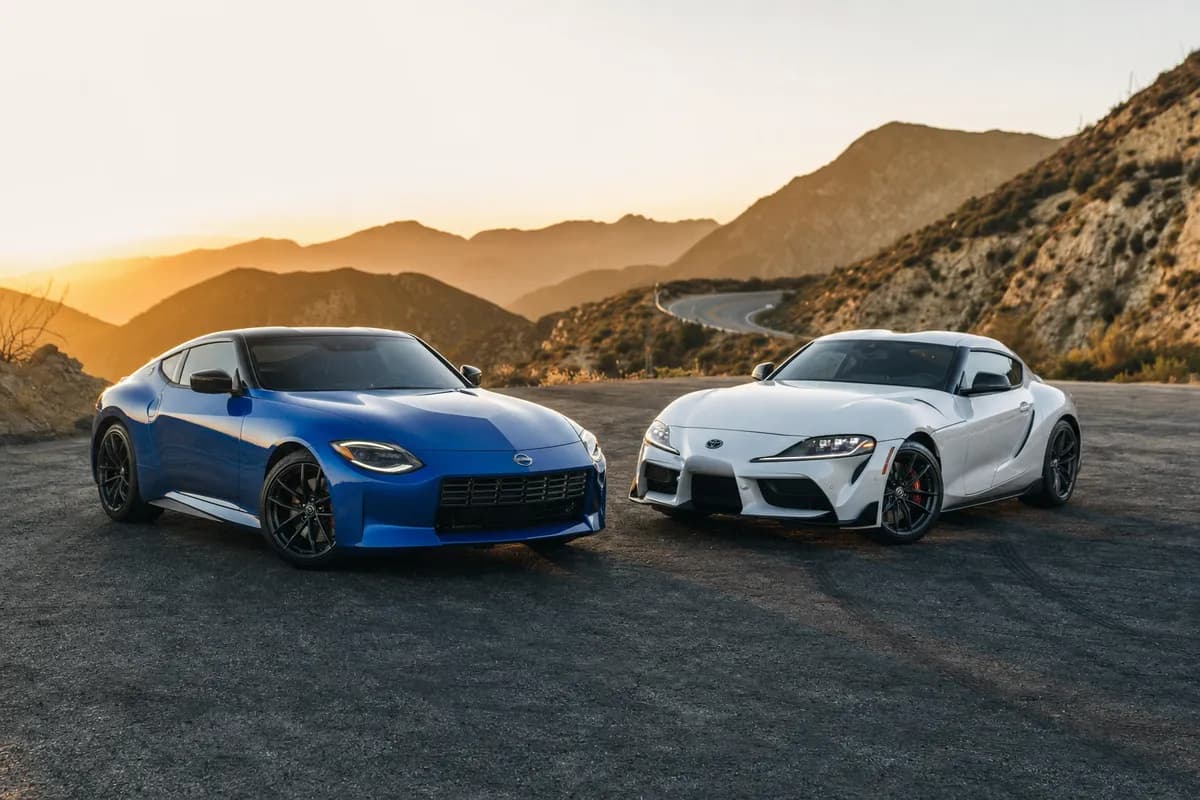
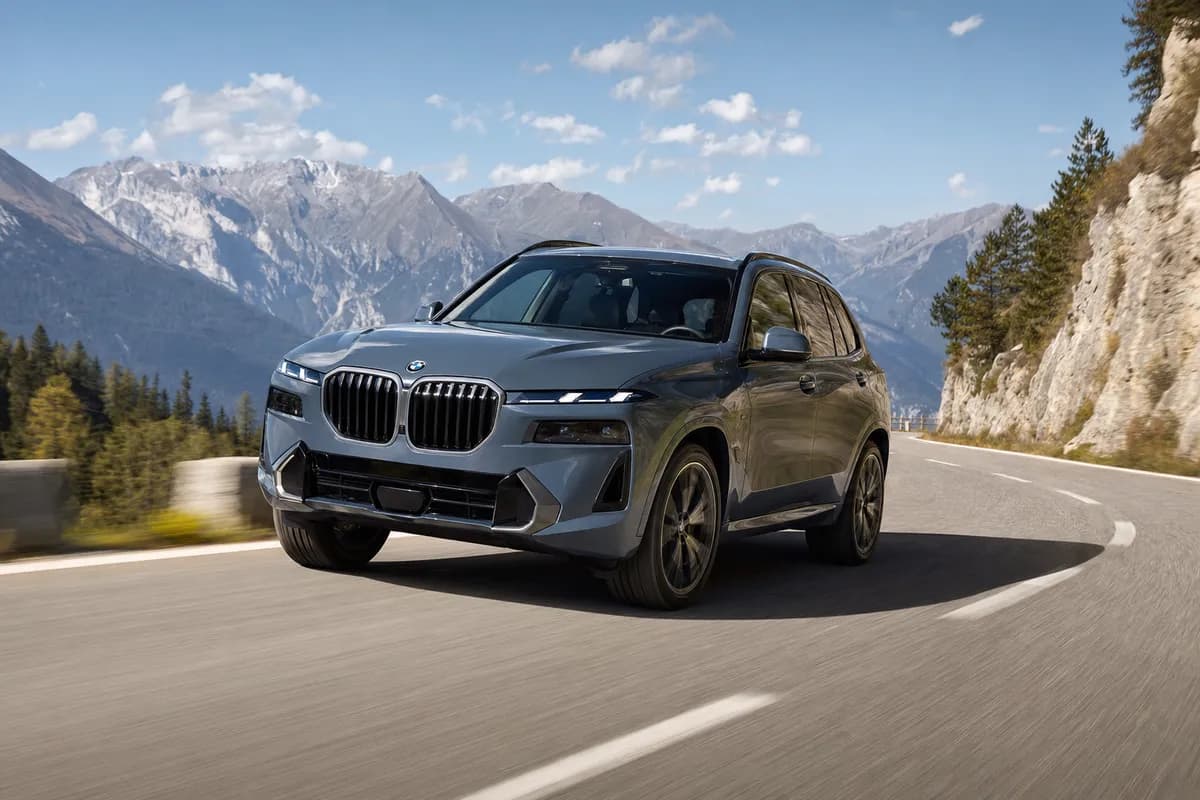
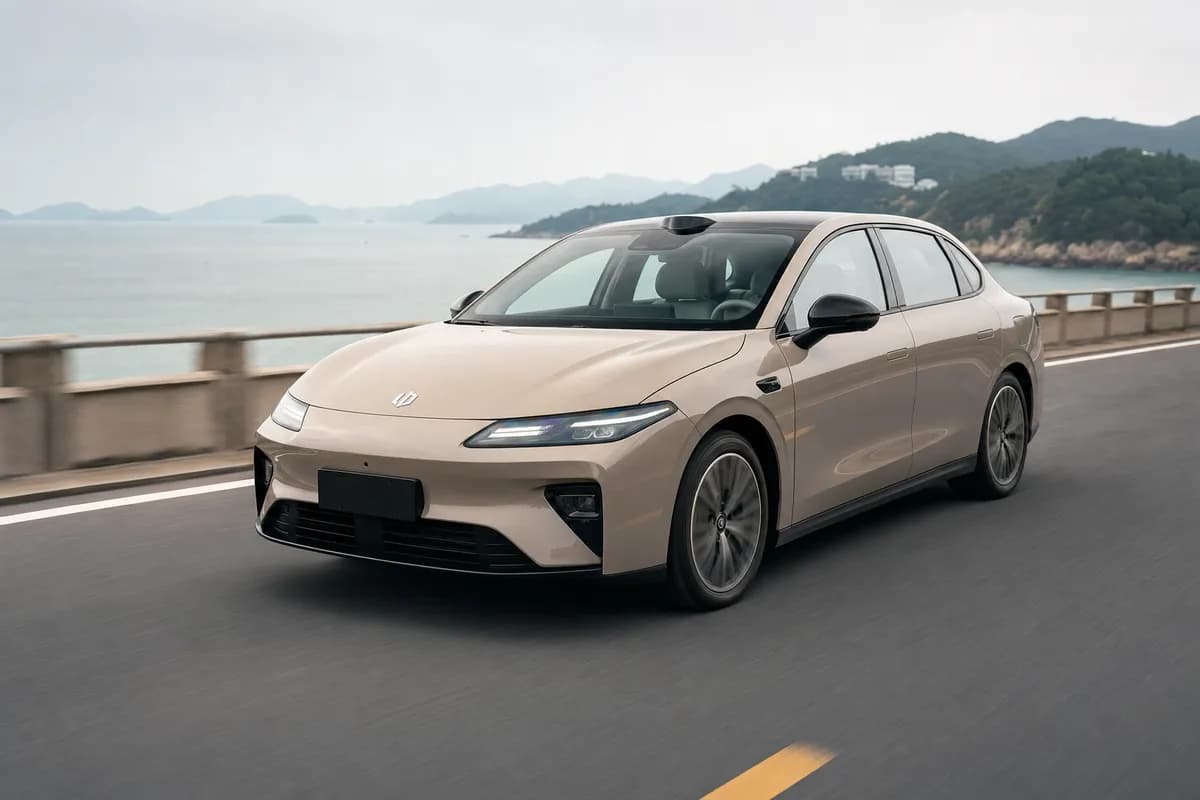
The 2025 Nissan Z and Toyota GR Supra are the two-car argument every enthusiast pretends is rational but secretly wants to settle with a launch-control run, a mountain road, and a tire budget.
The 2025 Nissan Z and Toyota GR Supra are the two-car argument every enthusiast pretends is rational but secretly wants to settle with a launch-control run, a mountain road, and a tire budget. Both are turbocharged, rear-drive, two-seat-ish coupes built to keep the flame alive in a world increasingly obsessed with silent crossovers and 5,000-pound EVs. But they do the job very differently. The Nissan Z is a Japanese muscle coupe with old-school charm, big torque, and a price that still looks vaguely sane. The Toyota Supra is really a BMW-engineered precision weapon wearing a Toyota badge, and it drives with the sort of polish the Z can only admire from the other lane. So which one deserves your money in 2025? Let’s stop romanticizing and start judging.
The Numbers: Power, Price, and What You Actually Get
On paper, the Nissan Z comes out swinging. The standard 2025 Z uses a 3.0-liter twin-turbocharged V6 producing 400 horsepower and 350 lb-ft of torque. Choose the Z NISMO and output rises to 420 horsepower and 384 lb-ft. The standard Z can be had with either a 6-speed manual or a 9-speed automatic, while the NISMO is automatic-only. Yes, automatic-only. On a NISMO. Somewhere, a 370Z track rat just spat coffee onto his Recaros.
The 2025 Toyota GR Supra, meanwhile, has trimmed the menu. The old 2.0-liter four-cylinder version is gone in the U.S., leaving the proper one: the 3.0-liter turbocharged inline-six. It makes 382 horsepower and 368 lb-ft of torque, routed through either an 8-speed automatic or a 6-speed manual. That engine is BMW’s B58, and if badge purity bothers you more than lap times, fine, go write a strongly worded forum post. The rest of us will enjoy one of the best turbo sixes in production.
Pricing is where the Z claws back dignity. The 2025 Nissan Z starts around the low-$40,000 range for the Sport trim, with the better-equipped Performance trim landing in the low-$50,000s. The Z NISMO pushes into the mid-$60,000s. The 2025 Toyota GR Supra 3.0 starts in the mid-$50,000s and climbs near $60,000 for the 3.0 Premium before options and destination charges. In other words, a Z Performance undercuts a comparable Supra 3.0 by several thousand dollars, while the Z NISMO runs straight into Supra money and then asks you to forgive its lack of a manual.
- 2025 Nissan Z: 3.0-liter twin-turbo V6, 400 hp, 350 lb-ft, manual or automatic
- 2025 Nissan Z NISMO: 420 hp, 384 lb-ft, automatic only
- 2025 Toyota GR Supra 3.0: 3.0-liter turbo inline-six, 382 hp, 368 lb-ft, manual or automatic
- Best value on paper: Nissan Z Performance
- Best hardware out of the box: Toyota GR Supra 3.0
Acceleration tells a slightly different story. Despite the Z’s horsepower advantage, the Supra is usually quicker in independent testing. The GR Supra 3.0 automatic can hit 0-60 mph in about 3.8 to 3.9 seconds. Manual versions are typically closer to the low-4-second range. The Nissan Z Performance automatic generally sits around 4.3 seconds to 60 mph, with the manual often a few tenths slower depending on surface, tires, and driver commitment. The Z NISMO improves the formula, but it still doesn’t turn the Nissan into a straight-line bully. The Supra puts power down better, shifts faster with the auto, and feels more sorted under hard launches.
Alex Torque’s take: The Nissan wins the dyno-brochure argument. The Supra wins the stopwatch argument. Guess which one matters when the light turns green?
Driving Feel: The Supra Is the Sharper Knife
The Supra is the more serious driver’s car. There, I said it. Toyota’s coupe has a shorter wheelbase, a lower center of gravity, a tighter structure, and a level of damping control the Z doesn’t match. The steering is quick, the front end bites harder, and the chassis feels more eager to rotate without turning every corner exit into a smoke machine audition.
The Supra’s 8-speed automatic is superb: fast, intelligent, and perfectly matched to the B58’s broad torque curve. The 6-speed manual is not the greatest stick shift in the world, but it gives the car the involvement it always needed. It has a slightly rubbery, BMW-ish action, but the clutch is manageable, the gearing is well chosen, and the engine’s flexibility makes it easy to drive quickly. The manual Supra feels like a real enthusiast concession, not a token PR exercise.
The Nissan Z has charm by the bucketful. Its twin-turbo V6 is muscular and easygoing, with torque arriving early and enough shove to make back roads entertaining without constant downshifts. The manual gearbox is familiar, somewhat mechanical, and more old-school than the Supra’s. There’s pleasure in that. The Z feels like a continuation of the 370Z lineage because, underneath the new skin and upgraded powertrain, that’s largely what it is. The platform traces its roots back a long way, and while Nissan has updated it, physics has a memory.
Push hard, and the Z reveals its age. The steering is less communicative than the Supra’s. Body control is good but not brilliant. The front end doesn’t have the same surgical bite, and the rear can feel busier when the pavement turns ugly. The Z Performance’s mechanical limited-slip differential helps enormously, and the upgraded brakes are mandatory if you plan to do more than commute theatrically. But on a demanding road, the Supra feels like a car developed with a stopwatch and a grudge. The Z feels like a car developed to make you smile first and worry about lap times second.
Then there is the Z NISMO. Nissan stiffened the structure, sharpened the suspension, upgraded cooling, added more aggressive bodywork, retuned the steering, and fitted stickier Dunlop SP Sport Maxx GT600 tires. It is meaningfully better on track than the regular Z. The transmission tuning is quicker, the brakes are stronger, and the car feels more disciplined. But the automatic-only decision is brutal. The NISMO should be the purist’s Z, and instead it is the one you can’t buy with a clutch pedal. That’s like selling a chef’s knife with a childproof handle.
The Supra is not perfect. Visibility is poor, especially over the shoulder. The cabin can feel snug to the point of wearing the car like a helmet. The steering, though accurate, is not overflowing with old-school feedback. And yes, plenty of the switchgear is BMW-sourced. But when you’re driving quickly, none of that matters much. The Supra flows. It changes direction with confidence, digs out of corners with traction, and feels expensive in the way it controls its mass.
Engine Character: V6 Swagger vs Inline-Six Silk
The Nissan’s VR30DDTT V6 gives the Z its personality. It is not a spine-tingling, naturally aspirated screamer like the old VQ at full chaos, but it is far more usable. Peak torque arrives early, boost builds quickly, and the car has a brawny midrange that suits daily driving. The soundtrack is decent but not spectacular; it sounds purposeful, though slightly muted from the factory. An exhaust wakes it up, but stock for stock, it does not deliver quite the theater its retro styling promises.
The Supra’s B58 inline-six is the better engine. It just is. Smooth, muscular, responsive, and underrated in classic BMW fashion, it makes the Supra feel faster than its 382-hp rating suggests. It pulls cleanly from low rpm, surges through the midrange, and keeps charging toward the top end with an expensive, polished snarl. It is one of the great modern performance engines, equally happy in a BMW M240i, a Z4 M40i, or this Toyota-badged coupe with Bavarian bones.
Fuel economy also favors the Supra, especially with the automatic. The GR Supra 3.0 automatic is rated around 23 mpg city and 31 mpg highway, while the manual sits lower, around 19 mpg city and 27 mpg highway. The Nissan Z automatic is typically rated around 19 mpg city and 28 mpg highway, with manual versions closer to 18 mpg city and 24 mpg highway. Nobody buys these cars to hypermile, but if you commute in one, the Supra’s efficiency is a useful bonus.
Reliability anxiety? Here’s the uncomfortable bit. The Toyota badge suggests bulletproof simplicity, but the Supra is heavily BMW underneath. That means maintenance costs, parts pricing, and long-term ownership may not feel like a Corolla with gym membership. However, the B58 has earned a strong reputation, and Toyota would not have put its name on a total grenade. The Nissan’s V6 is familiar and tunable, but the Z’s overall package has had complaints around transmission feel, heat management under track use, and refinement. Neither car is scary. The Supra just feels more thoroughly engineered.
Cabin, Practicality, and Daily Life
The Nissan Z has the more nostalgic cockpit. The triple dash gauges, simple driver-focused layout, and clean horizontal dashboard all nod to Z history without turning the interior into a cosplay convention. The digital cluster is clear, the seats are comfortable, and the Performance trim adds the equipment most buyers actually want: limited-slip differential, bigger brakes, better wheels, upgraded audio, and improved interior materials.
But the Z’s interior is a mixed bag. Some plastics feel old. Some switchgear reminds you this platform has been through several presidential administrations. The infotainment system is improved over the 370Z era, but that is like bragging that your fax machine now has Bluetooth. It works, it’s usable, and it won’t make you furious, but it doesn’t feel as premium as the Supra’s BMW-derived setup.
The Supra’s interior is tighter but richer. The driving position is excellent, the seats are supportive, and the controls feel more expensive. The iDrive-based infotainment system is not Toyota-native, but it is responsive and logically arranged once you accept the family tree. The Supra 3.0 Premium adds niceties like leather-trimmed seats, a head-up display, upgraded audio, and additional comfort features. It feels like a $60,000 car. The Z Performance feels like a $45,000 car with some expensive parts bolted to it, which is not necessarily an insult.
Practicality is a split decision. The Z has a hatchback cargo area and a more open-feeling cabin, though it is still strictly a two-seater. The Supra also has a hatch and usable cargo space for a weekend trip, but its low roof, tiny side glass, and awkward entry make daily use less graceful. If you are tall, try both before signing anything. The Supra can feel claustrophobic. The Z feels airier and easier to live with.
Ride quality depends on trim. The standard Z Performance rides firmly but tolerably, with enough compliance for bad roads. The Z NISMO is stiffer and more focused, as expected. The Supra rides better than many expect, especially considering its handling advantage, but it is still a low sports car with performance tires and short sidewalls. Neither is a couch. If you want comfort first, buy a BMW M240i xDrive and enjoy your heated compromise.
Verdict: Buy the Z With Your Heart, the Supra With Your Stopwatch
The 2025 Nissan Z is the more charismatic car. It looks fantastic, especially in bright colors with the Performance trim wheels. It has heritage, manual availability, serious power, and a price advantage that matters. It is the car you buy because you grew up loving Zs, because you want something with attitude, and because you like the idea of a front-engine, rear-drive Japanese coupe that still feels a little raw around the edges. In a market full of sanitized performance appliances, that counts for plenty.
But the 2025 Toyota GR Supra is the better sports car. It is quicker, sharper, more composed, more efficient, and more polished. The chassis has greater depth, the engine is superior, and the automatic transmission is in another league. With the manual, it finally has the enthusiast credibility it lacked at launch. If your priority is driving precision, lap times, and the kind of engineering cohesion that shows up every time you brake late and trust the front axle, the Supra is the one.
The Z Performance is the value pick. It gives you 400 hp, rear-drive balance, a manual gearbox, and genuine personality for less money than a Supra. That makes it a compelling buy, especially if you care more about road presence and emotional appeal than ultimate precision. Avoid the base Sport unless budget is everything; the Performance trim’s limited-slip differential and brake upgrades are not optional in spirit, even if they are optional on paper.
The Z NISMO is harder to recommend. It is faster and more capable than the regular Z, but at its price, it walks directly into Supra 3.0 territory while deleting the manual gearbox. That is a self-inflicted wound. If Nissan offered the NISMO with a proper 6-speed manual, this fight would be uglier. Without it, the Supra keeps the high ground.
So here is the clean verdict: buy the 2025 Nissan Z Performance if you want the most character per dollar. It is flawed, fun, handsome, and unapologetically old-school. But buy the 2025 Toyota GR Supra 3.0 if you want the better modern sports car. It is the sharper machine, the faster machine, and the one that feels more complete when the road gets serious.
Final call: The Nissan Z is the one I want to park outside a diner and admire through the window. The Toyota Supra is the one I want when the road turns empty, the tires are warm, and excuses stop mattering.
Affiliate disclosure: This article contains affiliate links. RevvedUpCars may earn a small commission on qualifying purchases at no extra cost to you.