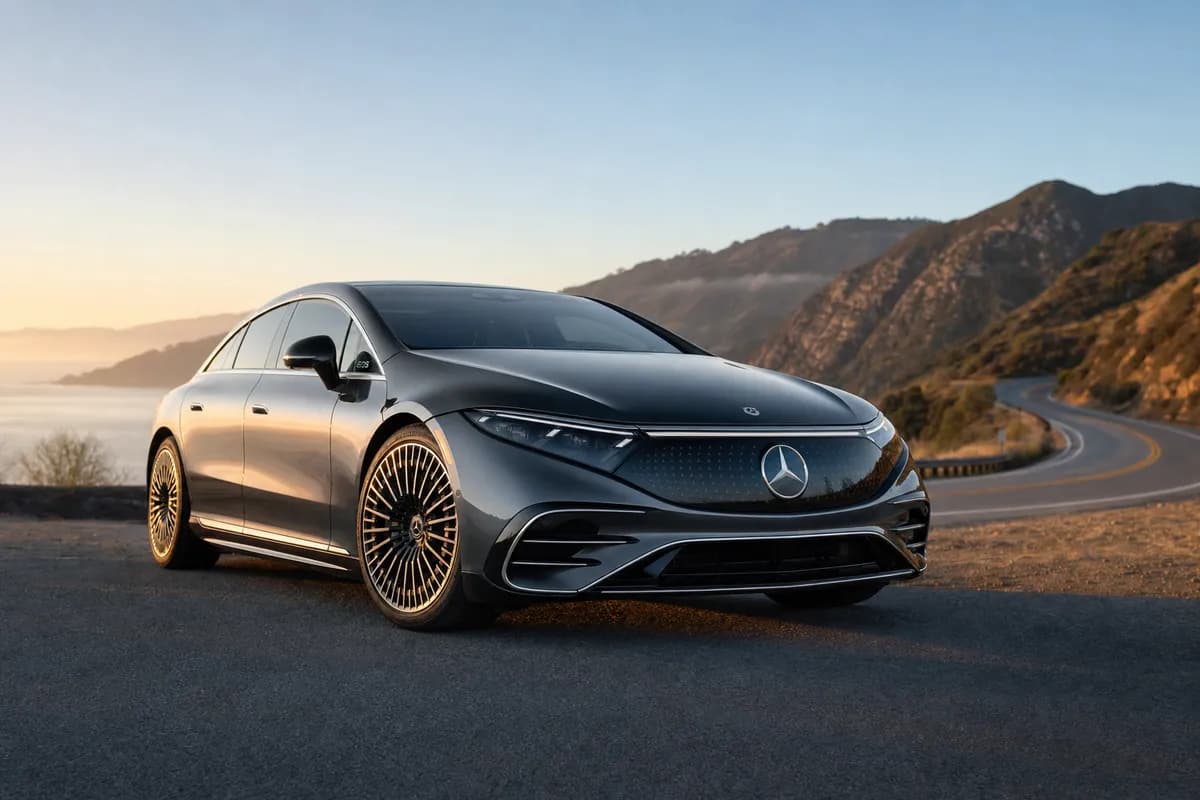
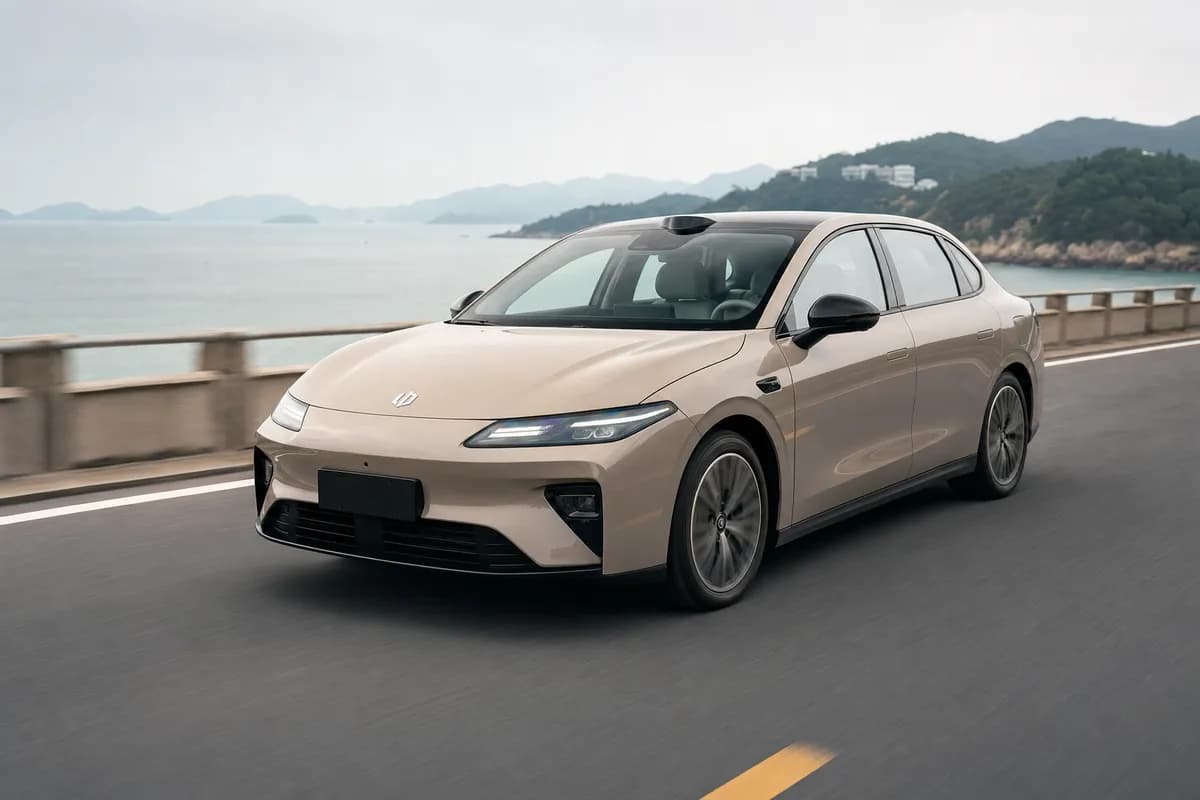
The 2024 Mercedes-Benz EQS is what happens when Stuttgart stops pretending an EV has to act like a gasoline car and instead builds a rolling first-class lounge with a drag coefficient of 0.20, a 56-inch dashboard screen, and the road manners of a velvet cruise missile.
The 2024 Mercedes-Benz EQS is what happens when Stuttgart stops pretending an EV has to act like a gasoline car and instead builds a rolling first-class lounge with a drag coefficient of 0.20, a 56-inch dashboard screen, and the road manners of a velvet cruise missile. After months of living with it, charging it, hustling it, parking it, and explaining to strangers that yes, the front “grille” is mostly theater, the big question is simple: is the EQS the ultimate luxury EV experience, or just the most expensive way to arrive silently?
Our Test Car: Big Battery, Bigger Expectations
Our long-term test focused on the 2024 Mercedes-Benz EQS 580 4MATIC Sedan, the sweet spot of the lineup if your idea of “sweet” includes 536 hp, 633 lb-ft of torque, all-wheel drive, and a starting price north of $125,000 before options. The EQS family starts with the EQS 450+ Sedan, a rear-drive range champ rated at up to 352 miles by the EPA, while the EQS 580 4MATIC is rated around 340 miles depending on wheel and tire specification. The AMG EQS exists for those who want their luxury pod to bench-press physics with up to 751 hp in Race Start mode, but its roughly 277-mile EPA range makes it a niche toy rather than the rational flagship.
Our EQS 580 was fitted with the MBUX Hyperscreen, rear-axle steering, adaptive air suspension, massaging front seats, Burmester 3D audio, and enough ambient lighting to make a Las Vegas cocktail bar feel underdressed. The as-tested price landed in the mid-$130,000 range, which plants the EQS directly against the BMW i7 xDrive60, Lucid Air Grand Touring, Porsche Taycan 4S, and Tesla Model S Plaid. That is not a friendly neighborhood. That is a knife fight in a cashmere suit.
The hardware is serious. The EQS rides on Mercedes’ dedicated EVA2 electric platform and uses a lithium-ion battery with about 108.4 kWh of usable capacity. DC fast-charging peaks at 200 kW, and Mercedes claims a 10-to-80 percent charge in about 31 minutes under ideal conditions. On paper, that is competitive but not class-leading. The Hyundai Ioniq 6 and Porsche Taycan can charge faster in the right conditions; the Lucid Air can go farther; the Tesla Model S still has the best charging ecosystem if you value predictability over upholstery.
But the EQS does not try to win by being the fastest or the longest-legged EV. It tries to win by making every mile feel absurdly polished. And on that front, it comes out swinging.
Cabin And Tech: A Private Jet With Better Software Than You Expect
Inside, the EQS is Mercedes at its most theatrical. The optional MBUX Hyperscreen stretches across the dashboard like a sci-fi aquarium: 12.3-inch driver display, 17.7-inch central OLED touchscreen, and 12.3-inch passenger display under one enormous curved glass panel. It looks ridiculous in photos. In person, it looks expensive. More importantly, it works better than most screen-heavy cabins because Mercedes hasn’t buried every essential function under six layers of digital nonsense.
Climate controls stay visible. Navigation is sharp. Voice commands are genuinely useful. Wireless Apple CarPlay and Android Auto are present, though the native Mercedes system is good enough that you won’t always immediately run back to your phone like a frightened toddler clutching a blanket.
The seats are superb. The front chairs offer heat, ventilation, massage, and enough adjustment to make chiropractors nervous. Long-distance comfort is sensational. After three hours behind the wheel, you step out feeling less like you drove and more like you were gently relocated by a very quiet concierge.
Rear-seat space is strong but not limo-level in the way the exterior size suggests. The EQS is a hatchback sedan with an arched roofline optimized for aerodynamics, and that means rear headroom is merely good rather than palatial. The BMW i7 feels more conventionally opulent in the back, especially with its executive rear seating and optional theater screen. The Mercedes counters with a huge liftback cargo opening and 22 cubic feet of luggage space behind the rear seats, which makes it far more practical than a traditional sedan trunk.
Material quality is mostly outstanding, though not flawless. The leather, wood, metal trim, and switchgear feel suitably rich. Some glossy black surfaces attract dust and fingerprints like they’re being paid per smudge, and a few lower-console plastics are less majestic than the price tag demands. Still, compared with the Tesla Model S, the EQS feels like a luxury product built by adults. Tesla has speed and software. Mercedes has craftsmanship and dignity.
The cabin is the EQS’s strongest argument. It doesn’t just feel expensive; it feels deliberately engineered to lower your blood pressure.
Range And Charging: Excellent, But Not The King
Range anxiety is mostly not a thing in the EQS, provided you understand winter, speed, and physics. In mixed driving, our EQS 580 typically returned between 2.8 and 3.2 miles per kWh, which translates to real-world range in the 300-to-340-mile zone. Gentle suburban use could push beyond that. Fast highway runs at 75 to 80 mph pulled the number down, particularly in colder weather, where we saw range estimates drop into the high-200s.
That is still good. It just isn’t Lucid good. The Lucid Air Grand Touring is EPA-rated at up to 516 miles in certain configurations, and even allowing for real-world erosion, it remains the long-distance monster in this class. If your luxury EV purchase is driven entirely by maximum range, the Lucid is the car Mercedes has to answer for.
Charging performance is solid rather than spectacular. The EQS’s 200-kW peak sounds strong, and in practice it will add meaningful range quickly when you arrive at a properly functioning high-power charger with the battery preconditioned. Our typical 10-to-80 percent sessions hovered around the low-30-minute mark in favorable conditions, which matches Mercedes’ claim. That is plenty usable for road trips, especially because the car’s navigation can route through chargers and precondition the battery en route.
The catch is that charging infrastructure remains the least luxurious part of owning a luxury EV. Pulling a six-figure Mercedes into a grimy public charger behind a big-box store at night is not quite the Riviera fantasy promised in the brochure. Mercedes is rolling out access improvements and its own charging network strategy, and future compatibility with the North American Charging Standard should help. But today, Tesla’s Supercharger network still feels like the benchmark for ease and reliability.
At home, the EQS is brilliant. Plug it into a Level 2 charger overnight and you wake up with a full “tank” and zero interaction with gasoline stations, which is one of the great understated joys of EV ownership. The onboard AC charging rate is around 9.6 kW, so a full recharge from low battery takes overnight rather than “while you make coffee,” but that is normal for the class.
- Battery: approximately 108.4 kWh usable capacity
- EPA range: up to around 340 miles for EQS 580 4MATIC, up to 352 miles for EQS 450+
- DC fast charging: up to 200 kW
- Claimed 10-to-80 percent charge: about 31 minutes
- Best rival for range: Lucid Air Grand Touring
- Best rival for charging convenience: Tesla Model S
Driving Experience: Whisper-Quiet, Shockingly Quick, Not Quite Fun
The EQS 580 is fast in the wonderfully undramatic way only luxury EVs can manage. Mercedes quotes 0-60 mph in about 4.1 seconds, and it feels every bit that quick. There is no launch-control theater, no exhaust bark, no frantic transmission kickdown. You press the accelerator, the horizon gets reeled in, and passengers pause mid-sentence as if someone briefly muted the laws of motion.
The dual-motor all-wheel-drive system delivers traction with total composure. Wet roads? Fine. Fast merge? Effortless. Passing a dawdling crossover on a two-lane road? Done before the other driver finishes checking their blind spot. The EQS does not feel violent like a Tesla Model S Plaid or playful like a Porsche Taycan. It feels inevitable.
Ride quality is the star. The standard air suspension smothers broken pavement, expansion joints, and freeway chop with the sort of calm that makes lesser luxury cars feel fidgety. This is where the EQS earns the S in its name. It is not merely comfortable; it is serenely detached. Road noise is minimal, wind noise is almost nonexistent thanks to that slippery body, and the cabin remains library-quiet at speeds where most EVs start revealing tire roar.
Rear-axle steering is another highlight. At low speeds, the rear wheels turn opposite the fronts, effectively shrinking the car in parking lots and tight city streets. The EQS is over 205 inches long, yet it can maneuver with the ease of something far smaller. At higher speeds, the rear wheels turn with the fronts to improve stability. It sounds like brochure fluff until you live with it, then you start wondering why every large luxury car doesn’t have it.
Now for the bad news: the EQS is not especially engaging. Accurate? Yes. Stable? Absolutely. Rewarding? Not really. The steering is clean but numb, the brake pedal can feel inconsistent as it blends regenerative and friction braking, and the whole car seems happiest when you stop pretending it is a canyon weapon. The Porsche Taycan runs circles around it for driver involvement. The BMW i7 also has more traditional big-sedan authority in the way it changes direction. The Mercedes is less athlete, more executive transport capsule.
That is not a fatal flaw. In fact, it may be the point. The EQS is designed to make driving feel easy, not heroic. If you want steering texture and chassis conversation, buy the Porsche. If you want to arrive fresh after 400 miles of interstate, take the Benz and let the Taycan driver explain to their passenger why the ride is “characterful.”
Ownership Reality: The Luxury Is Real, The Price Is Ruthless
The EQS makes a superb daily driver because it removes friction from routine use. The hatchback cargo area swallows luggage, golf bags, charging cables, and bulk shopping runs better than expected. The driver-assistance systems are among the best in the business, with adaptive cruise control and lane-centering behavior that feels smooth rather than twitchy. The navigation is EV-aware, the camera system is excellent, and the turning circle is almost comically tight for a car this large.
Efficiency is respectable for a big luxury sedan, but tire choice matters. Large wheels look fantastic and quietly mug your range. If you are buying an EQS for maximum comfort and distance, avoid the biggest wheels unless your priorities are Instagram and replacement-tire invoices. The smaller wheel setups ride better, go farther, and make more sense. Naturally, many buyers will ignore this and spec the shiny ones because humans are weak.
Depreciation is the elephant in the ambient-lit room. Luxury EVs have taken serious resale hits, and the EQS has not been immune. Early EQS models have shown steep used-market drops compared with original MSRP, partly because technology moves quickly and partly because six-figure electric sedans remain a narrow market. That is excellent news if you are shopping lightly used. It is less hilarious if you are the first owner watching value evaporate faster than a launch-edition smartphone.
Reliability during our test was generally good, though the EQS is a deeply complex machine. Software updates, sensors, displays, air suspension components, and EV-specific systems mean long-term ownership outside warranty is not something I’d approach with reckless optimism. Lease it, buy it with a strong warranty, or snag a certified pre-owned example after someone else has absorbed the depreciation grenade.
Compared with key rivals, the EQS has a clear personality:
- Mercedes-Benz EQS: best ride comfort, cabin serenity, and luxury isolation.
- Lucid Air: best range and efficiency, with brilliant powertrain engineering but a younger brand experience.
- BMW i7: more traditional flagship presence, better rear-seat theatrics, less slippery EV purity.
- Porsche Taycan: best to drive, worst for maximum luxury calm.
- Tesla Model S: quickest and easiest to charge, but nowhere near the Mercedes for cabin richness.
Verdict: The Ultimate Luxury EV? Yes, With One Big Asterisk
The 2024 Mercedes-Benz EQS is not the ultimate EV. The Lucid Air goes farther. The Tesla Model S charges more easily and accelerates harder. The Porsche Taycan is dramatically better to drive. The BMW i7 feels more like an old-money flagship from the rear seat.
But the EQS may still be the ultimate luxury EV, because luxury is not just range, speed, or screen size. Luxury is silence at 80 mph. It is a seat massage after a brutal day. It is suspension that turns bad pavement into a rumor. It is a cabin that feels special every single time you open the door. On those terms, the EQS is outstanding.
The EQS 580 4MATIC is the version I’d pick if budget allows: quick enough to feel properly flagship, all-wheel drive for year-round confidence, and still capable of genuine long-distance range. The EQS 450+ is the rational choice for buyers prioritizing range and value, while the AMG EQS is the answer to a question mostly asked by people who enjoy shredding expensive tires in near silence.
Would I buy one new at full MSRP? Probably not. Depreciation makes that a brave financial haircut. Would I lease one or buy a certified pre-owned EQS at a significant discount? Absolutely. In that scenario, this becomes one of the most compelling luxury cars on sale, electric or otherwise.
Final verdict: The 2024 Mercedes-Benz EQS is not perfect, but as a long-distance luxury EV, it is devastatingly good. It is less a car than a rolling sensory-deprivation chamber with torque. Buy it for comfort, silence, technology, and effortless pace. Just don’t pay full sticker unless your accountant has a sense of humor.
Affiliate disclosure: This article contains affiliate links. RevvedUpCars may earn a small commission on qualifying purchases at no extra cost to you.