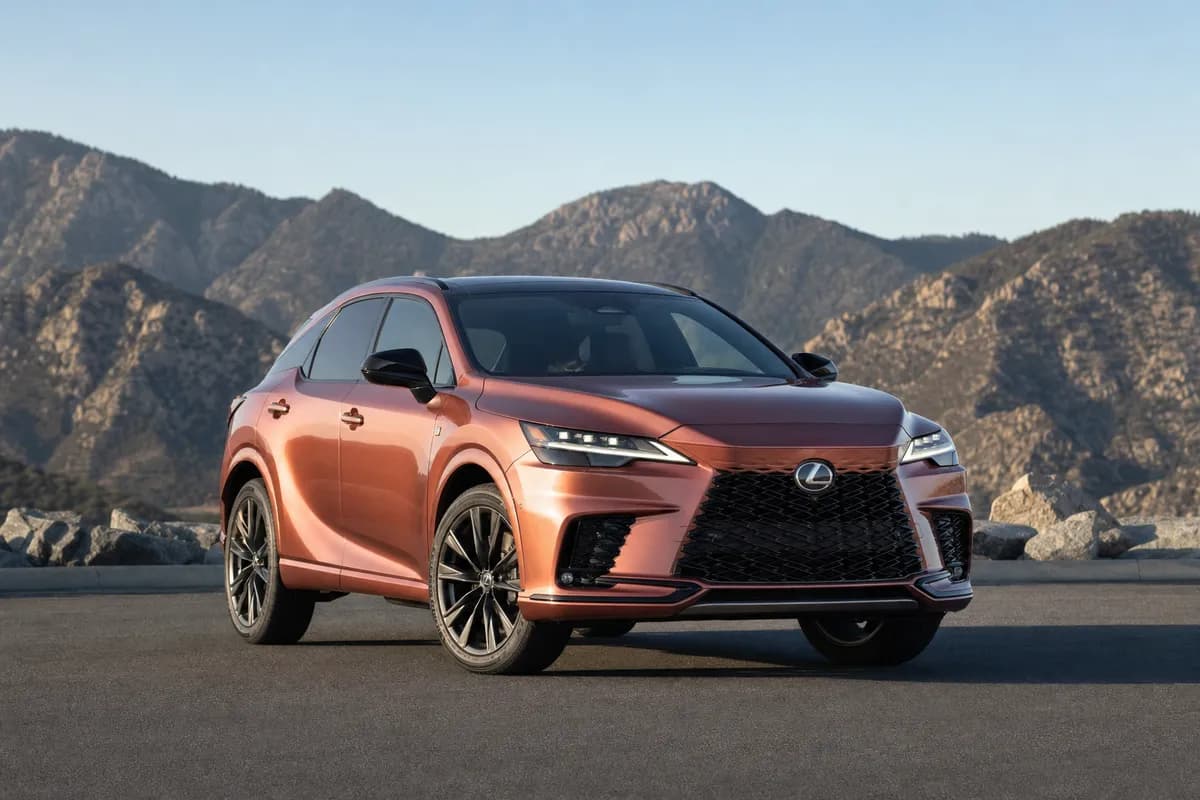
The 2025 Lexus RX 500h does not arrive asking to be loved by the apex-hunting crowd. It arrives wearing F Sport armor, packing a turbocharged hybrid powertrain, and quietly daring you to compare its real-world polish against the Germans, Koreans, and Acura’s shouty MDX Type S.
The official 0-60 mph time is 5.9 seconds. Fuel economy is rated at 27 mpg city, 28 mpg highway, and 27 mpg combined. That matters because several rivals deliver similar pace while drinking like they still think premium unleaded costs $2.10 a gallon.
Pricing starts in the mid-$60,000 range, with well-equipped examples pushing toward the upper-$60,000s or low-$70,000s depending on packages. That places the RX 500h right in the blast radius of the BMW X5 xDrive40i, Mercedes-Benz GLE 450, Genesis GV80 3.5T, Acura MDX Type S, and Volvo’s electrified XC90 T8.
That is not gentle company. This is a knife fight in a mahogany-paneled boardroom.
First Drive: Fast Enough, Polished Everywhere
The first thing you notice is that the RX 500h feels properly torquey. That 406 lb-ft figure is not brochure fluff. The electric side of the system fills in the low-end shove, while the turbo four keeps pulling once you are past city speeds. Around town, it steps away from lights with the clean, instant response buyers expect from a hybrid. On a back road, it has enough punch to overtake without performing a two-act downshift drama.
The six-speed automatic is a good call. Lexus could have gone with a continuously variable transmission and saved itself some engineering grief, but the RX 500h would have felt like a blender in a blazer. Instead, the conventional automatic gives the powertrain distinct shifts and a more natural sense of acceleration. It is not as snappy as BMW’s superb eight-speed automatic, but it avoids the elastic weirdness that can make performance hybrids feel like they are being operated through wet rope.
In Sport mode, throttle response sharpens, the transmission holds gears longer, and the RX 500h starts behaving like it has read at least one Nürburgring forum thread. The steering is accurate, though still filtered through the usual Lexus layer of expensive calm. It points cleanly, weights up predictably, and never gets nervous. If you are expecting gritty feedback through your palms, bless your optimism. This is Lexus, not a Lotus.
The chassis is the surprise. The RX 500h F Sport Performance gets adaptive suspension, six-piston front brake calipers, rear-wheel steering, and those big visual-performance cues that normally mean “please admire my wheels while I ride like a filing cabinet.” Yet the body control is genuinely good. It stays flat enough in quick transitions, resists the float that used to define older RX models, and uses its rear motor to help the SUV rotate more naturally under power.
Is it fun? Yes, in the way a luxury SUV can be fun without embarrassing itself. It is not playful like a Porsche Macan, nor does it have the brute confidence of a BMW X5 with the inline-six. But it is composed, quick, and surprisingly willing. More importantly, it never forgets it is still an RX. The cabin remains quiet, the structure feels solid, and the ride, while firmer than a standard RX 350h, does not turn potholes into courtroom testimony.
That said, the F Sport Performance trim rides on large wheels, and you feel them. Sharp-edged impacts send a short thump through the cabin. It is never crude, but if your idea of luxury is complete isolation from municipal neglect, the RX 350h is softer and probably better suited to your spine.
Interior: Lexus Gets the Big Stuff Right
The cabin is where the RX 500h stops pretending to be a sport SUV and starts doing what Lexus does best: making your blood pressure fall. Materials are excellent, panel gaps are tight, and the layout feels modern without turning every function into a touchscreen séance.
The available 14.0-inch touchscreen dominates the dashboard and runs Lexus’ newer infotainment system, which is a massive improvement over the old trackpad era. Wireless Apple CarPlay and Android Auto are available, voice recognition is better than before, and the screen responds quickly. Lexus also keeps physical knobs for volume and climate temperature, because apparently someone in product planning still likes humans.
The seats are supportive without being over-bolstered. Front-seat comfort is excellent, especially over long distances, and the driving position feels low enough to avoid the old perch-on-a-stool SUV sensation. Rear-seat space is generous for adults, with strong legroom and a flat enough floor to make the middle position tolerable rather than punitive.
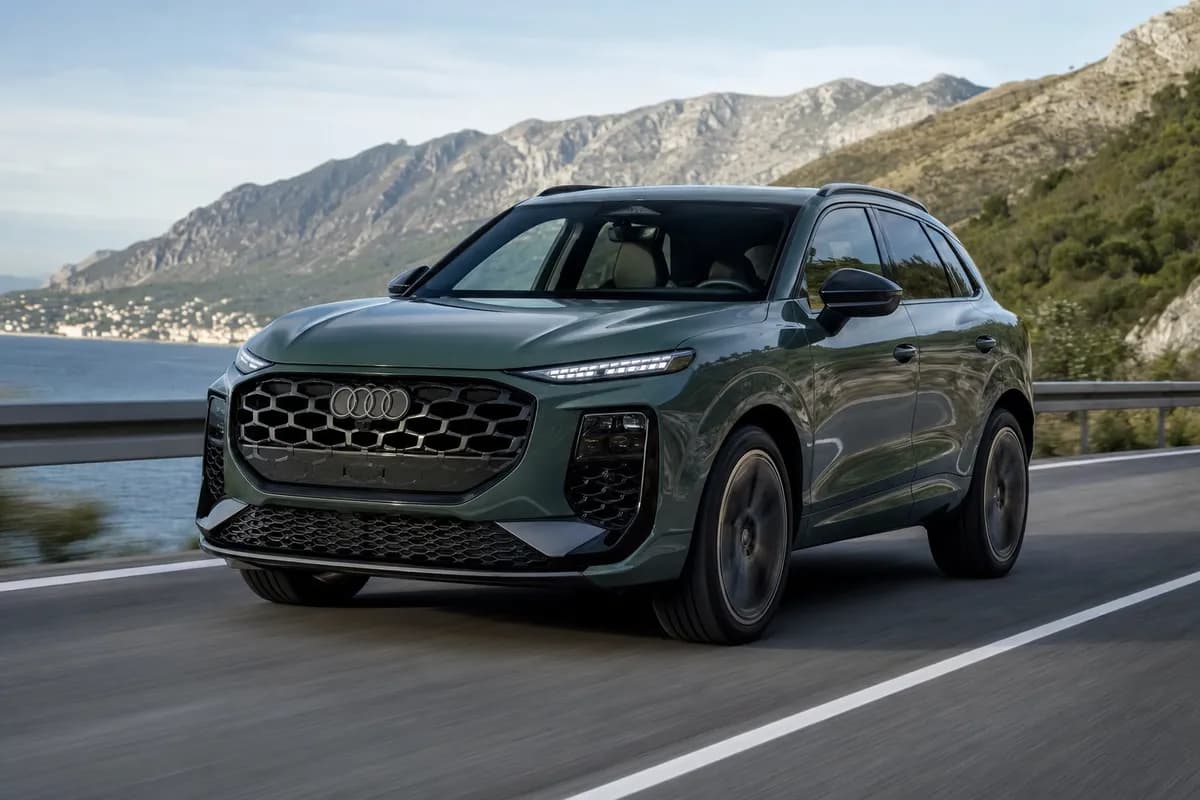
Cargo space is competitive, though not class-leading. The RX remains a two-row midsize luxury SUV, and that clarity helps it. Lexus no longer tries to make the RX into a compromised three-row hauler. If you need three rows, look at the Acura MDX, Volvo XC90, Audi Q7, or Lexus TX. If you want a plush two-row luxury crossover that does not waste space pretending to be a school bus, the RX makes more sense.
Technology is strong but occasionally too eager. Lexus’ driver-assistance suite is comprehensive, with adaptive cruise control, lane-centering assistance, blind-spot monitoring, rear cross-traffic alert, and automatic emergency braking. The lane-centering system is smooth on highways, though like most systems in the class, it prefers clear lane markings and calm weather over cracked pavement and chaos. Imagine that.
The controversial bit remains Lexus’ electronic door release system, which uses a button-style latch rather than a traditional mechanical pull. It works fine once you stop reaching for a handle like every other car built since the invention of hinges. There is a backup mechanical release, but the system still feels like innovation chasing a problem that was already dead.
How It Stacks Up Against Rivals
The 2025 Lexus RX 500h lives in a crowded and talented class, so let’s stop admiring the stitching and get to the fight.
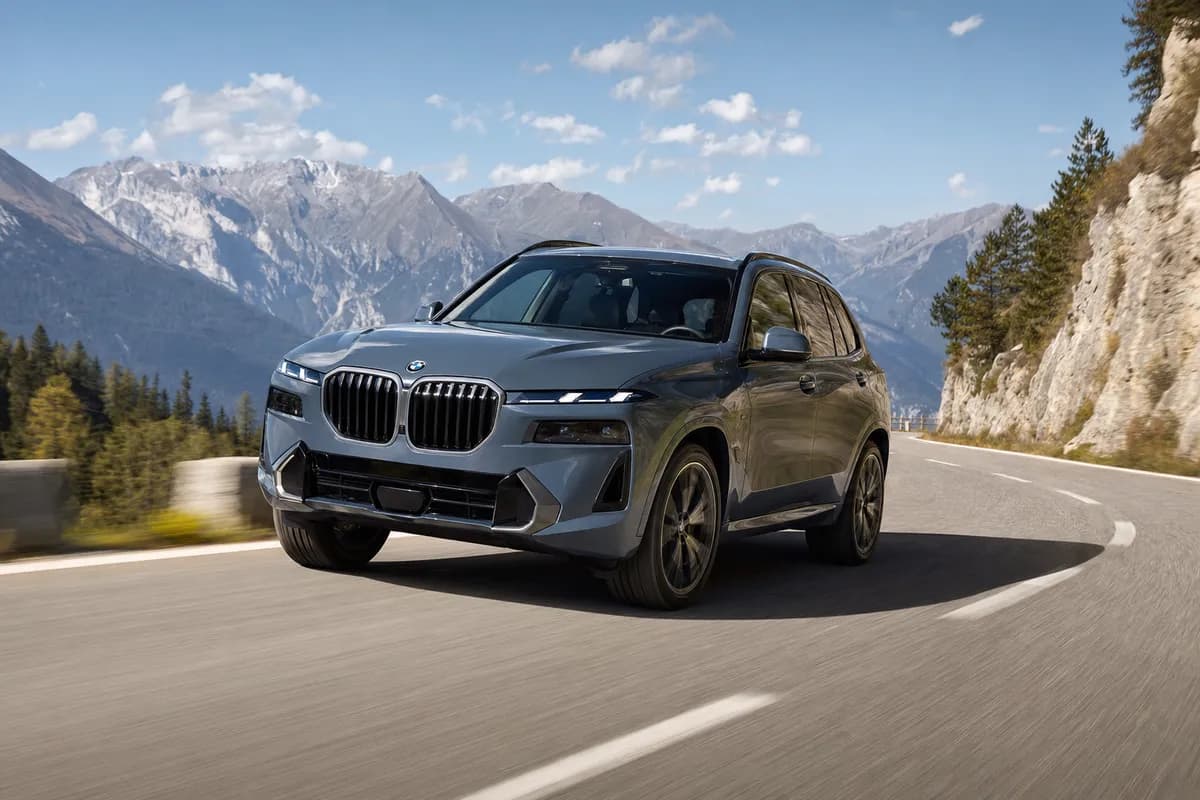
BMW X5 xDrive40i
The BMW X5 xDrive40i remains the dynamic benchmark for the sensible end of this segment. Its 3.0-liter turbocharged inline-six with mild-hybrid assistance produces 375 horsepower and 398 lb-ft of torque, and it can hit 60 mph in about 4.8 seconds. It is quicker than the Lexus, smoother under full throttle, and more rewarding to drive hard.
The BMW also gets an excellent eight-speed automatic and a chassis that feels more expensive when pushed. But it costs more once equipped similarly, and its EPA rating of roughly 23 mpg city, 27 mpg highway, and 25 mpg combined trails the Lexus in mixed use. The X5 is the driver’s pick. The RX 500h is the lower-stress ownership pick.
Mercedes-Benz GLE 450
The Mercedes-Benz GLE 450 brings a turbocharged inline-six with 375 horsepower and a lavish cabin that can make the Lexus feel restrained. It is quicker than the RX 500h, with 0-60 mph in the low-five-second range, and it offers more badge theater. Big screens, ambient lighting, and that whole “executive lounge at 75 mph” vibe are Mercedes specialties.
But the GLE gets expensive quickly, and its tech interface can feel more like a software subscription with tires. The Lexus is simpler, quieter in its design language, and likely to be less dramatic over ten years. If you lease and like glitter, buy the Benz. If you keep cars long enough to remember their VIN, the Lexus starts looking annoyingly rational.
Genesis GV80 3.5T
The Genesis GV80 3.5T is the style weapon. Its twin-turbo V6 makes 375 horsepower and 391 lb-ft, and it feels rich, handsome, and unapologetically premium. Genesis also delivers serious equipment value, with available massaging seats, a beautiful interior, and a road presence that punches above its badge.
Against the GV80, the RX 500h feels more efficient and more technically polished, but less dramatic. The Genesis has more old-school luxury swagger. The Lexus has better fuel economy, a more advanced hybrid system, and the stronger reputation for long-term reliability. The GV80 is the one you buy with your eyes. The RX is the one your accountant grudgingly admires.
Acura MDX Type S
The Acura MDX Type S is a fascinating rival because it offers three rows, a 3.0-liter turbo V6, 355 horsepower, and Acura’s excellent SH-AWD system. It is more aggressive, more vocal, and more willing to play. It also has an adaptive air suspension and one of the better all-wheel-drive systems in the business.
But the MDX Type S returns only about 17 mpg city, 21 mpg highway, and 19 mpg combined. That is a brutal gap versus the RX 500h’s 27 mpg combined rating. The Acura is more useful for families and more entertaining on a fast road, but the Lexus is far more efficient and more refined in daily driving. Unless you need the third row, the RX 500h is the better luxury product.
Volvo XC90 T8
The Volvo XC90 T8 is the electrified curveball. Its plug-in hybrid powertrain makes 455 horsepower and can travel about 32 miles on electric power depending on configuration and conditions. It is quicker than the RX 500h and can be dramatically cheaper to run if you charge every night.
But the Volvo is older underneath, its infotainment can be fussy, and its third-row packaging is useful only if you need it. The Lexus does not plug in, which is a missed opportunity for some buyers, but it also does not require a charging routine to deliver excellent fuel economy. The XC90 T8 is better for EV-curious families. The RX 500h is better for buyers who want hybrid efficiency without lifestyle homework.
The RX 500h’s Biggest Problem Is Another Lexus
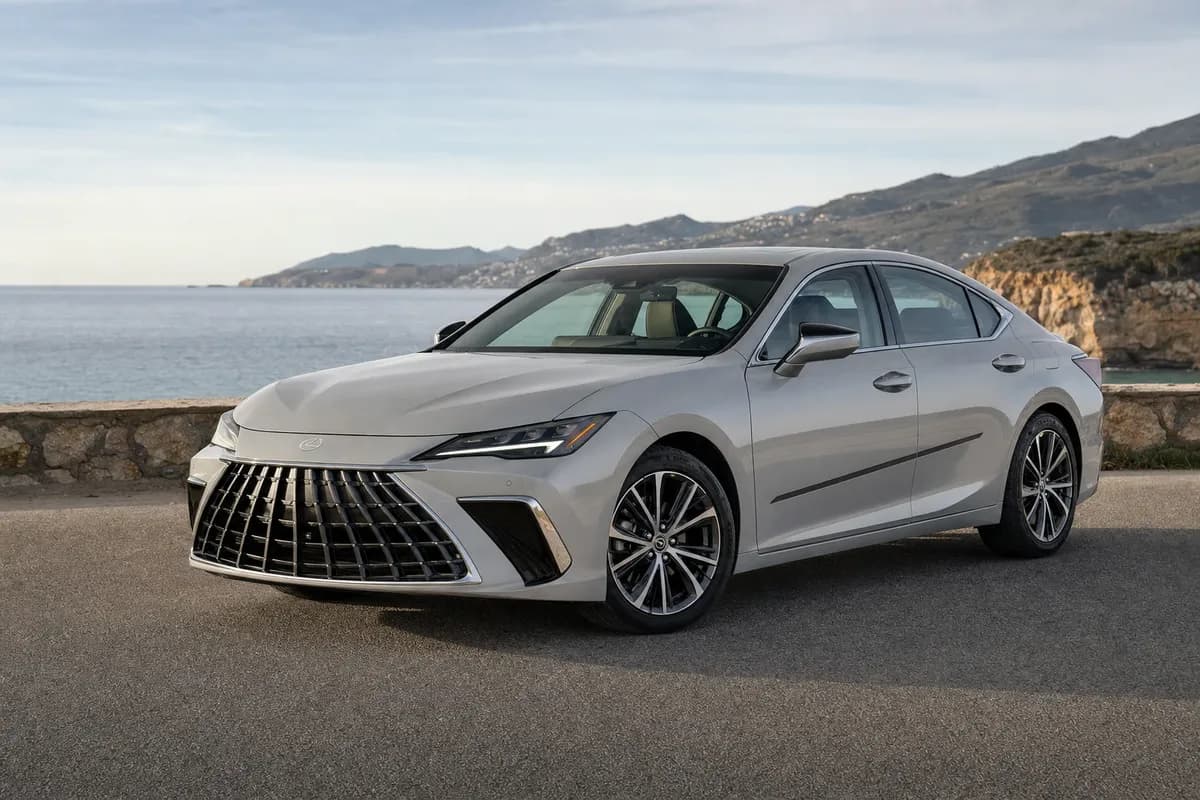
The most dangerous rival to the RX 500h is not wearing a BMW roundel or a three-pointed star. It is the Lexus RX 350h.
The RX 350h makes 246 horsepower and is not remotely as quick, with 0-60 mph taking roughly the high-seven-second range. But it returns about 36 mpg combined, costs significantly less, rides softer, and still delivers the quiet, premium, low-drama Lexus experience most RX buyers actually want. If your driving life consists of commuting, school runs, airport trips, and one spirited freeway merge per fiscal quarter, the RX 350h is the better buy. There, I said it.
Then there is the RX 450h+, the plug-in hybrid model. It produces 304 horsepower and offers an EPA-estimated electric driving range of around 37 miles. It is pricier, but if you can charge at home, it may deliver the best blend of Lexus comfort and low running costs. It lacks the RX 500h’s punch and performance hardware, but it has the stronger green-luxury argument.
So why buy the RX 500h? Because you want the RX with the most attitude. You want the better steering response, the stronger launch, the rear-wheel steering, the bigger brakes, and the sense that your luxury SUV has not completely surrendered to beige destiny. It is the enthusiast’s RX, which sounds like a contradiction until you drive it.
Verdict: Not the Sportiest, But Probably the Smartest
The 2025 Lexus RX 500h is not a BMW X5 killer. It is not as quick as the X5 xDrive40i, not as opulent as a loaded Mercedes GLE, not as theatrical as a Genesis GV80, and not as versatile as an Acura MDX Type S. If all you want is maximum performance per dollar, look elsewhere. The RX 500h is fast enough, not feral.
But as a complete luxury SUV, it is annoyingly difficult to dismiss. It delivers 366 horsepower, standard all-wheel drive, a real automatic transmission, strong hybrid efficiency, a beautifully built cabin, and the kind of everyday refinement that makes most rivals feel like they are trying too hard. It also carries the Lexus ownership promise: fewer headaches, fewer service-bay sob stories, and better resale confidence than most of the class.
Final call: Buy the 2025 Lexus RX 500h if you want a luxury midsize SUV that is quick, efficient, refined, and built with long-term sense. Skip it if you want maximum driving engagement or need three rows. The BMW X5 is still the athlete. The Genesis GV80 is still the looker. But the RX 500h is the one that will make the most sense five years from now, and that is exactly why it is dangerous.
The RX 500h is Lexus doing performance its own way: not loud, not reckless, not desperate for your Instagram story. It is calm, quick, polished, and just aggressive enough to remind you that sensible does not have to mean slow. In this class, that is not faint praise. That is a proper strategy.
Affiliate disclosure: This article contains affiliate links. RevvedUpCars may earn a small commission on qualifying purchases at no extra cost to you.