The Tesla Model 3 has spent years treating the electric-sedan class like its personal charging stall. Fast, efficient, software-rich, and backed by the best charging network in America, it has been the obvious answer for buyers who wanted an EV that didn’t feel like homework.
The Tesla Model 3 has spent years treating the electric-sedan class like its personal charging stall. Fast, efficient, software-rich, and backed by the best charging network in America, it has been the obvious answer for buyers who wanted an EV that didn’t feel like homework. But the 2025 Hyundai Ioniq 6 is not another compliance-car wallflower. It is slippery, spacious, extremely efficient, and built on Hyundai’s superb 800-volt E-GMP platform. In other words: the Tesla finally has a proper sedan fight on its hands. Not a “nice alternative if you hate Elon” fight. A real one.
Design and Packaging: Spaceship vs Soap Bar, and I Mean That Kindly
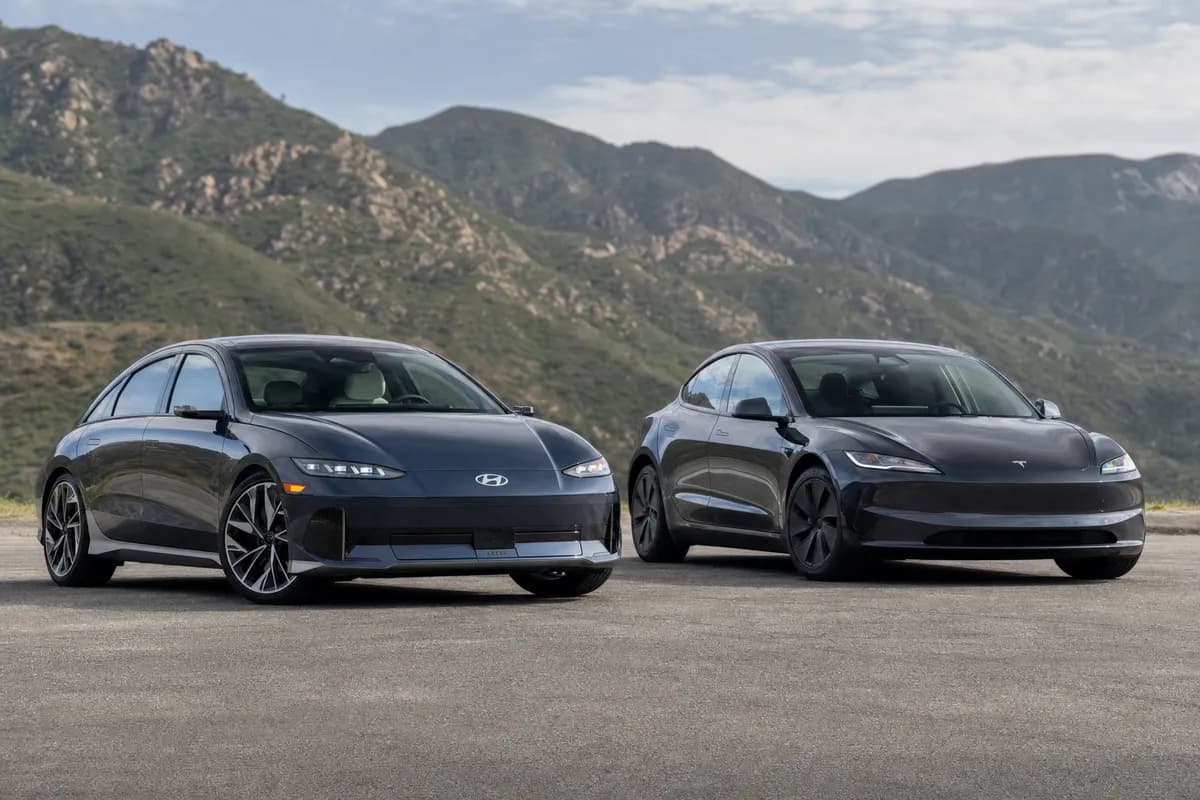
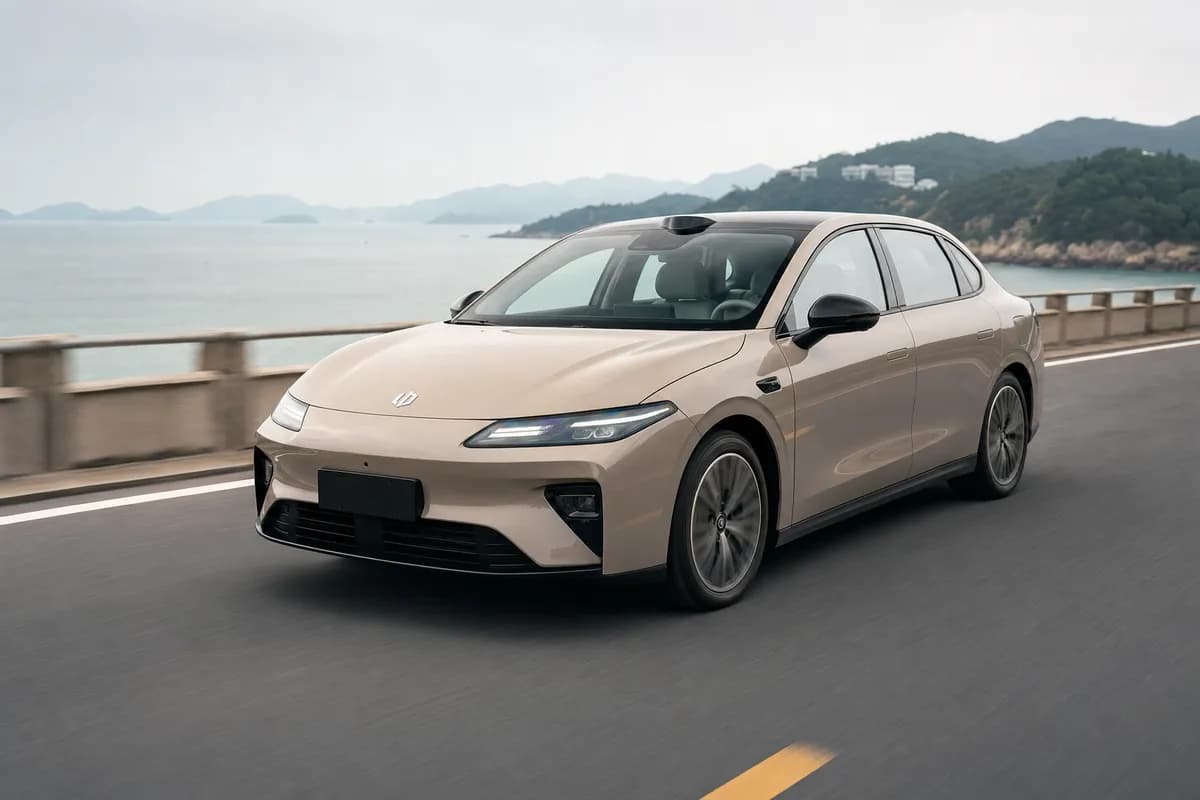
The 2025 Hyundai Ioniq 6 looks like the result of locking a Porsche 911, a Mercedes EQS, and a wind tunnel engineer in a room with too much espresso. Its drag coefficient is just 0.22, and the whole car is shaped around aerodynamic efficiency rather than showroom machismo. The result is distinctive, maybe even odd from some angles, but it works. The Ioniq 6 does not look like yet another anonymous EV lozenge. It has a point of view.
The Tesla Model 3, freshly updated in its “Highland” form, is cleaner and sharper than before. The front end is tidier, the lighting is slimmer, and the cabin is better insulated. But visually, it is still the default electric sedan. You see one at every Whole Foods, airport rideshare queue, and tech-office parking garage. That familiarity is part of its strength and part of its curse. The Model 3 is the iPhone of EV sedans: brilliant, ubiquitous, and not exactly dripping with character.
Dimensionally, both are compact-to-midsize electric sedans, but they use space differently. The Hyundai Ioniq 6 rides on a long 116.1-inch wheelbase, longer than the Tesla Model 3’s roughly 113.2-inch wheelbase. That pays off in rear legroom and a lounge-like cabin feel. The Hyundai’s flat floor and airy rear seat make it feel more generous than its swoopy roofline suggests, though taller passengers may notice the roof taper.
The Tesla counters with more practical cargo packaging. The Model 3’s trunk opening is wider and more useful, and when you include the underfloor space and front trunk, it offers better everyday load flexibility than the Hyundai. The Ioniq 6’s trunk is around 11.2 cubic feet, and its front trunk is tiny in U.S.-market models, especially with AWD hardware. Hyundai wins the rear-seat vibe; Tesla wins the “IKEA run without swearing” contest.
Range, Efficiency, and Charging: Hyundai Has the Better Hardware, Tesla Has the Better Ecosystem
This is where the fight gets spicy. The 2025 Hyundai Ioniq 6 is one of the most efficient EVs on sale. In SE Long Range RWD form, it is rated at up to 361 miles of EPA range from its 77.4-kWh battery pack. That is superb. The SE AWD version drops to around 316 miles, while higher-trim SEL and Limited models fall because of larger wheels and extra equipment, with AWD versions landing closer to 270 miles. The base Standard Range model uses a smaller battery and is rated around 240 miles.
The 2025 Tesla Model 3 is hardly wheezing in the corner. The Long Range Rear-Wheel Drive model is rated at up to 363 miles, edging the Hyundai’s headline number by a nose. The Long Range AWD version is rated around 346 miles, and the Model 3 Performance sits around 303 miles depending on final configuration. Tesla remains brutally good at squeezing miles from electrons. The Model 3 is lighter, efficient, and ruthlessly optimized.
- Hyundai Ioniq 6 SE Long Range RWD: up to 361 miles EPA range
- Tesla Model 3 Long Range RWD: up to 363 miles EPA range
- Hyundai Ioniq 6 AWD: up to roughly 316 miles in SE trim, less in SEL/Limited
- Tesla Model 3 Long Range AWD: around 346 miles EPA range
- Tesla Model 3 Performance: around 303 miles EPA range
But range is only half the story. Charging is the other half, and here the answer depends on whether you care more about the car’s electrical architecture or the network you plug into.
The Hyundai Ioniq 6 uses an 800-volt architecture, and on a compatible 350-kW DC fast charger it can charge from 10 to 80 percent in about 18 minutes. That is properly rapid. When the station works and the battery is conditioned, the Hyundai feels like it belongs in the next generation of EVs. Peak charge rates sit around the low-to-mid 200-kW range, but the curve is strong enough that the real-world stop is short. It also supports vehicle-to-load capability, meaning you can power tools, camping gear, or emergency essentials from the car. Tesla does not offer the same broad V2L trick on the Model 3.
The Tesla Model 3 charges at up to 250 kW on Tesla Superchargers, and Tesla claims roughly 175 miles can be added in about 15 minutes under ideal conditions. The charging curve is not as flashy as Hyundai’s 800-volt party trick, but Tesla’s network is the killer app. Superchargers are abundant, reliable, well integrated into navigation, and generally less likely to leave you glaring at a broken screen in a rainstorm while a payment terminal reboots like it’s running Windows 95.
So here is the blunt truth: the Hyundai has the better charging hardware; the Tesla has the better charging life. If your road trips rely heavily on non-Tesla DC fast chargers, the Ioniq 6 can be spectacular or mildly infuriating depending on the station. If you buy the Model 3, the car and network behave like they were designed by the same company, because they were. That matters.
Performance and Driving: Tesla Throws the Punches, Hyundai Lands the Smooth Ones
The Hyundai Ioniq 6 is not slow. In Long Range RWD form it makes 225 horsepower and 258 lb-ft of torque. In AWD form, output rises to 320 horsepower and 446 lb-ft. The AWD Ioniq 6 can sprint from 0 to 60 mph in roughly 5.1 seconds, which is quicker than many sport sedans from not very long ago. It delivers the usual EV shove cleanly, quietly, and without drama.
The Tesla Model 3 is quicker. Full stop. The Long Range RWD model is quoted around 4.9 seconds to 60 mph, the Long Range AWD around 4.2 seconds, and the Model 3 Performance drops the hammer with a claimed 2.9-second 0-to-60 time with rollout subtracted. Even if you mentally add a few tenths for real-world context, it is still absurdly fast for the money. The Performance model also gets adaptive dampers, stronger brakes, stickier tires, and a more serious chassis tune. It feels less like an appliance and more like a compact sport sedan that happens to run on battery cells and smug silence.
But speed is not the same as satisfaction. The Hyundai Ioniq 6 has a calmer, more polished ride. Its steering is not talkative, but the chassis is composed, and the car feels planted in a way that suits long-distance driving. It flows. The Ioniq 6 is the car you choose when you want to arrive relaxed rather than mildly adrenalized and wondering why your passenger is gripping the door handle.
The Model 3, especially after its update, is quieter and more refined than before. Tesla improved ride quality, reduced cabin noise, and generally made the car feel less like it was assembled during a fire drill. Still, it remains the sharper tool. The steering is quick, the accelerator response is instant, and the body control is tight. The Performance version is legitimately rapid enough to embarrass cars wearing expensive German badges.
The Hyundai Ioniq 6 is the better cruiser. The Tesla Model 3 is the better weapon.
Hyundai also deserves credit for regenerative braking control. The Ioniq 6 offers multiple regen levels, including strong one-pedal driving via i-Pedal, and the steering-wheel paddles make adjustments easy. Tesla’s regen strategy is simpler and more locked-in. Some drivers love the consistency; others will miss having more control. I’m in the latter camp. Give me paddles. Let me play the car like an instrument, not accept whatever the software priesthood has ordained this week.
Interior and Tech: Buttons Still Matter, Sorry Silicon Valley
Inside, the philosophical split is obvious. The Tesla Model 3 is minimalist to the point of provocation. Nearly everything runs through the central touchscreen. Speedometer? Center screen. Climate? Screen. Mirrors and steering column adjustments? Screen. Gear selection? Mostly screen-based, with backup overhead controls. Turn signals? Buttons on the steering wheel instead of stalks. Some owners adapt quickly. Others will spend the first week wondering why basic ergonomics were fed into a wood chipper.
The screen itself is excellent. Tesla’s interface remains one of the best in the business: fast, crisp, intuitive, and deeply integrated with charging, routing, entertainment, energy use, and vehicle settings. The updated Model 3 also adds a rear display for passengers, improved materials, ventilated front seats, and a more premium ambient-lit cabin. It feels more expensive than the old car because, finally, it is less aggressively bare.
The Hyundai Ioniq 6 uses dual 12.3-inch displays, one for instruments and one for infotainment. The interface is less slick than Tesla’s, but it is easy to understand and, crucially, Hyundai keeps actual physical controls for common functions. There are real buttons for climate shortcuts, hard keys for menus, and a more traditional driving environment. That may not impress app developers, but it will impress anyone who has tried to adjust fan speed while driving over broken pavement.
Hyundai also offers Apple CarPlay and Android Auto. Tesla still does not. That remains ridiculous. Tesla’s native system is strong, yes, but refusing smartphone projection in 2025 feels less like confidence and more like a personality disorder. If your life runs through Apple Maps, Waze, Spotify, WhatsApp, or Android Auto workflows, the Hyundai is simply more accommodating.
Build quality is a more complicated argument. Hyundai’s cabin feels solid, thoughtfully assembled, and pleasantly airy, though some materials lower down are less premium than the design suggests. Tesla’s recent improvements are real, but quality consistency still depends more on factory luck than it should. Panel gaps and trim issues are less of a punchline than they were five years ago, but Hyundai still gives off the stronger old-school manufacturing vibe.
- Choose the Tesla cabin if: you want the best native EV software, seamless charging navigation, and a futuristic interface.
- Choose the Hyundai cabin if: you want physical controls, smartphone projection, and a less dogmatic approach to ergonomics.
Price, Ownership, and the Verdict: The Winner Depends on How You Actually Drive
Pricing shifts with incentives, federal tax-credit eligibility, and Tesla’s favorite hobby: changing MSRPs like a caffeinated day trader. Broadly, the Hyundai Ioniq 6 starts in the high-$30,000 range for the Standard Range model and climbs into the low-$50,000 range for a loaded Limited AWD. The sweet spot is the SE Long Range RWD because it gives you the huge 361-mile range figure, strong efficiency, and the lowest operating costs without paying for heavier luxury gear that cuts range.
The Tesla Model 3 also lives in the low-$40,000 to mid-$50,000 band depending on trim. The Long Range RWD is the range champ, the Long Range AWD is the all-weather all-rounder, and the Performance is the hooligan choice. Federal incentives can tilt the math hard toward Tesla when applicable, while Hyundai often fights back with lease deals and dealer discounts. Do not compare sticker prices in a vacuum. Compare the actual out-the-door payment, including tax credits, lease cash, destination charges, and finance rates.
Warranty is a Hyundai strength. The Ioniq 6 gets Hyundai’s 5-year/60,000-mile basic warranty and 10-year/100,000-mile powertrain coverage, with EV battery coverage also typically 10 years/100,000 miles. Tesla’s basic warranty is 4 years/50,000 miles, while the battery and drive unit coverage varies by trim but commonly runs 8 years with mileage limits of 100,000 or 120,000 miles. Hyundai gives you more conventional warranty reassurance. Tesla gives you fewer dealership visits because there are no dealerships, though service availability can be excellent or maddening depending on where you live.
Safety and driver-assistance tech are strong on both. Tesla’s Autopilot is capable and widely known, but “Full Self-Driving” remains a misnamed paid beta-style system that requires supervision and should not be treated as autonomy. Hyundai’s Highway Driving Assist is less theatrically branded and generally easier to trust because it does not pretend to be a robot chauffeur from the future. Both cars can reduce fatigue on highways. Neither absolves you from paying attention. Revolutionary concept, I know.
So, which one should you buy?
If you regularly road-trip across areas where Tesla Superchargers dominate, buy the 2025 Tesla Model 3. It is faster, better supported by charging infrastructure, more software-polished, and in Performance form, genuinely thrilling. The Long Range RWD is the rational hero: huge range, strong efficiency, and access to the best charging network in the country. For most EV buyers who want the least friction, the Tesla remains the easy answer.
But if you want the better-riding, more comfortable, more conventionally usable electric sedan, the 2025 Hyundai Ioniq 6 is not merely a consolation prize. It is the car with the superior charging architecture, the better warranty, proper controls, Apple CarPlay and Android Auto, and a cabin that feels designed for humans rather than interface evangelists. The SE Long Range RWD is the trim to buy: 361 miles of range, excellent efficiency, and enough performance for sane adults.
Final verdict: the Tesla Model 3 wins on performance, software, and charging convenience. The Hyundai Ioniq 6 wins on comfort, warranty, ergonomics, and charging hardware. If I were crossing the country tomorrow, I’d take the Tesla. If I were living with one every day and charging mostly at home, I’d take the Hyundai — and enjoy every blessed physical button.
The electric-sedan crown is no longer a coronation. It is a knife fight with charging cables. The Model 3 is still the benchmark, but the Ioniq 6 is the first rival in years that makes Tesla look less inevitable. And that, finally, is good news for everyone who likes cars more than monopolies.
Affiliate disclosure: This article contains affiliate links. RevvedUpCars may earn a small commission on qualifying purchases at no extra cost to you.