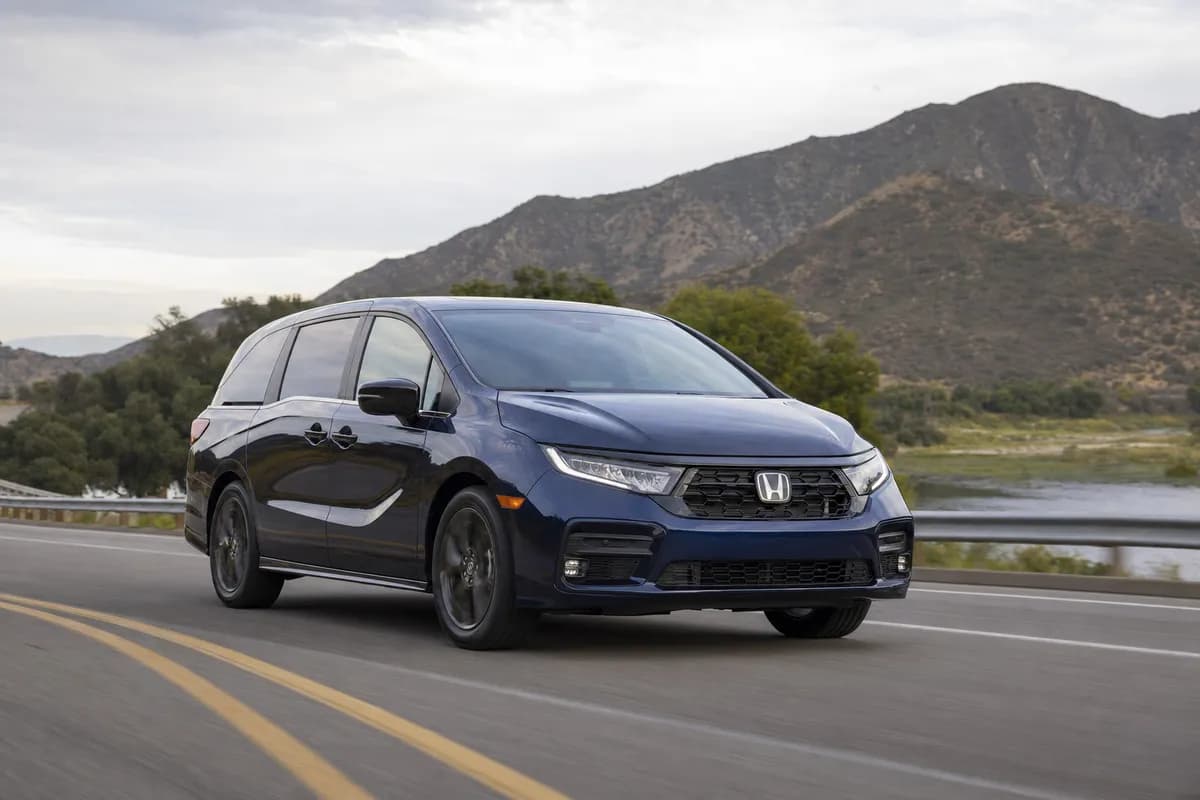
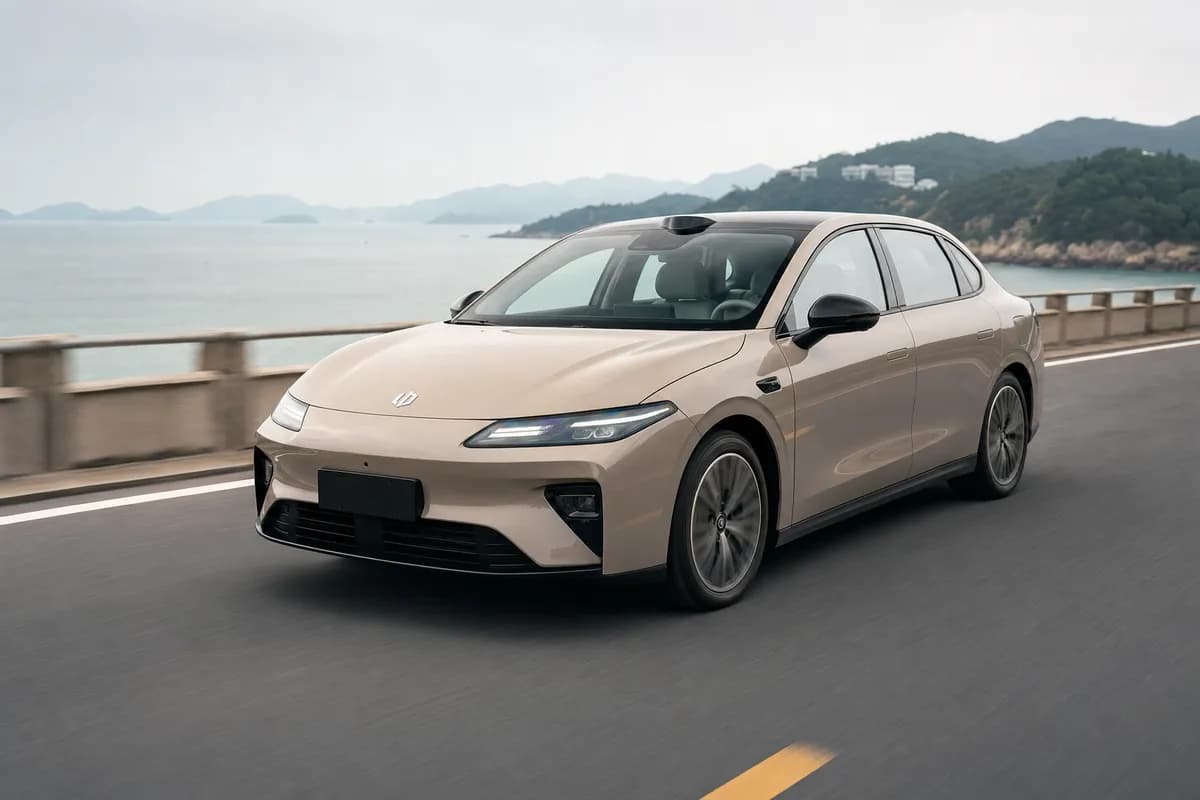
The 2024 Honda Odyssey Hybrid is exactly the sort of minivan Honda should have been building for every market years ago: quieter, smoother, thriftier, and still shaped like the most rational answer to family transport this side of a small municipal bus. The catch?
The 2024 Honda Odyssey Hybrid is exactly the sort of minivan Honda should have been building for every market years ago: quieter, smoother, thriftier, and still shaped like the most rational answer to family transport this side of a small municipal bus. The catch? This launch is not the full global victory lap many buyers want. Honda’s latest hybrid Odyssey has returned in Japan and select Asian markets with the brand’s excellent e:HEV two-motor system, while American families are still handed the familiar 3.5-liter V6. That makes this launch both encouraging and mildly infuriating — a genuine step forward for the Odyssey nameplate, and a reminder that Toyota has been eating Honda’s lunch with the Sienna Hybrid for far too long.
A Proper Hybrid Odyssey, Finally
The 2024 Honda Odyssey Hybrid is built around Honda’s e:HEV hybrid system, the same basic philosophy that makes the Accord Hybrid and CR-V Hybrid such polished daily drivers. In the Japanese-market Odyssey e:HEV, that means a 2.0-liter Atkinson-cycle four-cylinder petrol engine paired with a two-motor hybrid setup. The electric traction motor is rated at roughly 184 PS and 315 Nm of torque, while the gasoline engine produces about 145 PS and 175 Nm. As with most Honda hybrids, those outputs are not simply added together, because the system juggles engine drive, electric drive, and generator duty depending on speed and load.
That sounds complicated. From behind the wheel, it should feel beautifully simple. Honda’s two-motor hybrid system does its best work in real life, not on pub-boast spec sheets. Around town, the Odyssey can lean heavily on electric drive, giving that smooth, elastic shove parents appreciate when trying not to wake a sleeping toddler or spill an overpriced oat latte. At higher speeds, the engine can connect more directly to the wheels for better efficiency. It is a clever system because it does not try to make a minivan feel like a pretend performance car. It makes a minivan feel calm, immediate, and expensive.
Japanese fuel economy figures put the Odyssey e:HEV at around 19.6 km/L on the WLTC cycle, depending on trim. Convert that crudely and you are looking at the high-40s mpg in Japanese testing, though direct comparisons with EPA numbers are always slippery. Still, the direction is clear: this is a substantially more efficient Odyssey than the American V6 model, which is EPA-rated at 19 mpg city, 28 mpg highway, and 22 mpg combined.
That gap matters. A three-row family vehicle spends much of its life crawling through school drop-off lines, suburban arterials, and weekend errands. In other words, exactly the sort of driving where a hybrid shines and a big naturally aspirated V6 quietly drinks like it has unresolved issues.
Alex Torque’s take: Honda did not need to turn the Odyssey into a spaceship. It needed to give it hybrid torque, better efficiency, and less mechanical grumble. The e:HEV setup does precisely that.
Same Minivan Intelligence, Better Powertrain Manners
The 2024 Odyssey Hybrid remains a people mover first, and thank goodness for that. The minivan market is already plagued by self-consciousness, with buyers pretending three-row SUVs are somehow cooler while climbing over high sills and apologizing to their knees. The Odyssey does not play that game. It has sliding doors, a low floor, excellent outward visibility, and a cabin designed for actual humans rather than brochure photography.
In Japan, the latest Odyssey e:HEV measures roughly 4,860 mm long, 1,820 mm wide, and 1,695 mm tall, with a 2,900 mm wheelbase. That makes it smaller than the North American Odyssey, which stretches to about 205.2 inches in length, but the packaging remains impressively mature. Depending on configuration, the Odyssey Hybrid offers seven- or eight-seat layouts, with premium trims focusing heavily on second-row comfort. Available features include large captain’s chairs, ottoman-style leg rests, power sliding doors, a power tailgate, multi-zone climate control, and rear entertainment hardware in some trims.
The cabin tech has also moved forward. Japanese-market models offer equipment such as an 11.4-inch Honda Connect navigation display, a digital driver display, a multi-view camera system, and Honda Sensing driver-assistance features. The Black Edition trim adds the predictable darkened exterior treatment, black interior accents, and a slightly moodier look — because apparently even minivans now need to look like they have a side hustle in night security.
But the more important change is not the black trim or the infotainment screen. It is the way hybridization changes the character of a van. Electric torque fills in the low-speed dead zone. Stop-start transitions are less irritating. Cabin noise drops. The whole machine feels less strained during the driving families actually do. No child has ever been impressed that Dad’s van can rev to 6,500 rpm while merging onto the interstate. Plenty of parents, however, notice when a vehicle is quiet, smooth, and goes twice as far between fuel stops.
The Competition Has Already Moved
The Odyssey Hybrid launch lands in a minivan segment that is small but brutally competitive. Toyota figured out the obvious play first. The current Toyota Sienna is hybrid-only, pairing a 2.5-liter four-cylinder engine with electric motors for 245 total system horsepower. It returns up to 36 mpg combined with front-wheel drive, and even the all-wheel-drive version manages about 35 mpg combined. Those numbers are not just better than the gasoline Odyssey; they are in a different tax bracket.
The Sienna is not perfect. Its powertrain can drone when pushed, and its interior flexibility trails Honda’s best tricks. But at the pump, Toyota walks into the room, drops the EPA sheet on the table, and leaves Honda explaining why 22 mpg combined is still acceptable in a family hauler. It is not. Not in 2024.
Then there is the Chrysler Pacifica Plug-In Hybrid, which takes a different route. Its 3.6-liter V6-based plug-in hybrid system produces 260 horsepower and offers an EPA-rated 32 miles of electric range before the gas engine wakes up. For families with short commutes and home charging, that means many school runs can happen without burning fuel at all. The Pacifica PHEV is not as mechanically slick as Honda’s best hybrids, and Chrysler reliability remains a dinner-table argument waiting to happen, but the concept is excellent.
Kia’s Carnival, meanwhile, has been the style play. The 2024 Carnival uses a 3.5-liter V6 making 290 horsepower and 262 lb-ft of torque, with EPA ratings around 19 mpg city, 26 mpg highway, and 22 mpg combined. It looks sharp, drives well enough, and offers a plush cabin for the money. But in 2024 form, it lacks the hybrid hardware family buyers increasingly want. Kia has since moved toward a Carnival Hybrid for 2025, which only underlines the point: everyone can see where this segment is going.
Against that field, the 2024 Honda Odyssey Hybrid makes enormous sense. The existing Odyssey’s strengths are obvious: terrific seating flexibility, a polished ride, strong safety credentials, and the kind of cabin ergonomics that prove Honda still knows how families use cars. The weakness has been fuel economy. A hybrid Odyssey does not need to beat the Sienna by 10 mpg. It just needs to stop pretending the V6-only strategy is future-proof.
The American Problem: Honda Still Has Not Given U.S. Buyers the One They Need
Here is where the celebration hits a pothole. In the United States, the 2024 Honda Odyssey remains powered by a 3.5-liter naturally aspirated V6 producing 280 horsepower and 262 lb-ft of torque, paired with a 10-speed automatic transmission and front-wheel drive. It is quick for a minivan, with independent tests putting 0-60 mph in the mid-six-second range. That is properly brisk. It also tows up to 3,500 pounds when properly equipped and delivers the kind of smooth, linear response old-school Honda buyers appreciate.
I like that engine. It is refined, strong, and honest. But using it as the only option in 2024 is like insisting a DVD player is fine because the picture still works. The world has moved on. Toyota has proved families will accept a hybrid-only minivan. Chrysler has proved a plug-in van has real-world value. Kia is moving that way. Honda, of all companies, should not be late to the sensible engineering party.
The U.S.-market Odyssey still has some of the best family hardware in the business. Honda’s Magic Slide second-row seats remain genuinely useful, allowing easier access to the third row and better separation of squabbling children, which is not a luxury feature but a public-health measure. CabinWatch and CabinTalk, available on higher trims, let parents monitor and speak to rear passengers without conducting a full torso-twisting exorcism at 70 mph. Cargo space is excellent, with more than 140 cubic feet available when the rear rows are configured for maximum hauling.
Pricing for the 2024 U.S. Odyssey starts in the high-$30,000 range and climbs toward $50,000 for the Elite trim before fees and options. That places it squarely against the Toyota Sienna, Chrysler Pacifica, and Kia Carnival. The problem is that the Honda asks buyers to accept 22 mpg combined while its main Toyota rival offers mid-30s combined economy. Over 15,000 miles a year, that difference is not theoretical. It is hundreds of dollars in fuel, fewer stops, and less guilt every time the pump clicks past a number that looks like a hotel bill.
So yes, the 2024 Odyssey Hybrid launch is progress. But for North American buyers, it is also a tease. Honda has the technology. Honda has the platform knowledge. Honda has the brand equity with families. What it does not have, at least in U.S. showrooms for 2024, is the exact product the market is very loudly asking for.
Verdict: The Right Minivan, Not Yet in Enough Driveways
The 2024 Honda Odyssey Hybrid proves the Odyssey formula still has room to evolve. It takes the basic minivan virtues — space, access, comfort, visibility, sanity — and pairs them with the kind of hybrid powertrain that makes daily family driving smoother and cheaper. That is not glamorous, but it is important. And in the minivan world, important beats glamorous every single time.
If you are in a market where the Odyssey e:HEV is available, it is the version to buy. The hybrid system suits the vehicle better than a thirsty V6 ever could, especially in urban and suburban use. The Odyssey Hybrid should be quieter in traffic, more efficient over the long haul, and more pleasant for the stop-start grind that defines family life. Unless you regularly need maximum highway passing punch or towing muscle, the hybrid is the smarter machine.
If you are in the United States, the verdict is more complicated. The 2024 Honda Odyssey V6 is still one of the best-driving and most intelligently packaged minivans on sale. I would happily recommend it to buyers who value seating flexibility, strong acceleration, and Honda’s well-sorted chassis tuning. But I would also tell them to test-drive the Toyota Sienna Hybrid before signing anything. The Sienna’s fuel economy advantage is too big to ignore, and it makes Honda’s V6-only strategy feel stubborn rather than charming.
Buy the Odyssey Hybrid if: you want a refined, efficient family hauler with proper minivan practicality and Honda’s excellent e:HEV smoothness.
Consider the Toyota Sienna if: fuel economy is your top priority and you want available all-wheel drive.
Consider the Chrysler Pacifica Plug-In Hybrid if: you can charge at home and your daily driving fits inside its electric range.
Stick with the V6 Odyssey if: you are in the U.S., need strong acceleration, love Honda’s cabin packaging, and can stomach the fuel bill.
Final call: The 2024 Honda Odyssey Hybrid is not a radical reinvention. It is better than that. It is the obvious, overdue, deeply sensible version of a very good minivan. Honda has moved the family hauler forward; now it needs to move it into more markets before Toyota turns the hybrid minivan lane into private property.
Affiliate disclosure: This article contains affiliate links. RevvedUpCars may earn a small commission on qualifying purchases at no extra cost to you.