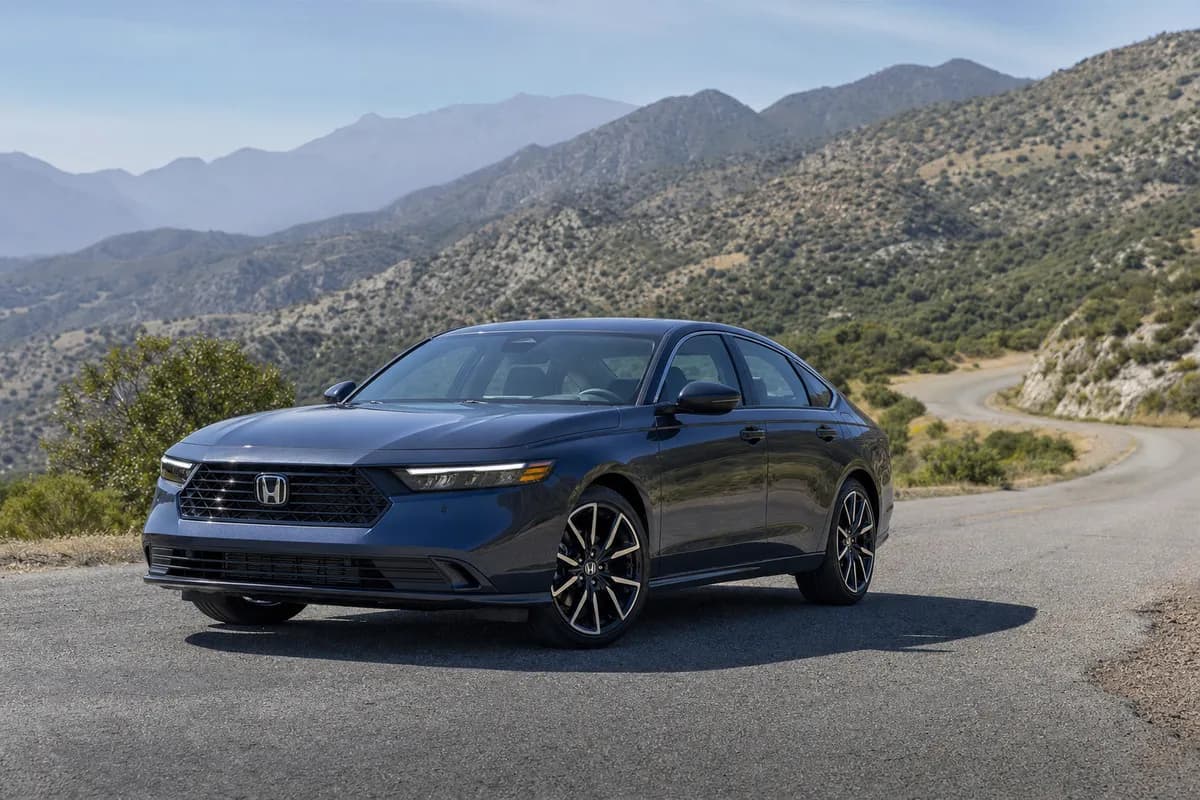
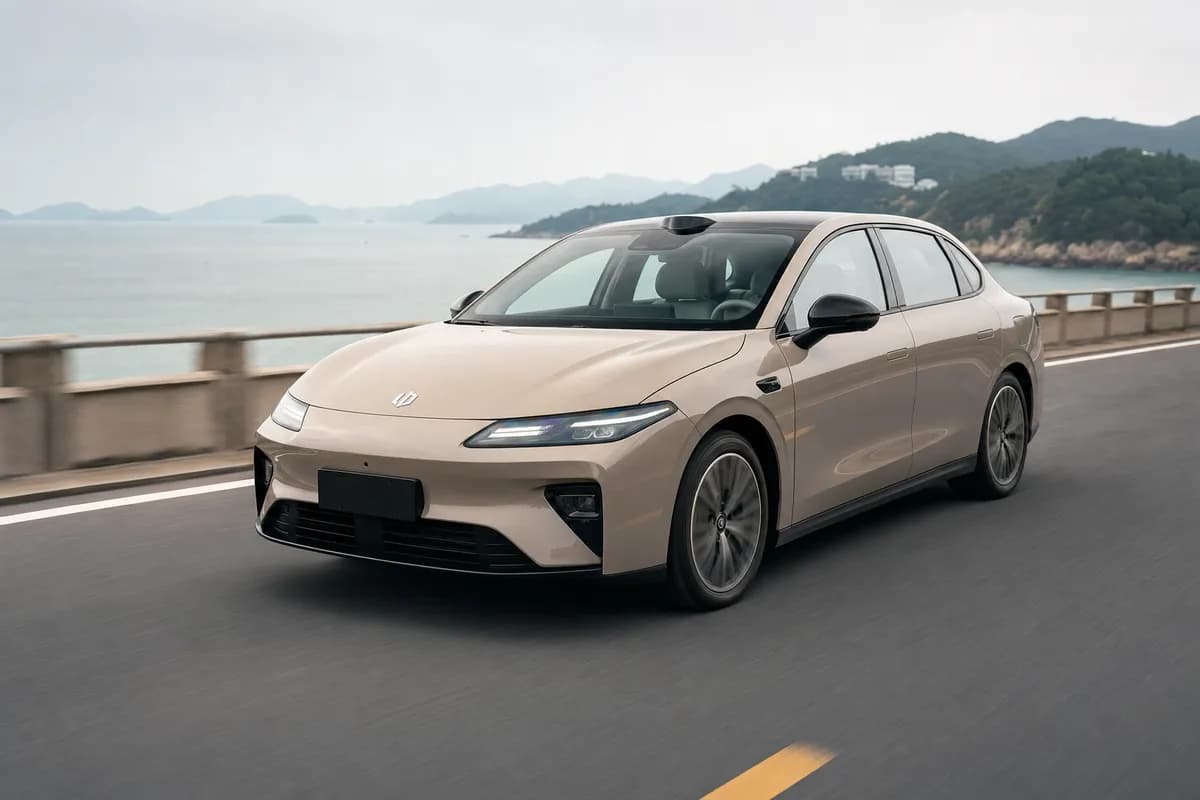
The 2024 Honda Accord Hybrid is the sort of car that makes most crossovers look like expensive posture problems. It is roomy, calm, properly efficient, and quick enough to embarrass the memory of old V6 Accords without drinking like one.
The 2024 Honda Accord Hybrid is the sort of car that makes most crossovers look like expensive posture problems. It is roomy, calm, properly efficient, and quick enough to embarrass the memory of old V6 Accords without drinking like one. After months of owner reports, road-test data, and real-world fuel-economy chatter, the verdict is becoming clear: this is not the flashiest midsize sedan on sale, but it may be the most sensible one with a pulse.
Honda’s 11th-generation Accord arrived with a cleaner suit, a more grown-up cabin, and a hybrid system doing the heavy lifting in the trims people actually want: Sport, EX-L, Sport-L, and Touring. The gas-only LX and EX still exist with a 1.5-liter turbo, but the Accord’s best personality lives in the hybrid. It is smoother, stronger, and more expensive, yes, but also the version that feels like Honda built the car around it rather than bolting electrification on as a compliance apology.
The Powertrain: Quietly Brilliant, Occasionally Weird
The 2024 Accord Hybrid uses Honda’s familiar 2.0-liter Atkinson-cycle four-cylinder engine paired with a two-motor hybrid system. Output is rated at 204 horsepower and 247 lb-ft of electric-motor torque, routed to the front wheels through what Honda calls an electronic continuously variable transmission. In practice, it is not a conventional CVT with belts and cones; it is a clever direct-drive-heavy hybrid setup that lets the electric motor do much of the work around town while the engine joins in efficiently when needed.
The result is better than the spec sheet suggests. Independent tests have put the Accord Hybrid in the 6.5- to 6.8-second range from 0-60 mph, depending on trim and conditions. That is properly quick for a family sedan chasing fuel economy, and it feels more immediate than the old 1.5T because electric torque fills in the gaps. Mash the throttle and the Accord does not roar theatrically; it surges with the focused competence of someone who has already read the meeting notes.
There is some synthetic shifting behavior programmed in under harder acceleration, which is Honda’s way of making the drivetrain feel more normal to drivers who panic when an engine holds revs. It mostly works. The system is less droney than Toyota’s older hybrid setups and more polished than the Hyundai Sonata Hybrid’s six-speed automatic pairing, though not as silently futuristic as a full EV. Around town, the Accord slips in and out of electric propulsion with admirable smoothness. You often notice the engine has started only because the fuel-economy number stops looking like witchcraft.
Where owners tend to agree is drivability. The Accord Hybrid is easy to modulate in traffic, relaxed on the highway, and punchy when merging. It does not feel like a science experiment. It feels like a Honda that happens to be very good at burning less fuel.
Real-World Fuel Economy: The Wheels Matter More Than Your Ego Wants to Admit
EPA ratings tell the first part of the story. The 2024 Accord Hybrid EX-L, wearing smaller wheels, is rated at 51 mpg city, 44 mpg highway, and 48 mpg combined. The Sport, Sport-L, and Touring trims, with their larger 19-inch wheels, drop to 46 mpg city, 41 mpg highway, and 44 mpg combined. That is not a rounding error. That is the price of looking cooler at the gas pump while silently judging yourself.
Owner experiences generally track close to those numbers, but driving style and wheel choice make a real difference. EX-L owners commonly report mixed-use results in the mid-to-high 40s, with careful suburban driving nudging above 50 mpg. Sport and Touring owners more often land in the low-to-mid 40s, especially if their commutes include higher-speed highways, cold weather, or short trips where the engine cannot fully warm up.
The Accord’s hybrid system is strongest below 55 mph, where regenerative braking and electric assist can do their best work. On fast interstate runs at 75 mph, physics strolls in wearing steel-toe boots. The sleeker sedan body still helps, but the hybrid advantage shrinks. If your life is mostly high-speed freeway, do not expect Prius numbers. If your life is traffic lights, school runs, and suburban arterials, the Accord Hybrid can make a midsize sedan feel indecently frugal.
Compared with rivals, Honda sits in a useful middle ground. The 2024 Toyota Camry Hybrid can reach up to 52 mpg combined in its most efficient LE form, though sportier trims fall closer to the Accord’s numbers. The Hyundai Sonata Hybrid Blue is rated at 52 mpg combined, while higher trims land lower. The Accord does not win the spreadsheet in every configuration, but it counters with superior chassis polish and a cabin that feels less like a rolling dealership incentive.
If maximum mpg is your only religion, buy the smallest wheels and resist the Touring trim’s temptations. The Accord Hybrid EX-L is the efficiency sweet spot; the Sport-L is the one your heart will try to justify.
Comfort, Cabin Quality, and Daily Use: The Anti-SUV Argument
The Accord’s best trick is how unbothered it feels as a daily driver. At 195.7 inches long with a 111.4-inch wheelbase, it has genuine limo-lite rear-seat space. Rear legroom is a generous 40.8 inches, and the trunk measures 16.7 cubic feet, which beats many compact crossovers once you stop pretending cargo height is the same thing as useful space.
The driving position is excellent, the dashboard is low, and outward visibility is better than in most fashionably angry SUVs. Honda’s cabin design is restrained but smart: a long mesh-style vent strip, physical climate controls, and a center touchscreen that does not require a séance to change fan speed. Sport and EX-L trims get a 12.3-inch touchscreen with wireless Apple CarPlay and Android Auto, while the Touring adds Google built-in, a head-up display, ventilated front seats, and a Bose audio system.
Owners coming from older Accords often praise the calmer ride and cleaner infotainment layout. Owners coming from compact SUVs often seem surprised that a sedan can be this spacious and more efficient while not leaning through corners like a filing cabinet on casters. The Accord Hybrid’s lower center of gravity matters. It turns in neatly, tracks steadily, and feels composed without pretending to be a sport sedan. This is not an Acura Integra Type S in sensible shoes. It is a family sedan with enough chassis literacy to make a Toyota Camry feel a bit sleepy.
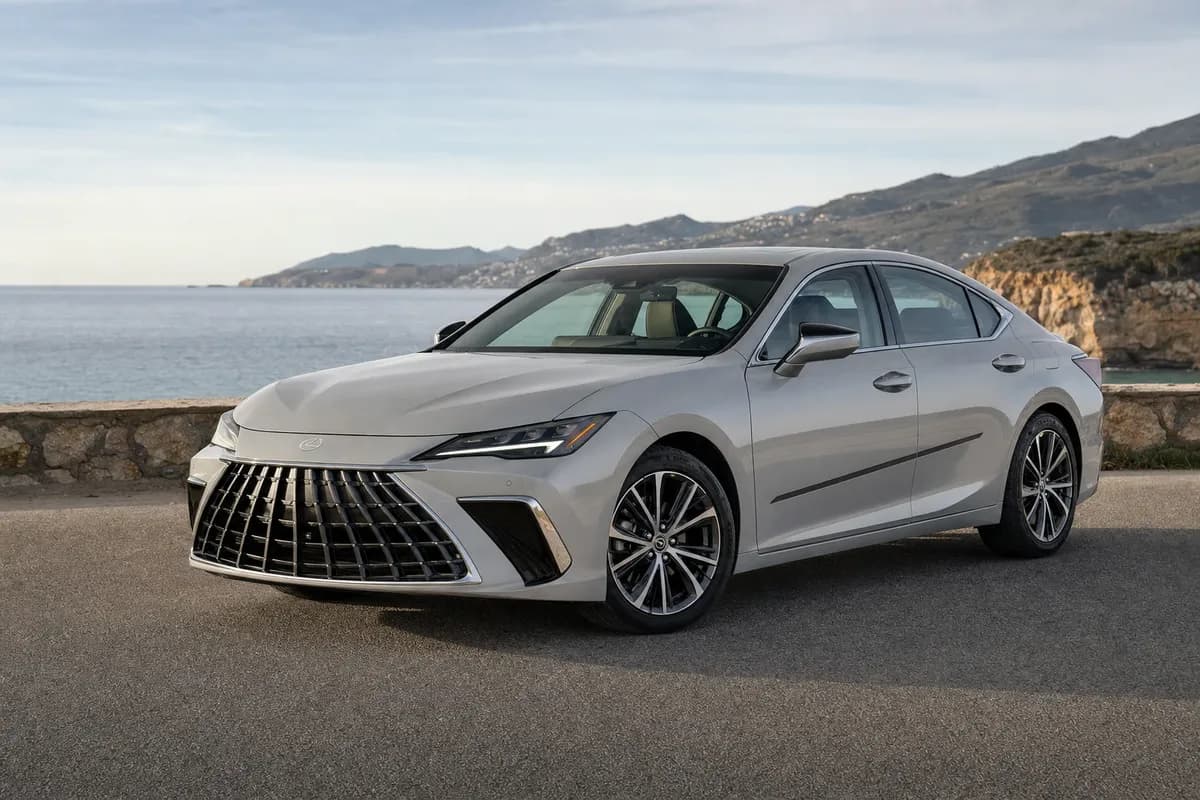
There are complaints. The 19-inch wheels on Sport, Sport-L, and Touring trims look sharp but transmit more road impact than the EX-L’s smaller setup. Tire noise can intrude on coarse pavement, especially at highway speeds. Honda has improved cabin refinement, but it still does not smother noise like a Lexus ES 300h. The Accord is controlled and mature, not vault-like.
The other recurring gripe is the absence of all-wheel drive. Toyota offered AWD on some Camry variants, and Subaru will happily sell you traction wrapped in granola. Honda keeps the Accord front-drive only. For most buyers using proper tires, that is fine. For snow-belt loyalists who want AWD without buying a CR-V Hybrid, it is a missed opportunity.
Owner Experience: Reliability, Tech, and the Annoying Bits
Long-term confidence is one of the Accord Hybrid’s biggest selling points, and early ownership patterns are encouraging. Honda’s hybrid system is not new, not fragile, and not some first-year moonshot powered by optimism. Variants of this two-motor architecture have been used across the Accord, CR-V, and other Honda models for years. That matters when you are buying a car to keep past the loan term rather than flipping it when the next lease ad starts yelling.
Maintenance is pleasantly normal. There is no plug to manage, no home charger to install, and no giant battery pack eating half the car. Routine service largely follows familiar Honda territory: oil changes, tire rotations, cabin filters, brake fluid, and eventual tires. Regenerative braking can reduce brake wear, although heavy city use and salted-road environments still demand inspections. Hybrid batteries are covered by federal emissions warranties, with longer coverage in some states, and Honda’s track record here is reassuring.
Owners do, however, report some common irritations. The Accord’s driver-assistance tech is broadly good, but lane-centering can occasionally feel fussy on poorly marked roads. Adaptive cruise control is smoother than many systems but can still brake earlier than a confident human would. The wireless phone charger, where equipped, has drawn the usual industry-wide grumbling: heat, finicky placement, and charging speeds that make a wall outlet look like a NASA project.
Infotainment is much improved, especially with the larger 12.3-inch screen, but Honda still reserves some of the nicest features for the top Touring. If you want ventilated seats, the head-up display, Google built-in, and the Bose stereo, you are paying for Touring and accepting the less efficient 19-inch wheel package. That is the trim-walk trap: luxury gear bundled with efficiency penalties. Automakers love this. Fuel-conscious nerds do not.
Build quality has generally been solid, though a few owners mention light rattles, particularly from trim areas in colder weather. That is not unheard of in modern Hondas, and it does not appear to be a widespread catastrophe. Still, buyers should do the obvious thing on a test drive: turn off the stereo, drive over rough pavement, and listen. A car is not quieter because the salesman keeps talking.
- Best owner-reported strengths: strong real-world mpg, smooth low-speed driving, spacious rear seat, excellent visibility, and low-stress commuting manners.
- Most common complaints: road noise on 19-inch wheels, no AWD option, some infotainment and wireless charging quirks, and top features locked behind the Touring trim.
- Best trim for value: EX-L Hybrid, thanks to the highest EPA rating and a sensible equipment mix.
- Best trim for style: Sport-L Hybrid, because apparently restraint dies the moment black wheels enter the chat.
How It Stacks Up Against Camry, Sonata, Prius, and CR-V Hybrid
The Accord Hybrid’s most obvious rival is the Toyota Camry Hybrid. The 2024 Camry Hybrid is famously reliable, impressively efficient, and about as emotionally stirring as a tax refund direct deposit. It is a smart buy, no question. But the Accord feels more premium inside, has a better driving position, and steers with more confidence. The Toyota wins if you want maximum proven durability and top mpg in its LE spec. The Honda wins if you still enjoy the act of driving even slightly.
The Hyundai Sonata Hybrid counters with strong fuel-economy ratings, bold styling, and a long warranty. It also offers clever features for the money. But the Accord’s hybrid system feels more natural, its chassis is more composed, and its resale value story is stronger. Hyundai has made huge progress; Honda still feels like the safer long-term bet.
The Toyota Prius is the efficiency champion, with EPA ratings reaching up to the high-50-mpg range depending on trim. It also looks dramatically better than the old Prius, which previously resembled a doorstop designed by a wind tunnel with unresolved trauma. But the Prius is smaller, less rear-seat friendly, and less relaxed as a family car. If you want maximum mpg in a compact footprint, Prius. If you want adult-sized space and highway comfort, Accord.
Then there is Honda’s own CR-V Hybrid, which uses a related 204-hp hybrid setup but wraps it in crossover packaging. The CR-V Hybrid is easier to load, available with all-wheel drive, and better for people who routinely carry bulky gear. But it is less efficient than the Accord, less elegant at speed, and more expensive when similarly equipped. Unless you need the height or AWD, the Accord Hybrid is the better machine. There, I said it. Sedans are not dead; buyers just got distracted by cladding.
Verdict: The Accord Hybrid Is the One to Buy, But Choose Carefully
The 2024 Honda Accord Hybrid is not perfect. It could be quieter on rough pavement. It should offer all-wheel drive. Honda should stop forcing buyers into 19-inch wheels to get the nicest equipment. And the styling, while clean, is so restrained it may need a double espresso before anyone calls it exciting.
But as a long-term ownership proposition, the Accord Hybrid is excellent. It is quick enough, genuinely efficient, roomy, well-built, and mechanically mature. It makes the strongest case in the lineup by far, and it remains one of the few midsize sedans that can satisfy both the spreadsheet brain and the part of you that still enjoys a good on-ramp.
My pick is the Accord Hybrid EX-L. It gets the best EPA rating at 48 mpg combined, rides better on its smaller wheels, and includes the important comfort and tech features without wandering into Touring money. The Sport-L is the emotional pick if you want the look, but do not pretend those 19s are free. The Touring is lovely, but its premium price drags it close to entry-luxury territory, where the badge snobs begin circling.
For buyers planning to keep a car for eight to ten years, the 2024 Accord Hybrid lands exactly where a great Honda should: low drama, high competence, and just enough driver appeal to keep the commute from feeling like a sentence. In a market drunk on oversized SUVs, this sedan is a sharp reminder that the sensible choice does not have to be the dull one.
Affiliate disclosure: This article contains affiliate links. RevvedUpCars may earn a small commission on qualifying purchases at no extra cost to you.