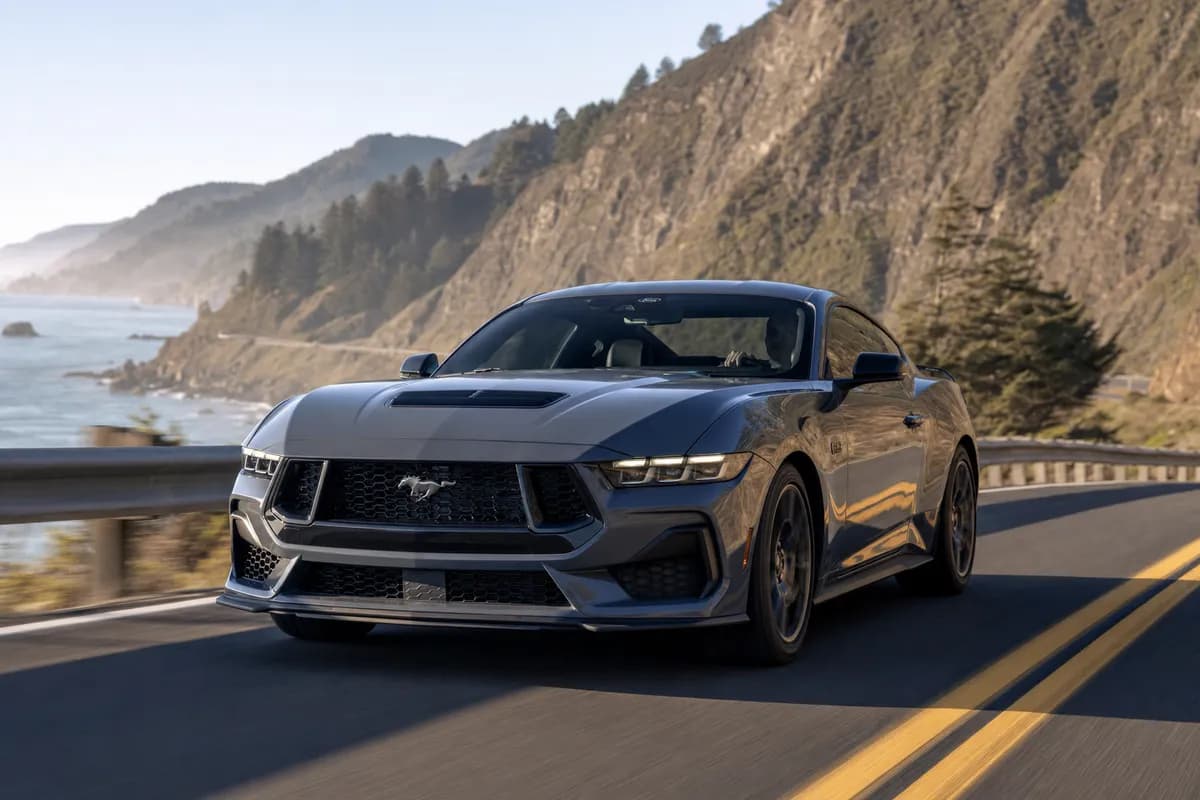
If there’s one car that’s thumbed its nose at the tides of change, it's the Ford Mustang. As V8s go extinct and future showrooms shimmer with electric crossovers, the 2025 Ford Mustang GT still rumbles onto the scene with an unapologetic, naturally aspirated growl.
If there’s one car that’s thumbed its nose at the tides of change, it's the Ford Mustang. As V8s go extinct and future showrooms shimmer with electric crossovers, the 2025 Ford Mustang GT still rumbles onto the scene with an unapologetic, naturally aspirated growl. But with EVs nipping at its tailpipes and technology transforming our expectation of “modern,” can the latest Mustang evolve without betraying its muscle car roots? After a hard-driven day behind the wheel, the answer is both reassuring—and a little surprising.
Evolution, Not Revolution: What’s New for the 2025 Mustang GT?
The 2025 Ford Mustang GT is not a clean-sheet revolution, nor does it pretend to be. Built on the S650 platform introduced for 2024, the latest GT refines, sharpens, and modernizes the Mustang recipe while keeping the bones and bravado that make Detroit iron iconic.
- Under the Hood: The beloved 5.0-liter “Coyote” V8 returns, now churning out 480 horsepower and 415 lb-ft of torque (486 hp and 418 lb-ft with the optional active-valve exhaust). That’s a hair more than the outgoing GT, and still comfortably ahead of the Camaro SS (455 hp) and Dodge Challenger R/T Scat Pack (485 hp).
- Transmission Choices: Purists, rejoice: a standard 6-speed manual still lives, joined by the spookily quick 10-speed automatic for those chasing tenths at the strip.
- Exterior: The classic long-hood, short-deck proportions persist, but the details are sharper—tri-bar LED headlights, chiseled grille options, and a bolder, more planted stance. It’s unmistakably Mustang, but with just enough modern menace to look at home in 2025.
- Chassis and Suspension: Ford’s MagneRide adaptive dampers are available, and the GT now gets a standard limited-slip diff and a stiffer rear subframe. There’s genuine chassis sophistication beneath the muscle-shirt looks.
But the biggest leap is inside. The cabin is now a digital showcase, with a crisp 12.4-inch digital instrument cluster and a 13.2-inch SYNC 4 touchscreen angled toward the driver, both running on Unreal Engine graphics. The result: more cockpit, less rental-car retro. There’s wireless Apple CarPlay, over-the-air updates, and a full suite of driver assists—whether you want them or not.
On the Road: Does the Mustang Still Thrill?
Let’s cut to the chase: The 2025 Mustang GT is still a proper muscle car, but it’s grown up—without going soft. Mash the throttle and the V8’s response is instant, the powerband wide and relentless. In the manual (bless Ford), the clutch is reasonably weighted, the shifter short and positive. Zero to 60 mph? Ford says 4.3 seconds with the manual, a tenth quicker with the auto. On a cold morning with sticky tires, we managed 4.1 in the automatic—matching the outgoing Camaro SS and edging the Challenger Scat Pack, which is heavier and more ponderous.
The MagneRide suspension is the real star for 2025, offering a plush ride in Comfort mode and hunkering down in Sport and Track. Tip it into a fast sweeper and—shockingly—the Mustang GT stays planted and communicative. There’s some body roll, but nothing alarming. Steering weight is adjustable, and while feedback isn’t Porsche-precise, it’s leagues ahead of muscle cars past and at least on par with the Camaro.
Braking is handled by beefy Brembos (six-pots up front), with fade-free stopping power even after repeated abuse. The GT is a car you can hustle, not just show-and-shine. Notably, the car’s “Electronic Drift Brake”—a nod to the growing “Gymkhana” crowd—lets you lock the rear wheels with a yank of the lever for YouTube-worthy slides. Silly? Maybe. Fun? Absolutely.
Tech Overhaul: Adapting to the Electric Era
Ford knows even diehards expect some 21st-century flair. The new Mustang GT bristles with tech—some useful, some a bit gimmicky, all meant to keep it relevant in a world obsessed with connectivity and screens.
- Digital Dash: The customizable instrument cluster is slick, fast, and actually useful—displaying everything from classic analog dials to track timers and G-force meters.
- SYNC 4: The infotainment system is genuinely snappy, intuitive, and finally doesn’t look glued on as an afterthought. Wireless smartphone integration means you can ignore Ford’s native nav if you wish.
- Driver Aids: Adaptive cruise, lane keep assist, emergency braking, and blind-spot monitoring are all here. You can ignore most of them, but on a long commute, they’re welcome.
- Over-the-Air Updates: Ford promises the Mustang will keep adding features as they’re developed, Tesla-style. Call me skeptical—manufacturers love promises—but it’s better than planned obsolescence.
What you won’t find is any hybrid or full-EV powertrain—at least not yet. The Mustang Mach-E handles that duty, leaving the GT to burn gasoline with gleeful abandon. And while you can’t quite “summon” your Mustang, the available FordPass app lets you remote-start, locate, and even configure your car from your phone.
Owning a Modern Muscle Car: Practicality, Rivals, and Real-World Use
The Mustang GT is, let’s be honest, not the car for everyone. Rear seats are ornamental for adults, trunk space is reasonable (13.5 cubic feet) but not cavernous, and visibility out the back is still a challenge. But as daily drivers go, it’s less punishing than you’d expect. Road and wind noise are well managed, the ride is supple with MagneRide, and standard features (heated/cooled seats, B&O audio, ambient lighting) put previous Mustangs to shame.
Fuel economy? Officially, the 2025 GT manages 15/24/18 mpg city/highway/combined with the manual, 16/25/19 with the auto. You’ll do worse if you drive it like it deserves. Is that embarrassing in a world of EVs? Sure. But buyers in this segment aren’t cross-shopping with Teslas. Yet.
Competitively, the field is thinning. The Chevy Camaro bows out after 2024, the Challenger is on its farewell tour, and the Toyota Supra (if you consider it a rival) is down two cylinders. A BMW M240i xDrive or Audi S5 Coupe? They’re quicker and more refined, but lack the Mustang’s V8 soul and cost $10,000+ more comparably equipped.
Pricing for the 2025 Mustang GT starts at $45,500 (including destination), with options (MagneRide, Performance Pack, Premium trim) pushing well into the mid-$50Ks. That’s still a bargain for rear-drive V8 thrills, especially as competition evaporates.
Verdict: The Last V8 Standing—For Now
Has the 2025 Ford Mustang GT evolved for the electric era? Yes—and no. Ford has judiciously updated its icon, adding enough tech and polish to keep it relevant, without neutering the essential Mustang experience. The V8 is still the star, the manual transmission is alive, and the new chassis gives it handling and ride quality that no Mustang before could claim—without descending into softness or gadgetry overload.
Is it an “electric era car”? Not by drivetrain, but by interface and attitude. The Mustang GT now feels digital on the inside, analog where it counts, and (crucially) not out of step with what buyers expect from a modern sports car. It’s not for eco-warriors or tech obsessives chasing the next algorithm. It’s for drivers who want to remember why gasoline and gearshifts made us fall in love with cars in the first place.
In a world where muscle cars are an endangered species, the 2025 Mustang GT is the last of its kind—and, for now, the best. If you want one, act soon. The electric era is coming for everything. For today, though, the Mustang doesn’t just survive. It roars.
Affiliate disclosure: This article contains affiliate links. RevvedUpCars may earn a small commission on qualifying purchases at no extra cost to you.
Get the latest car reviews in your inbox
Join thousands of car enthusiasts. No spam, unsubscribe any time.