The compact truck fight is wonderfully weird: two unibody pickups built for people who want Home Depot capability without piloting a full-size aircraft carrier through a Trader Joe’s parking lot.
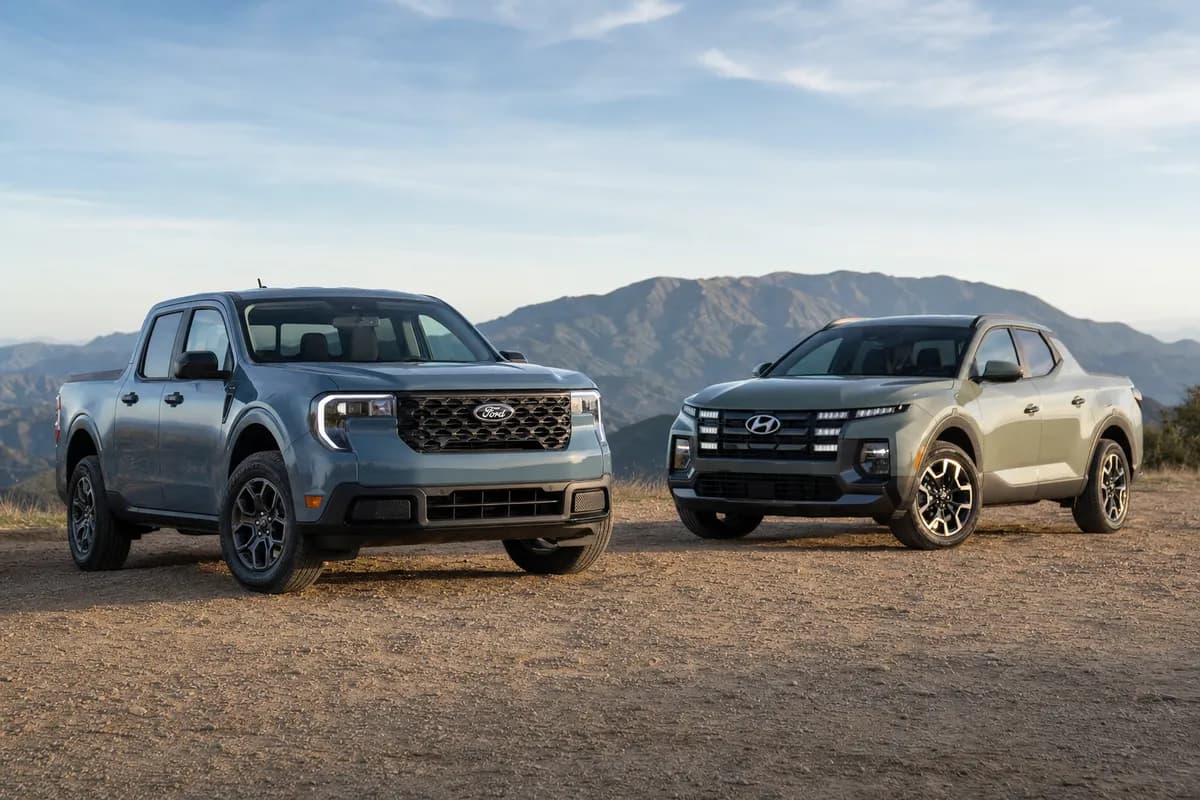
The compact truck fight is wonderfully weird: two unibody pickups built for people who want Home Depot capability without piloting a full-size aircraft carrier through a Trader Joe’s parking lot. The 2025 Ford Maverick and 2025 Hyundai Santa Cruz both reject the old-school body-on-frame truck rulebook, but they do it with very different personalities. The Maverick is the rational genius: cheap to run, easy to park, now available as a hybrid with all-wheel drive, and annoyingly good at being useful. The Santa Cruz is the stylish extrovert: quicker with the turbo, nicer inside, more SUV-like, and happy to charge you accordingly. If you’re shopping this segment, this is the comparison that actually matters.
Pricing, Powertrains, and the Numbers That Matter
The 2025 Ford Maverick enters the model year with a meaningful refresh: updated styling, a much larger 13.2-inch touchscreen, new trim options, and the big headline — the hybrid can finally be paired with all-wheel drive. That alone fixes one of the Maverick’s biggest weaknesses. For buyers in snow states, rural areas, or anywhere that gravel roads are not considered an “adventure lifestyle,” it’s a big deal.
Ford’s lineup includes the XL, XLT, Lariat, Tremor, and the new street-oriented Lobo. Pricing starts around the mid-$20,000s before destination, which still makes the Maverick one of the least expensive pickups in America. Of course, Ford dealers have historically treated Mavericks like limited-edition bourbon, so actual transaction prices may vary depending on how much nonsense your local store thinks it can get away with.
The Maverick offers two core powertrains:
- 2.5-liter hybrid four-cylinder: 191 total system horsepower, continuously variable automatic transmission, front-wheel drive or all-wheel drive for 2025.
- 2.0-liter EcoBoost turbo four-cylinder: 238 horsepower and 277 lb-ft of torque, paired with an 8-speed automatic and available all-wheel drive.
- Maximum towing: 2,000 pounds standard, or up to 4,000 pounds with the available 4K Tow Package.
- Maximum payload: about 1,500 pounds, depending on configuration.
- Bed length: 4.5 feet, with Ford’s useful Flexbed system.
The 2025 Hyundai Santa Cruz also gets a refresh, and it leans harder into its SUV-with-a-bed identity. The front end is more squared off, the cabin gets a much cleaner layout, and upper trims receive Hyundai’s slick panoramic-style digital display setup. Trims include SE, SEL, SEL Activity, XRT, and Limited, with pricing generally starting closer to the high-$20,000s and climbing into the low-$40,000s for the turbocharged luxury trims.
The Santa Cruz powertrain lineup is simpler but more dramatic at the top:
- 2.5-liter naturally aspirated four-cylinder: 191 horsepower and 181 lb-ft of torque, with an 8-speed automatic, front-wheel drive or all-wheel drive.
- 2.5-liter turbocharged four-cylinder: 281 horsepower and 311 lb-ft of torque, standard all-wheel drive, and an 8-speed dual-clutch automatic.
- Maximum towing: 3,500 pounds with the base engine, up to 5,000 pounds with the turbo AWD model.
- Payload: roughly 1,400 to 1,700 pounds depending on trim and drivetrain.
- Bed length: just over 4 feet, with an underfloor storage compartment and available integrated tonneau cover.
On paper, the Santa Cruz wins the muscle contest. The turbo model’s 281 horsepower and 311 lb-ft are serious numbers in a vehicle this size. But the Maverick wins the efficiency and value fight before the Hyundai has even finished warming up its dual-clutch gearbox.
Driving: Hybrid Cleverness vs Turbo Swagger
The Ford Maverick drives like exactly what it is: a small, light, practical machine that doesn’t waste your time. The hybrid is the star. With 191 combined horsepower, it is not quick in the barroom-brag sense, but it is smooth, responsive around town, and absurdly efficient for something with a pickup bed. Front-drive hybrid Mavericks have returned EPA ratings around 42 mpg city and 38 mpg combined in recent years, and while the new AWD hybrid sacrifices a little efficiency, it remains the economy champion by a mile.
That fuel economy is not a gimmick. It changes the ownership experience. A Maverick Hybrid can commute like a compact crossover, haul mulch on Saturday, and still sip fuel like it is personally offended by gas stations. In real-world use, that matters more than a 0-60 time you’ll brag about twice and then forget.
The 2.0-liter EcoBoost Maverick is the one for people who want more punch. With 238 horsepower and 277 lb-ft, it feels legitimately quick for a small truck. Independent testing of earlier EcoBoost AWD Mavericks has put 0-60 mph in the six-second range, which is hilarious when you remember this thing can also carry plywood and costs less than many compact SUVs with the personality of wet drywall.
The Maverick’s ride is generally composed, and its steering is light but accurate. It doesn’t pretend to be a sports car unless you count the new Lobo, which Ford is pitching as a lower, street-performance version with attitude. The Tremor, meanwhile, is the outdoorsy one, adding off-road hardware and a tougher look. Neither turns the Maverick into a Ranger Raptor, but both give the lineup some flavor.
The Hyundai Santa Cruz feels more polished and more expensive, because it is. Its platform roots are shared with the Tucson, and that shows in the way it rides and handles. It feels planted, refined, and more crossover-like than the Maverick. The cabin is quieter, the body control is tidier, and the steering has a little more sophistication. If you’re coming out of a compact SUV, the Santa Cruz will feel instantly familiar.
The base 191-hp Santa Cruz is adequate, but adequate is what you call a hotel breakfast when the eggs came from a bag. It moves, it merges, it does the job. The turbocharged 2.5-liter, however, transforms the vehicle. With 281 horsepower and 311 lb-ft, it punches hard from low revs, and 0-60 mph runs around six seconds are realistic. That makes the Santa Cruz Turbo one of the quickest compact pickups you can buy.
The catch is the transmission. Hyundai’s 8-speed dual-clutch automatic is quick once rolling, but in low-speed parking maneuvers or stop-and-go traffic, it can feel less buttery than a conventional automatic. It’s not a disaster, but it is a reminder that sporty hardware sometimes brings sporty compromises. The Maverick’s hybrid eCVT, by contrast, is not thrilling, but it is wonderfully seamless.
Driving verdict: The Santa Cruz Turbo is the fun one. The Maverick Hybrid is the smart one. The Maverick EcoBoost splits the difference and may be the best all-rounder if you want speed without Hyundai’s price tag.
Bed Utility, Towing, and Real Truck Stuff
Let’s be blunt: neither of these is replacing an F-150, Silverado, Ram 1500, Tacoma, or Colorado for serious towing and jobsite abuse. If your weekends involve a 7,000-pound camper, a skid steer, or calling your truck “the rig” without irony, move along. These are lifestyle-and-light-duty trucks, and judged that way, both are very useful.
The Maverick’s 4.5-foot bed is one of its best features. Ford’s Flexbed setup includes clever tie-down points, slots for DIY dividers, available in-bed power, and a shape that makes excellent use of the truck’s compact footprint. The Maverick is about 200 inches long overall, which means it is far easier to park than a midsize truck but still capable of carrying bikes, tools, gardening supplies, camping gear, and the usual suburban cargo chaos.
The 2025 Maverick’s towing story improves because Ford now lets buyers pair the hybrid with all-wheel drive and the 4K Tow Package. That means you no longer have to choose between excellent fuel economy and a more useful tow rating. Properly equipped, the Maverick can tow up to 4,000 pounds. That covers small boats, utility trailers, lightweight campers, motorcycles, and a lot of weekend toys.
The Santa Cruz counters with a higher maximum tow rating. With the turbo engine and all-wheel drive, it can tow up to 5,000 pounds. That is a clear win over the Maverick if towing is your priority. The Hyundai also offers a clever under-bed storage compartment, much like a smaller version of the Honda Ridgeline’s trunk. It is great for wet gear, recovery straps, muddy shoes, or anything you want hidden from opportunistic parking-lot goblins.
But the Santa Cruz bed is smaller. Its cargo box is just over 4 feet long, and while the available integrated tonneau cover is neat, it eats into vertical space near the front of the bed. The Hyundai’s bed is thoughtfully designed, but the Maverick’s box feels more open, more flexible, and more truck-like. The Santa Cruz is a crossover with a clever cargo area. The Maverick is a small truck that happens to drive like a crossover.
- Choose the Maverick for: better bed flexibility, lower running costs, strong payload, and superior small-truck practicality.
- Choose the Santa Cruz for: higher max towing, hidden bed storage, and a more premium lifestyle-truck experience.
If you regularly tow near 5,000 pounds, the Hyundai wins. If you mostly haul messy, bulky stuff and want a cheap, efficient truck bed, the Ford is the better tool.
Interior, Tech, Safety, and Daily Living
The Maverick’s cabin used to be charmingly cheap. For 2025, it is still cheap in places, but now it is less apologetic about it. The big upgrade is the standard 13.2-inch center touchscreen, replacing the old small screen that looked like Ford found it in a drawer labeled “Escape, maybe?” Wireless Apple CarPlay and Android Auto are expected, and the interface is much more modern. There is also an 8-inch digital instrument cluster, plus improved connectivity and available driver-assistance features.
The Maverick’s interior strength is usability. The doors have smart storage cutouts, the rear seat can hide gear, the materials are rugged enough to survive actual life, and the controls are generally straightforward. This is not a luxury cabin, even in Lariat trim, but it feels honest. It’s the kind of interior you can climb into with muddy boots and not feel like you’ve committed a felony.
The Hyundai Santa Cruz wins the showroom battle. Its refreshed 2025 interior looks and feels more expensive, especially in XRT and Limited trims. Hyundai’s available dual 12.3-inch display arrangement gives the cabin a high-tech look, and the updated control layout brings back more physical switchgear where it matters. Bless Hyundai for remembering that adjusting climate control should not require the precision of defusing a submarine mine.
Seat comfort is strong in both, but the Santa Cruz feels more like a premium compact SUV. The Maverick feels more upright and truckish, with a slightly more utilitarian vibe. Rear-seat space is usable in both, though neither is a limousine. Adults will fit, but if you regularly carry tall rear passengers, a Honda Ridgeline or true midsize crew cab will be more comfortable.
Safety tech depends on trim and package. The Santa Cruz generally offers a generous list of standard and available driver-assistance features, including forward collision avoidance, lane keeping assistance, blind-spot monitoring, and adaptive cruise control on higher trims. Hyundai also backs the Santa Cruz with one of the best warranties in the business: 5 years/60,000 miles basic and 10 years/100,000 miles powertrain, plus complimentary maintenance for 3 years/36,000 miles.
Ford’s warranty is more traditional: 3 years/36,000 miles basic and 5 years/60,000 miles powertrain. The Maverick offers Ford Co-Pilot360 features, but you may need to pay attention to trim and packages to get the full safety suite. That is very Ford: the truck is affordable, but the options list stands nearby wearing a ski mask.
Cabin verdict: Santa Cruz feels richer and more SUV-like. Maverick feels tougher, simpler, and more practical. If interior quality matters most, buy the Hyundai. If you want a cabin you can actually use without fussing over fingerprints and scuffs, buy the Ford.
Verdict: The Maverick Is the Better Truck, the Santa Cruz Is the Better Crossover
The 2025 Hyundai Santa Cruz is the more powerful, more refined, and more upscale machine. In turbo form, it is genuinely quick. It tows up to 5,000 pounds. Its cabin is more stylish, its warranty is vastly better, and its overall driving experience feels more polished. If you want a compact SUV that happens to have an open bed for bikes, coolers, plants, and weekend gear, the Santa Cruz is excellent. The XRT trim, with its tougher styling and standard turbo power, is probably the sweet spot if your budget allows it.
But the 2025 Ford Maverick is the one I’d recommend to more people. It is less expensive, more fuel-efficient, more bed-focused, and now far more versatile thanks to the availability of hybrid all-wheel drive. That single change makes the Maverick’s best powertrain viable for buyers who previously had to default to the EcoBoost just to get AWD. Add the 4K Tow Package, and the Maverick Hybrid becomes the compact truck cheat code: efficient all week, genuinely useful on weekends, and still small enough to live with in the city.
The Santa Cruz Turbo beats the Maverick in horsepower and towing. No argument. But it also costs more, burns more fuel, and gives you a smaller bed. The base Santa Cruz, meanwhile, lacks the performance sparkle that makes the Hyundai special. If you’re buying the Hyundai, buy the turbo. If you’re not buying the turbo, you’d better really love the styling.
The Maverick lineup has broader appeal. The XL Hybrid is the value hero. The XLT Hybrid AWD is the practical sweet spot. The EcoBoost AWD is the budget sleeper. The Tremor is for people who actually leave pavement now and then. The Lobo is for people who remember when mini-trucks were cool and refuse to let taste get in the way of joy. That is a deeper, smarter range than Hyundai offers.
- Best for fuel economy: 2025 Ford Maverick Hybrid.
- Best for towing: 2025 Hyundai Santa Cruz Turbo AWD.
- Best value: 2025 Ford Maverick XL or XLT Hybrid.
- Best performance: 2025 Hyundai Santa Cruz 2.5T.
- Best actual compact truck: 2025 Ford Maverick.
- Best SUV alternative with a bed: 2025 Hyundai Santa Cruz.
Final call: Buy the 2025 Ford Maverick if you want the smarter, cheaper, more efficient compact pickup. Buy the 2025 Hyundai Santa Cruz if you want more power, more polish, and don’t mind paying for it. My money goes to the Maverick Hybrid AWD with the 4K Tow Package. It is not the flashiest choice, but it is the one that best understands the assignment. And in this class, understanding the assignment beats flexing in the parking lot every single time.
Affiliate disclosure: This article contains affiliate links. RevvedUpCars may earn a small commission on qualifying purchases at no extra cost to you.