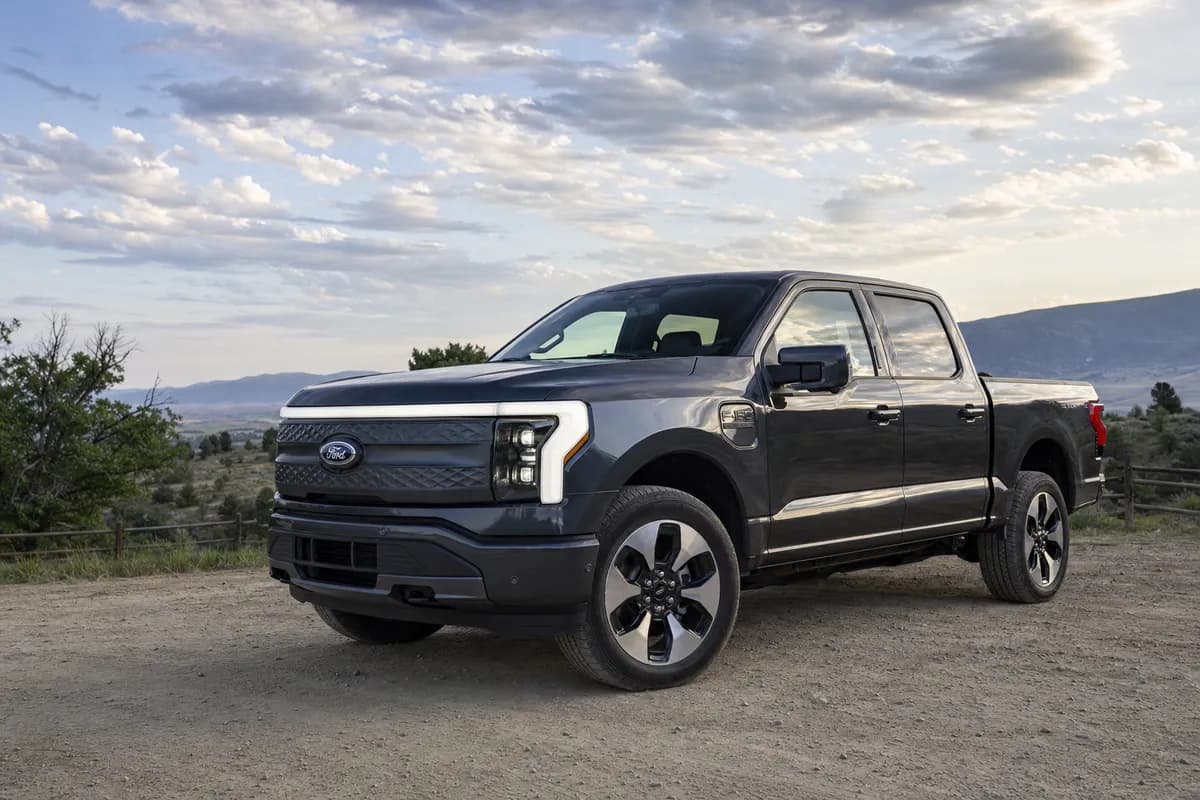
The 2024 Ford F-150 Lightning is the rare electric vehicle that doesn’t need to explain itself over artisanal coffee. It’s an F-150. It has a bed, a massive frunk, real towing hardware, four-wheel drive, and enough torque to make rear tires feel like office supplies.
The 2024 Ford F-150 Lightning is the rare electric vehicle that doesn’t need to explain itself over artisanal coffee. It’s an F-150. It has a bed, a massive frunk, real towing hardware, four-wheel drive, and enough torque to make rear tires feel like office supplies. After living with the Lightning long enough to move furniture, commute, charge in public, run errands, haul gear, and occasionally launch it like a silent trebuchet, the verdict is clear: this is one of the most useful EVs on sale. It is also not the electric truck for everyone, because physics still has a vote — especially when towing.
What We Tested: The Lightning Formula Still Makes Sense
The 2024 Ford F-150 Lightning lineup is refreshingly straightforward by modern EV standards. Every Lightning uses dual electric motors and four-wheel drive. Standard-range models make 452 horsepower, while extended-range versions deliver 580 horsepower. All of them produce the same absurdly immediate 775 lb-ft of torque. That number matters more than the horsepower figure in daily driving, because the Lightning doesn’t build power; it detonates it.
For 2024, the lineup includes the work-focused Pro, the better-equipped XLT, the new value-oriented Flash, the premium Lariat, and the luxo-truck Platinum. The Flash is the sweet spot on paper, pairing the extended-range battery with the equipment most buyers actually want: the big screen, tech goodies, and the useful range without climbing fully into leather-lined country-club territory.
Battery choices remain central to the Lightning experience. The standard-range pack is rated at 240 miles of EPA range in most configurations. Extended-range trucks reach up to 320 miles, while the heavier Platinum is rated around 300 miles. That’s enough for normal life, but if you tow long distances, you should tattoo “range varies” on your trailer hitch.
The Lightning’s party trick is that it feels like an F-150 first and an EV second. The cabin is familiar, the driving position is commanding, the controls mostly make sense, and the bed is a real truck bed rather than a lifestyle accessory designed by someone whose toughest weekend involves carrying paddleboards. The 5.5-foot box won’t satisfy every contractor, but it handles homeowner duty, camping gear, mulch runs, and bulky cargo without drama.
Quick take: The F-150 Lightning works because Ford didn’t try to reinvent the truck. It electrified the best-selling one and left the useful bits intact.
Daily Utility: The Frunk Is Not a Gimmick
Let’s start with the feature that turns skeptics into annoying evangelists: the front trunk. The Lightning’s 14.1-cubic-foot Mega Power Frunk can carry up to 400 pounds, has drainable storage, lighting, power outlets, and enough space for luggage, tools, groceries, charging cables, muddy boots, or the stuff you don’t want sliding around in the bed. It is not cute. It is brilliant.
In daily use, the frunk changes how you use a pickup. Traditional trucks force you into a choice: secure cargo in the cab, expose it in the bed, or buy a tonneau cover and pretend rain doesn’t exist. The Lightning gives you a lockable, weather-protected compartment where the engine used to be. For commuters and families, it’s arguably more useful than the bed on many days.
The cab is classic modern F-150: wide, roomy, and practical. Rear-seat space in crew-cab form is enormous, with a flat floor and room for adults who don’t need to fold themselves like camping chairs. Storage bins are everywhere. The available interior work surface remains genuinely handy if you use the truck as a mobile office, though it also encourages eating gas-station sandwiches over your keyboard, which is a lifestyle choice rather than a Ford problem.
Ride quality is another daily win. Because the battery sits low in the chassis and the Lightning uses independent rear suspension instead of the standard gas F-150’s leaf-spring setup, it rides with a calmness most pickups can only dream about. Expansion joints don’t thump through the cabin like dropped anvils, and the truck feels planted rather than bouncy when unloaded. Compared with a Ram 1500, long the comfort benchmark among combustion pickups, the Lightning feels smoother in town and more composed over broken pavement.
Payload depends on configuration, but the Lightning can carry up to roughly 2,235 pounds in standard-range form. Extended-range and high-trim models give some of that back because batteries and luxury equipment are heavy. Still, for normal homeowner, fleet, and recreational use, it’s plenty. The issue is not whether the Lightning can haul; it can. The issue is how far you want to go while doing it.
- Frunk volume: 14.1 cubic feet
- Frunk capacity: 400 pounds
- Maximum towing: up to 10,000 pounds when properly equipped
- Maximum payload: up to about 2,235 pounds, configuration dependent
- Bed length: 5.5 feet
Performance: This Truck Is Hilariously Quick
The Lightning’s acceleration remains one of the great automotive jokes of the decade. Here is a full-size pickup, shaped like a suburban toolshed and weighing roughly three tons depending on trim, that can run from 0-60 mph in the mid-four-second range with the extended-range battery. That is quicker than many sport sedans and deeply disrespectful to physics.
The best part is how casually it does it. No revs. No turbo lag. No downshift. Just press the right pedal and the truck lunges forward with the silent confidence of a bank vault falling down an elevator shaft. Around town, that instant torque makes the Lightning feel smaller than it is. Merging is effortless. Passing is a non-event. Gaps in traffic become opportunities rather than negotiations.
Ford’s tuning deserves credit. Some EVs deliver acceleration like a carnival ride: dramatic, nauseating, and slightly silly. The Lightning is strong but progressive, especially in normal drive modes. It doesn’t feel twitchy, and the one-pedal driving calibration is among the better truck applications on the market. You can glide smoothly through traffic without constantly jabbing the brake pedal.
Handling is better than expected but still governed by mass. The low-mounted battery helps reduce body roll, and the steering is accurate enough, but this is not a Rivian R1T on a back road. The Rivian is sharper, more playful, and more adventurous off-road. The Lightning is calmer, more traditional, and easier to live with if what you actually want is an F-150 that happens to be electric. The GMC Hummer EV Pickup, meanwhile, is a 9,000-pound moon buggy with crab-walk theatrics and the efficiency of a collapsing star. Fun? Yes. Sensible? Only if your accountant has given up.
Braking feel is decent, though not perfect. The blend between regenerative and friction braking can occasionally feel slightly artificial at low speeds, but it’s far from a deal-breaker. The bigger issue is tire wear if you treat every stoplight like a drag strip. With 775 lb-ft available instantly, restraint is cheaper than rubber.
Range, Charging, and the Cold Truth About Towing
Here’s where the Lightning is both impressive and brutally honest. As a daily EV truck, it works beautifully. As a long-distance tow rig, it demands planning. That’s not a Ford scandal; that’s aerodynamics, weight, and battery chemistry collecting their invoice.
In mixed driving, an extended-range Lightning commonly lands around 2.0 to 2.3 miles per kWh depending on temperature, speed, tires, terrain, and driver self-control. At highway speeds, especially above 70 mph, efficiency drops. Add cold weather and it drops again. Add a trailer and the range can fall dramatically — often by 40 to 50 percent depending on trailer size and shape. A low utility trailer is one thing. A tall enclosed trailer is an aerodynamic felony.
The Lightning can tow up to 10,000 pounds when properly equipped with the extended-range battery and Max Trailer Tow Package. It tows confidently, too. The torque is fantastic, stability is good, and the truck doesn’t hunt for gears because there are no gears to hunt. But towing range is the buzzkill. If your use case is towing a camper 250 miles every other weekend, a hybrid F-150 PowerBoost or a diesel heavy-duty truck will make your life easier. If you tow locally, the Lightning is superb.
Charging is adequate rather than class-leading. The Lightning’s DC fast-charging peak is roughly 150 kW, and Ford estimates charging from 15 to 80 percent in about 36 to 44 minutes, depending on battery and conditions. That’s fine, but not spectacular in a world where the Hyundai Ioniq 5, Kia EV6, and 800-volt rivals can gulp electrons faster. Of course, none of those can carry a refrigerator in the bed and another one in the frunk, so context matters.
At home, the Lightning makes far more sense. Level 2 charging turns it into a wake-up-full appliance. Extended-range trucks can support faster AC charging with the right equipment, and Ford’s available 80-amp Charge Station Pro can significantly cut home charging times if your electrical panel is ready for it. If your garage wiring looks like it was installed during the Eisenhower administration, budget accordingly.
The 2024 model’s heat pump is a welcome addition for cold-weather efficiency. It won’t perform miracles in February, but it helps reduce the winter range penalty compared with pure resistive heating. Also important: Ford’s access to the Tesla Supercharger network via adapter for compatible stations dramatically improves road-trip confidence. The Lightning still uses a CCS port for 2024, with native NACS adoption expected later, but Supercharger access is a major practical upgrade.
Tech, Cabin, and Ownership: Mostly Smart, Occasionally Too Screen-Happy
The Lightning’s cabin tech depends heavily on trim. Lower trims use a more traditional layout, while higher trims get Ford’s large vertical touchscreen running SYNC 4A. The system is generally quick and clear, with wireless Apple CarPlay and Android Auto, good navigation, and EV-specific route planning. Still, Ford leans too heavily on the screen for some functions. Real knobs are not a moral failing, Dearborn. They are civilization.
BlueCruise, Ford’s hands-free highway driving system, is available on many trims and works well on mapped roads. It’s not autonomous driving, no matter what your overconfident neighbor says, but it reduces fatigue on long highway stints. Lane positioning is smooth, adaptive cruise behavior is natural, and the driver-monitoring system keeps things appropriately supervised.
The Lightning also excels as a rolling power source. Available Pro Power Onboard can deliver up to 9.6 kW of exportable power on properly equipped models, enough to run tools, campsite gear, tailgate equipment, or jobsite essentials. Ford’s Intelligent Backup Power system can also power a home during an outage when properly installed with the required hardware. That feature sounds like marketing until the lights go out and your neighbor’s generator is screaming like a lawn mower in a bucket.
Compared with the Chevrolet Silverado EV, the Lightning feels more conventional but also more familiar. The Silverado EV offers impressive range in certain configurations and clever packaging, but it is still rolling out across trims and price points. The Rivian R1T is the enthusiast’s choice, with better off-road hardware and a more premium adventure vibe, but it has a smaller bed and a higher starting price in many configurations. The Tesla Cybertruck is quicker and louder in the cultural sense, but its stainless-steel origami body and polarizing ergonomics make the Lightning look like the adult in the room.
Pricing has been a moving target, as EV truck MSRPs have bounced around like a loose socket in a toolbox. Broadly, the Lightning ranges from work-truck money in Pro form to luxury-truck money in Platinum trim. The smartest buy is not the Platinum. It’s the Flash or Lariat extended-range, depending on how much luxury you need and how allergic you are to sensible spending.
Verdict: The Best Electric Truck for Normal Truck People
The 2024 Ford F-150 Lightning is not perfect, but it is deeply convincing. Its genius is not in being the flashiest EV pickup. It isn’t. The Rivian is cooler, the Hummer is crazier, the Cybertruck is more meme than machine, and the Silverado EV may beat it on certain range numbers. But the Lightning is the one that feels most like a truck you can simply use.
It rides beautifully, accelerates like it has a grudge, offers outstanding storage, powers tools and homes, and fits into daily life with far less adjustment than most people expect. If you can charge at home and your towing is local or occasional, the Lightning is a fantastic ownership proposition. If you regularly tow heavy loads over long distances, buy the PowerBoost hybrid or a Super Duty and stop pretending charging stops with a trailer are character-building.
The best version is the extended-range Flash or Lariat. The standard-range truck makes sense for fleets and predictable local use, but private buyers should stretch for the bigger battery if the budget allows. Range is like garage space and horsepower: nobody complains about having too much.
Final verdict: The 2024 Ford F-150 Lightning is the most useful electric pickup for real-world buyers because it behaves like an F-150, not a science project. Just know your towing needs before you let the instant torque seduce you.
Affiliate disclosure: This article contains affiliate links. RevvedUpCars may earn a small commission on qualifying purchases at no extra cost to you.