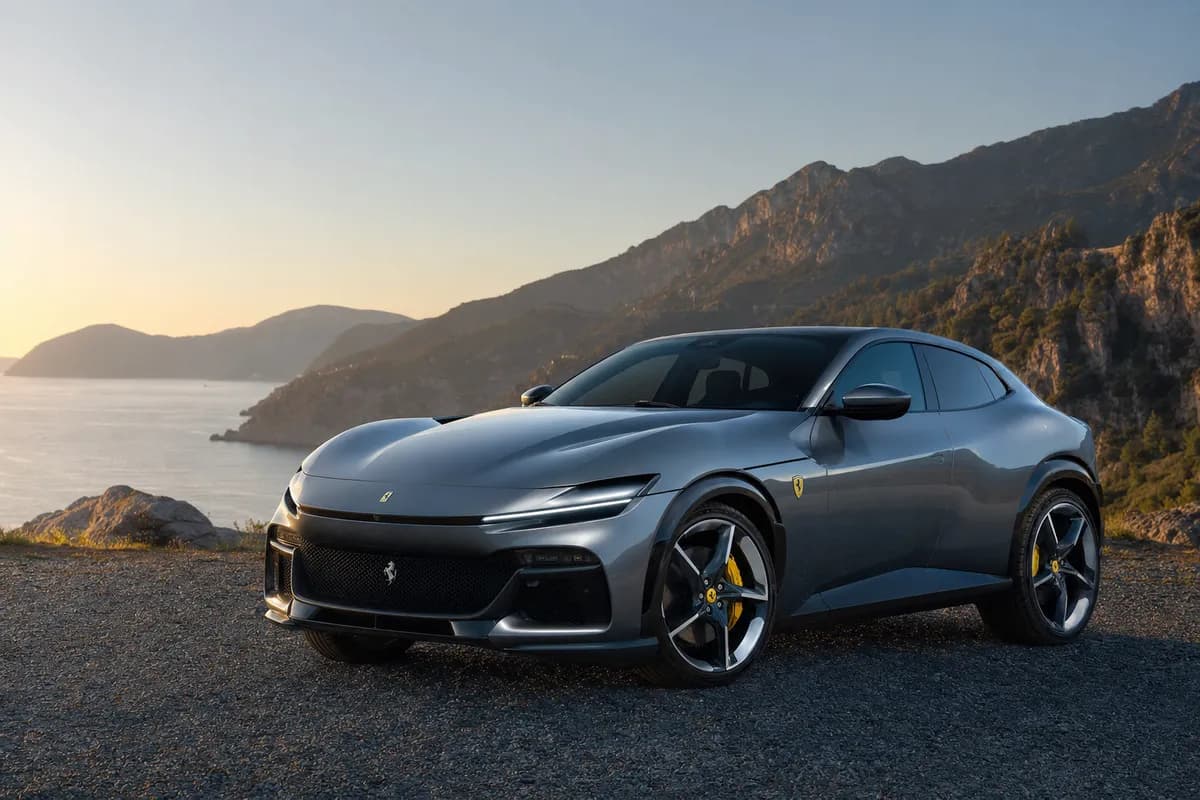
The 2025 Ferrari Purosangue launch is Ferrari doing the thing it swore it would never do — then making everyone else look slightly underdressed. Maranello still refuses to call it an SUV, because apparently the word is too vulgar to park near a V12. Fine.
The Purosangue uses a naturally aspirated 6.5-liter V12, not a downsized turbocharged V8. It mounts that engine behind the front axle for a front-mid layout, pairs it with a rear-mounted eight-speed dual-clutch transaxle, and uses a sophisticated all-wheel-drive system that behaves more like a traction-assist device than a permanent nanny. Ferrari claims a 49:51 front-to-rear weight distribution, which is frankly absurd for something with four doors and a boot.
And yes, the doors matter. The rear doors are electrically operated and rear-hinged, giving the Purosangue a theatrical party trick that is actually useful. You can get adults into the back without folding them like expensive laundry. Once inside, they sit in two proper individual rear seats, not a flat bench pretending to be premium. This is not a seven-seat school-run bus. Ferrari has drawn a hard line: four people, their bags, and their unreasonable expectations.
The proportions are strange in the best way. Long hood, cab pushed back, swollen haunches, and a roofline that avoids the bloated loaf shape of most luxury SUVs. It is less “high-riding 812 Superfast” than “GTC4Lusso that started going to the gym and stopped apologizing.” At around 4,973 mm long, it is roughly the size of an Aston Martin DBX, but visually it sits lower, meaner, and less desperate to prove it can tow a horsebox.
The V12 Is the Point — and Everyone Else Knows It
The headline number is simple: 715 hp. More precisely, the Purosangue’s 6.5-liter naturally aspirated V12 produces 715 hp at 7,750 rpm and 528 lb-ft of torque at 6,250 rpm. Ferrari says 80 percent of that torque is available from just 2,100 rpm, which matters because you do not want a family car that needs opera-house revs just to leave a junction.
But let’s be honest: nobody buys a V12 Ferrari because of torque availability. They buy it because it turns fuel into noise with the kind of mechanical savagery that makes turbocharged rivals sound like office equipment.
The Purosangue runs from 0-62 mph in 3.3 seconds, reaches 124 mph in 10.6 seconds, and tops out at more than 193 mph. Those figures place it directly in the firing line of the Aston Martin DBX707, which makes 697 hp from a 4.0-liter twin-turbo V8 and hits 193 mph, and the Lamborghini Urus Performante, which makes 657 hp and tops out around 190 mph. Porsche’s Cayenne Turbo GT, with 650 hp, is savagely effective and brutally quick, but it cannot match the Ferrari’s engine character. Nothing in this class can.
The numbers are impressive, but the delivery is what changes the argument. Turbocharged SUVs are quick in that now-now-now way, all boost and shove. The Purosangue builds speed like a proper Ferrari: elastic at first, then furious, then borderline antisocial as the V12 clears its throat above 6,000 rpm. It does not just accelerate; it escalates.
The Purosangue is not quick “for an SUV.” It is quick full stop — and the V12 makes its rivals feel like they are winning spreadsheets rather than hearts.
The eight-speed dual-clutch gearbox is related in philosophy to Ferrari’s current performance hardware and fires through ratios with the crisp violence you expect from Maranello. Leave it in automatic and it behaves with surprising polish. Pull the paddles and it remembers it has a reputation to protect.
Ferrari’s 4RM-S all-wheel-drive system is clever too. Rather than making the Purosangue feel like a front-biased security blanket, it preserves a rear-drive attitude and sends power forward when grip or circumstances demand it. The result is not the locked-down, hyper-controlled feel of a fast Audi or the brute-force approach of the Urus. The Ferrari feels more alive, more adjustable, and occasionally more mischievous. Good. Cars at this price should have personality, not just algorithms.
Chassis Trickery That Actually Works
Here is where the Purosangue should fall apart. A tall, heavy, V12-powered four-seater ought to be an exercise in physics management. Ferrari’s solution is not simply to fit stiff springs and hope your chiropractor has availability.
The big technical flex is the active suspension system developed with Multimatic. It uses 48-volt actuators to control body motion at each damper, reducing roll and pitch without relying on conventional anti-roll bars in the usual way. In plain English: the Purosangue can ride comfortably when you are behaving like a civilized adult, then clamp down hard when you start driving like you own a private mountain road.
That is the difference between Ferrari and many rivals. The Lamborghini Urus Performante is hugely entertaining but often feels like it is beating the road into submission. The Porsche Cayenne Turbo GT has staggering control and might be the most ruthlessly competent SUV on sale, but it can feel clinical — the Nürburgring lap time is doing a lot of the talking. The Aston Martin DBX707 is a charismatic bruiser, probably the Purosangue’s closest rival in spirit, but it cannot match the Ferrari’s steering purity or powertrain drama.
The Purosangue’s steering is fast, light, and immediate in typical Ferrari fashion. If you are coming from a Range Rover, the first quarter-turn may feel like the car has misread your mind and acted before you finished the thought. But settle into it and the front end is astonishing. There is real bite, real accuracy, and far less of the top-heavy delay that plagues big performance SUVs.
Is it as sharp as a 296 GTB or an 812 Competizione? Don’t be ridiculous. It is still a large, heavy, high-riding machine, with a dry weight quoted at 2,033 kg when specified with lightweight options. Add fluids, passengers, and luggage, and you are very much operating in heavyweight territory. But the magic is that it rarely feels ponderous. The active suspension keeps the body flat without turning the ride into punishment, and the rear-biased balance lets the car rotate with an enthusiasm that feels almost indecent for something with rear seats this usable.
Carbon-ceramic brakes are standard, as they should be. Pedal feel is strong, stopping power is immense, and repeated hard use does not turn the middle pedal into a suggestion. Ferrari has been doing this long enough to know that speed is cheap if you cannot repeatedly erase it.
Cabin: Brilliant Theatre, Occasional Ferrari Nonsense
The Purosangue’s cabin is one of the most interesting interiors Ferrari has built in years. Not perfect. Interesting. There is no traditional central infotainment screen, because Ferrari believes the driver and front passenger should have distinct digital zones. The driver gets a large digital display, the passenger gets their own screen, and the dashboard has a sweeping, twin-cockpit layout that looks spectacular.
Apple CarPlay and Android Auto are available, and the passenger display is a neat flex, especially when your co-driver wants to monitor speed, music, or navigation. But the lack of a conventional central touchscreen will annoy anyone accustomed to the cleaner interfaces in a Porsche Cayenne or even a BMW XM. Ferrari’s steering-wheel controls, including touch-sensitive elements, still feel like a solution designed by someone who has never adjusted a setting on a bumpy road.
Materials are suitably expensive. Leather, Alcantara, carbon fiber, metal trim — all the expected jewelry is present, and Ferrari’s customization program can make the cabin tasteful, outrageous, or visually criminal depending on your dealer and your self-control. The driving position is excellent: low for this type of car, focused, and properly aligned with the wheel and pedals.
The rear seats are the bigger surprise. They are not decorative. Two adults can sit back there in comfort, and the electrically opening rear-hinged doors make access easier than the roofline suggests. Cargo space is rated at about 473 liters, or roughly 16.7 cubic feet, which is useful rather than cavernous. A Bentley Bentayga is more practical. A Range Rover is more regal. A Mercedes-AMG GLS 63 will move more humans and more luggage. But none of those will make a tunnel sound like the pit lane at Monza.
Ride comfort is also better than skeptics expect. In its softer modes, the Purosangue is composed, quiet enough, and genuinely capable of long-distance touring. It does not have the pillowy isolation of a Bentley or Range Rover, but that is not the brief. Ferrari has managed to build a car that can cross countries without exhausting its occupants, then attack the last 30 miles like the family dog just stole its parking space.
Price, Rivals, and the Problem with Calling It an SUV
Pricing is where the Purosangue stops being a car and becomes a wealth filter. In the U.S., recent pricing has hovered around the low-$400,000 range before options, and Ferrari options are not so much accessories as financial weather events. A sensibly specified Purosangue can sail well beyond $500,000 without trying very hard. That is nearly double the price of some already outrageous competitors.
So let’s compare it honestly.
- Aston Martin DBX707: Around 697 hp, 193 mph, superb soundtrack for a turbo V8, excellent luxury, and far cheaper than the Ferrari. It is the emotional alternative for people who want drama without Maranello-level gatekeeping.
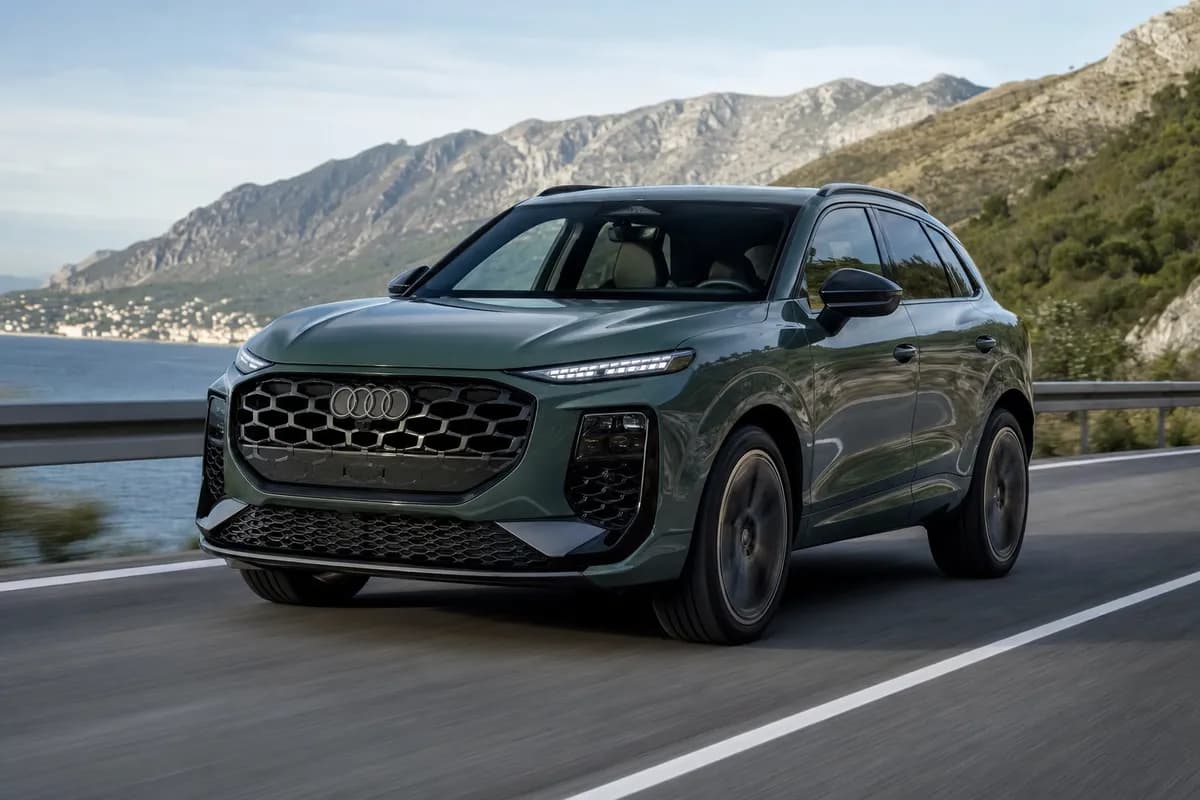
- Lamborghini Urus Performante: 657 hp, 0-62 mph in about 3.3 seconds, 190 mph top speed, and more visual aggression than a nightclub bouncer in carbon fiber. Hugely capable, less sophisticated, more extroverted.
- Porsche Cayenne Turbo GT: 650 hp, sensational chassis control, devastating real-world pace, and probably the best choice if you care about lap times and ergonomics more than theatre.
- Bentley Bentayga Speed: More luxury, more waft, less edge. Fast enough for most humans, but the Ferrari makes it feel like a country house with launch control.
- Range Rover SV: Better at status, comfort, and actual SUV duty. Not remotely in the same performance conversation, and not trying to be.
The Purosangue does not beat every rival on every practical metric. It is not the roomiest. It is not the cheapest. It is not the most rugged. It is not the easiest to buy, either, because Ferrari allocations are their own little theater of loyalty, timing, and dealer politics.
But it changes the performance SUV argument because it refuses to feel like a compromised supercar or a tuned luxury truck. It feels like its own thing: a Ferrari that happens to carry four people and luggage, rather than an SUV wearing a Ferrari costume.
That distinction matters. The Urus is a Lamborghini SUV. The DBX707 is an Aston SUV. The Cayenne Turbo GT is a Porsche SUV. The Purosangue is, stubbornly and convincingly, a Ferrari.
Verdict: Ferrari Broke Its Own Rule and Won
The 2025 Ferrari Purosangue should have been a cynical inevitability. The market wanted a Ferrari SUV, shareholders wanted Ferrari SUV money, and purists wanted something to complain about over espresso. Instead, Ferrari delivered a car that makes the entire category look slightly lazy.
The naturally aspirated V12 is the masterstroke. In a class drowning in turbocharged torque monsters, it gives the Purosangue a soul none of its rivals can copy. The chassis is clever without feeling synthetic, the cabin is special without being unusable, and the performance is outrageous without reducing the car to a one-trick drag-strip appliance.
There are flaws. The infotainment philosophy is too clever by half. The price is obscene. The options list can turn obscene into operatic. And if you need maximum cargo room, towing credibility, or seven seats, buy something else and stop pretending this was ever on your sensible list.
But as a fast, luxurious, four-seat Ferrari for people who actually use their cars, the Purosangue is a triumph. It does not merely break the mold of performance SUVs; it takes the mold, feeds it into a V12, and fires it out of quad exhaust pipes at 8,000 rpm.
Final call: The Aston Martin DBX707 is better value, the Porsche Cayenne Turbo GT is more ruthlessly logical, and the Lamborghini Urus is louder in the parking lot. But the 2025 Ferrari Purosangue is the one you will remember after the road goes quiet. If you can get an allocation and stomach the invoice, buy it. Then never call it an SUV in front of the Ferrari people — they get twitchy.
Affiliate disclosure: This article contains affiliate links. RevvedUpCars may earn a small commission on qualifying purchases at no extra cost to you.