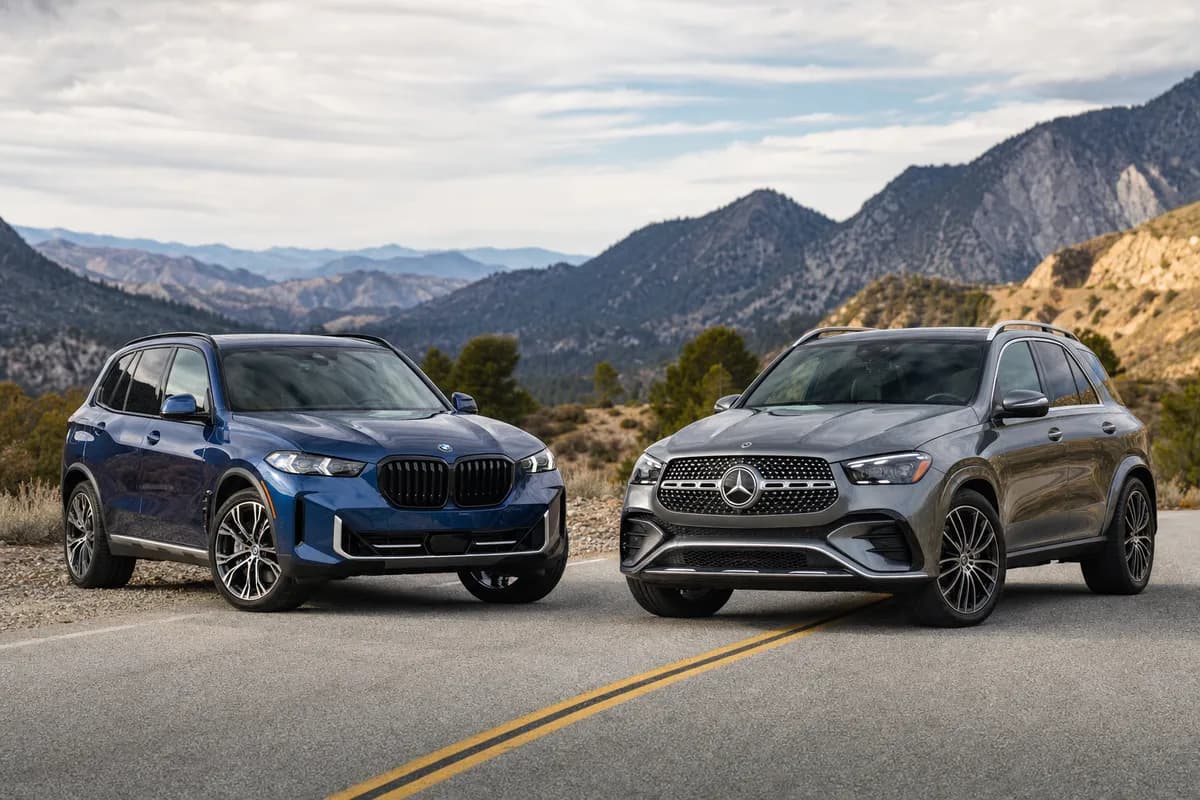
The 2025 BMW X5 and Mercedes-Benz GLE are what happens when family SUVs discover tailoring, turbocharging, and a taste for executive parking spaces.
The 2025 BMW X5 and Mercedes-Benz GLE are what happens when family SUVs discover tailoring, turbocharging, and a taste for executive parking spaces. Both are midsize luxury SUVs with six-figure aspirations, both offer silky inline-six engines, plug-in hybrid variants, and leather-lined cabins, and both can tow your boat while massaging your spine. But they are not the same machine. The X5 is the sharper, more athletic SUV — the one that still remembers BMW used to build sports sedans for people who liked driving. The GLE is softer, grander, and more comfort-obsessed, a rolling lounge with a three-pointed star and a slightly smug air suspension. If you’re shopping these two, congratulations: life has gone reasonably well. Now let’s make sure you don’t spend $80,000 on the wrong badge.
Powertrains and Performance: BMW Brings the Bite, Mercedes Brings the Velvet
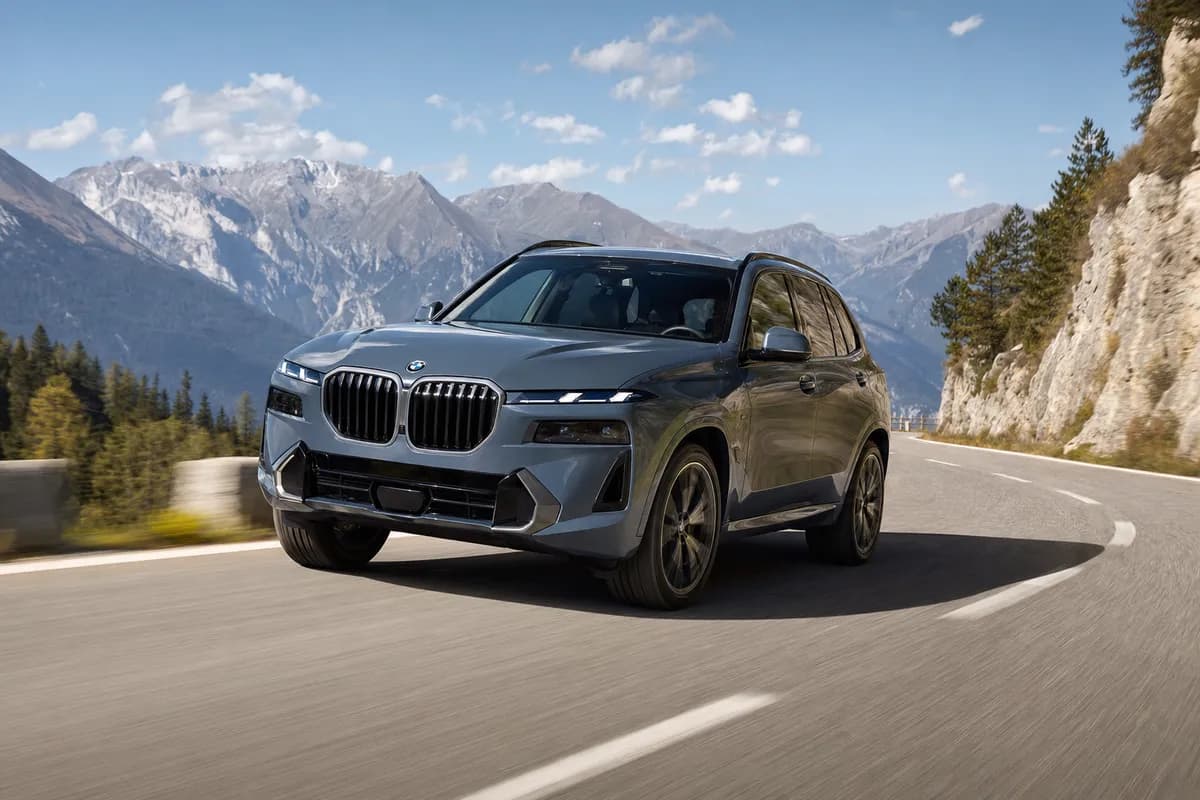
The 2025 BMW X5 lineup starts with the sDrive40i and xDrive40i, both powered by BMW’s excellent 3.0-liter turbocharged inline-six with 48-volt mild-hybrid assistance. Output is 375 horsepower and 398 lb-ft of torque, routed through an eight-speed automatic. BMW quotes 0-60 mph in about 5.3 seconds for the xDrive40i, which is genuinely brisk for an SUV weighing well over two tons.
Mercedes counters with the GLE 350, using a 2.0-liter turbocharged four-cylinder making 255 horsepower and 295 lb-ft. It is adequate in the way hotel coffee is adequate: technically functional, emotionally vacant. The more comparable model is the GLE 450 4Matic, which uses a 3.0-liter turbocharged inline-six with mild-hybrid assist producing 375 horsepower and 369 lb-ft. On paper, it matches the BMW for horsepower, but the X5 feels more eager and more direct when you actually ask it to hustle.
The plug-in hybrids are where things get interesting. The BMW X5 xDrive50e combines a turbo inline-six with electric assistance for a stout 483 horsepower and 516 lb-ft. It offers an EPA-rated electric range of roughly 40 miles, which means many owners could do weekday commuting without waking the gasoline engine. The Mercedes-Benz GLE 450e 4Matic delivers 381 horsepower and 479 lb-ft, with an EPA electric range around 48 miles. Mercedes wins on EV range; BMW wins on punch. Pick your religion.
At the top of the regular lineups, the BMW X5 M60i uses a 4.4-liter twin-turbo V8 with 523 horsepower and 553 lb-ft, good for 0-60 mph in roughly 4.2 seconds. Mercedes offers the GLE 580 4Matic with a 4.0-liter twin-turbo V8 making 510 horsepower and 538 lb-ft. It’s fast, creamy, and expensive. If you wander into AMG territory, the Mercedes-AMG GLE 63 S brings 603 horsepower and super-SUV theatrics, but it also comes with the kind of price tag that makes accountants stare silently at walls.
- Best standard engine: BMW X5 xDrive40i
- Best plug-in hybrid for range: Mercedes-Benz GLE 450e
- Best plug-in hybrid for performance: BMW X5 xDrive50e
- Best V8 personality: BMW X5 M60i, unless you’re going full AMG
Driving Experience: The X5 Still Has a Pulse
This is where the BMW starts building a lead. The 2025 X5 is not a sports car — physics still exists, despite what marketing departments suggest — but it is impressively composed. Steering is quicker and more communicative than the GLE’s, body control is tighter, and the chassis feels like it was tuned by people who have occasionally used an apex rather than merely read about one in a brochure.
The X5 rides firmly, especially on larger wheels, but it rarely feels crude. With the available adaptive suspension, it balances comfort and control with typical BMW confidence. It turns in cleanly, resists float, and shrinks around you on a fast road. In xDrive40i form, it is probably the sweet spot: quick enough, refined enough, and not burdened by the cost or complexity of the V8.
The Mercedes-Benz GLE is not trying to be that. It is more relaxed, more isolated, and more interested in making potholes disappear than encouraging spirited back-road nonsense. With the available Airmatic air suspension, the GLE glides with genuine luxury-car composure. Add Mercedes’ trick E-Active Body Control where available, and the GLE can feel almost absurdly serene, flattening body motions and making bad pavement seem like someone else’s problem.
But serene is not the same as satisfying. The GLE’s steering is lighter and less talkative, its brake feel can be inconsistent in hybrid models, and its size is more apparent when you’re pushing on. It is a magnificent cruiser. It is not the SUV you choose if you secretly miss your old 5 Series.
The BMW X5 drives like a luxury SUV developed by engineers. The Mercedes-Benz GLE drives like one developed by hotel managers with excellent taste in carpeting.
Towing? Both are useful. The BMW X5 can tow up to around 7,200 pounds when properly equipped, while the Mercedes-Benz GLE can tow up to about 7,700 pounds. So yes, both will handle a small boat, a pair of jet skis, or the consequences of your midlife crisis.
Interior, Technology, and Practicality: Mercedes Wins the Spa Day
Inside, the X5 and GLE take very different approaches. The BMW cabin is clean, modern, and driver-focused. The 2025 X5 uses BMW’s curved display layout, combining a 12.3-inch digital instrument cluster with a 14.9-inch central touchscreen running iDrive 8.5. The graphics are crisp, responses are quick, and wireless Apple CarPlay and Android Auto are standard. BMW has reduced physical buttons, which looks slick but can be irritating when you just want to change the climate settings without conducting a software seminar.
The GLE cabin feels richer at first touch. Its dual-screen setup, typically with 12.3-inch displays for the instrument panel and infotainment system, still looks elegant, and Mercedes’ MBUX interface remains one of the flashier systems in the business. Voice control is useful, the graphics are polished, and the ambient lighting can make the cabin look like a private club on wheels — or a nightclub, depending on your color choices and emotional maturity.
Seat comfort is excellent in both, but the Mercedes leans harder into long-distance relaxation. Its front seats are broad and plush, available with heating, ventilation, and massage. The BMW seats are more supportive and better bolstered, especially if you drive with intent rather than just drift between country clubs.
Space is close. The X5 offers about 33.9 cubic feet of cargo room behind the second row and roughly 72.3 cubic feet with the rear seats folded. The GLE offers about 33.3 cubic feet behind the second row and up to around 74.9 cubic feet total. In daily use, both swallow luggage, strollers, golf bags, and Costco overconfidence without complaint.
The Mercedes has one practical ace: an available third row. It is not especially roomy, and adults placed back there will begin reconsidering your friendship within minutes, but it exists. The BMW X5 is now essentially a two-row SUV in the U.S. market; if you need proper three-row BMW seating, the X7 is the answer. An expensive answer, naturally.
- BMW X5 interior strengths: better driving position, sharper interface response, cleaner cockpit, stronger front-seat support
- Mercedes GLE interior strengths: richer ambience, plusher ride feel, available third row, more lounge-like luxury
- Infotainment winner: slight edge to BMW for usability, Mercedes for theatre
- Family practicality winner: Mercedes GLE, thanks to the optional third row
Trims, Pricing, and Ownership: The Sweet Spots Matter
Pricing moves quickly once you start ticking boxes. The 2025 BMW X5 starts around the mid-$60,000 range for the sDrive40i, with the all-wheel-drive xDrive40i landing a little higher. The X5 xDrive50e plug-in hybrid typically begins in the low-$70,000 range, while the X5 M60i jumps into roughly $90,000 territory before options. And BMW options, as ever, multiply like rabbits in a cashmere showroom.
The 2025 Mercedes-Benz GLE generally starts a bit lower with the GLE 350, but that base model is not the one to buy unless you simply want the badge and the shape. The GLE 450 4Matic is the real rival to the X5 xDrive40i and usually lands in a similar high-$60,000 to low-$70,000 zone. The GLE 450e plug-in hybrid is compelling if you can charge at home, while the GLE 580 and AMG models can sail deep into luxury-performance pricing.
Here is the blunt buying advice: do not get hypnotized by the configurator. Both SUVs can be turned from sensible luxury purchases into rolling financial crimes with big wheels, premium audio, leather upgrades, driver-assistance bundles, air suspension, and appearance packages. A $70,000 SUV can become an $85,000 SUV with frightening ease.
For most buyers, the best BMW is the X5 xDrive40i. It has the superb inline-six, standard all-wheel drive, real pace, and fewer long-term complexity concerns than the plug-in hybrid or V8. If your commute fits the electric range and you charge regularly, the X5 xDrive50e is the enthusiast’s plug-in choice because it is genuinely quick and genuinely useful.
For Mercedes shoppers, skip the GLE 350 unless budget is the primary concern. The GLE 450 4Matic is the one that feels properly premium, with the refinement and torque this class deserves. The GLE 450e is the smarter pick for suburban commuters who want electric running without full EV commitment, and its longer electric range gives it a real-world efficiency advantage over the BMW plug-in if you drive short distances often.
Reliability and maintenance? Neither is a Toyota Highlander wearing a dinner jacket. Expect premium service costs, expensive tires, pricey brakes, and complex electronics. BMW’s latest B58 inline-six has a strong reputation, which helps the X5 40i’s case. Mercedes’ air suspension and high-end chassis systems are wonderful when new and potentially wallet-moistening as they age. Lease shoppers may sleep easier than long-term owners.
Verdict: Buy the X5 to Drive, Buy the GLE to Glide
The 2025 BMW X5 wins this comparison because it delivers the broader, more satisfying package. It is quicker in the heart of the range, sharper from behind the wheel, and still luxurious enough to make every commute feel first-class. The X5 xDrive40i is the standout: fast, refined, efficient for its size, and powered by one of the best six-cylinder engines in production. It is the luxury SUV for people who still care what happens between the steering wheel and the road.
The Mercedes-Benz GLE is not defeated so much as differently excellent. If your priorities are ride comfort, cabin ambience, available three-row flexibility, and plug-in hybrid electric range, the GLE makes a very persuasive case. A GLE 450 4Matic with air suspension is a lovely way to cross a continent while barely acknowledging the condition of the pavement. The GLE 450e is also the better plug-in choice for buyers who prize electric range over outright acceleration.
But the BMW feels more complete. It has the better base premium powertrain, the more engaging chassis, and a sense of athletic polish the Mercedes can’t quite match. The GLE pampers you. The X5 pampers you, then dares you to take the long way home.
Final call: choose the 2025 BMW X5 xDrive40i if you want the best all-around luxury SUV in this fight. Choose the Mercedes-Benz GLE 450 4Matic if comfort is king and driving enjoyment is merely a rumor you once heard from your neighbor with a Porsche. Both are excellent. Only one still has a pulse.
Affiliate disclosure: This article contains affiliate links. RevvedUpCars may earn a small commission on qualifying purchases at no extra cost to you.