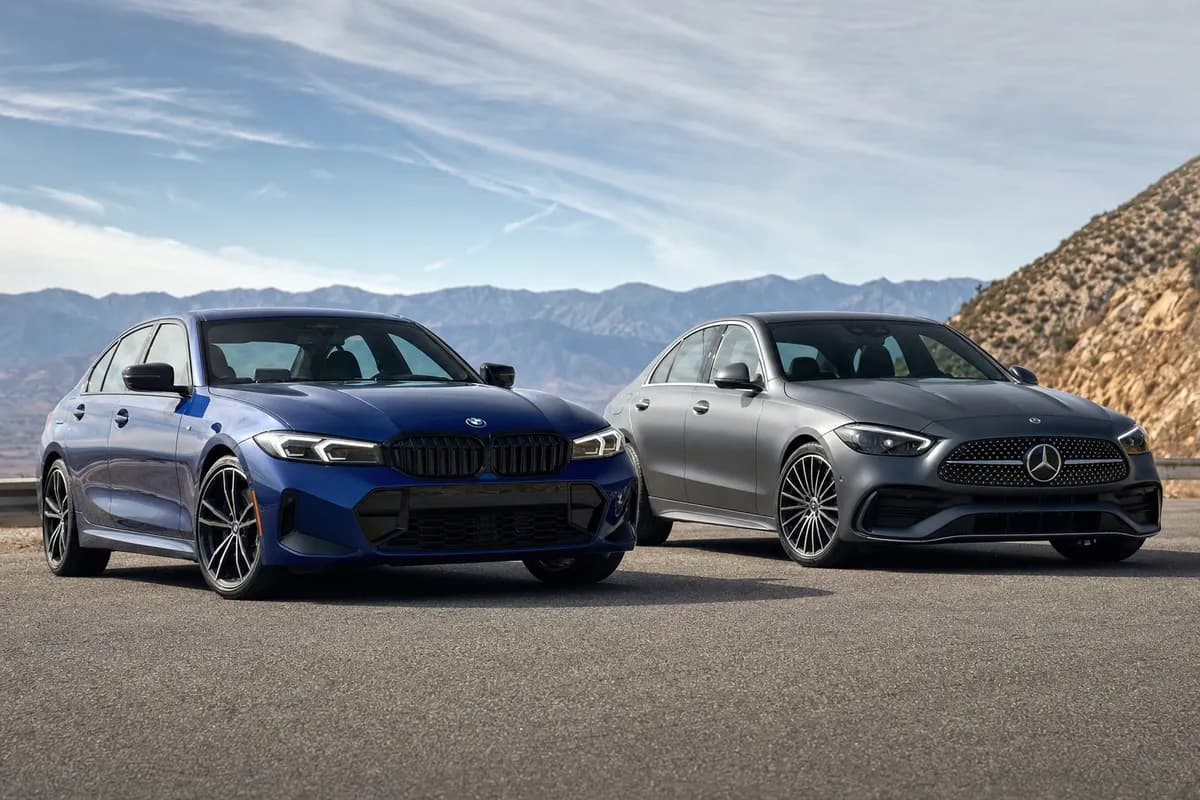
The luxury sport sedan fight used to be simple: the BMW 3 Series was the driver’s car, the Mercedes-Benz C-Class was the rolling lounge, and Audi sat in the corner polishing its Quattro badge. In 2025, the lines are blurrier.
The luxury sport sedan fight used to be simple: the BMW 3 Series was the driver’s car, the Mercedes-Benz C-Class was the rolling lounge, and Audi sat in the corner polishing its Quattro badge. In 2025, the lines are blurrier. The 3 Series has gone digital, cushier, and more mature. The C-Class has borrowed half its wardrobe from the S-Class and now thinks ambient lighting is a personality trait. Both are excellent. Only one still makes you take the long way home without needing to be bribed by a massage seat.
Powertrains and Numbers: Close on Paper, Not on Pulse
Let’s start with the volume sellers: the 2025 BMW 330i and the 2025 Mercedes-Benz C 300. Both use a 2.0-liter turbocharged four-cylinder engine with mild-hybrid assistance. Both make 255 horsepower. Both offer rear-wheel drive as standard and all-wheel drive as an option: xDrive for BMW, 4MATIC for Mercedes.
That sounds like a dead heat until you drive them back-to-back. The BMW’s 2.0-liter engine produces 295 lb-ft of torque, sent through an eight-speed ZF automatic that remains one of the best torque-converter gearboxes in the business. BMW claims the 330i xDrive runs 0-60 mph in about 5.4 seconds, with the rear-drive car only a tick behind. It feels alert, clean, and eager without pretending to be an M car.
The Mercedes C 300 also makes 295 lb-ft, with a 48-volt integrated starter-generator that can briefly add electric shove. Its nine-speed automatic is smooth, but not as crisp as BMW’s transmission when you start asking impolite questions with your right foot. Mercedes claims roughly 6.0 seconds to 60 mph, depending on drivetrain. That is perfectly quick. It is also not quite quick enough to keep the BMW from smirking at the next merge lane.
- 2025 BMW 330i: 2.0-liter turbo inline-four, 255 hp, 295 lb-ft, 8-speed automatic, RWD or xDrive AWD
- 2025 Mercedes-Benz C 300: 2.0-liter turbo inline-four mild hybrid, 255 hp, 295 lb-ft, 9-speed automatic, RWD or 4MATIC AWD
- BMW 330i 0-60 mph: roughly mid-5-second range, depending on drivetrain
- Mercedes C 300 0-60 mph: roughly 6.0 seconds, depending on drivetrain
Move up a rung and the gap gets nastier. The 2025 BMW M340i uses BMW’s glorious 3.0-liter turbocharged inline-six, now rated at 386 horsepower and 398 lb-ft of torque with 48-volt hybrid assistance. It can hit 60 mph in about 4.1 to 4.3 seconds depending on configuration, and it does so with the kind of creamy violence that makes four-cylinder luxury sedans feel like office furniture.
Mercedes counters with the AMG C 43, which uses a highly tuned 2.0-liter turbo four-cylinder making 416 horsepower and 369 lb-ft. It is technically impressive, turbocharged within an inch of its life, and properly fast, with a 0-60 mph estimate around 4.3 seconds. But here’s the inconvenient truth: the BMW six-cylinder feels more expensive, sounds better, and delivers power with less theatrical strain. The AMG is clever. The M340i is charismatic. In this segment, charisma still matters.
Driving: BMW Still Owns the Back Road
The 3 Series has softened over the years, and yes, old-school BMW devotees will tell you everything after the E46 is basically a Bavarian appliance with subscription heated seats. Ignore the nostalgia fog. The 2025 BMW 3 Series is still the sharper, more satisfying car to drive.
The steering is accurate, the front end bites cleanly, and the chassis has that lovely rear-drive balance the C-Class can’t quite fake. Even in 330i form, the BMW feels lighter on its feet than the Mercedes. It rotates more willingly, settles faster after mid-corner bumps, and communicates more clearly when the tires start approaching their limit. It is not raw, but it is fluent.
The C-Class is composed rather than playful. Its ride quality is generally plush, especially on smaller wheels, and it’s excellent at wafting through ugly commutes with a rich, insulated feel. That matters. Not everyone wants their luxury sedan to behave like it’s auditioning for a track day. But the Mercedes feels less natural when pushed. The steering is lighter, the brake pedal can feel less linear because of the mild-hybrid system, and the car prefers sweeping confidence over corner-carving mischief.
The short version: the C-Class makes traffic feel expensive. The 3 Series makes an empty on-ramp feel like an invitation.
Ride comfort is closer than BMW fans might expect. The 3 Series no longer rides like it’s trying to prove a point to your spine. Adaptive M suspension, where equipped, gives it a broad range: relaxed enough for weekday duty, taut enough for Sunday stupidity. The Mercedes still has the softer touch over patched pavement, but it can feel floatier when pressed hard.
If you live somewhere with awful roads and spend most of your time at 37 mph behind crossover traffic, the C-Class will charm you. If you care how a sedan takes a set through a decreasing-radius bend, the BMW walks away. Not runs. Walks. Confidently. Without checking back.
Interior and Technology: Mercedes Wins the Showroom, BMW Wins the Week
This is where Mercedes lands its cleanest punch. The C-Class cabin looks sensational at first glance. The portrait-style 11.9-inch central touchscreen, available open-pore wood, turbine-style vents, and nightclub-grade ambient lighting give it a junior S-Class vibe. It photographs beautifully, which is useful because half of luxury car shopping now seems to happen through Instagram and lease calculators.
The BMW cabin is more restrained. The 2025 3 Series uses BMW’s curved display setup, combining a 12.3-inch digital instrument cluster with a 14.9-inch central infotainment screen running the latest iDrive interface. It is less theatrical than the Mercedes layout, but easier to live with once the honeymoon ends. BMW’s menus are cleaner, the response is snappy, and the console controller remains a gift from the gods for anyone who has ever tried to change a setting on a touchscreen while bouncing over expansion joints.
Mercedes’ MBUX system has flashy graphics and strong voice control, but it leans heavily on touch inputs. Climate controls are integrated into the screen, and while the permanent climate bar helps, physical controls would still be better. This is not an old-man complaint; this is physics. Fingers, glass, and potholes are not a precision interface.
Material quality is a mixed bag in both. The Mercedes looks richer, but poke around and you’ll find some glossy plastics and trim pieces that don’t feel quite as vault-like as the badge suggests. The BMW looks more conservative but feels solid, with better control weighting and fewer moments of “wait, this costs how much?” disappointment.
- BMW advantage: cleaner ergonomics, better infotainment controller, more driver-focused layout
- Mercedes advantage: flashier design, richer first impression, more dramatic lighting and screen presentation
- Shared strengths: wireless Apple CarPlay and Android Auto, digital instrument clusters, strong driver-assistance availability
Space is close. The Mercedes C-Class is slightly longer overall, around 187 inches, while the 3 Series sits around 185.7 inches. Rear-seat room is usable in both, not limousine-like in either. Adults fit, but if you regularly carry tall passengers, a 5 Series or E-Class exists for a reason.
The trunk comparison is less close. The BMW 3 Series offers about 17.0 cubic feet of cargo space, which is excellent for the class. The C-Class is closer to 12.6 cubic feet. That’s a meaningful difference when luggage, golf bags, or the weekly Costco run enter the chat. Luxury is lovely; fitting your stuff is lovelier.
Efficiency, Pricing, and Ownership: Neither Is Cheap, One Feels Better Value
Neither of these cars is a bargain in the traditional sense, because “entry-level luxury sedan” has become a deeply funny phrase. By the time you add all-wheel drive, premium audio, driver assistance, bigger wheels, and the option package that includes the thing you assumed would be standard, you’re comfortably past the advertised starting price.
The 2025 BMW 330i starts in the mid-$40,000 range before destination and options, with xDrive adding roughly $2,000. The 2025 Mercedes-Benz C 300 typically starts a bit higher, also before the inevitable option-package creep. In real-world dealer configurations, both commonly land between $50,000 and $58,000 in well-equipped four-cylinder form.
Performance versions escalate quickly. A BMW M340i usually lives around the low-$60,000 range before options, while the AMG C 43 plays in similar territory. Start adding adaptive suspension, upgraded wheels, premium audio, head-up displays, and driver-assistance packages, and the price tags begin cosplaying as executive sedans.
Fuel economy is competitive. The 330i is one of the more efficient sport sedans in the segment, with EPA estimates generally around the high-20s city and mid-30s highway depending on drivetrain. The C 300 is similarly strong, with rear-drive versions capable of mid-30s highway numbers. All-wheel drive lowers both. The six-cylinder M340i remains impressively efficient for its pace, while the AMG C 43 works harder and can drink accordingly when driven like an AMG badge demands.
BMW also has a practical ace: three years or 36,000 miles of complimentary scheduled maintenance in the U.S. Mercedes typically does not include the same level of free maintenance, though prepaid plans are available. That won’t make the BMW cheap to own, but it does soften the first few years of the relationship.
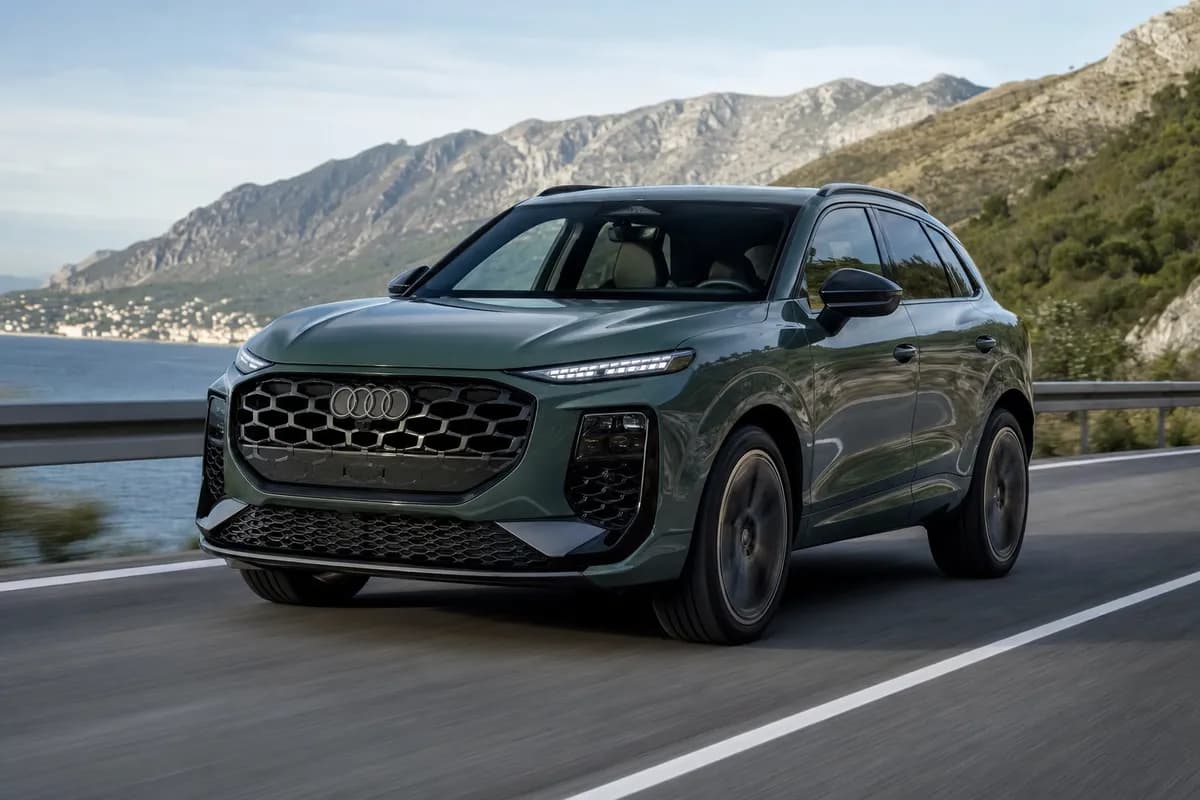
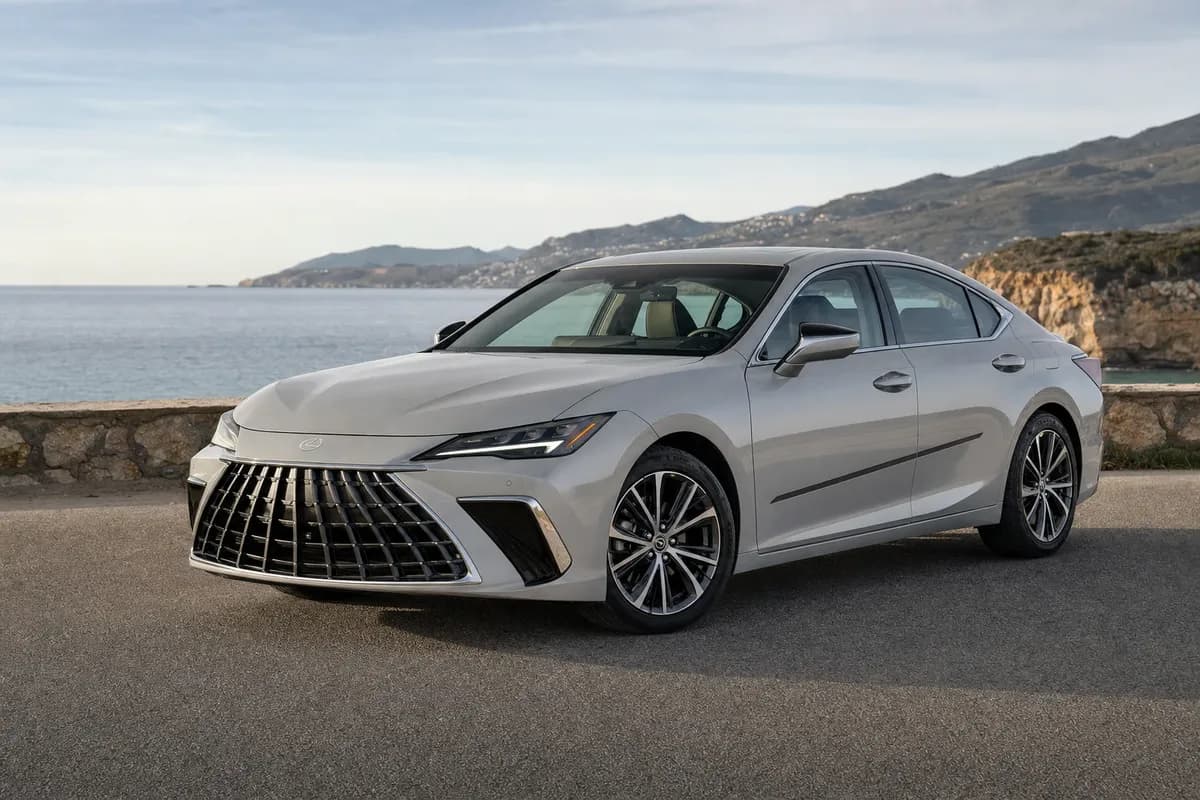
Reliability expectations? Both are complex German luxury sedans with turbo engines, mild-hybrid systems, giant screens, and enough modules to run a small airport. If you plan to lease, fine. If you plan to own past warranty, budget like an adult. The Lexus IS will be less exciting but may outlive several civilizations. The Genesis G70 offers more standard equipment for the money. The Audi A4 is refined but aging. The Acura TLX is handsome and solid, though too heavy for its own good. The BMW and Mercedes remain the benchmarks because they still feel special, not merely sensible.
Verdict: The Crown Goes to the BMW 3 Series
The 2025 Mercedes-Benz C-Class is the better luxury object. It has the more glamorous cabin, the smoother boulevard personality, and the stronger sense of occasion when you first slide behind the wheel. If your priorities are comfort, style, brand theater, and making your driveway look more expensive, the C 300 is a very easy car to recommend.
But the 2025 BMW 3 Series is the better luxury sport sedan. That distinction matters. It is quicker in mainstream 330i form, more engaging through corners, more practical thanks to its larger trunk, and easier to operate daily thanks to smarter ergonomics. Step up to the M340i, and the BMW doesn’t just beat the C-Class; it reminds you why inline-six engines deserve fan clubs and possibly national holidays.
The Mercedes C-Class takes the showroom victory. The BMW 3 Series takes the road victory. Since cars are meant to be driven, not merely mood-lit, that settles it.
Winner: 2025 BMW 3 Series. Buy the Mercedes if you want the prettier cabin and softer commute. Buy the BMW if you want the car that still knows what a sport sedan is supposed to feel like.
Affiliate disclosure: This article contains affiliate links. RevvedUpCars may earn a small commission on qualifying purchases at no extra cost to you.