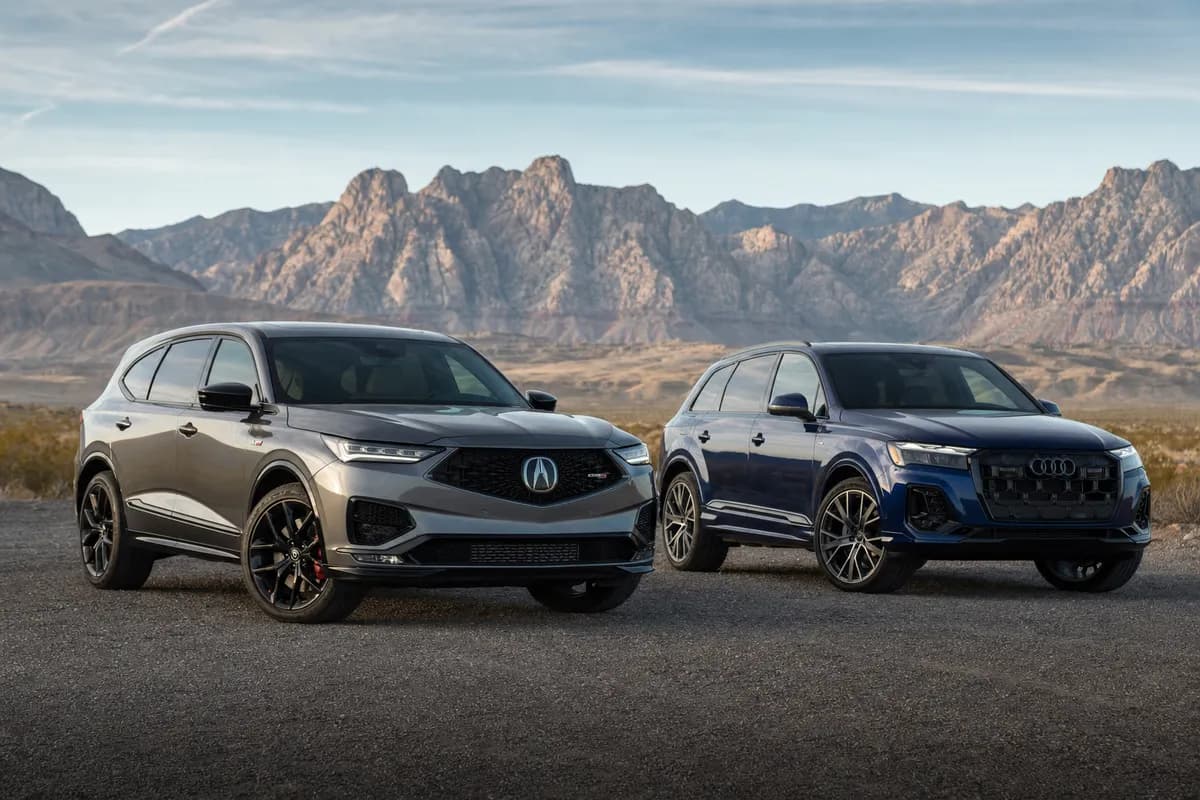
The 2025 Acura MDX Type S and Audi Q7 are both three-row luxury SUVs, but they arrive at the same problem from opposite ends of the paddock. The Acura shows up with a turbo V6, torque-vectoring all-wheel drive, air suspension, Brembo brakes, and the subtlety of a pit-lane…
The 2025 Acura MDX Type S and Audi Q7 are both three-row luxury SUVs, but they arrive at the same problem from opposite ends of the paddock. The Acura shows up with a turbo V6, torque-vectoring all-wheel drive, air suspension, Brembo brakes, and the subtlety of a pit-lane marshal waving both arms. The Audi Q7 counters with a smoother straight-six, quattro all-wheel drive, a calmer cabin, and that particular German talent for making 80 mph feel like the legal minimum. If you care only about badges, buy the Audi and enjoy the nods from people who lease watches. If you care about how a big SUV actually moves when the road gets interesting, the fight gets much more entertaining.
Powertrains: Turbo V6 Muscle vs Polished German Punch
The 2025 Acura MDX Type S uses a 3.0-liter turbocharged V6 producing 355 horsepower and 354 lb-ft of torque. It is paired with a 10-speed automatic transmission and Acura’s excellent Super Handling All-Wheel Drive, better known as SH-AWD. This is not just branding confetti. SH-AWD can actively send torque rearward and side-to-side across the rear axle, helping rotate the MDX into corners instead of merely dragging it through them like a reluctant refrigerator.
The Audi Q7 most directly comparable to the MDX Type S is the Q7 55 TFSI, which uses a 3.0-liter turbocharged V6 with a 48-volt mild-hybrid system. Output is 335 horsepower and 369 lb-ft of torque, sent through an eight-speed automatic transmission to standard quattro all-wheel drive. Audi claims a 0-60 mph time of about 5.5 seconds for the Q7 55. The MDX Type S lives in the same neighborhood, typically running the sprint in the mid-five-second range depending on conditions.
On paper, the Acura has the horsepower advantage; the Audi has slightly more torque and a broader, silkier shove. In the real world, the Q7’s V6 feels more expensive. It is smoother, quieter, and better isolated. The MDX Type S feels more urgent and theatrical, with a sharper throttle map in Sport+ and a more vocal engine note, partly enhanced but still satisfying when you’re leaning into the turbo.
The Acura’s 10-speed automatic is quick enough when driven hard, but it can occasionally feel busier than necessary around town. Ten gears sound clever until the transmission starts acting like it’s trying to solve a Sudoku puzzle between 28 and 42 mph. The Audi’s eight-speed is more composed, with cleaner shifts and a stronger sense of mechanical polish. If drivetrain refinement is your top priority, the Q7 wins. If you want the SUV that feels more awake when you jab the throttle, the MDX Type S punches harder emotionally.
- 2025 Acura MDX Type S: 3.0L turbo V6, 355 hp, 354 lb-ft, 10-speed automatic, SH-AWD
- 2025 Audi Q7 55 TFSI: 3.0L turbo V6 mild hybrid, 335 hp, 369 lb-ft, 8-speed automatic, quattro AWD
- Performance feel: Acura is sharper and more aggressive; Audi is smoother and more effortless
Handling and Ride: Acura Brings the Mischief, Audi Brings the Manners
This is where the MDX Type S makes its case. Acura did not just bolt on a badge and call it a day. The Type S gets an adaptive air suspension, performance-tuned dampers, larger brakes, 21-inch wheels, and the most aggressive calibration of SH-AWD in the MDX lineup. The result is a three-row SUV that genuinely enjoys being hustled.
In corners, the MDX Type S feels smaller than it is. That is the magic trick. Its steering is quicker and heavier than the Audi’s, and while it is not overflowing with old-school hydraulic feedback, it gives you enough precision to place the front end confidently. The rear torque-vectoring effect is the star. Get on the throttle early, and the system helps push the outside rear wheel, tightening your line in a way most family SUVs simply do not bother attempting.
The Audi Q7 is dynamically excellent in a different way. It is stable, calm, and supremely planted at speed. With available adaptive air suspension and all-wheel steering, the Q7 can feel impressively tidy for something nearly 200 inches long. But it never quite eggs you on. The Audi is the better long-distance cruiser, the vehicle you want for devouring interstate miles in cold rain while your passengers sleep and your coffee remains civilly unspilled.
The Acura is the one you take on the scenic route after dropping the kids at practice. It has more body control in its sportier modes, more front-end eagerness, and a more playful all-wheel-drive system. That does not mean it is a sports car. It is still a large three-row SUV with a curb weight around 4,800 pounds. Physics remains undefeated. But the MDX Type S at least argues with physics. The Q7 negotiates politely and moves on.
Ride quality is more complicated. The Acura’s air suspension gives it a broad range, from comfortable in its softer settings to properly taut in Sport+. Still, those 21-inch wheels and performance intent mean it can feel firmer over sharp impacts than some buyers expect from a luxury SUV. The Audi rides with more sophistication, especially with air suspension fitted. It smothers bad pavement better and sends fewer unpleasant thumps into the cabin.
So here is the blunt version: the MDX Type S is the better driver’s SUV; the Q7 is the better luxury cruiser. Audi has the calmer chassis. Acura has the more entertaining one. Decide whether your favorite road is a mountain pass or a freshly paved highway to a five-star hotel.
Braking, Grip, and Confidence: The Acura Comes Armed
Acura gives the MDX Type S serious stopping hardware, including Brembo front brakes with four-piston calipers. Pedal feel is reassuring, with a firm bite that suits the Type S mission. In spirited driving, the MDX feels more resistant to the vague, over-assisted brake sensation that plagues too many big luxury SUVs. You know you are hauling down a heavy machine, but you are not left praying to a cloud of brake dust and optimism.
The Audi Q7’s brakes are strong as well, and in normal driving they are beautifully calibrated. The pedal is progressive, the initial bite is smooth, and the whole system fits the Q7’s polished personality. Push harder, though, and the Audi feels more like a fast family hauler than a performance-leaning SUV. It stops well, but it does not invite repeated hard use with the same enthusiasm as the Acura.
Tire choice matters, of course. The MDX Type S typically rides on wide 21-inch performance-oriented all-season rubber, while Q7 configurations vary by trim and package. Equip the Audi properly and it delivers impressive grip, but its default attitude remains neutral and reserved. The Acura is more eager to rotate, more willing to help you trim a corner with throttle, and more communicative when loaded up.
The Q7’s advantage is bad-weather confidence. Quattro remains one of the best all-wheel-drive systems in the luxury business, and the Audi’s calm weight distribution and stability tuning make it superb in rain, snow, and high-speed sweepers. The Acura’s SH-AWD is more entertaining; Audi’s quattro is more unflappable. One likes to dance. The other looks like it has already read the safety briefing.
Cabin, Tech, and Everyday Use: Audi Feels Richer, Acura Packs Value
Inside, the 2025 Acura MDX Type S has improved substantially, especially after Acura’s recent updates that brought a more modern infotainment setup with a touchscreen interface. That matters because the old touchpad system had all the intuitive charm of programming a microwave in Morse code. The Type S Advance trim also brings quilted leather, massaging front seats, a head-up display, a 31-speaker Bang & Olufsen audio system on newer updated models, and enough standard equipment to make German option sheets look like ransom notes.
The Audi Q7 still has the more premium cabin. Materials feel richer, switchgear has that precise Audi tactility, and the digital displays are slick without seeming desperate. Audi’s Virtual Cockpit remains one of the best digital instrument clusters in the industry. The Q7’s cabin design is restrained, maybe even a little cold, but it feels expensive in the way buyers expect when the monthly payment could fund a modest kitchen renovation.
Space is close but not identical. The Acura MDX measures about 198.4 inches long with a 113.8-inch wheelbase. The Audi Q7 is about 199.6 inches long and rides on a longer 117.9-inch wheelbase. The Audi’s extra wheelbase helps second-row comfort, though neither third row is what I would call adult-friendly unless the adult in question has recently annoyed you.
Cargo capacity gives Acura a practical edge. The MDX offers roughly 16.3 cubic feet behind the third row, about 39 cubic feet behind the second row, and more than 70 cubic feet maximum with rows folded. The Q7 offers around 10.9 cubic feet behind the third row, about 37.6 cubic feet behind the second row, and roughly 69.6 cubic feet maximum. In daily family use, that extra space behind the Acura’s third row matters. It is the difference between loading groceries and playing cargo-bay Tetris with eggs.
The Audi claws back points with towing. Properly equipped, the Q7 55 TFSI can tow up to 7,700 pounds. The MDX Type S is rated at 5,000 pounds. If you tow a substantial boat, horse trailer, or heavy camper, the Audi is the obvious choice. If your towing life consists of bikes, a small utility trailer, or weekend toys, the Acura is sufficient.
- Interior quality: Audi Q7 wins for materials, quietness, and premium feel
- Standard equipment value: Acura MDX Type S wins, especially in Type S Advance form
- Cargo practicality: Acura has more usable space behind the third row
- Towing: Audi Q7 dominates with up to 7,700 pounds versus Acura’s 5,000 pounds
Cost, Fuel Economy, and Ownership: The Acura Makes the Spreadsheet Smile
The 2025 Acura MDX Type S is not cheap, but it is refreshingly straightforward. A loaded Type S Advance lands around the mid-$70,000 range, depending on destination and final pricing. That is a big number for an Acura, yes, but it includes the performance hardware, premium audio, massaging seats, adaptive air suspension, and nearly every major feature you would want.
The Audi Q7 55 TFSI starts lower in base Premium form, but the version most buyers actually want is usually a Premium Plus or Prestige with options. Add air suspension, larger wheels, luxury packages, upgraded audio, and driver-assistance features, and the Q7 can sprint toward $80,000 with the enthusiasm of an RS model chasing an autobahn gap. Audi options are not priced; they are harvested.
Fuel economy is not heroic in either case. The Acura MDX Type S is rated around 17 mpg city, 21 mpg highway, and 19 mpg combined. The Audi Q7 55 TFSI does slightly better, typically around 18 mpg city, 23 mpg highway, and 20 mpg combined. The Audi’s mild-hybrid system and smoother gearing help, though neither SUV belongs in a conversation about frugality unless the other vehicle is a yacht.
Long-term ownership is where Acura has a real advantage. Acura’s reliability reputation is generally stronger than Audi’s, and maintenance costs are likely to be lower outside the warranty period. The Q7 is more complex, especially with air suspension, mild-hybrid hardware, and the usual German luxury electronics. It is a wonderful machine when everything is fresh and warrantied. At year eight, it may start sending invoices with the emotional tone of a ransom demand.
That said, Audi buyers may not care. Many will lease, enjoy the warranty, and move on before the expensive bits start auditioning for attention. For buyers planning to keep their SUV for a decade, the Acura is the safer bet. It also gives you more performance equipment as standard, which makes the MDX Type S feel like a better deal if you are comparing real-world transaction prices rather than base MSRPs designed to look friendly in ads.
Alex’s take: The Audi feels like the more expensive product. The Acura feels like the more intelligently purchased one.
Verdict: Buy the MDX Type S for Driving, the Q7 for Refinement
The 2025 Acura MDX Type S is the SUV I would rather drive hard. It has the sharper chassis, the more playful all-wheel-drive system, stronger performance character, better cargo practicality, and a far more generous standard-equipment list. It is not as quiet or as polished as the Audi, and its transmission occasionally gets too clever for its own good, but when the road coils up and the kids are not actively spilling snacks into the seat rails, the Acura is the one that comes alive.
The Audi Q7 is the better luxury object. Its cabin is richer, its powertrain is smoother, its ride is more composed, and its towing capacity makes the Acura look underqualified for serious hauling. It is also the more relaxed highway machine. If your definition of dynamics is stability, silence, and effortless pace, the Q7 is deeply impressive. It does not need to shout because it knows the valet already recognizes the badge.
But this comparison is about luxury SUV dynamics, and on that front, the Acura wins. The MDX Type S has more personality and more mechanical cleverness aimed at the person behind the wheel. SH-AWD is not a gimmick; it changes how the SUV behaves. The adaptive air suspension gives it range, the Brembos give it confidence, and the turbo V6 gives it just enough attitude to justify the Type S badge.
Final call: buy the 2025 Acura MDX Type S if you want the more engaging, better-value performance SUV with real family usability. Buy the Audi Q7 55 TFSI if you want superior cabin refinement, bigger towing capacity, and the smoother premium experience. My money? MDX Type S. It is less polished, yes, but it is also less predictable, more involving, and far more willing to turn a school-run appliance into something with a pulse.
Affiliate disclosure: This article contains affiliate links. RevvedUpCars may earn a small commission on qualifying purchases at no extra cost to you.