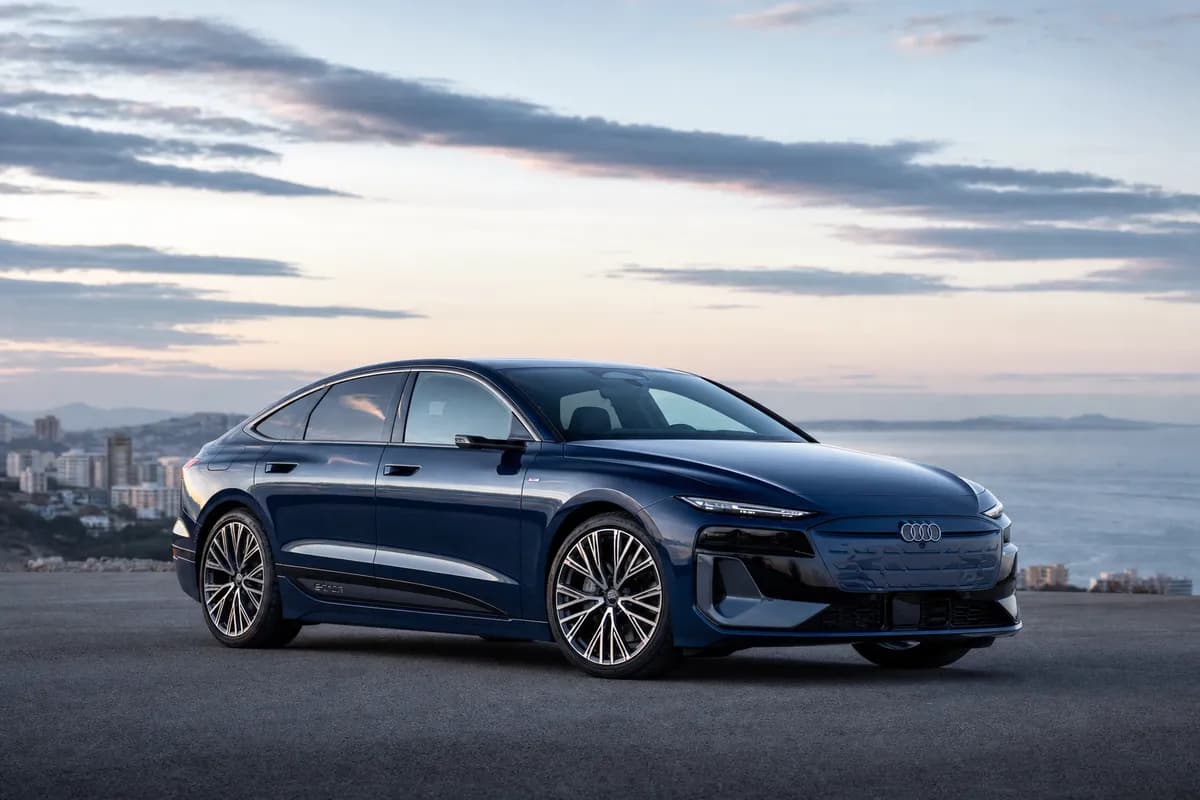
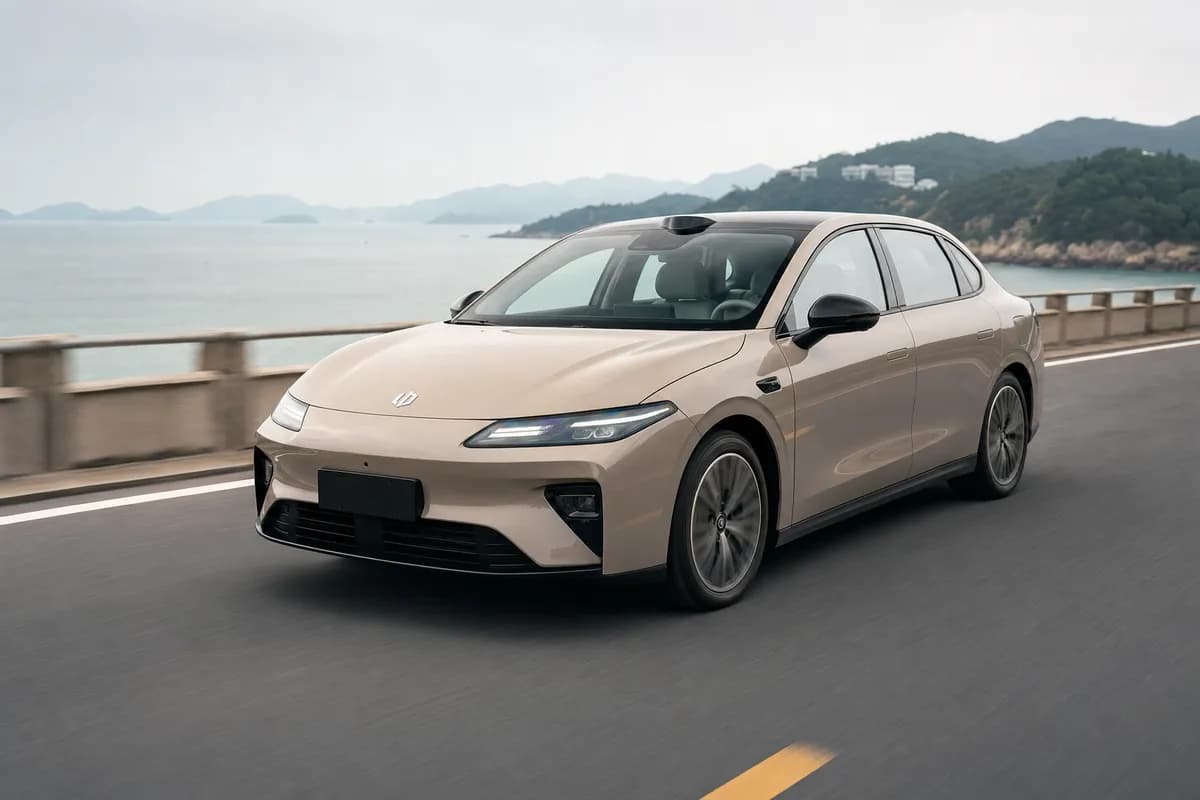
The 2025 Audi A6 e-tron is the car Ingolstadt needed to build three years ago: a sleek, long-legged electric luxury machine that finally looks like an Audi rather than a science-fair apology on wheels.
The 2025 Audi A6 e-tron is the car Ingolstadt needed to build three years ago: a sleek, long-legged electric luxury machine that finally looks like an Audi rather than a science-fair apology on wheels. Built on the new PPE platform shared with the Porsche Macan Electric, the A6 e-tron arrives as a Sportback and Avant, packing up to 756 km of WLTP range, 270 kW DC charging, and enough aerodynamic slipperiness to make a Tesla Model S glance nervously in the mirror. This is not just another battery-powered executive car. This is Audi deciding it still remembers how to do quiet confidence properly.
The A6 Goes Electric, But Not Boring
Let’s get the obvious bit out of the way: despite the “A6” badge, this is not simply an electric version of the traditional Audi A6 sedan. The 2025 Audi A6 e-tron launches as a five-door Sportback and a proper Avant wagon, which is excellent news because the world has quite enough jellybean crossovers already. If you want the spiritual electric successor to the A6 sedan, the Sportback is it. If you have taste, a dog, skis, or a functioning sense of practicality, the Avant is the one to watch.
Audi first teased this idea with the A6 e-tron concept in 2021, and impressively, the production car has kept much of the concept’s visual drama. The stance is low and wide, the roofline is clean, and the whole thing has the kind of technical restraint Audi used to do so well before everyone in the premium segment decided grilles needed to look like architectural mistakes.
The key numbers matter here. The A6 Sportback e-tron has a drag coefficient as low as 0.21, making it one of the slipperiest production Audis ever. The Avant manages 0.24, which is still superb for a wagon. That aerodynamic work is not trivia for brochure collectors. It is a major reason the A6 e-tron can claim up to 756 km WLTP in its most efficient Sportback form and up to 720 km WLTP for the Avant.
For context, the Mercedes-Benz EQE sedan offers up to around 690 km WLTP depending on specification, while the BMW i5 eDrive40 is rated at up to roughly 582 km WLTP. The Tesla Model S still looms large with excellent range and savage performance, but it no longer feels like the only long-legged electric executive car in the room. Audi has finally brought a proper knife to the luxury EV fight.
Alex’s take: The best thing about the A6 e-tron is that it does not try to look like a rolling USB mouse. It looks expensive, composed, and slightly smug. Exactly what an Audi should be.
Platform, Battery, Charging: The Numbers Finally Match The Badge
The 2025 Audi A6 e-tron sits on the Premium Platform Electric, better known as PPE. This architecture is shared with Porsche and is a major step beyond the older Volkswagen Group EV hardware used underneath cars like the Q4 e-tron. Translation: this is not a compliance EV wearing a nice suit. It is a serious electric luxury platform with the voltage, battery capacity, and charging muscle to compete with the class leaders.
The headline battery is a 100 kWh gross pack, with usable capacity quoted at approximately 94.9 kWh. That is a proper long-distance battery, not a “premium urban mobility solution” battery, which is marketing speak for “you will be hunting for a charger before lunch.”
Thanks to an 800-volt electrical architecture, the A6 e-tron can charge at up to 270 kW on a compatible DC fast charger. Audi says a 10 to 80 percent charge can take as little as 21 minutes, and that around 310 km of range can be added in roughly 10 minutes under ideal conditions. Those ideal conditions, of course, involve a working high-power charger, a warm battery, and the charging gods being in a charitable mood. Still, the capability is there.
This is where the A6 e-tron lands a clean punch on the BMW i5. The i5 is a polished, satisfying car, but its peak DC charging rate of up to 205 kW looks merely decent beside Audi’s 270 kW peak. Mercedes’ EQE also charges at up to around 170 kW, which now feels conservative. Audi, for once, is not late and apologizing. It is late and wearing a tailored jacket while announcing it brought better hardware.
There is also clever charging behavior beneath the spec sheet. The PPE platform can split the battery into two 400-volt banks when using certain 400-volt chargers, helping maintain compatibility and charging speed across different infrastructure. In plain English: it is engineered for the messy real world, not just a perfect test lab in a press presentation.
Key technical highlights
- Platform: Premium Platform Electric, shared with Porsche Macan Electric
- Battery: 100 kWh gross capacity, around 94.9 kWh usable
- Charging: Up to 270 kW DC fast charging
- Charge time: 10 to 80 percent in as little as 21 minutes
- Range: Up to 756 km WLTP for the Sportback, up to 720 km WLTP for the Avant
- Aerodynamics: Cd as low as 0.21 for the Sportback
Performance: Smooth, Fast, And Very Audi
The 2025 Audi A6 e-tron launches with several powertrain flavors, and the early stars are the rear-drive A6 e-tron performance and the all-wheel-drive S6 e-tron quattro. The naming department has clearly been trapped in a conference room with too much espresso, but the mechanical story is much cleaner.
The A6 e-tron performance uses a rear-mounted electric motor producing 270 kW, or about 367 hp. Audi quotes 0 to 100 km/h in 5.4 seconds and a top speed of 210 km/h. That is not neck-snapping, but it is entirely appropriate for a luxury EV aimed at people who value effortless thrust more than launch-control party tricks. It should feel brisk, quiet, and beautifully controlled, which is what most A6 buyers actually want, even if they pretend otherwise while browsing RS6 videos at midnight.
The S6 e-tron quattro is the one with bite. Its dual-motor all-wheel-drive system delivers 370 kW, or about 503 hp, with output rising to 405 kW, around 551 hp, using launch control. Audi claims 0 to 100 km/h in 3.9 seconds and a top speed of 240 km/h. That puts it directly in the ring with the BMW i5 M60, which produces up to 593 hp and hits 100 km/h in about 3.8 seconds. The BMW has a slight muscle-car swagger; the Audi counters with range, aero efficiency, and what should be a calmer, more polished long-distance personality.
Against the Mercedes-AMG EQE 53, the S6 e-tron is less theatrical. The AMG can produce up to 677 hp with the right package and behaves like a luxury lounge that accidentally swallowed a drag strip. But the EQE is heavier-feeling, visually odd from some angles, and less convincing as a classic executive car. The Audi appears better judged: fast enough to embarrass most combustion sports sedans, but not so obsessed with acceleration that it forgets why people buy Audis in the first place.
And then there is Tesla. The Model S Long Range remains brutally effective, with sub-4-second acceleration and excellent real-world efficiency. The Model S Plaid, meanwhile, is still the acceleration champion for people who believe inner ears are optional. But Audi’s advantage is cabin quality, dealer support, design sophistication, and the sense that somebody thought about how the car feels after the first launch-control run. Tesla does software and drivetrain efficiency brilliantly. Audi does the part where a car feels like a car, not a beta test with heated seats.
Interior And Technology: Screens, Substance, And Fewer Gimmicks Than Expected
Inside, the A6 e-tron follows Audi’s latest digital architecture, and yes, there are screens. Lots of them. The dashboard uses a curved panoramic display layout with an 11.9-inch digital instrument cluster and a 14.5-inch central touchscreen. A separate 10.9-inch passenger display is available, because apparently passengers now require their own cockpit to survive a trip to the supermarket.
Still, Audi usually executes this sort of thing better than most. The graphics are crisp, the menus tend to be logical, and the cabin design appears far less desperate than some rivals. BMW’s iDrive remains powerful but can feel like a software suite wearing a steering wheel. Mercedes’ Hyperscreen is spectacular, but also has the subtlety of a nightclub aquarium. Audi’s approach lands somewhere more mature: digital, premium, and not quite so determined to shout at you.
Material quality should be a strong point. Audi has spent decades convincing buyers that soft-touch plastics, tight panel gaps, and muted switchgear clicks are morally superior to horsepower, and in the A6 e-tron that obsession is welcome. Expect a mix of recycled materials, premium textiles, leather alternatives, and traditional upscale finishes depending on trim and market. The company is also pushing its new lighting signatures, including configurable OLED rear lights in some specifications, which feels a bit gimmicky until you remember that half the luxury market is now built on ambient lighting and vibes.
The more useful technology is in the chassis and driver assistance systems. Adaptive air suspension is expected on higher trims, and Audi’s calibration history suggests the A6 e-tron will favor high-speed stability over boy-racer sharpness. That is not a criticism. A large electric Audi should not be trying to imitate a Lotus. It should crush distance like a private jet with number plates.
Practicality also looks strong. The Sportback’s hatch gives it an advantage over traditional sedans, and the Avant should be one of the most desirable electric wagons on sale. The Porsche Taycan Sport Turismo is sharper and sexier, but it is also more expensive and less practical in long-range form. The A6 Avant e-tron may become the thinking person’s electric estate: handsome, quick, spacious, and not pretending every grocery run is a Nürburgring qualifying session.
Market Position: Audi’s Most Important EV Yet
The A6 e-tron matters because Audi’s EV rollout has been uneven. The original e-tron SUV was comfortable but inefficient. The Q4 e-tron is sensible but not especially memorable. The e-tron GT is gorgeous but essentially a Taycan in a tailored dinner jacket, and priced accordingly. The A6 e-tron, however, lands in the heart of Audi territory: the executive class.
This is where Audi built its modern reputation. The old A6 was never always the most thrilling car in its class, but it was often the one that felt most complete. Better cabins than BMW, cleaner design than Mercedes, more all-weather confidence than almost anything else. The electric A6 has to recreate that formula for a market where range, charging speed, software, and efficiency now matter as much as cylinder count once did.
In Europe, launch pricing starts in Germany at around €75,600 for the A6 Sportback e-tron performance, with the Avant slightly higher. The S6 e-tron sits close to the €100,000 mark before options, which means Audi has absolutely not discovered humility. U.S. pricing and final specifications vary by market timing, but expect the A6 e-tron to sit above the Q4 e-tron and below the e-tron GT, directly targeting the BMW i5, Mercedes EQE, Genesis Electrified G80, Tesla Model S, and Lucid Air Pure.
The Lucid Air deserves special mention because it remains the efficiency nerd’s hero. In U.S. form, the Air Pure can deliver over 400 miles of EPA-estimated range depending on configuration, and Lucid’s powertrain engineering is world-class. But Lucid still lacks Audi’s global dealer footprint and brand familiarity. For a buyer spending serious money on an electric executive car, that matters. Being clever is good. Being clever and easy to service is better.
The Genesis Electrified G80 is another compelling rival, with superb refinement and a quietly luxurious cabin. But its range and platform packaging are less advanced than the Audi’s clean-sheet PPE setup. The A6 e-tron simply feels like the newer idea.
Verdict: Audi Is Back In The Executive Fight
The 2025 Audi A6 e-tron is not revolutionary because it is electric. That ship sailed years ago. It is important because it finally gives Audi a luxury EV that feels properly aligned with the brand’s best instincts: aerodynamic restraint, high-speed refinement, beautiful detailing, serious engineering, and enough performance to make combustion loyalists stop mumbling about “soul” for five minutes.
The A6 Sportback e-tron performance looks like the sweet spot for most buyers. It has the big battery, the longest range, strong charging, and enough rear-drive performance to make daily driving feel expensive in the right way. The S6 e-tron quattro is the one for drivers who want BMW i5 M60 pace without the BMW’s extroverted aggression. And the Avant? That may be the connoisseur’s choice. An electric Audi wagon with up to 720 km WLTP range is exactly the kind of car enthusiasts claim they want, right before buying another SUV. Don’t be that person.
Is it perfect? Probably not. It will be expensive, options will sting, and Audi’s obsession with screen-based interfaces may annoy anyone who remembers when climate controls were physical and civilization had not yet collapsed. Real-world range will vary, charging infrastructure remains inconsistent, and the Tesla Model S and Lucid Air still have strong efficiency credentials.
But judged as a complete luxury electric sedan alternative, the A6 e-tron is a serious statement. It is more elegant than the Mercedes EQE, more advanced in charging than the BMW i5, more traditionally premium than the Tesla Model S, and more attainable in brand confidence than the Lucid Air. That is not fence-sitting. That is a win.
Final verdict: The 2025 Audi A6 e-tron is the electric executive car Audi should have built first. Long range, rapid charging, handsome design, and proper luxury manners make it one of the most convincing premium EVs of 2025. If the real-world efficiency matches the promise, BMW and Mercedes have a problem.
Affiliate disclosure: This article contains affiliate links. RevvedUpCars may earn a small commission on qualifying purchases at no extra cost to you.