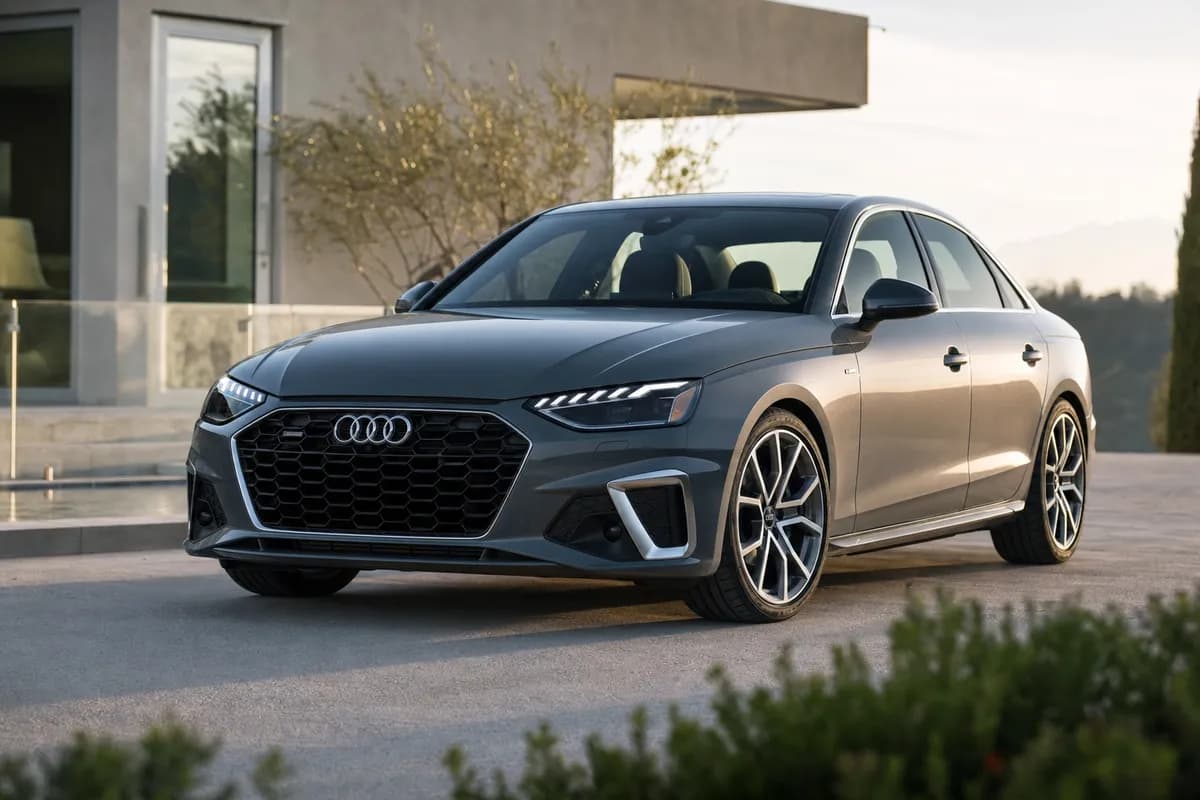
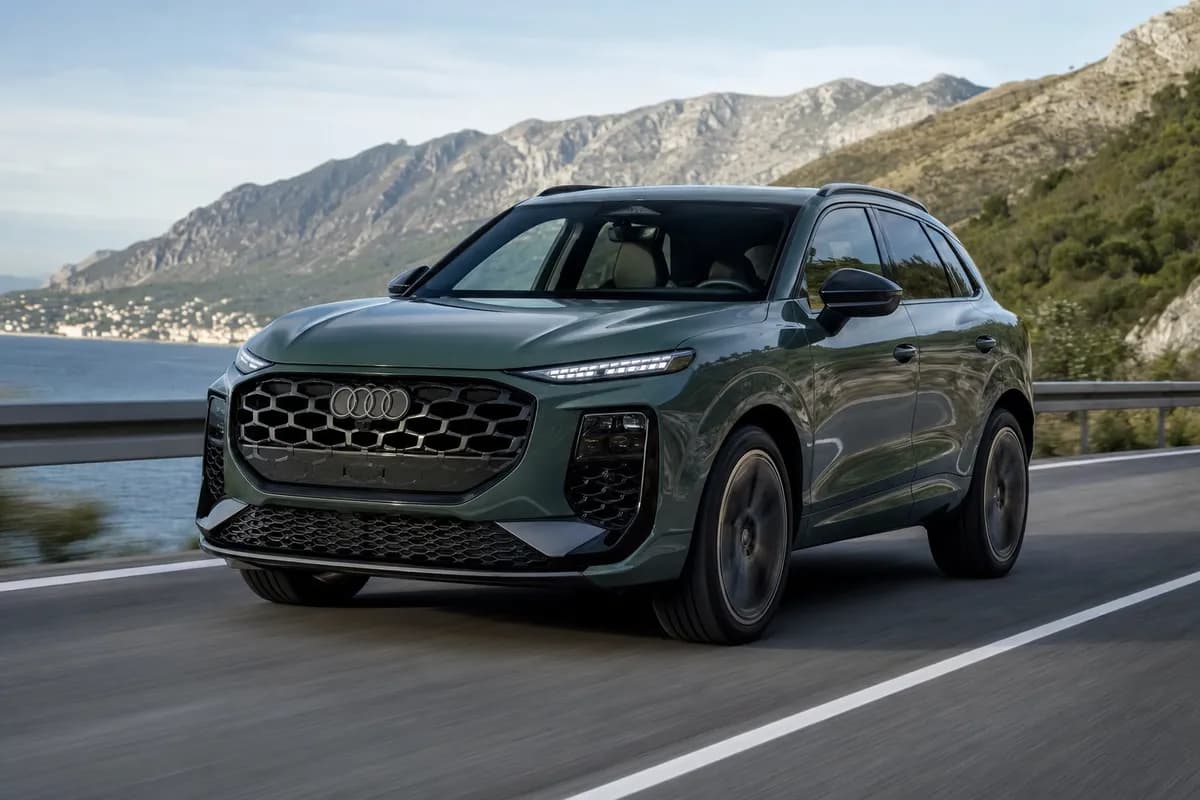
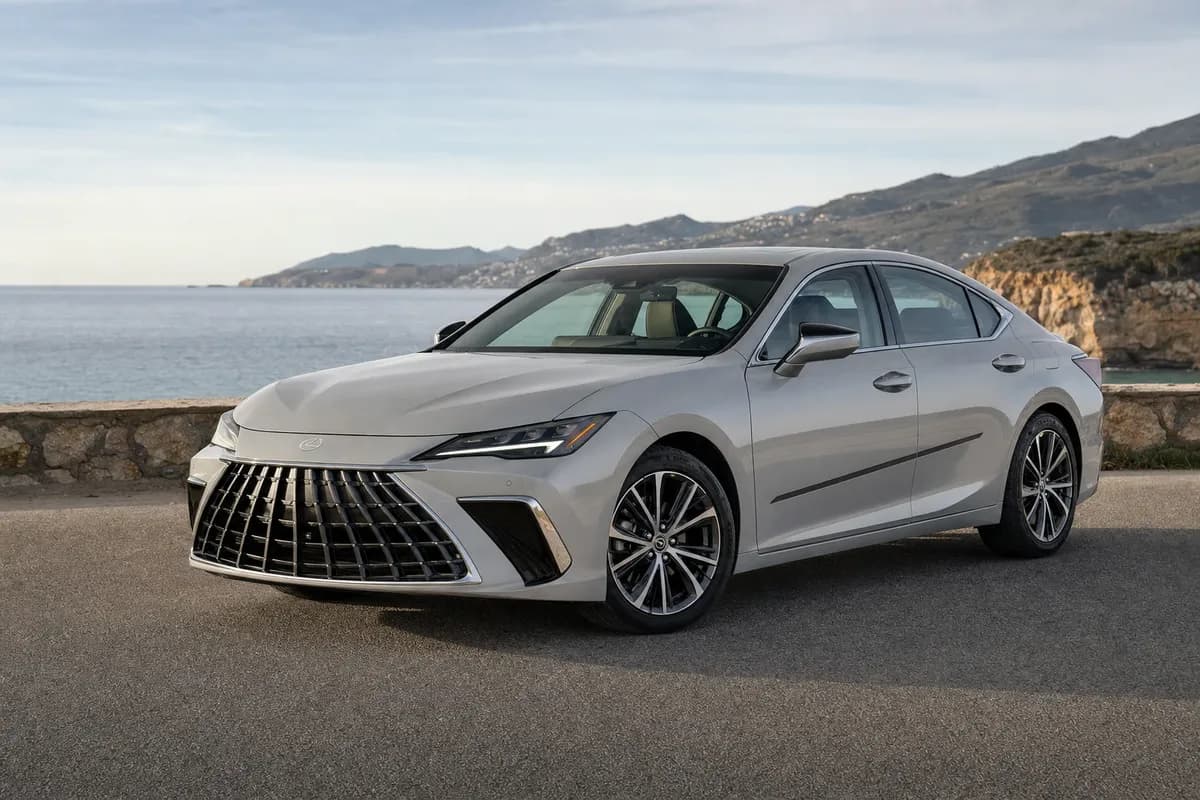
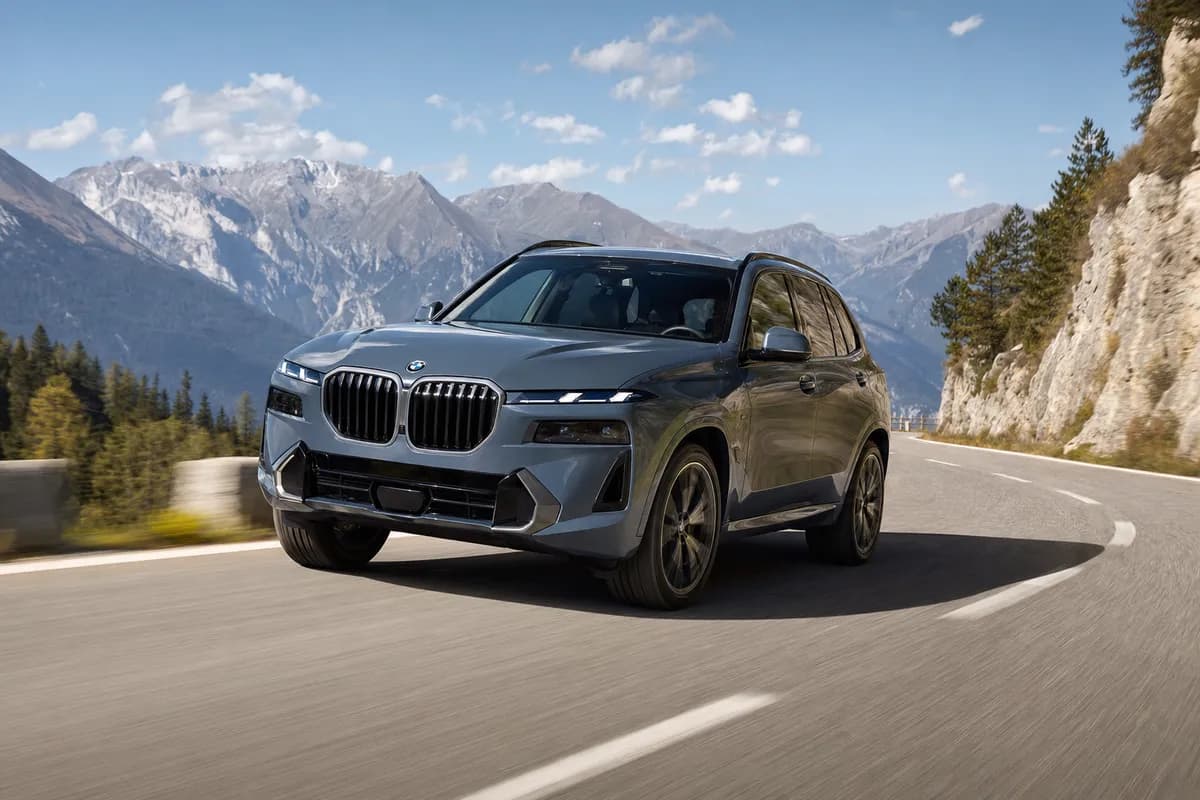
The all-new 2025 Audi A4 story comes with a twist worthy of a German boardroom thriller: the car most buyers are waiting for may not actually wear an A4 badge.
The all-new 2025 Audi A4 story comes with a twist worthy of a German boardroom thriller: the car most buyers are waiting for may not actually wear an A4 badge. Audi is reshuffling its naming strategy, pushing combustion-powered models toward odd numbers and reserving even-numbered names for EVs. Translation? The traditional A4 sedan’s replacement is effectively arriving as the new Audi A5 in several markets, while the A4 name is expected to live on in electrified form later. Confusing? Absolutely. Important? Very. Because beneath the badge drama sits one of Audi’s most crucial launches: a fresh compact luxury sedan aimed straight at the BMW 3 Series, Mercedes-Benz C-Class, Genesis G70, and Lexus IS.
For two decades, the A4 has been the sensible sharp suit of the premium sedan world: less shouty than a 3 Series, less ostentatious than a C-Class, more composed than most front-drive-based rivals, and usually better inside than all of them. The 2025 generation has to do more than polish that formula. It has to justify its existence in a world where buyers keep wandering into SUVs, EVs, and performance crossovers like raccoons finding an open trash can.
Launch Reality: The 2025 A4 Is Changing More Than Its Sheetmetal
The biggest thing to know about the all-new 2025 Audi A4 launch is that Audi’s product strategy has shifted. Under the brand’s revised naming structure, combustion-engine vehicles are moving to odd numbers, while even-numbered nameplates are being lined up for electric models. That means the conventional gasoline A4 successor is widely represented by the new-generation Audi A5 sedan and Avant in global markets, built on Audi’s new Premium Platform Combustion architecture, or PPC.
So if you walk into an Audi showroom expecting a completely redesigned 2025 A4 sedan with the same familiar badge, do not be shocked if the salesperson points you toward an A5 instead. This is not just a rebadged old car wearing fresh lipstick. The new model is larger, more digital, more powerful, and designed to bridge Audi’s current combustion lineup with the brand’s EV-heavy future.
The outgoing B9-generation Audi A4 was no weakling. In U.S. specification, the 2024 A4 45 TFSI delivered 261 horsepower and 273 lb-ft of torque from a turbocharged 2.0-liter four-cylinder, paired with a seven-speed dual-clutch automatic and standard quattro all-wheel drive. Audi quoted a 0-60 mph time of about 5.2 seconds, which is plenty brisk for an executive commuter with heated seats and a Bang & Olufsen sound system.
But the segment has moved. The BMW 330i makes 255 horsepower and 295 lb-ft, the Mercedes-Benz C300 produces 255 horsepower and 295 lb-ft, and the Genesis G70 2.5T now hits with 300 horsepower and 311 lb-ft. Audi could not simply serve yesterday’s quattro sandwich and expect applause.
The new-generation car addresses that with improved hardware, stronger available outputs, and a cabin that looks like someone finally told Audi’s interior team to stop being quite so polite.
Design and Interior: Sharper Outside, Screenier Inside
Audi design evolves at the pace of a glacier wearing designer glasses, but the 2025 car makes meaningful changes. The proportions are sleeker, the stance is wider, and the front end adopts slimmer lighting and a broader interpretation of Audi’s singleframe grille. It is still unmistakably an Audi sedan, which means clean lines, expensive-looking surfacing, and precisely zero interest in visual clownery.
Compared with the old A4, the new car feels more substantial. Expect a longer body, a more fastback-like roofline, and a stronger visual link to Audi’s larger sedans. The result is less “junior executive rental upgrade” and more “proper premium sedan.” That matters, because the Mercedes C-Class has been dining out on mini-S-Class vibes for years, while BMW’s 3 Series continues to sell athletic swagger by the crate.
The Cabin Is Where Audi Is Swinging Hard
Audi interiors used to be the industry benchmark. Then Mercedes turned its dashboards into nightclub installations, BMW finally figured out big screens, and Genesis started offering cabins that looked expensive enough to make German accountants sweat. The 2025 A4/A5-generation cabin is Audi’s counterpunch.
The centerpiece is a new digital layout built around an 11.9-inch virtual cockpit display and a large 14.5-inch central touchscreen. In higher trims, an optional 10.9-inch passenger display may also be offered, turning the front row into a three-screen command center. Is that necessary? Not remotely. Will buyers like it in the showroom? Of course they will. Humans are magpies with finance agreements.
The new infotainment interface is expected to be faster, more app-friendly, and more deeply integrated with vehicle settings than Audi’s older MMI system. Physical controls are reduced, though not entirely erased. That is both good and bad. The cabin looks cleaner and more futuristic, but adjusting climate settings through glass while driving on a cratered highway remains one of modern motoring’s dumber rituals.
Material quality should remain an Audi strength. Expect soft-touch surfaces, precise switchgear, configurable ambient lighting, and seats that balance long-distance support with premium plushness. The outgoing A4 already had a disciplined, high-quality cabin; the new model adds more theater without going full Mercedes hyperscreen disco.
- Expected cabin highlights: 11.9-inch driver display, 14.5-inch infotainment screen, optional passenger screen, updated voice control, premium audio, and upgraded ambient lighting.
- Likely practical gains: More rear-seat space, improved cargo access depending on body style, and better small-item storage.
- Potential annoyance: Too many touch controls replacing simple buttons, because apparently a volume knob offended someone in product planning.
Powertrains and Driving: Quattro Still Matters
The old A4’s secret weapon was not raw horsepower. It was composure. Quattro all-wheel drive, quick-shifting dual-clutch transmission logic, and well-judged body control made it one of the easiest luxury sedans to drive quickly in bad weather without feeling like you were negotiating with the rear axle.
For 2025, expect Audi to keep that character while adding more electrification and sharper engine tuning. The new global A5 family has already shown an evolution of the turbocharged 2.0-liter gasoline engine, with outputs in the upper-200-horsepower range depending on market. In the U.S., the new A5 is rated at around 268 horsepower, a modest bump over the outgoing A4 45 TFSI’s 261 horsepower. That does not sound dramatic, but in this segment, delivery matters more than pub numbers.
Audi’s seven-speed S tronic dual-clutch automatic should remain one of the better gearboxes in the class when tuned properly. It shifts faster and more crisply than many conventional automatics, though it can still be slightly hesitant at parking-lot speeds. Quattro all-wheel drive should again be a defining advantage, especially against rear-drive-based rivals in wet or snowy climates.
How It Stacks Up Against Rivals
Here is the uncomfortable truth for Audi: the compact luxury sedan class is not short on talent. The BMW 330i remains the dynamic reference point for buyers who care about steering precision and chassis balance. The Mercedes-Benz C300 has the plushest, most glamorous cabin aura. The Genesis G70 offers more horsepower for the money and a longer warranty. The Lexus IS is older than some TikTok influencers but remains beautifully built and wonderfully reliable.
Against those cars, the 2025 Audi’s pitch is balance. It probably will not steer with the same rear-drive purity as a BMW 3 Series. It likely will not out-bling the Mercedes C-Class. It may not undercut the Genesis G70 on value. But it should blend traction, cabin quality, tech, and everyday refinement better than almost anything else in the segment.
- BMW 330i: 255 hp, 295 lb-ft, rear-wheel drive standard, all-wheel drive optional. Sportier steering, more playful chassis.
- Mercedes-Benz C300: 255 hp, 295 lb-ft, standard mild-hybrid assist. More luxurious vibe, less driver-focused.
- Genesis G70 2.5T: 300 hp, 311 lb-ft. Strong value and power, but tighter rear seat and less badge cachet.
- Lexus IS 350: 311 hp V6, old-school charm, strong reliability, but aging infotainment packaging and platform.
- Audi A4/A5 successor: Around 268 hp in U.S. A5 form, quattro availability, premium tech-heavy cabin, all-weather confidence.
And then there is the hotter variant. The new S5 effectively takes over from the outgoing S4, bringing a turbocharged 3.0-liter V6 with around 362 horsepower in U.S. specification. That positions it against the BMW M340i, which still packs a magnificent 382-hp turbocharged inline-six, and the Mercedes-AMG C43, which uses a highly strung turbo four-cylinder making 402 horsepower. The Audi will probably be less manic than the AMG and less sonorous than the BMW, but likely more planted and easier to exploit year-round.
The 2025 Audi compact luxury sedan will not win buyers by being the loudest car in the room. It will win by being the one you still want to drive after the roads turn ugly, the commute turns miserable, and the novelty of 400 horsepower fades into insurance premiums.
Technology, Safety, and Expected Features
Audi knows this buyer. They want the car to feel expensive before it even leaves the dealership. That means lighting signatures, screens, driver assistance tech, and enough software to make the owner’s manual look like an airport novel.
Expect available features to include adaptive cruise assist, lane-keeping support, traffic sign recognition, a surround-view camera system, automated parking assistance, matrix-style LED lighting where regulations allow, wireless Apple CarPlay and Android Auto, over-the-air update capability, and a head-up display. Audi’s digital key and app-based vehicle controls should also become more prominent.
The important question is not whether the 2025 model will have tech. Of course it will. The question is whether Audi can make it intuitive. The outgoing A4’s cabin was refreshingly straightforward compared with newer screen-heavy rivals. If the 2025 car buries basic controls under too many menus, it risks turning German precision into German homework.
Expected Trim Strategy
While exact trim availability varies by market, Audi’s familiar structure is likely to continue in spirit: Premium, Premium Plus, and Prestige-style trims in the U.S., with sport packages, black optics packages, upgraded wheels, premium audio, ventilated seats, and advanced driver assistance bundled higher up the ladder.
Pricing will be crucial. The outgoing 2024 Audi A4 started in the low-to-mid $40,000 range in the U.S., with well-equipped versions easily climbing past $50,000. The new-generation car, especially if sold as the A5, is expected to move upward. A well-optioned model brushing against $55,000 would not surprise anyone who has spent time inside a modern Audi configurator, where adding desirable features can feel like feeding a parking meter with hundred-dollar bills.
That puts pressure on value. A Genesis G70 gives you more power per dollar. A BMW 330i gives you sharper handling credibility. A Mercedes C300 gives you stronger luxury theater. Audi must make the case that its combination of quattro traction, restrained design, excellent build quality, and usable speed is worth the premium.
Verdict: Expect a Better Audi, But Mind the Badge Confusion
The all-new 2025 Audi A4 launch is less straightforward than buyers might expect. If you want the classic gasoline-powered Audi compact sedan formula, the real successor may arrive wearing an A5 badge depending on your market. If you are waiting specifically for a future A4 nameplate, you may be waiting for something more electric, more software-defined, and potentially very different from the turbocharged quattro sedan we know today.
But judge the car, not the badge, and the outlook is strong. The 2025 generation promises a richer cabin, smarter technology, slightly stronger performance, improved packaging, and the same all-weather confidence that made the A4 such a satisfying real-world luxury sedan. It is not trying to out-BMW BMW, and that is probably wise. Audi’s best cars have never been about tail-out theatrics. They are about pace, polish, and the smug satisfaction of arriving quickly without looking like you tried too hard.
Would I buy one over a BMW 330i? If I lived somewhere dry, had good roads, and wanted the sharpest steering, probably not. The BMW still has the driver’s-car edge. Over a Mercedes C300? If I cared more about control layout, winter traction, and clean design than cabin flamboyance, yes. Over a Genesis G70? The Audi will cost more, but it will likely feel more modern and more premium inside.
Final verdict: the 2025 Audi A4 story is really the next chapter of Audi’s compact luxury sedan identity, even if the badge on the trunk changes. Expect a more mature, more digital, more polished machine that keeps Audi’s strengths intact. Just do your homework before walking into the showroom, because in 2025, asking for an A4 may get you a lesson in Audi naming strategy before you even get a test drive.
Confusing? Yes. Promising? Also yes. And if Audi gets the ride, cabin tech, and pricing right, this could be the most convincing evolution of the A4 formula in years, no matter what number it wears.
Affiliate disclosure: This article contains affiliate links. RevvedUpCars may earn a small commission on qualifying purchases at no extra cost to you.