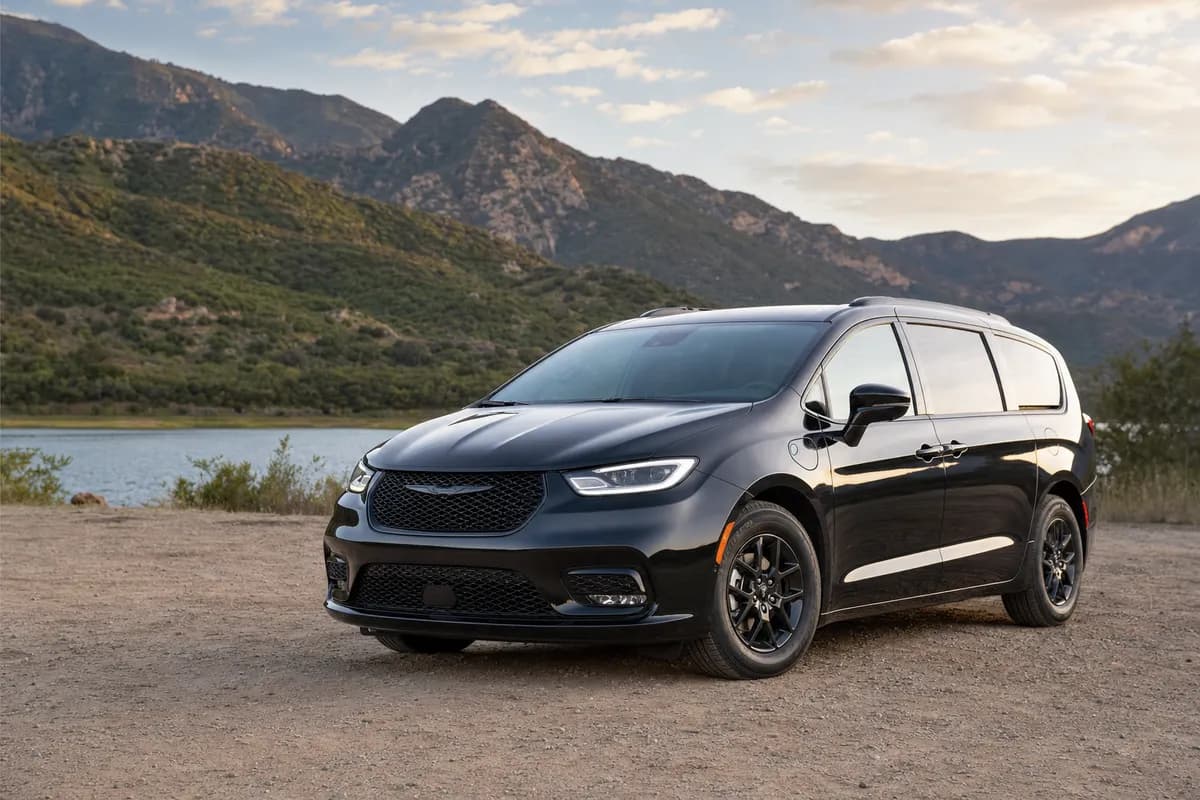
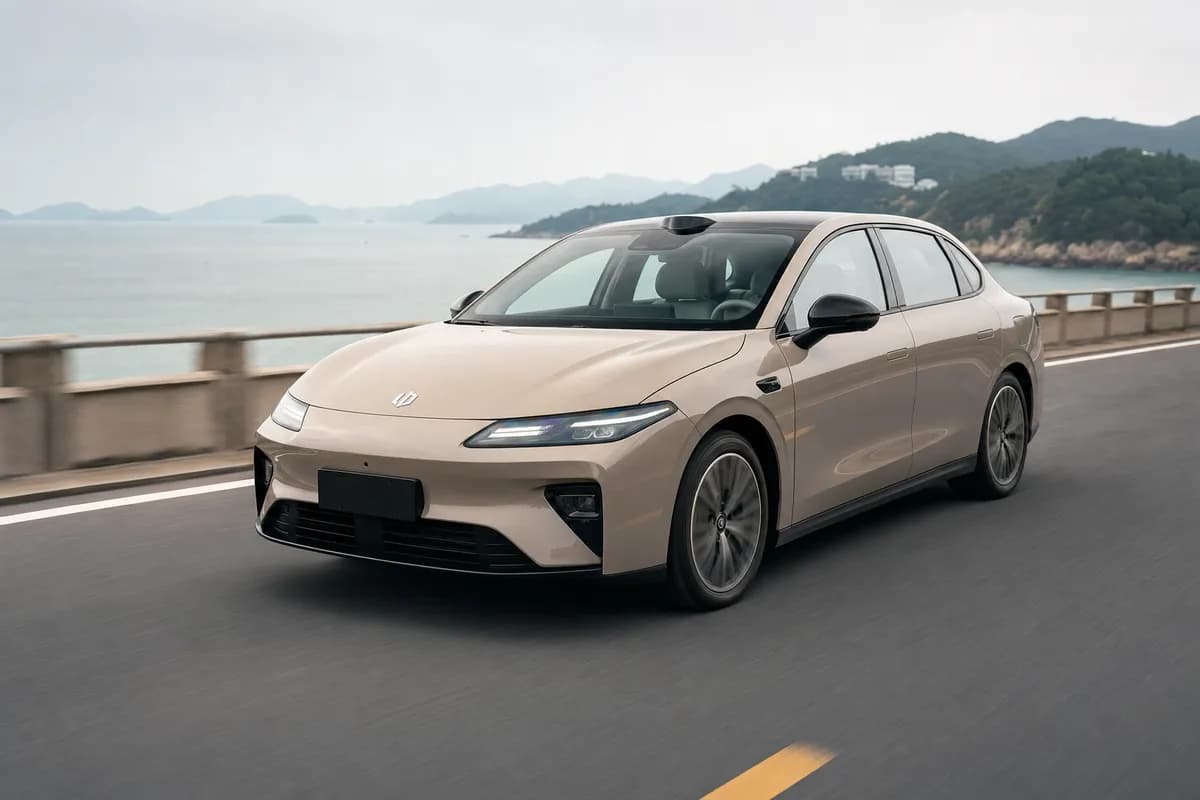
The 2024 Chrysler Pacifica Hybrid is the rare family vehicle that doesn’t ask you to cosplay as an off-road explorer just to get three rows, sliding doors, and lower fuel bills. It is not sexy in the Instagram sense. It will not make valet attendants stand straighter.
The 2024 Chrysler Pacifica Hybrid is the rare family vehicle that doesn’t ask you to cosplay as an off-road explorer just to get three rows, sliding doors, and lower fuel bills. It is not sexy in the Instagram sense. It will not make valet attendants stand straighter. But it will carry seven people, swallow a Costco run, glide through the school drop-off line on electricity, and embarrass most SUVs on actual usefulness. For eco-conscious families, this is not just a greener minivan. It is one of the smartest family cars on sale.
What It Is: The Only Plug-In Hybrid Minivan That Actually Exists
The 2024 Chrysler Pacifica Hybrid is a plug-in hybrid version of Chrysler’s long-running Pacifica minivan. More accurately, it is the plug-in hybrid minivan in America. Toyota sells the excellent Sienna as a conventional hybrid, but you cannot plug it in. Honda’s Odyssey and Kia’s Carnival still run old-school gas V6 engines. Chrysler, meanwhile, gives you a 16-kWh lithium-ion battery, an EPA-rated 32 miles of electric range, and a gasoline engine for longer trips.
That combination matters. For a typical family doing school runs, grocery trips, practices, pediatrician visits, and the occasional “we forgot the cleats” panic sprint, 32 electric miles can cover a huge chunk of daily driving. Plug it in overnight and you may go days without waking the V6. Then, when it’s time for a 400-mile road trip, you just keep driving like a normal person instead of planning your life around charging stations and broken fast chargers behind a half-lit convenience store.
The 2024 lineup is relatively simple. Chrysler offers the Pacifica Plug-In Hybrid primarily in Select and Pinnacle trims. Pricing sits in premium territory, with the Select starting around the low-$50,000 range and the Pinnacle pushing toward roughly $60,000 before incentives and options. That is not cheap, but the Pacifica Hybrid has one major ace: it has been eligible for up to a $7,500 federal clean vehicle tax credit, subject to income limits, MSRP rules, and changing federal requirements. Check eligibility before buying, because tax policy moves with all the grace of a shopping cart with one locked wheel.
The short version: if you want a minivan with real electric-only range and no road-trip anxiety, Chrysler is the only game in town.
Powertrain and Driving: Quiet, Quick Enough, and Better Than It Has Any Right to Be
Under the Pacifica Hybrid’s hood is a 3.6-liter V6 paired with two electric motors and an electrically variable transmission. Total system output is 260 horsepower. That is less than the 287-hp gas-only Pacifica and well below the 280-hp Honda Odyssey or 290-hp Kia Carnival, but numbers do not tell the whole story here.
Electric torque makes the Pacifica Hybrid feel smooth and eager in normal driving. From a stop, it pulls away cleanly and quietly, which is exactly what you want when you are easing out of a neighborhood at 7:10 a.m. with one child eating toast, one child yelling about a missing water bottle, and one adult wondering why nobody invented teleportation for families.
Independent testing has typically put the Pacifica Hybrid in the high-seven-second range from 0 to 60 mph. That is not quick by modern EV standards, but it is plenty for a three-row family hauler. The Honda Odyssey is quicker, usually around the mid-six-second range to 60 mph, and the Kia Carnival is also punchier. The Toyota Sienna is similar to the Chrysler in real-world acceleration, despite its lower 245-hp hybrid system output. But none of those rivals can drive 32 miles without burning gasoline.
The transition between electric and gas power is generally polished, though not invisible. Ask for a hard burst of acceleration and the V6 joins the party with a muted growl. It is not an inspiring soundtrack, but this is a minivan, not a Dodge Challenger with child-seat anchors. The electrically variable transmission avoids the fake-shift nonsense some hybrids use, and it keeps the powertrain in its efficiency zone without much drama.
Steering is light but accurate. Ride quality is one of the Pacifica’s strengths: supple over broken pavement, stable on the highway, and impressively composed with a cabin full of humans and cargo. The battery’s low placement helps the van feel planted, though nobody will confuse it with a sport sedan. Push it hard into a corner and the Pacifica politely reminds you that its natural habitat is a Target parking lot, not Laguna Seca.
The brakes deserve a note. Like most hybrids, the Pacifica blends regenerative and friction braking. Pedal feel is mostly natural, but there can be a faintly synthetic sensation at low speeds. It is not a deal-breaker. It is just the car converting your bad timing at yellow lights into a little usable electricity.
Efficiency and Charging: This Is Where the Pacifica Hybrid Earns Its Keep
The EPA rates the 2024 Pacifica Hybrid at 82 MPGe when using electricity and 30 mpg combined when operating as a hybrid after the battery is depleted. Total driving range is about 520 miles. Those numbers are the reason this van exists.
Compare that with the competition. The Toyota Sienna is rated up to 36 mpg combined with front-wheel drive and 35 mpg combined with all-wheel drive. That is outstanding, and if you never plug in, the Sienna is the more efficient long-haul machine. The Honda Odyssey returns 22 mpg combined. The 2024 Kia Carnival also lands around 22 mpg combined. Against those gas-only rivals, the Pacifica Hybrid looks like it brought a calculator to a knife fight.
Charging is simple. On a Level 2 charger, the Pacifica Hybrid can recharge in about two hours. On a standard household outlet, expect roughly 12 hours. That means even without a fancy garage setup, many families can plug in after dinner and wake up with a full battery. If you do have a 240-volt charger, the Pacifica becomes dramatically easier to keep in its electric sweet spot.
There is no DC fast charging, and that is fine. This is a plug-in hybrid, not a full EV. The whole point is to charge at home when convenient and let gasoline handle the long stuff. If your daily routine is under 30 miles and you plug in consistently, your fuel stops could become rare enough that your local gas station attendant starts assuming you moved.
There is one important caveat: the Pacifica Hybrid performs best when you actually charge it. Buy it, never plug it in, and you are hauling around a battery like an expensive gym membership you keep pretending you will use. In that case, get a Toyota Sienna or a gas Pacifica and stop lying to yourself.
Interior, Space, and Family Practicality: Sliding Doors Still Beat SUV Swagger
This is where minivans dunk on SUVs from the free-throw line. The Pacifica Hybrid seats seven, with second-row captain’s chairs and a third row that adults can use without filing a complaint. The doors slide wide open, the floor is low, and loading kids into car seats does not require the spinal flexibility of a circus performer.
Cargo space is excellent: about 32.3 cubic feet behind the third row, 87.5 cubic feet behind the second row, and up to 140.5 cubic feet with the rear seats folded and the second-row seats removed. That last detail matters. The Pacifica Hybrid does not get Chrysler’s brilliant second-row Stow ’n Go seats, because the battery lives under the floor where those seats would fold. The third row still folds into the floor, but the second-row chairs must be physically removed if you want maximum cargo space.
That is the Pacifica Hybrid’s biggest practicality penalty. In the gas Pacifica, Stow ’n Go is a killer feature. In the Hybrid, you trade that convenience for electric driving. For many families, that is a fair trade. But if you constantly convert your van from passenger shuttle to cargo van, the gas Pacifica may be the more flexible tool.
The cabin itself is pleasant, especially in Pinnacle trim, which brings quilted Nappa leather, second-row lumbar pillows, and enough soft-touch material to make you forget this vehicle’s primary mission involves crushed crackers. Chrysler’s Uconnect 5 system runs through a 10.1-inch touchscreen and remains one of the better infotainment setups in the business. It is quick, logically arranged, and supports wireless Apple CarPlay and Android Auto.
Available family tech includes Amazon Fire TV integration, rear-seat entertainment screens, USB ports scattered like Easter eggs, and Chrysler’s FamCAM interior camera, which lets front passengers monitor rear-seat chaos without turning around. It sounds gimmicky until you use it to identify which child is weaponizing gummy bears.
Safety equipment is also strong. Standard driver-assistance features include adaptive cruise control, blind-spot monitoring, rear cross-traffic alert, forward collision warning, automatic emergency braking, lane-departure warning, and lane-keeping assistance. For a vehicle tasked with transporting your most emotionally and financially expensive cargo, that matters.
- Seats: Seven passengers
- Electric range: EPA-rated 32 miles
- Efficiency: 82 MPGe electric, 30 mpg combined on gas
- Total range: About 520 miles
- Horsepower: 260 hp combined
- Maximum cargo volume: Up to 140.5 cubic feet
- Charging time: About two hours on Level 2
Rivals, Costs, and the Verdict
The Pacifica Hybrid’s closest rival is the Toyota Sienna, and this is a proper fight. The Sienna is more efficient on long highway drives once the Pacifica’s battery is depleted, it offers available all-wheel drive, and Toyota’s hybrid reputation is as sturdy as a cast-iron skillet. It also starts at a lower price. If you live somewhere snowy and need all-wheel drive, the Sienna has a clear advantage because the Pacifica Hybrid is front-wheel drive only.
But the Sienna cannot plug in. That single fact changes the math. If your daily driving fits inside the Pacifica’s electric range, the Chrysler can use dramatically less gasoline than the Toyota. For suburban families with a garage or driveway outlet, the Pacifica Hybrid may be the greener and cheaper-to-run choice in everyday life.
The Honda Odyssey remains the driver’s pick among minivans. Its V6 is smooth, strong, and satisfying, and Honda knows how to tune a chassis. But at 22 mpg combined and with no hybrid option, it feels increasingly old-school. The Kia Carnival brings SUV-ish styling, a handsome interior, and strong value, but it also lacks electrification for 2024. It is stylish, yes. Efficient, no.
There are some knocks against the Chrysler. The Pacifica Hybrid is expensive. It lacks all-wheel drive. It loses second-row Stow ’n Go. Its long-term ownership reputation is not as bulletproof as Toyota’s. And if you frequently tow, look elsewhere: the Pacifica Hybrid is not the towing pick, while the gas Pacifica can tow up to 3,600 pounds when properly equipped.
Still, the bigger picture is hard to ignore. The Pacifica Hybrid solves a real family problem better than most crossovers. Three-row SUVs often pretend to be practical, then punish you with tight third rows, high load floors, and rear doors that become weapons in crowded parking lots. The Pacifica does the job properly. It is lower, roomier, easier to load, and far more efficient than V6-powered rivals if you plug it in.
The best version for most buyers is the Select trim with the features you actually need. The Pinnacle is lovely, but once you are spending around $60,000 on a minivan, you are deep into “maybe we should price out a luxury SUV” territory. Resist that temptation unless you enjoy paying more for less usable space.
Verdict: The 2024 Chrysler Pacifica Hybrid is the best minivan for families who can charge at home and want to cut fuel use without sacrificing road-trip freedom. It is not perfect, but it is uniquely practical, genuinely efficient, and far more sensible than another three-row SUV with fake rugged cladding.
If you never plug in, buy the Toyota Sienna. If you want all-wheel drive, buy the Toyota Sienna. If you want the quickest or sharpest-driving van, test the Honda Odyssey. But if your family routine is mostly local driving with occasional long trips, the Pacifica Hybrid is the cleverest machine in the segment. It is a minivan for people who have done the math, looked past the SUV fashion show, and realized the future of family transport might just have sliding doors.
Affiliate disclosure: This article contains affiliate links. RevvedUpCars may earn a small commission on qualifying purchases at no extra cost to you.