The 2024 Chevrolet Equinox EV arrives with a very un-Chevy job: make normal people care about an electric crossover without asking them to mortgage the dog.
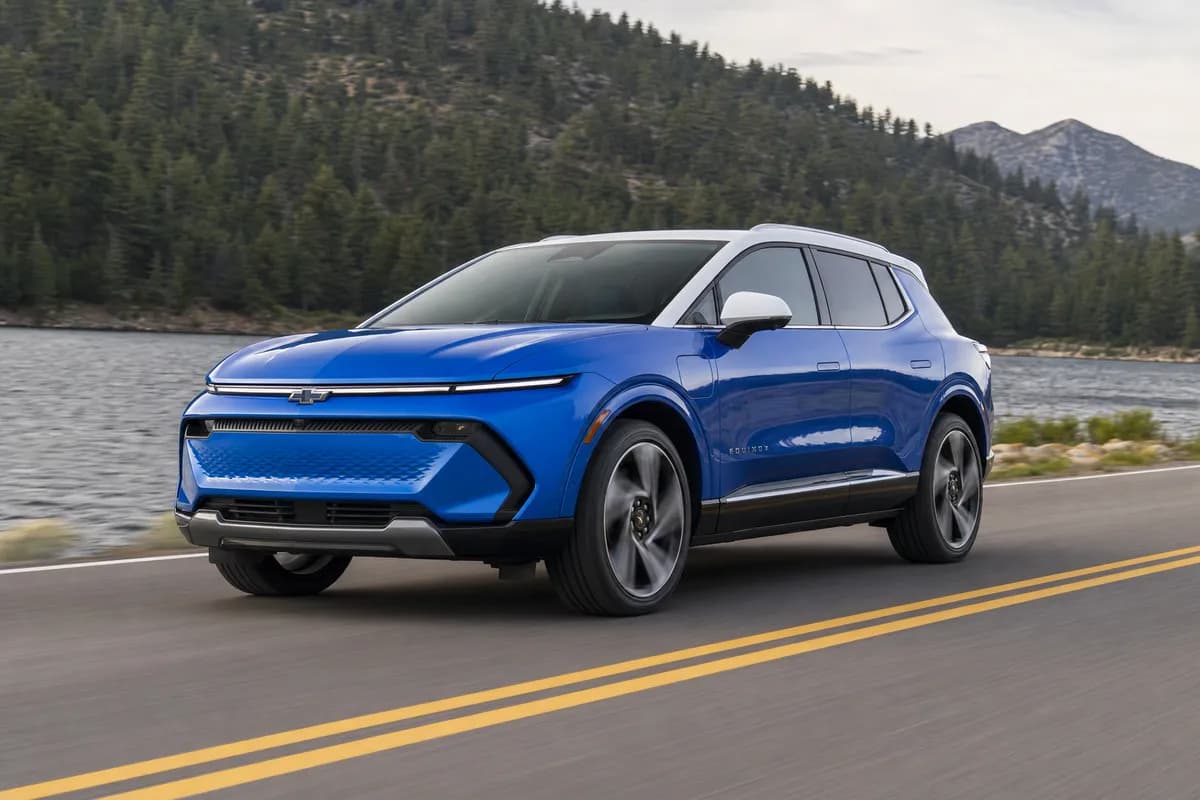
The 2024 Chevrolet Equinox EV arrives with a very un-Chevy job: make normal people care about an electric crossover without asking them to mortgage the dog. It is not a moonshot like the GMC Hummer EV, not a muscle-costume science project like the Blazer EV, and not a compliance-mobile with the charisma of wet cardboard. This is Chevrolet aiming straight at the family driveway: 319 miles of EPA range in front-wheel-drive form, available all-wheel drive, a big Google-based screen, and pricing that puts heat on the Volkswagen ID.4, Hyundai Ioniq 5, Kia EV6, Ford Mustang Mach-E, Nissan Ariya, and yes, the Tesla Model Y. After a first drive, the headline is simple: the Equinox EV is not the most exciting electric crossover in the class, but it may be one of the most sensible. And in this segment, sensible sells.
What The 2024 Chevrolet Equinox EV Actually Is
Do not confuse this with the gasoline Chevrolet Equinox. That car is a compact crossover built for rental counters, school runs, and people who say “I just need something reliable” while dying inside. The Equinox EV is different. It rides on GM’s Ultium-based architecture, shares broad electric DNA with the larger Blazer EV and Honda Prologue, and stretches into near-midsize territory.
The numbers tell the story. The Equinox EV is about 190.6 inches long, with a 116.3-inch wheelbase. That makes it longer than a Volkswagen ID.4 and not far off a Tesla Model Y in real-world footprint. Cargo capacity is rated at 26.4 cubic feet behind the rear seats and 57.2 cubic feet with them folded. There is no front trunk, which is annoying because EVs should use empty space better than a teenager’s bedroom, but the rear load area is flat, wide, and genuinely useful.
Power depends on drivetrain. Front-wheel-drive versions use a single motor producing 213 horsepower and 236 lb-ft of torque. All-wheel-drive models add a rear motor and jump to 288 horsepower and 333 lb-ft. EPA range is the big win: up to 319 miles for front-drive models and 285 miles for AWD. Those figures matter because they put the Equinox EV in the grown-up part of the class, not the “just enough if you never visit relatives” zone.
Trim structure includes LT and RS flavors, with the RS bringing the usual blacked-out trim, sportier styling, and bigger visual swagger. Depending on configuration, you will see 19-, 20-, or 21-inch wheels. The RS looks particularly sharp, especially in the way the slim lighting signature wraps the front end. Chevrolet has finally figured out that “mainstream” does not have to mean “designed by committee during a lunch break.”
Pricing has been a moving target because of staggered trim availability, but the Equinox EV’s pitch is clear: undercut the premium-feeling EVs while offering competitive range. The long-promised entry 1LT was aimed around the mid-$30,000s before incentives, while better-equipped 2LT and RS models move into the low-to-high $40,000 range depending on drivetrain and options. Crucially, the Equinox EV has qualified for the full $7,500 federal tax credit when buyer and vehicle eligibility requirements are met, which makes the math far more interesting.
Driving It: Calm, Quick Enough, And Not Trying Too Hard
The first thing you notice is what the Equinox EV does not do. It does not lurch away from stoplights like a Tesla Model Y Performance with a grudge. It does not attempt the fake-sports-car routine of the Mustang Mach-E. It does not feel as rear-drive playful as a Hyundai Ioniq 5. Instead, it moves with the smooth, settled confidence of a crossover designed by people who know most buyers are not chasing lap times between daycare and Costco.
In front-wheel-drive form, the Equinox EV is perfectly adequate. The 213-hp motor delivers the usual EV instant torque, so urban driving feels more eager than the horsepower number suggests. It jumps cleanly into gaps, cruises quietly, and avoids the strained, rubber-band feel that still plagues some gasoline crossovers with CVTs. But ask for a hard launch and the front-drive model reminds you it is hauling a substantial battery pack and a family-sized body. It is quick enough, not quick.
The all-wheel-drive version is the one I would buy. With 288 hp and 333 lb-ft, it has the muscle the chassis deserves. Chevrolet has not turned it into a drag-strip hero, but the AWD Equinox EV feels far more relaxed when merging, passing, or climbing grades. The added rear motor also cleans up the launch feel. Instead of the front tires doing all the work, the car simply hooks up and goes. Expect acceleration in the “comfortably brisk” category rather than the “my passenger just swallowed their gum” category.
The steering is light, accurate, and low-drama. That sounds like faint praise, but it is exactly right for this vehicle. Some EV makers dial in artificial heft and call it sporty. Chevrolet wisely skips that cosplay. The Equinox EV changes direction cleanly, stays composed through sweeping bends, and keeps body motion in check without punishing occupants. It is not a canyon carver, but it also does not flop around like a mattress tied to a shopping cart.
Ride quality is one of its stronger points. On 19- and 20-inch wheels, the Equinox EV feels settled and mature, absorbing broken pavement without the brittle edge you get in some heavier EVs. The 21-inch RS wheels look terrific but bring the usual penalty: more impact noise, less sidewall, and a faint sense that style has mugged compliance in an alley. If comfort matters, do not let the showroom lighting seduce you into the biggest wheels.
Regenerative braking is well handled. Chevrolet offers one-pedal driving, and it feels progressive rather than grabby. There is also a regen-on-demand paddle, a familiar GM EV trick that lets you increase deceleration manually. The brake pedal itself blends friction and regen smoothly enough that most drivers will never think about it, which is exactly the point. EV braking should not feel like a software engineer arguing with a hydraulic system.
Range, Charging, And The Numbers That Matter
The Equinox EV’s best weapon is range. The 319-mile EPA estimate for front-wheel-drive models beats many direct rivals at the price. A Volkswagen ID.4 Pro is rated up to 291 miles in some configurations. A Hyundai Ioniq 5 rear-driver can reach 303 miles. A Nissan Ariya Venture+ posts up to 304 miles. The Tesla Model Y Long Range remains formidable, typically around 310 miles depending on wheel and configuration, but the Chevy is right there on paper.
The AWD Equinox EV drops to 285 miles, which is still healthy. That figure is more than enough for daily commuting and weekend use, and it keeps the car from feeling like an EV you must constantly babysit. As always, highway speed, winter weather, tires, and cabin heat will chew into range. Physics remains undefeated, despite what YouTube comment sections believe.
Charging is good, not class-leading. The Equinox EV can DC fast-charge at up to 150 kW, adding roughly 77 miles of range in about 10 minutes under ideal conditions. That is useful, but it does not match the 800-volt Hyundai Ioniq 5 and Kia EV6, which can rip from 10 to 80 percent in about 18 minutes on a properly functioning high-power charger. The Chevy is more in line with the ID.4, Ariya, and many mainstream 400-volt EVs.
For home charging, the Equinox EV supports 11.5-kW Level 2 charging on many trims, good for roughly 34 miles of range per hour. Some higher-output configurations support up to 19.2 kW AC charging, which can add around 51 miles per hour if your home setup can actually deliver that. Most owners will plug in overnight and wake up full, which remains the great EV convenience trick that gasoline drivers underestimate until they experience it.
One caveat: public charging is still the messy part of EV ownership. Chevrolet’s route planning and Google built-in navigation help, and GM’s access to Tesla Superchargers via adapter improves the long-trip picture dramatically where available. But if you routinely road-trip through charging deserts, the Tesla Model Y still has the advantage because its charging ecosystem is more seamless. The Equinox EV can do the road-trip job; Tesla still makes the job easier.
Interior, Tech, And The CarPlay Fight Nobody Asked For
Inside, the Equinox EV is a massive leap beyond Chevrolet’s old compact-crossover cabins. The design is clean, the seating position is natural, and the dashboard is dominated by a standard 17.7-inch infotainment screen paired with an 11-inch driver display. The graphics are crisp, the layout is logical, and Google built-in means Google Maps, Google Assistant, and app integration are deeply embedded.
That part works well. The controversial part is what is missing: Apple CarPlay and Android Auto phone projection. GM has decided its future EVs should rely on native software instead. This is either brave strategic vertical integration or a completely unnecessary slap fight with customers who already like their phones. I lean toward the second option. The native Google system is good, but taking away choice is not a feature. It is a boardroom decision wearing a UX hat.
Still, the Equinox EV’s cabin scores where families will care. Front seats are comfortable, rear legroom is generous, and the flat floor makes the second row feel genuinely open. Visibility is decent for a modern crossover, though the rising beltline and thick rear pillars remind you that designers still worship at the altar of “sporty stance.” Material quality is mixed but acceptable. You will find some hard plastics, but the touchpoints are good enough, and the cabin does not feel cheap unless you go hunting for sins.
Storage is practical. There are useful bins, a broad center console, and a cargo area that will swallow strollers, luggage, sports gear, and the other debris of modern adulthood. The lack of a frunk remains a miss. Ford gives you one in the Mustang Mach-E. Tesla gives you one in the Model Y. Chevrolet gives you a shrug and a plastic-covered void where dreams could have lived.
Available driver-assistance technology is a major plus. Super Cruise is offered on the Equinox EV, and when properly equipped and used on compatible roads, it remains one of the best hands-free highway systems in the business. It is smoother and less twitchy than many lane-centering systems, and GM’s driver-monitoring approach is more responsible than systems that pretend a steering-wheel tug every few seconds equals attention. If you do long freeway slogs, Super Cruise is not a gimmick. It is a fatigue reducer.
How It Stacks Up: The New Sensible Pick?
Against the Tesla Model Y, the Equinox EV wins on conventional interior controls, smoother mainstream styling, and potentially lower transaction pricing with incentives. The Tesla wins on acceleration, cargo space, charging ease, software maturity, and brand cachet among people who say “full self-driving” with a straight face. If you road-trip constantly, buy the Tesla. If you want an EV that feels more like a normal crossover and less like a rolling tech manifesto, the Chevy makes a strong case.
Against the Hyundai Ioniq 5 and Kia EV6, the Chevy has range and value arguments, but the Koreans charge faster and feel more special. The Ioniq 5 has lounge-like cool. The EV6 has sharper reflexes. Both make the Equinox EV feel a little conventional. But conventional is not automatically bad. Plenty of buyers do not want their family car to look like it escaped from a concept-car turntable.
Against the Volkswagen ID.4, the Equinox EV is simply more compelling. The VW has improved, but its interface has been a long-running exercise in testing owner patience, and its driving experience is pleasant rather than memorable. The Chevy’s screen, range, and available Super Cruise give it the edge. Against the Nissan Ariya, the Equinox EV is less plush but better value. Against the Ford Mustang Mach-E, the Ford is more fun and more characterful, but the Chevy feels more practical and less theatrically branded.
The closest in-house comparison is the Honda Prologue, which uses GM bones under Honda styling and tuning. The Prologue is larger and nicely executed, but it is also generally positioned higher. The Equinox EV feels like the smarter buy unless you prefer the Honda badge, dealer experience, or slightly more premium presentation.
Verdict: The 2024 Chevrolet Equinox EV is not the EV that will make enthusiasts write poetry. Good. It is the EV that could make thousands of regular crossover buyers stop fearing the plug.
That is the real accomplishment here. The Equinox EV feels normal in the best possible way: quiet, roomy, easy to drive, efficient enough, and priced within shouting distance of reality. It does not have the ultra-fast charging of an Ioniq 5, the performance punch of a Model Y, or the style theater of a Mach-E. But it brings a better blend of range, comfort, usability, and attainable pricing than most of them.
My pick would be an all-wheel-drive 2LT or 2RS with sensible wheels and Super Cruise if the budget allows. Skip the largest wheels unless you value curb appeal over ride quality, and think hard before paying for cosmetic extras that do nothing for range or comfort. The front-drive version is the range champion and the rational choice for warmer climates; the AWD version is the one that feels properly complete.
So, is the 2024 Chevrolet Equinox EV a new electric contender? Absolutely. More than that, it is the first mainstream Chevy EV in years that feels built for the center of the market instead of the edge of a press release. It is not perfect, and the no-CarPlay decision deserves every raised eyebrow it gets. But as an electric family crossover with real range, real space, and real value, the Equinox EV lands a clean shot. The old Equinox was transportation. This one is a reason to pay attention.
Affiliate disclosure: This article contains affiliate links. RevvedUpCars may earn a small commission on qualifying purchases at no extra cost to you.