Explore the full-size luxury SUV showdown between Cadillac Escalade and Lincoln Navigator. Compare towing, interior, and more for 2025 SUVs. Read now!
In this article
If you think spending $100,000-plus on a full-size SUV is madness, you’re probably not the target buyer—but that doesn’t stop the Cadillac Escalade vs Navigator debate from being the loudest argument in the valet line. These are rolling declarations of success, equal parts luxury lounge and towing machine, and yes, I’ve driven both back-to-back with coffee still warm. Right now, with 2025 and 2026 updates fresh, buyers are cross-shopping harder than ever because this choice actually says something about you.
The Escalade vs Navigator fight matters today because prices are creeping north, tech is exploding, and rivals like the BMW X7, Mercedes-Benz GLS, Lexus LX, and Range Rover are circling like sharks. Pick wrong and you’ll be stuck with a $110k status symbol that annoys you every commute. Pick right and you’ll wonder how you ever lived without massaging seats, 8,000-plus pounds of towing, and a cabin that smells like expensive leather and mild arrogance.
I’m not here to coddle brand loyalists. I’m here to tell you which of these American behemoths actually deserves your money in 2026, with numbers, driving impressions, and a couple of hot takes that might upset your uncle who’s owned five Lincolns in a row.
Quick Specs
Starting Price: Escalade starting around $81,000 / Navigator approximately $83,000 (check manufacturer website for latest pricing)
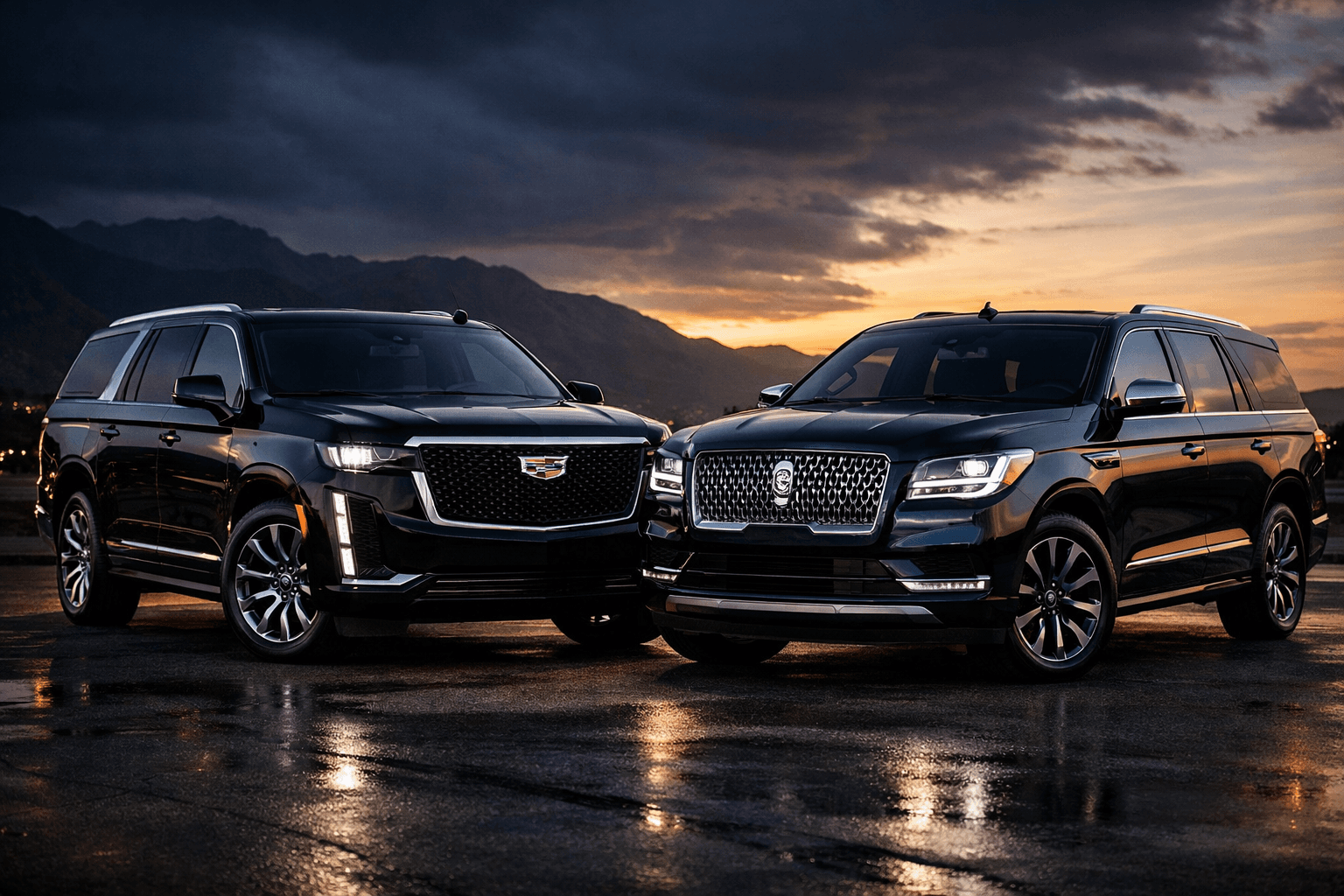
The Escalade is Cadillac’s loudest suit, powered by a naturally aspirated 6.2-liter V8 that sounds like freedom and premium fuel. Lincoln counters with the Navigator’s twin-turbo V6, smoother than a jazz playlist and stronger on paper with 510 lb-ft of torque. Both tow north of 8,000 pounds, both seat seven in outrageous comfort, and both cost more than some condos did in 2009.
What separates them is philosophy. Cadillac leans into theater—giant screens, sharp angles, and a V8 that refuses to apologize—while Lincoln sells calm, spa-day luxury with softer edges and fewer shouting matches between design elements. If you’ve read our guide to choosing three-row SUVs, you already know this segment is about personality as much as practicality.
Design Face-Off: Loud vs Lounge
The Escalade looks like it was designed with a ruler and a dare. Its vertical LED lighting and slab sides scream presence, and in traffic it parts lanes like a political motorcade. Love it or hate it, nobody mistakes it for a Chevy Tahoe anymore.
The Navigator is more reserved, which some will call elegant and others will call boring. I’ll say this: it’s aged better, especially in darker colors where the chrome doesn’t look like it fell into a jewelry box. Hot take—Cadillac’s design will feel dated sooner than Lincoln’s, and I’d bet a pint on that.
Interior & Tech: Screens vs Serenity
Advertisement
Step into the Escalade and you’re greeted by a 38-inch curved OLED display that stretches across the dash like Times Square. It’s stunning, responsive, and absolutely overkill, but I love it in the same way Doug DeMuro loves obscure button labels. The AKG audio system with up to 36 speakers is absurdly good, turning podcasts into IMAX experiences.
Lincoln answers with comfort rather than spectacle. The Navigator’s seats are some of the best in the business, with a ride quality that makes potholes feel like gossip rather than news. Its infotainment isn’t as flashy, but it’s easier to live with, echoing arguments made in this discussion on automotive UX.
Performance & Driving Experience
The Navigator is quicker, full stop. A 0–60 mph run in about 5.3 seconds is bonkers for something weighing over 6,000 pounds, and the turbo V6 delivers torque like a freight elevator. The throttle response is sharp, not lazy, and on highway on-ramps it genuinely surprises people.
The Escalade counters with character. That V8 isn’t the fastest, but it sounds right and feels honest, and with Magnetic Ride Control and available air suspension, it hustles better than physics suggests. Chris Harris would still roll his eyes, but for this class, it’s impressive.
Towing, MPG, and Real-World Costs
Both SUVs tow around 8,300 pounds when properly equipped, enough for boats, horse trailers, or your buddy’s broken-down project car. The Navigator’s torque advantage makes towing feel less strained, especially at altitude. Cadillac’s diesel option is gone, which is a shame for long-haul towers.
Fuel economy favors the Navigator at roughly 16/22 mpg versus the Escalade’s 14/19 mpg, according to FuelEconomy.gov. Neither is cheap to run, so before you sign, read our breakdown of ownership costs and prepare your wallet emotionally.
Practicality & Everyday Use
Cargo space is massive in both, with over 120 cubic feet maxed out, and third rows adults won’t hate you for. The Escalade ESV and Navigator L stretch even further, basically turning into luxury buses. Parking, however, requires planning and forgiveness from your local shopping center.
Safety tech is comprehensive on both, with hands-free highway driving systems that actually work. For official safety ratings, the Escalade and Navigator both score well per NHTSA, though size remains their greatest passive safety feature.
Value Breakdown vs Competitors
At $80k to $110k+, value is relative. Against the BMW X7’s sharper handling, the Mercedes GLS’s tech wizardry, and the Range Rover’s off-road cred, these two still win on space and presence. Lexus LX buyers will scoff, but they’re paying for reliability and tradition.
Here’s the controversial bit: neither Escalade nor Navigator feels truly $120,000 special at the top trims. At that money, you’re buying brand gravity as much as material quality, and both could learn a thing or two from Bentley-level attention to detail.
Navigator’s smoother ride and quicker acceleration
Excellent towing capability
Huge interior space
Cons
Eye-watering prices when fully loaded
Fuel economy still mediocre
Top trims don’t feel ultra-luxury
The Winner: Escalade vs Navigator Final Call
This Escalade vs Navigator showdown comes down to how you define luxury. If you want drama, sound, and tech that makes passengers gasp, the Cadillac Escalade wins on personality alone. If you want calm confidence, better efficiency, and a ride that pampers rather than shouts, the Lincoln Navigator is the smarter buy.
My pick? Navigator—because real luxury whispers, and because that torque-rich V6 makes daily driving easier. But if your heart beats to the sound of a V8 and OLED pixels, I won’t judge… much.
RevvedUpCars Rating: 8.5/10
Best for: Buyers who want maximum space, serious towing, and unapologetic American luxury with a clear personality.
Either way, the Escalade vs Navigator battle proves one thing: big, brash luxury SUVs aren’t going anywhere, and they’re still very good at making a statement—whether that statement is shouted or whispered.
Affiliate disclosure: some links on this page earn us a commission at no extra cost to you.
Alex Torque is a lifelong gearhead who grew up in Detroit with motor oil in his veins. After a decade as a performance driving instructor at Laguna Seca and the Nurburgring, he traded his racing helmet for a keyboard—though he still logs track days whenever possible. Alex specializes in sports cars, supercars, and anything with forced induction. His reviews blend technical precision with the visceral thrill of pushing machines to their limits. When he’s not testing the latest performance machines, you’ll find him restoring his 1973 Datsun 240Z or arguing about optimal tire pressures. Alex believes that driving should be an event, not a commute.
Get the latest car reviews in your inbox
Join thousands of car enthusiasts. No spam, unsubscribe any time.



Comments
Leave a comment