Volkswagen’s ID. Buzz arrives with a job bigger than reviving the Microbus silhouette. It has to prove that an electric family van can be more than a nostalgic design exercise. In long-wheelbase form for the U.S. market, the ID.
Volkswagen’s ID. Buzz arrives with a job bigger than reviving the Microbus silhouette. It has to prove that an electric family van can be more than a nostalgic design exercise. In long-wheelbase form for the U.S. market, the ID. Buzz combines three-row seating, sliding doors, serious cargo volume and a battery-electric drivetrain in a package that looks nothing like the anonymous crossovers dominating school drop-off lines. The result is one of the most distinctive family vehicles on sale — and one of the clearest signs yet that electric travel is moving beyond sedans and SUVs.
A Modern Microbus Built for Today’s Families
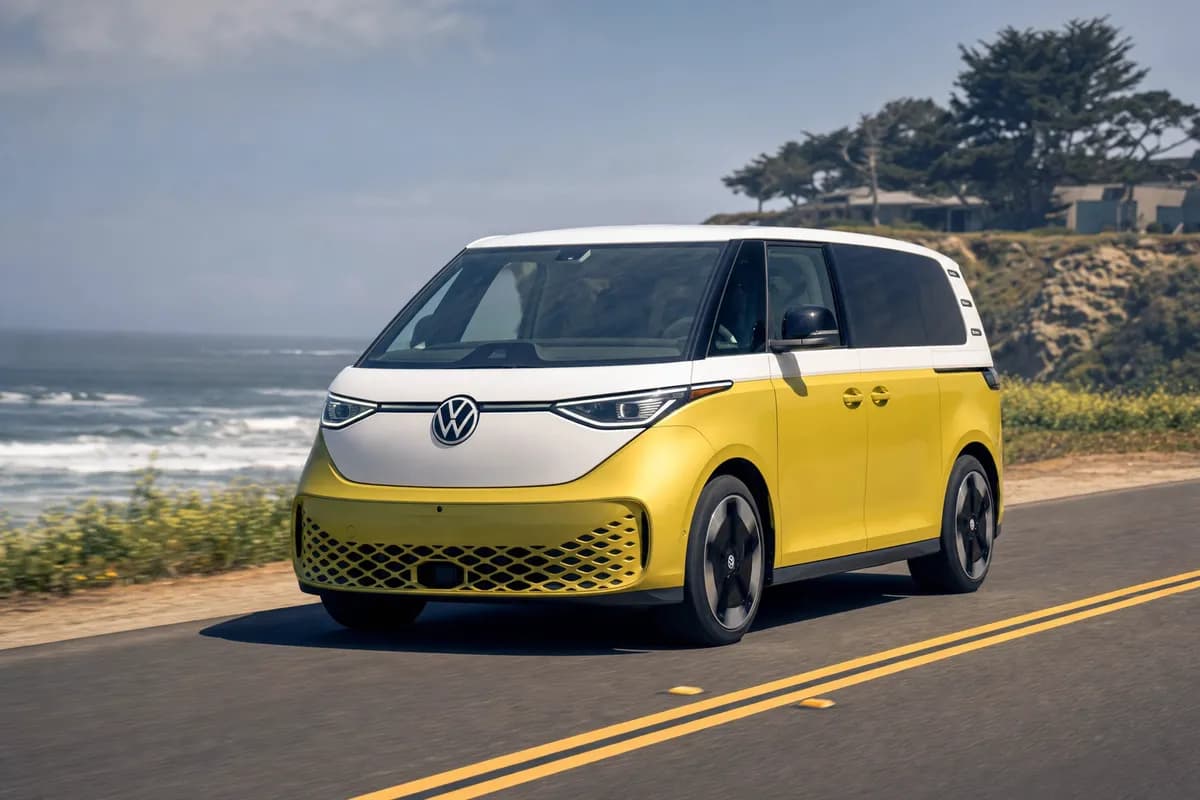
The ID. Buzz is not a retro van in the way a New Beetle was a retro hatchback. Volkswagen has borrowed the spirit of the original Type 2 Microbus — short overhangs, a friendly face, two-tone paint and an upright cabin — but the engineering underneath is thoroughly modern. The van rides on Volkswagen Group’s MEB electric platform, the same basic architecture used by the ID.4 crossover, but stretched and repackaged for maximum passenger space.
For the U.S., Volkswagen sells the longer-wheelbase ID. Buzz, measuring about 195.4 inches long with a 127.5-inch wheelbase. That makes it shorter than a Toyota Sienna or Chrysler Pacifica, yet the boxy body and EV packaging help it deliver the kind of usable interior space families expect from a van. The battery sits under the floor, the front and rear overhangs are relatively compact, and the cabin is pushed outward to create a roomy, lounge-like environment.
That packaging is central to the ID. Buzz’s appeal. Three-row SUVs often ask families to compromise: high step-in height, tight third rows, awkward rear-door openings and limited cargo space when all seats are in use. A van solves those problems with a low floor, wide sliding doors and a square cargo area. The ID. Buzz adds electric propulsion to that formula without abandoning the practical basics that make minivans work.
In the U.S., the ID. Buzz is offered with seating for six or seven, depending on configuration. Seven-seat versions use a second-row bench, while six-seat models use second-row captain’s chairs. The third row is adult-usable by the standards of family vehicles, and the flat floor helps make the cabin feel open. Cargo capacity is another strength: Volkswagen quotes 18.6 cubic feet behind the third row, 75.5 cubic feet behind the second row and up to 145.5 cubic feet with rear seats removed or folded depending on configuration.
Those numbers matter because family travel is rarely just about passengers. It is about strollers, sports bags, coolers, luggage, pets, scooters and the random gear that appears on every weekend away. The ID. Buzz’s shape makes that load easier to manage than in most electric SUVs, even if it does not have the deep underfloor cargo well found in some gasoline minivans.
Electric Performance With Real-World Trade-Offs
The ID. Buzz is powered by a 91-kWh battery pack in U.S. specification. Rear-wheel-drive models use a single rear motor producing 282 horsepower, while all-wheel-drive 4Motion versions add a front motor for a combined 335 horsepower. That gives the van much stronger acceleration than its cheerful shape suggests. It is not a performance vehicle, but it has the instant torque and quiet response that make EVs feel relaxed in daily driving.
Volkswagen estimates the rear-drive ID. Buzz can travel 234 miles on a full charge, while the all-wheel-drive version is rated at 231 miles. Those figures are workable, but they are not class-leading. A Kia EV9 can offer more than 300 miles in some trims, while many gasoline and hybrid minivans can travel 450 to 600 miles between fuel stops. A Toyota Sienna hybrid, for example, returns up to 36 mpg combined and can cover long highway trips with minimal planning.
That is the ID. Buzz’s biggest limitation as a long-distance family vehicle. Around town, 230-plus miles is more than enough for commuting, school runs, errands and local weekend trips. On a road trip, especially with children and a full load, charging stops become part of the itinerary. Weather, speed, terrain, cargo and climate-control use can all affect range. Families traveling in cold climates or at sustained highway speeds should expect real-world range to drop below the official estimate.
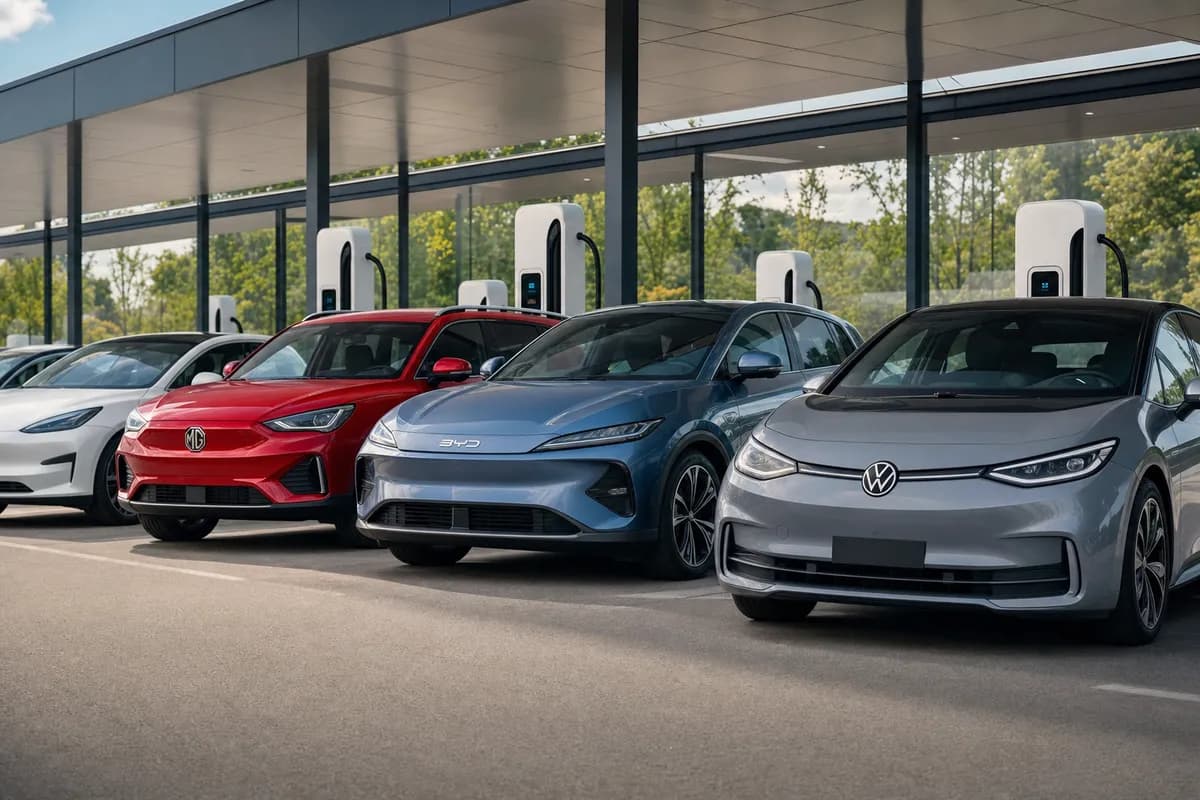
Charging capability helps offset that. The ID. Buzz can accept DC fast charging at up to 200 kW, and Volkswagen says a 10% to 80% charge can take about 26 minutes under ideal conditions. At home, the van supports 11-kW Level 2 AC charging, which can refill the battery overnight when paired with an appropriate charger. For many families, that home-charging convenience will be the biggest lifestyle change: the van starts most mornings with a full battery, and routine gas-station visits disappear.
The public-charging experience is more complicated. Network reliability, charger availability and stall layout still vary widely. A family van is larger than a compact EV, and charging stations designed around narrow parking spaces can be awkward with children, luggage and sliding doors. Volkswagen is moving toward access to Tesla’s North American Charging Standard ecosystem across its EV lineup, but buyers should check current adapter availability, charging-network support and route-planning tools before assuming seamless access.
Towing is available, but it should be viewed realistically. The ID. Buzz is not an electric replacement for a full-size truck. Properly equipped, towing capacity is expected to be up to 2,600 pounds for rear-drive models and 3,500 pounds for all-wheel-drive versions. That is useful for a small trailer, bikes, light recreational gear or compact campers, but towing will reduce range significantly, as it does with every EV.
How the ID. Buzz Compares With Minivans and Electric SUVs
The ID. Buzz enters a market with few direct rivals. There are no other fully electric mainstream minivans on sale in the U.S. as of now. That makes Volkswagen’s offering unusual: it is competing against gasoline and hybrid minivans on practicality, and against three-row electric SUVs on powertrain and technology.
Against traditional minivans, the ID. Buzz wins on design, quietness and zero tailpipe emissions. A Chrysler Pacifica Plug-In Hybrid can travel about 32 miles on electricity before operating as a gasoline hybrid, which makes it efficient for local driving and convenient for road trips. A Toyota Sienna uses a standard hybrid system and offers outstanding fuel economy without charging. Both are more familiar choices for families who prioritize range, price and proven long-distance convenience.
Where the ID. Buzz pushes ahead is the driving experience. EVs are naturally smooth and quiet, and that matters in a family vehicle. There is no engine vibration, no transmission hunting and little drama in stop-and-go traffic. The low-mounted battery also helps stability, giving the van a planted feel despite its height. Volkswagen has tuned the ID. Buzz more for comfort than cornering, as it should. This is a family transporter, not a hot hatch.
Against electric SUVs, the ID. Buzz makes a strong packaging argument. The Kia EV9 is the most relevant comparison: it is a three-row EV with available all-wheel drive, a more conventional SUV shape and trims with longer driving range. The EV9 may appeal to buyers who want SUV styling and more range flexibility. But the ID. Buzz counters with easier access, more personality and a more open cabin layout. For families with young children, grandparents or frequent car-seat duty, sliding doors are not a novelty — they are a daily advantage.
Pricing is the other crucial comparison. The 2025 Volkswagen ID. Buzz starts around $59,995 before destination for the Pro S rear-wheel-drive model, with higher trims and all-wheel drive moving into the mid-to-high $60,000 range. That places it well above many gasoline minivans and near premium three-row EV territory. Because the ID. Buzz is built in Germany, it does not qualify for the current U.S. federal EV tax credit when purchased, though lease structures may vary depending on Volkswagen’s financing programs.
That price means the ID. Buzz will not democratize electric family travel overnight. It is a design-led, early-market EV with a premium price tag. But it also gives families an option they have not had before: a practical, purpose-built electric van from a mainstream brand.
Interior, Technology and Daily Usability
The cabin is where the ID. Buzz makes its strongest case. Volkswagen has leaned into the van’s playful character with bright trim options, airy glass and a dashboard that feels more like modern furniture than old-school utility vehicle hardware. The driving position is upright, visibility is excellent, and the windshield is set far forward, creating the sense of space that made the original Microbus famous.
U.S. models feature a 12.9-inch central touchscreen and a small digital driver display. Volkswagen’s latest infotainment software is improved over the early ID.4 system, with quicker responses and a more logical interface. Wireless Apple CarPlay and Android Auto are expected, and the brand’s IDA voice assistant is part of Volkswagen’s latest software strategy. As with many new vehicles, however, key functions moving into the touchscreen may frustrate drivers who prefer physical controls.
Family-focused details are more important than screen size. Available power sliding doors and a power tailgate make loading easier. The optional electrochromic panoramic glass roof can switch from transparent to opaque, helping manage sunlight and heat. Multiple USB-C ports, flexible storage and a broad, flat cabin floor improve day-to-day usefulness. The seats are designed for modularity, though buyers should pay close attention to how each row folds, slides or removes, because the ID. Buzz does not mimic every trick of a Chrysler Pacifica’s Stow ’n Go system.
Volkswagen’s IQ.DRIVE driver-assistance suite brings features such as adaptive cruise control, lane-keeping assistance, blind-spot monitoring and Travel Assist, depending on trim. These systems are not substitutes for attention, but they can reduce fatigue on long highway drives. For families, safety technology is often as important as performance, and the ID. Buzz arrives with the expected modern suite. Official U.S. crash-test ratings should be checked as they become available.
The ID. Buzz also changes the emotional tone of family transportation. That may sound soft, but it matters. Minivans have long been the rational choice and the cultural punchline. Volkswagen has made a van people want to be seen in. The two-tone paint, short-nose profile and friendly lighting signature turn an appliance into something with identity. For a segment that has spent years losing buyers to SUVs, that is significant.
Verdict: A Better Family EV, Not a Perfect Road-Trip Machine
The Volkswagen ID. Buzz is one of the most important family EVs yet because it does not try to force a three-row household into another crossover shape. It recognizes that vans are still the most space-efficient, family-friendly vehicles on the road — and then updates the formula with quiet electric power, modern driver assistance and standout design.
Its strengths are clear:
- Excellent packaging: Three rows, sliding doors and a square cargo area make it easier to live with than many SUVs.
- Distinctive design: The Microbus-inspired look gives the ID. Buzz character without relying solely on nostalgia.
- Smooth electric driving: Instant torque, quiet operation and home charging fit the rhythm of daily family use.
- Useful charging speed: A 200-kW peak DC fast-charging rate and roughly 26-minute 10% to 80% charge time are competitive.
The weaknesses are just as real:
- Range is modest: EPA ratings of about 231 to 234 miles require planning on longer trips.
- Pricing is high: A starting price near $60,000 puts it beyond many family budgets.
- No purchase tax-credit advantage: German production limits eligibility for the current federal EV credit on purchases.
- Charging infrastructure still matters: The van is only as road-trip-ready as the chargers along the route.
For families that mostly drive locally, can charge at home and want maximum interior space without buying another SUV, the ID. Buzz is a compelling new answer. For families that regularly travel long distances through areas with thin charging coverage, a hybrid minivan may still be the more practical choice.
That balance is what makes the ID. Buzz interesting. It is not a fantasy machine that makes all compromises disappear. It is a real electric van with real limitations — and a genuine ability to make family travel cleaner, quieter and more enjoyable. Volkswagen has not reinvented the idea of the family vehicle so much as rediscovered why the van worked in the first place. Electrifying it is the next logical step.
Affiliate disclosure: This article contains affiliate links. RevvedUpCars may earn a small commission on qualifying purchases at no extra cost to you.