Automotive recalls are easy to ignore until they are not. In 2023, several of America’s most common vehicles were called back for problems that could cause fires, engine stalls, loss of control or disabled safety systems. Some fixes are as simple as a software update.
Automotive recalls are easy to ignore until they are not. In 2023, several of America’s most common vehicles were called back for problems that could cause fires, engine stalls, loss of control or disabled safety systems. Some fixes are as simple as a software update. Others require new hardware at a dealer. Either way, owners should not assume a recall has already been handled just because the car still drives normally.
Why these 2023 recalls deserve attention
This list focuses on five high-volume, widely owned models that were tied to significant U.S. safety recalls announced in 2023. The ranking is not simply a count of campaigns. It considers the size of the affected population, the seriousness of the defect, the popularity of the model and the likelihood that many vehicles are still in daily use or changing hands on the used-car market.
The key point: recalls are issued by VIN, not just by model name. A 2018 Toyota RAV4 may be affected while another 2018 RAV4 is not. The same applies to Ford F-150, Honda CR-V, Nissan Rogue and Tesla Model 3 vehicles. Owners should check their VIN through the National Highway Traffic Safety Administration recall database, the automaker’s owner portal or a dealer service department.
The practical rule is simple: if your vehicle appears on a recall list, do not wait for symptoms. Recalls are designed to fix safety defects before they turn into crashes, fires or roadside failures.
The top five models from 2023 recall activity
1. Ford F-150: Electronic parking brake risk on 2021-2023 trucks
The Ford F-150 earns the top spot because of its scale and its role in everyday American transportation. It is not just a personal vehicle; it is a work truck, tow vehicle and fleet staple. In 2023, Ford recalled roughly 870,000 2021-2023 F-150 pickups over a defect that could cause the electric parking brake to activate unexpectedly while driving.
The issue centered on rear-axle wiring that could chafe and short circuit. If that happened, the parking brake could engage without driver input, increasing the risk of a loss of control or crash. Ford’s remedy involved inspecting the harness and installing protective measures, with replacement of damaged components where necessary.
That recall mattered because it affected a recent-generation truck, not an aging model on the fringe of the market. Many of these F-150s are still under warranty, still being financed and still carrying heavy daily mileage. A sudden parking-brake activation in a loaded pickup or while towing is not a minor inconvenience.
The F-150 also appeared in other recall activity during the year, including campaigns involving components such as wipers and driveline hardware on certain configurations. The electronic parking brake campaign, however, was the headline issue for owners to prioritize.
What owners should do: check whether the truck is included by VIN, schedule the dealer repair and avoid assuming that a lack of warning lights means the truck is unaffected. Wiring-related defects can appear suddenly after vibration, corrosion or normal use.
2. Tesla Model 3: Autopilot-related software recall
Tesla’s 2023 recall activity drew outsized attention because it involved driver-assistance software rather than a conventional failed part. In December 2023, Tesla recalled more than 2 million U.S. vehicles across the Model S, Model X, Model 3 and Model Y lines after federal regulators determined that Autopilot’s driver-monitoring and engagement controls could be insufficient to prevent misuse.
For the Model 3, the campaign covered certain 2017-2023 vehicles. The remedy was delivered through an over-the-air software update, which added or revised driver alerts and engagement checks for Autosteer. That is faster than a traditional dealer repair, but it is still a safety recall, not a routine feature update.
The Model 3 was also part of an earlier 2023 recall involving Tesla’s Full Self-Driving Beta software on certain vehicles. That campaign covered about 362,000 Tesla vehicles equipped with, or pending installation of, the software. The concern was that the system could, in specific situations, behave in ways that increased crash risk, including around intersections or speed limits. Tesla again used an over-the-air update as the remedy.
The context matters. Tesla’s recall process is different because many fixes do not require a service appointment. But owners still need to confirm that the correct software version was installed. A vehicle parked without connectivity, running outdated software or changing owners may not be fully up to date.
What owners should do: open the vehicle software menu, confirm available updates are installed and check the VIN through Tesla or NHTSA. Drivers should also remember that Autopilot and Full Self-Driving features do not make the Model 3 autonomous. The driver remains responsible for supervision and control.
3. Toyota RAV4: 12-volt battery fire risk on 2013-2018 SUVs
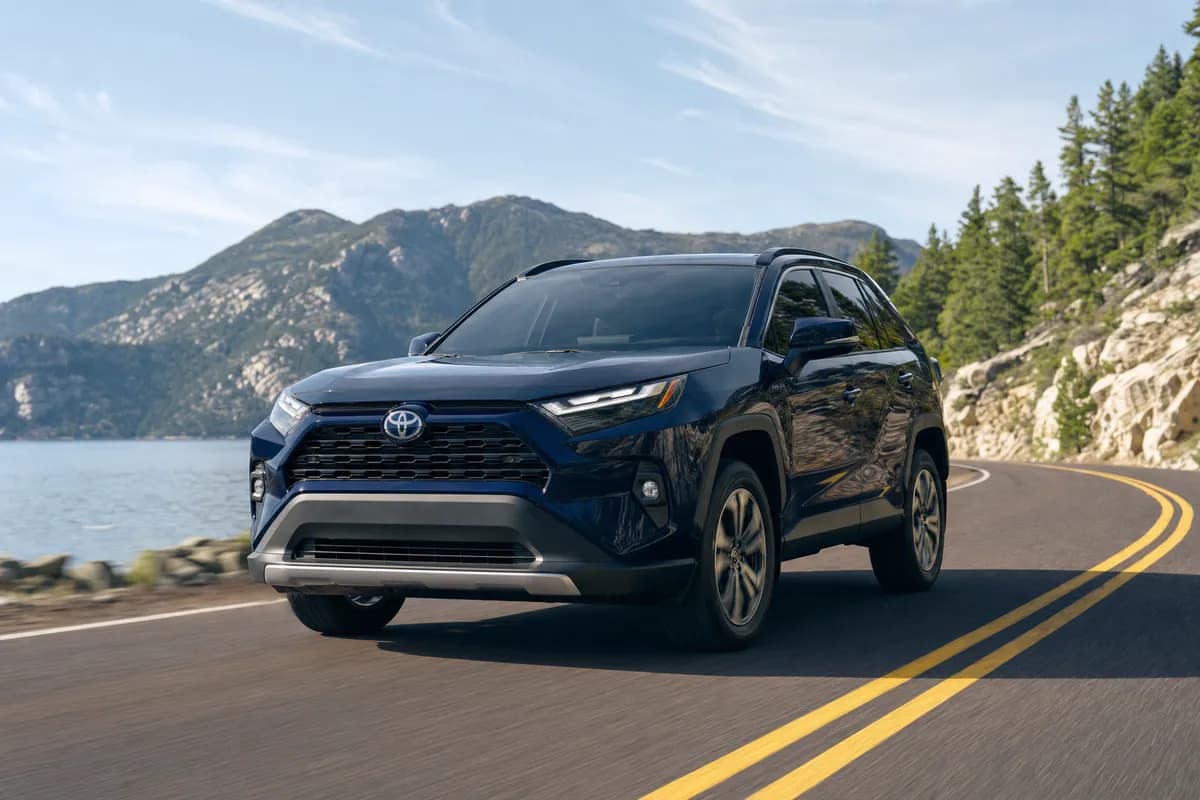
The Toyota RAV4 is one of the most important used vehicles in America, which is why its 2023 recall deserves close attention. Toyota recalled about 1.85 million 2013-2018 RAV4 SUVs in the U.S. because certain 12-volt battery installations could create a fire risk.
The issue did not involve the hybrid battery pack. It involved the conventional 12-volt battery under the hood. Toyota said that if a replacement battery with smaller top dimensions was installed and the hold-down clamp was not properly secured, the battery could move during forceful turns. That movement could allow the positive terminal to contact the hold-down clamp, causing a short circuit and increasing the risk of a fire.
This is exactly the kind of recall that can be overlooked. Many owners do not think of a 12-volt battery as a safety-critical component, and many used RAV4s have had batteries replaced outside the dealer network. Independent shops, quick-lube centers and previous owners may have installed different battery sizes over the years.
Toyota’s fix involved replacing or modifying battery-related hardware, including the hold-down clamp, battery tray and positive terminal cover as needed. The recall covered a previous-generation RAV4, but that does not make it less relevant. A 2013-2018 RAV4 is still a mainstream family vehicle, commuter car and student car in 2023 and beyond.
What owners should do: inspect the battery for secure fitment, but do not rely on a visual check alone. Confirm the VIN and have the recall remedy completed by a Toyota dealer. Owners who recently bought a used RAV4 should be especially proactive because recall notices may have gone to the prior owner.
4. Honda CR-V: Fuel pump and seat-belt concerns
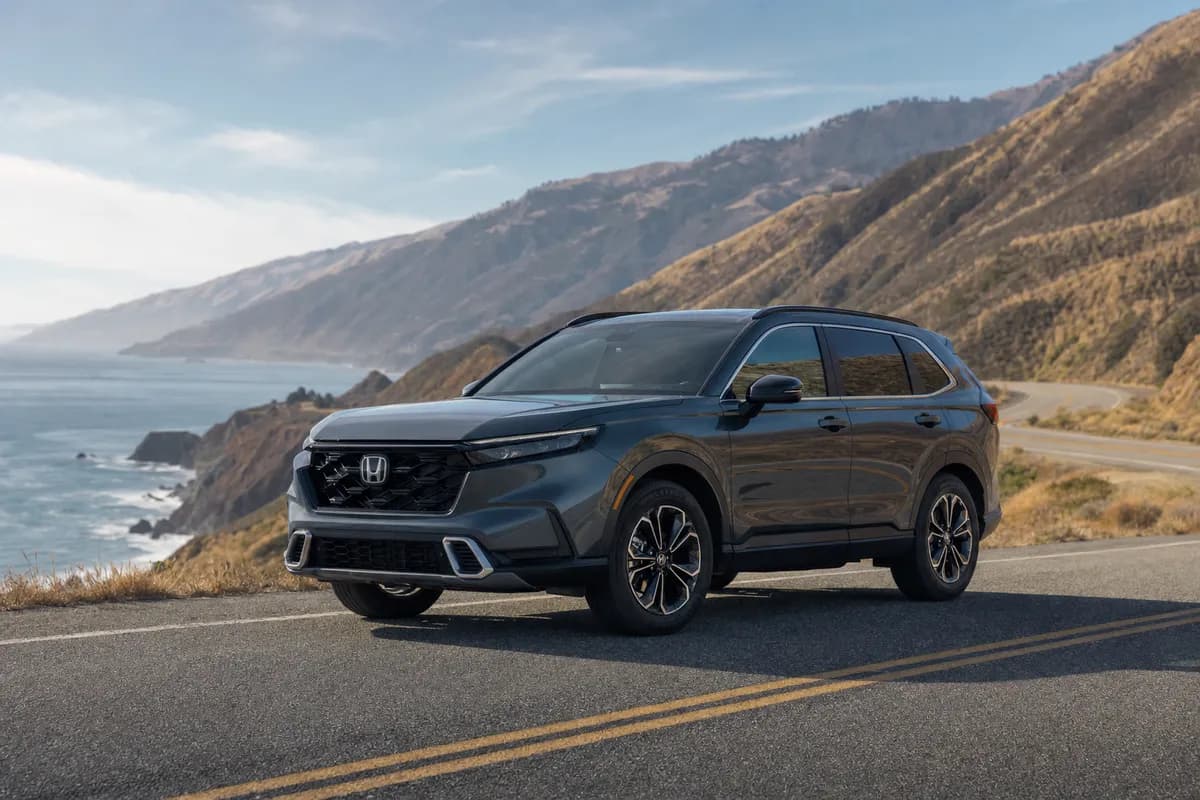
The Honda CR-V appears here because it was linked to two important 2023 recall areas: fuel pump failure risk and seat-belt hardware. The larger campaign was Honda’s late-2023 recall of roughly 2.5 million Honda and Acura vehicles equipped with fuel pumps that could fail internally. Certain CR-V model years were included, along with models such as the Accord, Civic, Pilot, Odyssey and several Acura vehicles.
The defect involved the fuel pump impeller, which could deform and cause the pump to stop working. If the pump fails, the engine may stall or fail to start. A stall in traffic increases crash risk, particularly on highways, at intersections or in poor weather.
The CR-V was also included in a separate 2023 Honda recall involving front seat-belt buckle components on hundreds of thousands of vehicles. The concern was that the seat belt might not latch properly, reducing occupant protection in a crash. That recall also affected several other Honda and Acura models, but the CR-V’s popularity makes it especially important for owners to check.
Honda’s reputation for durability can work against recall awareness. Many CR-V owners keep their vehicles for a decade or more and may assume that a reliable vehicle does not need urgent safety work. But recalls are not wear-and-tear repairs. A fuel pump defect or seat-belt latch problem can affect a vehicle that otherwise feels perfectly healthy.
What owners should do: verify whether the CR-V is covered by either campaign. If included in the fuel pump recall, ask the dealer about parts availability and timing. If included in the seat-belt recall, do not delay; restraint-system defects are among the most important safety repairs a vehicle can have.
5. Nissan Rogue: Folding key could shut the vehicle off
The Nissan Rogue was the subject of a particularly unusual 2023 recall involving the ignition key. Nissan recalled about 712,000 2014-2020 Rogue and 2017-2022 Rogue Sport vehicles because the folding “jackknife” key could collapse while inserted in the ignition.
If the key folds while the vehicle is being driven, it can rotate out of position and shut off the engine. That means a driver could suddenly lose motive power. Depending on the circumstances, the issue could also affect safety-system performance in a crash because the ignition may no longer be in the correct position.
This recall stands out because the defect is low-tech but high-consequence. It is not an advanced driver-assistance system, a battery pack or a complex emissions component. It is a physical key. But a key that can turn the vehicle off at speed is a serious safety issue.
Nissan’s interim guidance told owners not to attach accessories to the key and to avoid using it in a way that would increase the chance of folding. The remedy involved modifications to the key so it could not collapse unexpectedly while in use.
The Rogue is also one of the most common compact SUVs on the used market. Many affected vehicles are now outside the original owner cycle, meaning recall notices may not reach the person actually driving the vehicle. That makes VIN checks especially important for anyone buying or selling a used Rogue.
What owners should do: check the VIN, examine whether the vehicle uses the affected folding key and arrange the recall fix. Until repaired, keep the key free of heavy keychains and accessories, and follow Nissan’s recall instructions.
How these recalls compare
The five models above show how different recall risks can be. The Tesla Model 3 recall was mainly a software and driver-monitoring issue. The Toyota RAV4 recall involved battery installation hardware. The Ford F-150 recall involved electrical wiring that could trigger a mechanical braking event. The Honda CR-V campaigns involved core safety systems: fuel delivery and seat-belt latching. The Nissan Rogue recall came down to a key design that could shut the vehicle off.
They also show why recall size alone does not tell the full story. Tesla’s Autopilot recall affected more than 2 million vehicles, but many owners could receive the fix wirelessly. Toyota’s RAV4 recall affected older vehicles, but it required physical inspection and parts. Ford’s F-150 campaign was smaller than Tesla’s by count, but the potential event was abrupt and could occur while driving a heavy pickup.
Another important comparison is ownership pattern. Newer F-150 and Tesla Model 3 owners are more likely to be connected to manufacturer apps or dealer service systems. Older RAV4, Rogue and CR-V owners may rely on independent repair shops and may never see a mailed recall notice if the registration information is outdated.
What owners should do now
- Check by VIN, not by memory. Use the 17-character VIN on the dashboard, registration or insurance card to confirm open recalls.
- Do not assume a previous owner handled it. Used vehicles often change hands with open recalls still active.
- Ask for proof of completion. A dealer can confirm whether the recall repair has been performed.
- Take software recalls seriously. Over-the-air updates still address safety defects and should be installed promptly.
- Watch for interim instructions. Automakers sometimes issue temporary guidance before final parts are available.
Verdict: these are not recalls to ignore
The biggest lesson from 2023 is that recalls are no longer limited to one type of vehicle or one type of defect. A best-selling pickup, a benchmark electric sedan, a family SUV, a compact crossover and a used-market favorite all made the list for different reasons.
For owners, the action item is straightforward: check the VIN and complete the repair. For used-car shoppers, recall status should be part of the pre-purchase process, just like accident history and maintenance records. None of these recalls automatically makes a vehicle unsafe to buy or own, but leaving the remedy undone is an avoidable risk.
The Ford F-150, Tesla Model 3, Toyota RAV4, Honda CR-V and Nissan Rogue remain major players in the U.S. market. That is exactly why their 2023 recalls matter. When a defect touches vehicles this common, the safety impact depends less on the announcement and more on whether owners actually get the fix completed.
Affiliate disclosure: This article contains affiliate links. RevvedUpCars may earn a small commission on qualifying purchases at no extra cost to you.