Nissan Leaf owners are being told to take a specific charging precaution after a major recall tied to the risk of battery overheating during DC fast charging.
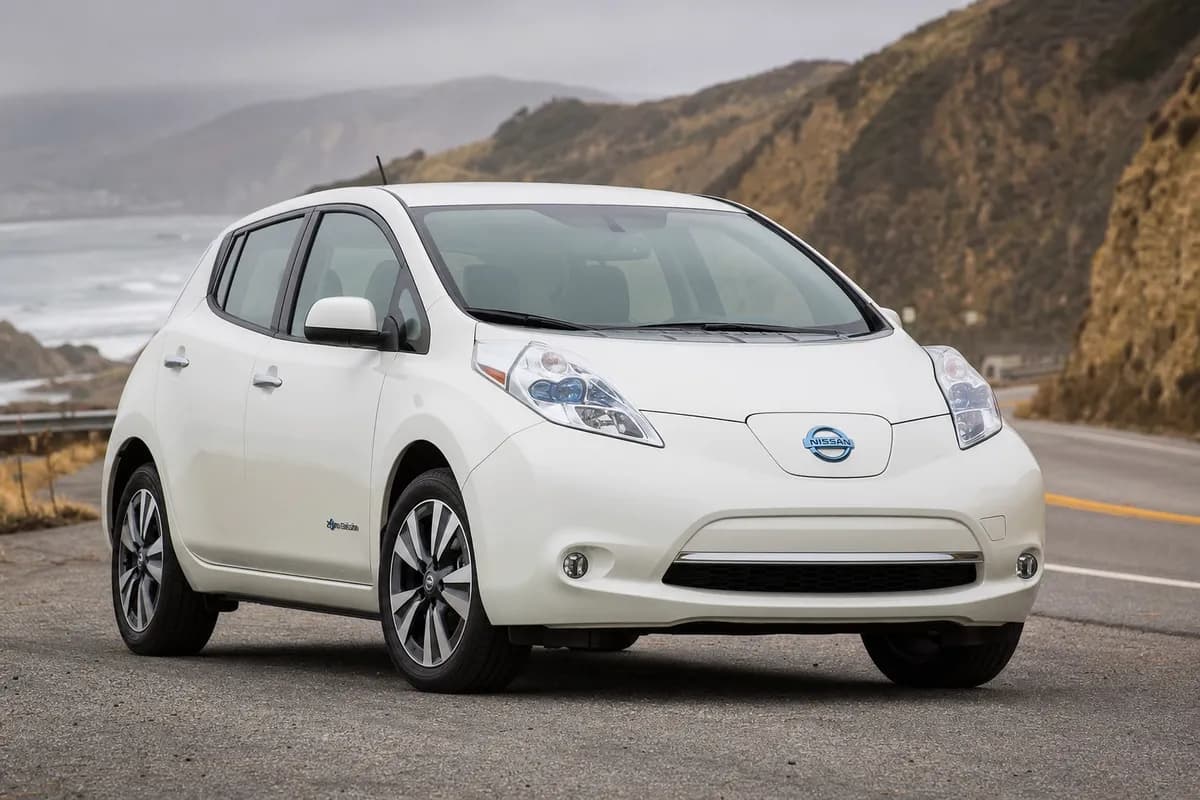
Nissan Leaf owners are being told to take a specific charging precaution after a major recall tied to the risk of battery overheating during DC fast charging. The recall affects certain 2019 and 2020 Nissan Leaf EVs in the U.S., a group of roughly 24,000 vehicles, and it centers on the kind of public “Level 3” quick charging that many owners use on road trips or when they cannot charge at home. For now, the key message is simple: check your VIN, avoid DC fast charging if your car is affected, and schedule the dealer software update as soon as possible.
Which Nissan Leaf Models Are Affected?
The recall covers approximately 23,887 Nissan Leaf electric vehicles from the 2019 and 2020 model years, according to recall filings with the National Highway Traffic Safety Administration. These are second-generation Leaf models, sold in standard and longer-range forms.
The affected model years include versions such as:
- 2019 Nissan Leaf with the 40-kWh battery pack
- 2019 Nissan Leaf Plus models with the 62-kWh battery pack
- 2020 Nissan Leaf with the 40-kWh battery pack
- 2020 Nissan Leaf Plus models, including S Plus, SV Plus, and SL Plus trims
Not every Leaf on the road is part of this campaign. Earlier first-generation cars, later model years, and individual vehicles outside the affected production population may not be included. Owners should not rely only on the model year or trim badge. The correct way to confirm recall status is to check the 17-character vehicle identification number, or VIN, through Nissan’s recall lookup tool or at nhtsa.gov/recalls.
The timing matters because the 2019 and 2020 Leaf sat at an important point in the model’s evolution. Nissan had already introduced the second-generation Leaf for 2018, with sharper styling, improved driver-assistance features, and a 40-kWh battery rated at up to 150 miles of EPA range. For 2019, Nissan added the Leaf Plus with a larger 62-kWh battery and up to 226 miles of EPA-rated range in the most efficient S Plus configuration. That made the Leaf more competitive with newer EVs such as the Chevrolet Bolt EV, Hyundai Kona Electric, and Tesla Model 3 Standard Range.
But the Leaf also retained a key engineering difference: its battery pack is not liquid-cooled. Unlike many modern EVs that actively manage battery temperature with a liquid thermal system, the Leaf has long relied on a simpler passive thermal-management strategy. That does not mean every Leaf has a battery problem, but it does make charging behavior and battery temperature especially important context for this recall.
What Is the Safety Issue?
Nissan says the issue involves the lithium-ion battery potentially overheating during Level 3 quick charging. In recall language, overheating can increase the risk of a fire. The company’s instruction to affected owners is to avoid Level 3 fast charging until the recall remedy has been completed.
For owners, the most important distinction is the type of charging involved. The recall is not a blanket instruction to stop driving the car, and it is not the same as saying the vehicle cannot be charged at all. The concern is tied to DC fast charging, the high-power public charging method commonly used for quicker top-ups away from home.
On the Nissan Leaf, DC fast charging uses the CHAdeMO connector. That is the larger fast-charge plug found at compatible public charging stations. It is different from the J1772 connector used for Level 1 and Level 2 AC charging.
Here is the practical breakdown:
- Level 1 charging: A 120-volt household outlet, typically adding only a few miles of range per hour. This is not the fast charging targeted by the recall.
- Level 2 charging: A 240-volt home or public charger using the J1772 connector, usually adding meaningful range overnight or during a long stop. This is also not the Level 3 quick charging addressed by the recall.
- Level 3 DC fast charging: Public high-power charging using the CHAdeMO connector on the Leaf. This is the charging type owners of affected vehicles should avoid until the recall repair is done.
That distinction is especially important because many owners casually refer to any charger faster than a wall outlet as a “fast charger.” In recall terms, Level 2 is not the same as DC fast charging. A 240-volt home charger may be much quicker than a household outlet, but it does not deliver power to the battery in the same way as a Level 3 DC station.
Owner takeaway: If your 2019 or 2020 Leaf is included in the recall, do not use CHAdeMO DC fast charging until the dealer repair is completed. Continue to follow Nissan’s official instructions for your specific VIN.
What Owners Should Do Now
Owners should take three steps immediately: verify whether the vehicle is affected, adjust charging habits if it is, and arrange the dealer fix.
- Check the VIN. Use Nissan’s recall lookup or the NHTSA recall tool at nhtsa.gov/recalls. This is especially important for used Leaf buyers, because recall notices may have gone to a previous owner.
- Avoid Level 3 quick charging if the vehicle is included. Do not plug into a CHAdeMO DC fast charger until the recall has been completed. Use Level 1 or Level 2 charging instead, unless Nissan provides different instructions for your specific vehicle.
- Schedule service with a Nissan dealer. Recall repairs are performed at no charge. The remedy is a software update intended to address the battery-management issue associated with quick charging.
- Watch for warning signs. If the vehicle displays battery warnings, abnormal charging behavior, smoke, unusual smells, or signs of overheating, stop charging when safe to do so and contact roadside assistance or emergency services as appropriate.
- Keep documentation. Save dealer paperwork confirming completion of the recall. This matters for future resale and for buyers who want proof that the campaign has been handled.
Because this is a safety recall, the repair is free regardless of warranty status. That applies whether the car is still with its original owner or has changed hands several times. Owners should also ask the dealer to check for any other open Leaf campaigns at the same appointment. The Leaf has had other recalls in recent years, including software-related campaigns affecting certain 2018-2023 vehicles, so a VIN check is the cleanest way to see the complete picture.
Owners who rely heavily on public charging will feel this recall more than those who charge at home. The Leaf’s CHAdeMO port was once a strength because CHAdeMO was an early DC fast-charging standard with broad deployment. Today, the U.S. market has shifted heavily toward CCS and now the Tesla-style NACS connector. CHAdeMO stations are still out there, but the network is aging, and the Leaf is one of the few remaining EVs in the U.S. that still uses that standard.
For a commuter who charges overnight in a garage on Level 2, the practical disruption may be modest. For an owner using a 2019 Leaf Plus for longer trips, the instruction to avoid DC fast charging is more significant. A Leaf Plus can be a useful regional EV because of its larger 62-kWh pack, but without CHAdeMO fast charging, long-distance flexibility drops sharply.
Why This Recall Matters Beyond One Model
The Leaf is not just another EV nameplate. Launched for the 2011 model year in the U.S., it was one of the first modern mass-market electric cars and helped prove there was real demand for battery-electric transportation long before the current wave of electric SUVs and pickups. Globally, Nissan has sold hundreds of thousands of Leafs, and the car remains one of the most recognizable EVs on the used market.
That used-market role is why this recall matters. A 2019 or 2020 Leaf can be an appealing secondhand EV: relatively affordable, simple to drive, inexpensive to maintain, and well suited to daily commuting. Many examples now cost far less than new EVs, especially as the market has been flooded with newer long-range models and as federal used-EV incentives have reshaped pricing.
But used EV shoppers need to treat battery condition and recall status as core purchase checks, not afterthoughts. A Leaf’s battery health, charging history, climate exposure, and open recall status can all affect its value and usefulness. A car with an unresolved fast-charging recall is not necessarily a car to avoid, but buyers should factor in the required dealer visit and any temporary charging limitations.
The recall also highlights the growing importance of battery thermal management. Many newer EVs, including the Tesla Model 3, Hyundai Ioniq 5, Kia EV6, Ford Mustang Mach-E, and Chevrolet Equinox EV, use active liquid cooling to manage pack temperature during fast charging, hard driving, and extreme weather. That technology adds complexity and cost, but it helps preserve charging performance and control battery temperature under demanding conditions.
Nissan’s Leaf took a different path. Its simpler battery system helped make the car relatively affordable and mechanically straightforward. For many owners, especially those in mild climates who charge mostly at home, the Leaf has delivered years of low-cost electric driving. But the lack of active liquid cooling has also been a recurring point of comparison against newer EVs, particularly for owners who fast charge frequently or drive in hot climates.
This recall should not be read as proof that EVs are broadly unsafe or that Leaf ownership is inherently risky. Gasoline vehicles are recalled for fire risks, fuel leaks, electrical faults, and software defects every year. EVs bring different failure modes, and the industry is still refining how battery systems are monitored, cooled, and protected over long service lives.
The appropriate response is not panic; it is compliance. Safety recalls exist because automakers and regulators have identified a risk that needs correction. In this case, the correction is targeted: stop using the affected charging method until the software update is complete.
Verdict: A Serious Recall, but a Manageable One
This is a significant recall because it involves battery overheating and potential fire risk, two words no EV owner wants to see in the same notice. It is also significant because the Leaf is a high-volume, high-visibility electric car with a large used-owner base. Nissan and its dealers need to make the repair process clear, quick, and accessible, especially for secondhand owners who may not receive mailed notices promptly.
For owners, the path is straightforward. Check the VIN. If the vehicle is included, avoid CHAdeMO DC fast charging until the recall repair is complete. Use Level 1 or Level 2 charging where possible. Book the dealer software update and keep the service record.
The broader lesson is equally clear: EV recalls are becoming more specific as the fleet ages. Battery software, charging behavior, thermal management, and connector standards now matter as much to ownership as oil changes and timing belts once did for combustion cars. The Leaf remains an important EV, and for many drivers it is still a practical, efficient commuter. But affected 2019 and 2020 owners should treat this recall seriously and get the fix done before returning to DC fast charging.
Affiliate disclosure: This article contains affiliate links. RevvedUpCars may earn a small commission on qualifying purchases at no extra cost to you.