The new U.S. tariffs on European-built autos are set to make imported cars more expensive, but the impact will not be uniform. A German-built luxury sedan, a British-built Mini, an Italian performance car and a U.S.-built BMW SUV will all be treated differently once customs…
The new U.S. tariffs on European-built autos are set to make imported cars more expensive, but the impact will not be uniform. A German-built luxury sedan, a British-built Mini, an Italian performance car and a U.S.-built BMW SUV will all be treated differently once customs value, factory location, parts sourcing and dealer inventory are factored in. For shoppers, the headline is simple: prices are likely to rise first on European-made vehicles with no U.S. assembly base, while locally built models from European brands should be better insulated, though not fully protected.
How the New Tariffs Change the Price Equation
The core issue is the jump in import cost. Before the latest tariff move, most passenger vehicles imported into the United States faced a 2.5% duty, while imported light trucks were already subject to a much steeper 25% tariff. A new tariff on European autos raises the cost of bringing many EU- and U.K.-built vehicles into the U.S. market, and that cost will land somewhere between the automaker, the dealer and the customer.
Tariffs are applied to the customs value of the vehicle, not directly to the window-sticker price. That distinction matters. A car with a $60,000 MSRP may have a customs value closer to $45,000 to $50,000 depending on freight, distribution costs, dealer margin and options. A 25% tariff on a $48,000 customs value would add $12,000 before any further pricing decisions are made.
That does not automatically mean every affected vehicle gets a $12,000 MSRP increase. Automakers can absorb part of the cost, reduce incentives, raise lease payments, shift allocation, or increase destination and option pricing. Dealers can also adjust discounts or markups depending on supply. But over time, tariffs usually show up in transaction prices because the added cost is recurring and tied to every new imported unit.
For a rough guide, the possible impact looks like this:
- $35,000 European-built hatchback or small crossover: a 25% tariff on an estimated $27,000 customs value could add about $6,750 in import cost.
- $55,000 premium sedan or EV: a tariff on an estimated $42,000 customs value could add about $10,500.
- $90,000 luxury SUV or performance car: a tariff on an estimated $70,000 customs value could add about $17,500.
- $130,000 sports car: a tariff on an estimated $100,000 customs value could add about $25,000.
The practical effect is that tariffs hit lower-margin mainstream imports harder than high-margin luxury models. Porsche, Mercedes-Benz, BMW and Audi have more room to absorb costs on expensive vehicles than a brand trying to sell a compact car in the low-$30,000 range. But even premium brands cannot absorb a five-figure cost increase indefinitely without cutting profit or raising prices.
Which European Models Are Most Exposed?
The biggest exposure is on vehicles that are assembled in Europe and shipped to U.S. dealers. Brand nationality is less important than build location. A BMW built in South Carolina is not treated the same as a BMW built in Germany. An Audi assembled in Mexico is not the same tariff case as an Audi assembled in Germany or Slovakia.
Models most likely to feel pressure include European-built sedans, wagons, hatchbacks, EVs and performance cars. Examples include the BMW i4 and iX from Germany, the Mercedes-Benz S-Class from Germany, the Porsche 911 and Taycan from Germany, the Mini Cooper from the U.K., and many Volvo, Jaguar, Land Rover, Maserati and Alfa Romeo models depending on factory origin and trim.
Porsche is especially exposed because it has no U.S. assembly plant. The 911, 718, Panamera and Taycan are German-built, while the Cayenne is primarily assembled in Slovakia. Porsche’s U.S. buyers are less price-sensitive than mainstream shoppers, but tariffs on vehicles with MSRPs ranging from roughly $70,000 to well above $150,000 could still change lease math, reduce dealer discounts and push some buyers toward used inventory.
Audi also faces a complicated situation. The Q5 is built in Mexico for the U.S. market, but many Audi cars and larger SUVs are imported from Europe. The A6, A7 and A8 have traditionally been European-built, while the Q7 and Q8 come from Slovakia. A tariff on European-made vehicles would put those models at a disadvantage against U.S.-built luxury SUVs such as the BMW X5, Mercedes-Benz GLE and Genesis GV80.
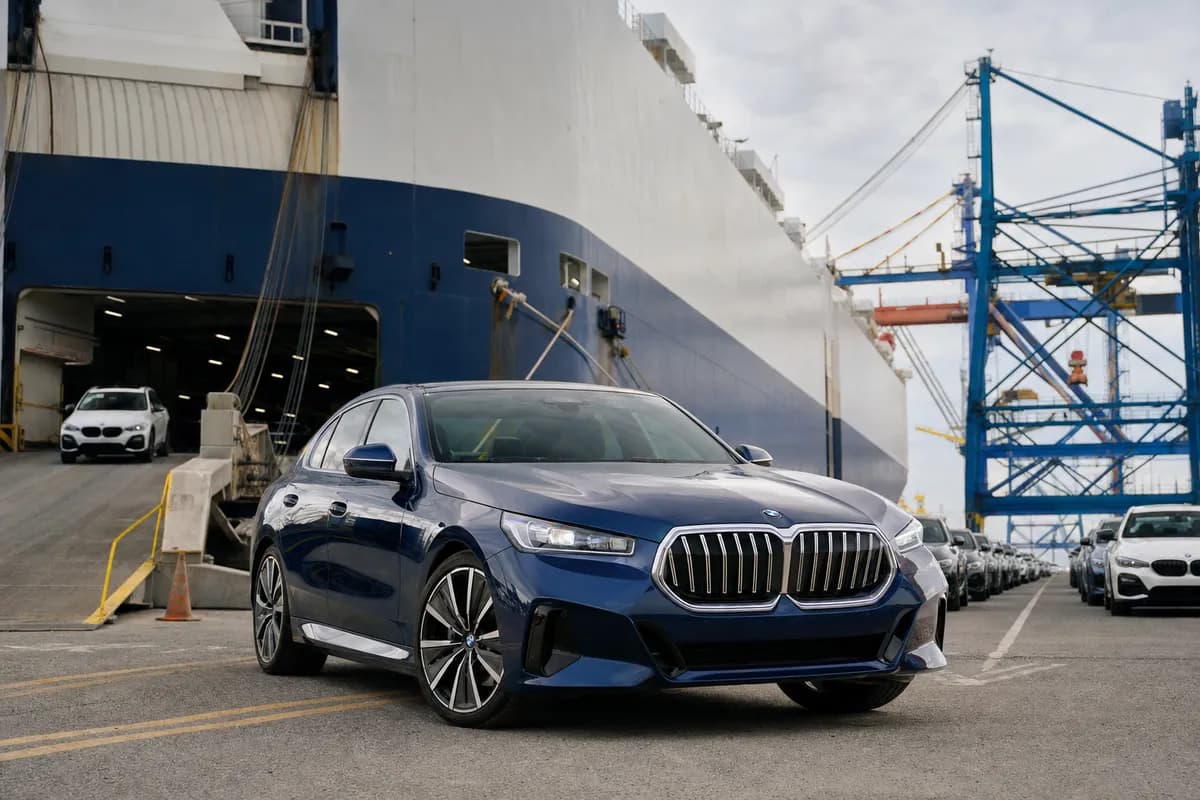
BMW is in a stronger position than many rivals because its Spartanburg, South Carolina, plant builds the X3, X4, X5, X6, X7 and XM. That plant is one of BMW’s most important global production sites and has produced more than 400,000 vehicles in strong years. For U.S. buyers, that means BMW’s core SUV lineup is better protected than imported cars such as the i4, i5, i7, 4 Series, 5 Series and 7 Series, depending on final assembly source.
Mercedes-Benz has a similar partial shield. Its Alabama plant builds high-volume SUVs including the GLE and GLS, along with electric SUV models in recent production plans. But imported models such as the C-Class, E-Class, S-Class, CLA, CLE and AMG GT remain vulnerable if sourced from Europe. The result is likely to be a sharper price gap between U.S.-built Mercedes SUVs and imported Mercedes cars.
Volkswagen is less exposed on some key models because the Atlas and Atlas Cross Sport are built in Chattanooga, Tennessee, and the ID.4 has also been assembled there for the U.S. market. But European-built enthusiast models such as the Golf GTI and Golf R are more vulnerable. Those cars already compete in narrow segments where a few thousand dollars can change the value equation against the Honda Civic Type R, Acura Integra Type S, Toyota GR Corolla or Subaru WRX.
EVs Could See a Double Hit
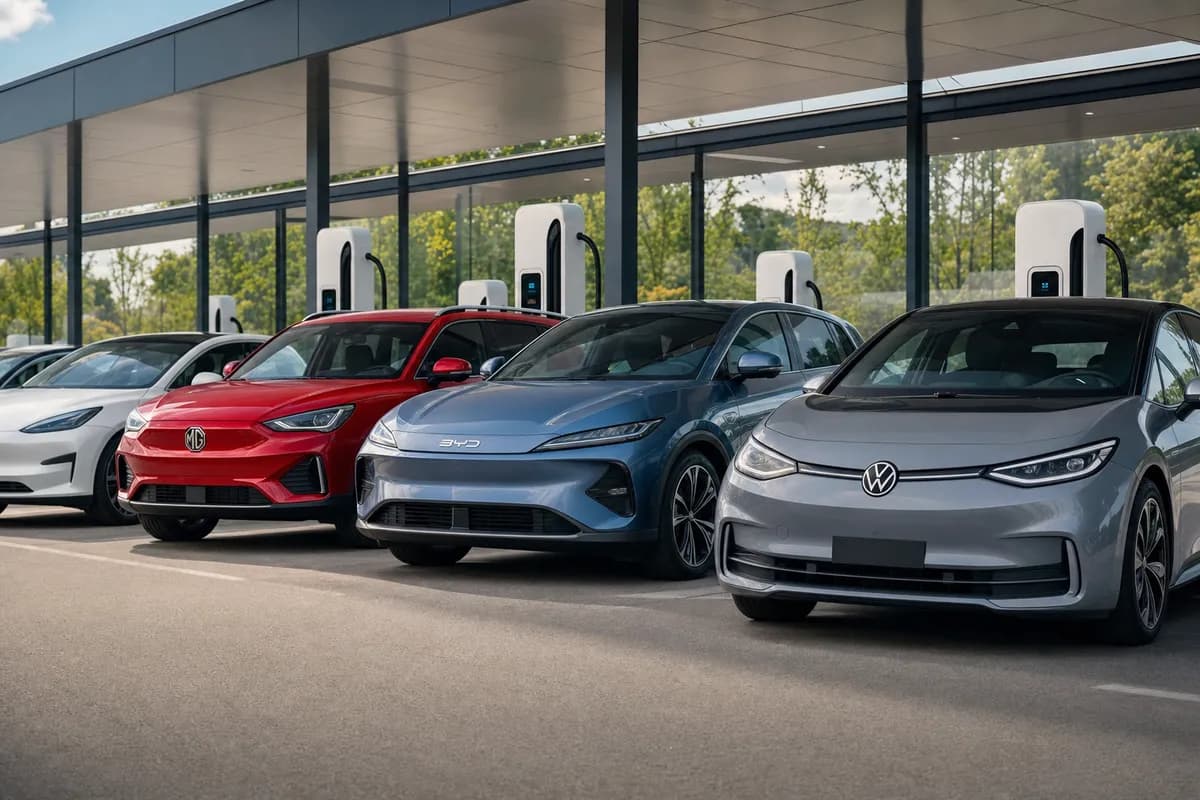
Electric vehicles are particularly sensitive to tariff changes because many European-built EVs already lack access to the full U.S. consumer tax credit under the Inflation Reduction Act. The $7,500 purchase credit is tied to North American final assembly, battery component rules, critical mineral sourcing and price caps. Many imported European EVs do not qualify for the purchase credit, although leased EVs may receive support through the commercial clean vehicle credit if the leasing company passes it along.
That means a tariff can widen an existing affordability gap. A BMW i4, Porsche Taycan, Mercedes-Benz EQE sedan or Volvo EX30-style import strategy is already competing against U.S.-built or North American-built EVs with stronger incentive eligibility. Add a tariff, and the monthly lease or finance payment becomes harder to defend unless the manufacturer uses incentives to offset the added cost.
Consider the difference between a European-built EV priced around $60,000 and a U.S.-built rival priced around the same level. If the imported vehicle effectively carries $8,000 to $12,000 in additional tariff cost while the domestic or North American-built model can access stronger federal incentives, the real-world payment gap can become substantial. On a 36-month lease, even a $6,000 net difference can add roughly $165 per month before interest and residual effects.
Luxury EV buyers may still choose the European model for design, brand, ride quality or performance. But the tariff gives U.S.-built EVs an advantage in the shopping comparison. That matters for models such as the Tesla Model Y, Cadillac Lyriq, BMW’s future South Carolina-built EVs, Mercedes-Benz electric SUVs assembled in Alabama, and Hyundai Motor Group EVs as more Georgia production comes online.
The tariff may also influence product planning. Automakers were already localizing EV and battery production to qualify for incentives and reduce logistics risk. Higher import costs strengthen that case. European brands that want to compete in the U.S. EV market will have more reason to build vehicles, battery packs and key components in North America rather than shipping finished vehicles across the Atlantic.
Why U.S.-Built European Brands Are Not Fully Safe
U.S. assembly reduces the direct tariff hit on finished vehicles, but it does not eliminate cost pressure. Modern vehicles use global supply chains. A BMW X5 assembled in South Carolina may use components from Europe. A Mercedes-Benz GLE built in Alabama may rely on imported electronics, powertrain parts, modules or specialty components. A Volkswagen Atlas built in Tennessee still sits inside a global purchasing network.
If tariffs also apply to European auto parts, the cost impact spreads beyond fully imported vehicles. Even if the finished vehicle avoids the full tariff, parts tariffs can add hundreds or thousands of dollars per unit depending on the content affected. Automakers can respond by sourcing more parts locally, but that takes time. Contracts, tooling, validation, safety testing and emissions certification are not changed overnight.
This is why price increases may not be limited to imported models. A U.S.-built European SUV could see smaller increases through option packages, destination charges or reduced incentives. The customer may not see a line item labeled “tariff,” but the effect can show up in a higher transaction price or a less generous lease program.
There is also an allocation issue. If imported sedans and EVs become more expensive, automakers may prioritize higher-margin trims or reduce U.S. shipments of lower-volume models. That could mean fewer base cars, longer wait times for specific colors and options, and more pressure on dealer inventories. In past tariff and supply-chain disruptions, automakers often protected profitability by simplifying lineups and pushing richer trims.
For shoppers, the most important step is to check the vehicle identification number and the window sticker. The first character of the VIN identifies the country of origin: “1,” “4” and “5” generally indicate the United States, “2” Canada, “3” Mexico, “W” Germany, “S” the U.K., “Z” Italy and “Y” Sweden or Finland, depending on the manufacturer. The Monroney label also lists final assembly location and major parts content.
What Buyers Should Do Now
For consumers already shopping, timing matters. Vehicles already in dealer inventory may have been imported before the tariff took effect or before automakers adjusted pricing. Those cars could represent the best near-term deals, especially if dealers still have older inventory purchased under the previous cost structure. But once replacement stock arrives at higher landed cost, discounts may shrink.
Buyers should focus on five practical steps:
- Confirm where the vehicle is built. Do not assume based on the badge. A European brand may build in the U.S., Mexico or Europe depending on the model.
- Compare transaction price, not MSRP alone. Tariffs may appear through reduced incentives rather than a visible sticker-price increase.
- Ask about incoming inventory. A car on the lot may be priced differently from an identical unit arriving next month.
- Check lease programs carefully. EV lease credits, residual values and money factors can offset or amplify tariff effects.
- Cross-shop U.S.-built alternatives. A locally assembled luxury SUV may now be a stronger value than an imported sedan or EV from the same brand.
For shoppers considering a European performance or luxury car, the used market may become more attractive. A lightly used Porsche 911, BMW M car, Mercedes-AMG model or Audi S/RS model already in the country is not directly subject to a new-vehicle import tariff. If new-car prices rise, late-model used values may also firm up, but the used option can still avoid the immediate tariff pass-through.
Fleet buyers and small businesses should also pay close attention. A tariff-driven price increase on imported vehicles can affect depreciation, insurance costs and lease accounting. Luxury fleets, executive vehicles and specialty commercial users that rely on European models may see total cost of ownership increase even if monthly payments are partially subsidized by manufacturer programs.
Verdict: Prices Rise, but the Impact Will Be Uneven
The new U.S. tariffs on European autos are not a simple across-the-board price hike. The biggest increases are likely on European-built vehicles with limited pricing flexibility: imported EVs without full tax-credit eligibility, niche performance cars, low-volume luxury sedans and small premium models. Porsche, Mini, imported BMW and Mercedes cars, European-built Audis, and selected Volvo, Jaguar Land Rover, Maserati and Alfa Romeo models are among the vehicles most exposed.
U.S.-built European-brand SUVs are in a better position. BMW’s South Carolina-built X models, Mercedes-Benz SUVs from Alabama and Volkswagen’s Tennessee-built models should be more insulated from the direct vehicle tariff. Still, parts costs and reduced incentives could push prices higher even on locally assembled vehicles.
The bottom line for buyers is clear: check the build location, move quickly on existing inventory if the deal is strong, and compare lease and finance offers carefully. Tariffs will not make every European car dramatically more expensive overnight, but they will raise the cost floor for imported models. In a market where affordability is already stretched, that is enough to shift shopping lists, resale values and automaker production plans.
Affiliate disclosure: This article contains affiliate links. RevvedUpCars may earn a small commission on qualifying purchases at no extra cost to you.