Mexico’s EV share surged to 12.5% of new-car sales in June 2026, reshaping 2026–2027 buying plans and charging expansion across North America.
Mexico’s EV market is moving from niche to meaningful at striking speed. In June 2026, plug-in and hybrid demand pushed electrified vehicles to 12.5% of new-car sales, turning Mexico into one of the most closely watched growth stories in North America.
That matters well beyond one month of sales. Mexico now sits at the intersection of affordable Chinese EV expansion, legacy-brand pricing pressure, fast-changing charging needs, and a 2027 buyer base that is starting to expect electrified options at mainstream prices.
June 2026 marks a real inflection point for Mexico’s EV market
The headline number is simple: Mexico electrified vehicle market share reached 12.5% of new-car sales in June 2026. That includes battery-electric vehicles, plug-in hybrids, and conventional hybrids, reflecting a market that is broadening rather than relying on one technology alone.
For context, Mexico has long trailed the U.S. and Canada in EV adoption, largely because of price sensitivity, uneven charging coverage, and a market structure dominated by lower-cost passenger cars and work-focused vehicles. June 2026 suggests those barriers are weakening, especially as more sub-premium and mid-priced electrified products arrive.
The biggest shift is that growth is no longer confined to early adopters in Mexico City, Monterrey, and Guadalajara. More buyers are entering from the compact-car and value-oriented crossover segments, where monthly payments matter more than brand prestige or headline acceleration figures.
- Battery EVs are gaining attention as prices fall and model variety expands.
- Plug-in hybrids remain a practical bridge for buyers worried about charging access.
- Conventional hybrids continue to do heavy lifting in volume, especially with fuel savings as the core selling point.
That mix is why June 2026 is more significant than a pure BEV spike would have been. It points to a broader consumer transition, not just a short-term jump driven by one imported model or one metro area incentive.
BYD and JAC are reshaping the value equation as legacy brands face pressure
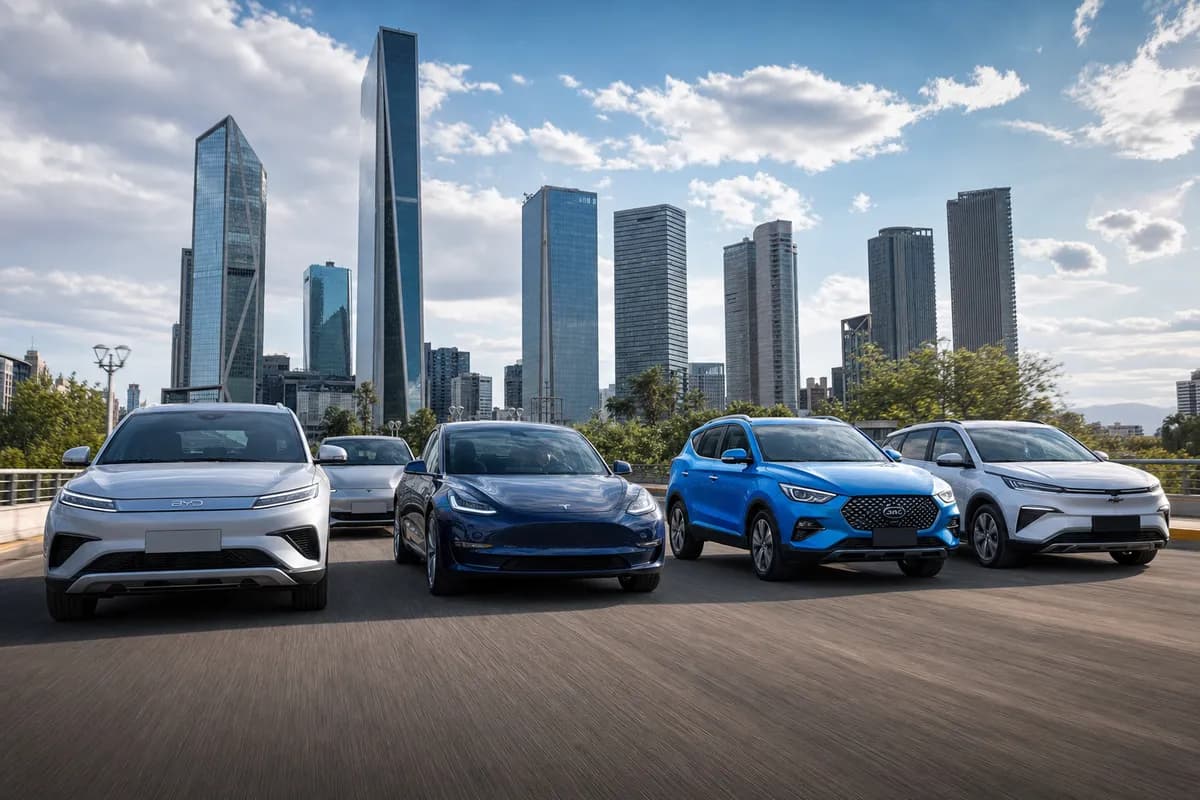
BYD Mexico 2026 is now one of the defining industry stories in the region. The brand has expanded quickly by doing what many rivals struggled to do: offering EVs and plug-in hybrids that look modern, come well-equipped, and land closer to mainstream budgets.
Models such as the BYD Dolphin Mini, Dolphin, Yuan Pro, and Song Plus have given Mexican buyers alternatives to higher-priced legacy-brand EVs. The formula is familiar from other emerging EV markets: competitive financing, aggressive dealer rollout, and product specs that are “good enough” in range and performance while undercutting better-known brands.
JAC has also played a critical role, especially because it already built brand recognition in Mexico around accessible pricing and local market focus. Its electric city cars and compact commercial offerings helped normalize EV ownership before many larger automakers treated Mexico as a serious plug-in market.
That creates pressure for Chevrolet, Nissan, and Tesla, but in different ways.
- Chevrolet has stronger mainstream brand reach, but it needs more price-accessible electrified offerings beyond halo EV messaging.
- Nissan has a deep installed base and hybrid potential, yet it must respond faster as Chinese rivals move into compact and crossover segments.
- Tesla still carries major brand pull, but its pricing sits above the center of the Mexican market.
For legacy automakers, the lesson is blunt. Brand equity alone will not hold back Chinese competition if affordability, features, and availability line up in the buyer’s favor.
Why affordability matters more in Mexico than in many U.S. EV narratives
In the U.S., EV discussion often revolves around software, charging speed, and tax-credit complexity. In Mexico, the first question is usually simpler: can the buyer afford the vehicle without stretching beyond reason?
That is why the market’s current growth path matters for the next 18 months. If automakers can deliver credible electrified vehicles in compact, subcompact, and entry crossover classes, North America EV growth may increasingly depend on Mexico, not just on U.S. coastal demand or Canadian incentive programs.
What BYD, JAC, Tesla, Chevrolet, and Nissan buyers should watch through 2027
For 2027 EV buyers Mexico, this market is about to get more competitive and more confusing at the same time. More choice is coming, but so is a wider gap between strong value and weak value.
BYD buyers should watch dealer service expansion, software support, and parts availability just as closely as sticker price. The products are compelling, but long-term ownership confidence will matter more as volumes rise beyond early adopters.
JAC buyers should pay attention to battery warranty terms, residual values, and whether the company keeps improving range and cabin refinement. JAC’s strength has been accessibility, but the market is now moving from “cheap EV” to “best-value EV.” That is a tougher standard.
Tesla buyers in Mexico still get strong brand recognition, Supercharger appeal, and straightforward EV-first packaging. But price remains the obstacle. Unless lower-cost Tesla offerings arrive in meaningful volume, the brand risks staying aspirational while the market’s volume center shifts elsewhere.
Chevrolet buyers should watch for how quickly GM broadens its electrified ladder in Mexico. The Equinox EV and Blazer EV matter for visibility, but lower-priced entries and practical hybrids would do more to capture mainstream demand.
Nissan buyers have a different calculation. The company’s history in Mexico is a major advantage, and it could be powerful if paired with the right hybrid and EV rollout. But if Nissan leaves too much open space below premium price points, Chinese brands will keep taking share where Nissan has traditionally been strongest.
- Best positioned on affordability: BYD, JAC
- Best positioned on charging ecosystem: Tesla
- Best positioned on dealer familiarity: Nissan, Chevrolet
- Biggest 2027 risk: legacy brands ceding entry-level EV buyers to Chinese rivals
Charging expansion is now the next gatekeeper for Mexico EV sales growth
Vehicle pricing helped get Mexico to this point. Charging buildout will determine whether growth accelerates or stalls. A 12.5% electrified share is manageable with uneven infrastructure; a much higher share will not be.
Mexico’s charging map is improving, but it remains concentrated in wealthier urban corridors, private homes, office parks, and retail destinations. That works for some owners of compact EVs and plug-in hybrids, but it leaves major gaps for apartment residents, intercity travelers, fleet users, and buyers outside core metropolitan areas.
The next phase of expansion needs to happen in three places at once:
- Urban public charging for residents without reliable home charging.
- Highway fast charging connecting major industrial and tourism corridors.
- Destination and workplace charging that reduces dependence on dedicated charging stops.
Tesla’s network still stands out for reliability and brand confidence, but broader market growth cannot depend on a single proprietary ecosystem. For Mexico to become a durable EV market rather than a promising one, open-access charging networks need better uptime, clearer payment systems, and wider geographic coverage.
This is also where policy and private investment start to matter more. The June 2026 sales milestone shows demand is real. Infrastructure providers, utilities, retailers, and automakers now have a clearer signal that Mexico is no longer too small to justify faster deployment.
Why Mexico may be North America’s most overlooked EV battleground
The strategic case for Mexico is stronger than many automakers treated it even two years ago. It is a large vehicle market, deeply linked to North American manufacturing, highly sensitive to affordability, and increasingly open to new brands if they offer better value.
That combination makes Mexico a proving ground for the next phase of EV competition. The winners here will not just be the companies with the best technology. They will be the ones that can package electrification into vehicles ordinary households can actually buy and live with.
There is also a regional knock-on effect. If Chinese brands establish scale, retail presence, and consumer trust in Mexico first, that can strengthen their wider North American ambitions even where regulatory barriers remain high. Mexico becomes not just a sales market, but a strategic foothold.
For legacy automakers, June 2026 should read as a warning shot. Buyers are showing they will move toward electrified vehicles when pricing, availability, and usability line up. If established brands fail to meet that moment, they may lose the market’s fastest-growing customers before 2027 really begins.
Verdict: Mexico’s June 2026 EV milestone is the start of a tougher competitive era
Mexico EV sales June 2026 delivered more than a strong monthly number. They confirmed that the country is becoming a serious battleground for affordable electrification, with BYD and JAC forcing the pace, Tesla defending its premium EV position, and Chevrolet and Nissan facing rising pressure to respond faster.
The key question now is not whether Mexico will grow as an electrified market. It is who will own that growth. If charging expansion keeps pace and value-priced models continue to arrive, Mexico could become the most important overlooked engine of North America EV growth through 2027.
For buyers, that is good news. More competition should mean lower prices, better equipment, and more real choice. For automakers, it means the easy phase is over.
Affiliate disclosure: This article contains affiliate links. RevvedUpCars may earn a small commission on qualifying purchases at no extra cost to you.