Explore why Mazda employees refuse to abandon the rotary engine and what it means for the RX sports car return. Read the full story and get involved now.
In this article
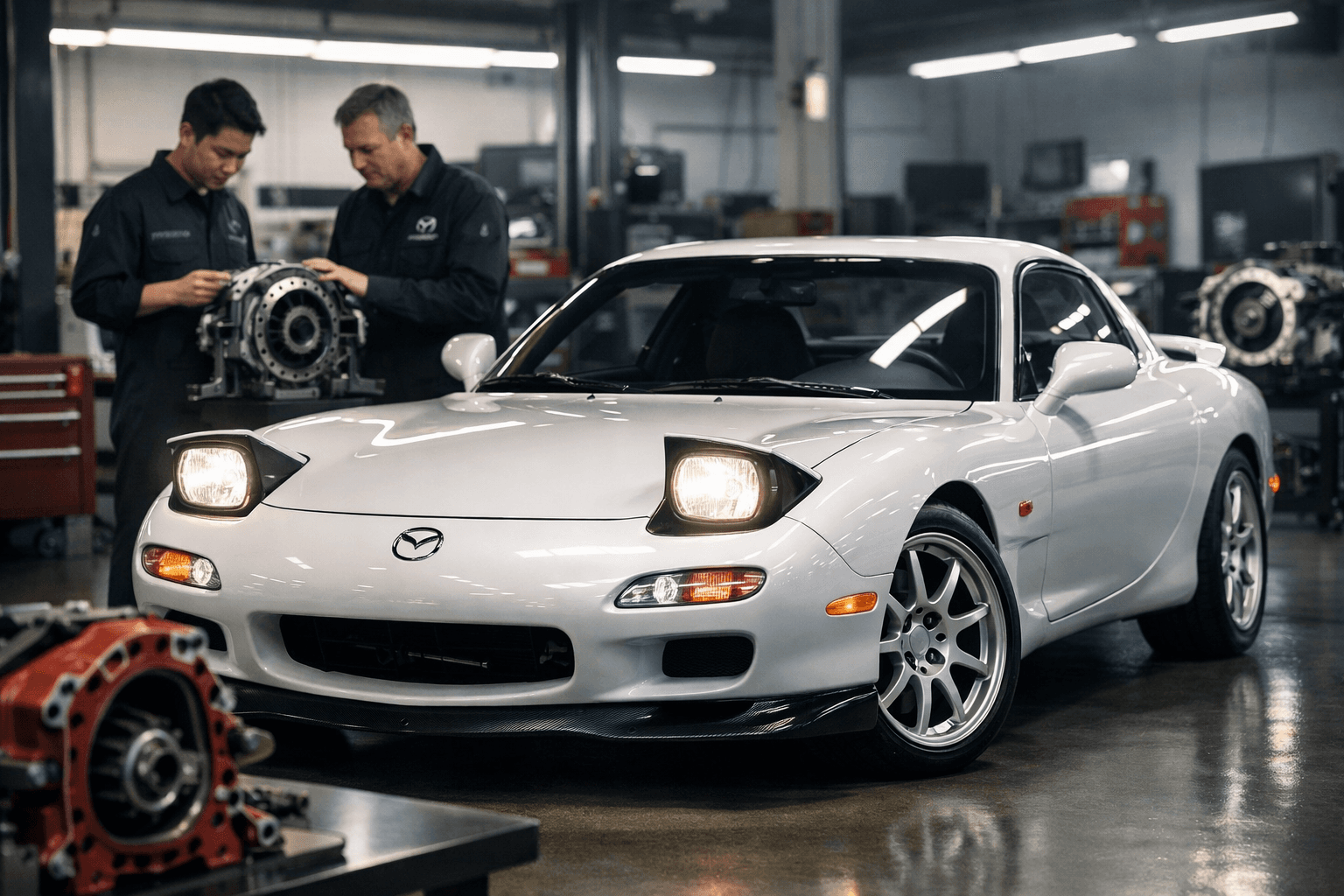
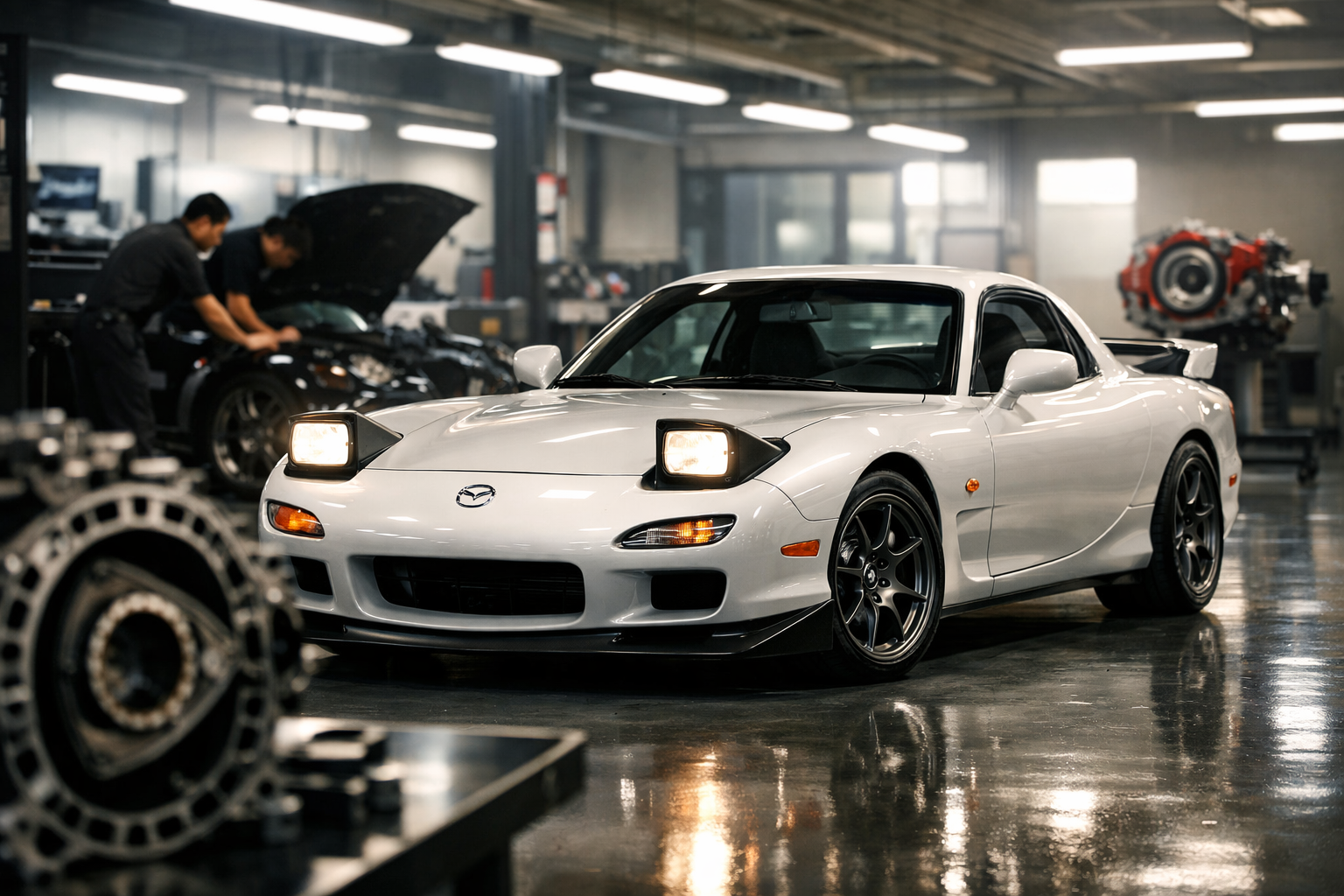
Mazda could have quietly buried the rotary engine years ago. Instead, engineers in Hiroshima are still sneaking it into prototypes like teenagers hiding a turbo kit from their parents.
That’s why the Mazda rotary engine future isn’t some nostalgic fever dream—it’s a stubborn, very real internal crusade. And if you care about the return of a proper RX sports car, this matters more than any 1,000-hp electric SUV headline.
I’ve spoken to enough Mazda insiders over the years to know this: the rotary isn’t just an engine layout to them. It’s a middle finger to conformity in a world of 2.0-liter turbo fours and corporate synergy slides.
The Cult of the Spinning Dorito
Let’s get one thing straight: the rotary engine makes no rational sense in 2026. It’s historically thirstier than a rugby team on tour, emissions are trickier than a Ferrari press launch, and durability jokes still haunt the RX-8.
And yet, Mazda employees adore it. Why? Because a rotary is light, compact, and revs like it’s allergic to low RPM. A Renesis from the old RX-8 made 232 hp from 1.3 liters and screamed to 9,000 rpm—try doing that with your average crossover lump.
It’s the automotive equivalent of a vinyl record in a Spotify world. Objectively flawed. Emotionally unbeatable.
Why the RX Sports Car Return Still Matters
Mazda hasn’t built an RX-7 since 2002 or an RX-8 since 2012. That’s over a decade without a rotary-powered sports car while the Toyota Supra, Nissan Z (400 hp, starting around $43,000; check manufacturer website for latest pricing), and even the Subaru BRZ (228 hp, from approximately $31,000) keep flying the affordable fun flag.
If the RX sports car return happens, it won’t just be another coupe. It’ll be a statement that lightweight, high-revving, rear-wheel-drive joy still has a seat at the table next to the Mustang GT (480 hp) and the four-cylinder BMW M240i.
Hot take: the world doesn’t need another 500-hp AWD coupe. It needs a 2,800-pound rotary lunatic with perfect steering feel.
Engineers vs. Accountants: The Real Battle
Here’s the bit nobody in PR likes to admit. The Mazda rotary engine future survives because engineers inside Mazda keep fighting for it.
Developing a new rotary isn’t cheap. Emissions compliance in the U.S., Europe, and Japan costs millions. Mazda is a comparatively small company—global sales hover around 1.2 million units annually, a fraction of Toyota’s empire.
Advertisement
But Mazda has always punched above its weight. This is the brand that gave us the Miata instead of another beige sedan. It’s the same rebellious streak we praised in our Mazda CX-5 vs RAV4 comparison, where Mazda chose driving feel over soulless efficiency charts.
The Rotary as a Range Extender: Genius or Cop-Out?
We’ve already seen Mazda dip its toes back in with a rotary acting as a generator in certain markets. Purists cried foul. “That’s not a real RX!” they shouted into the internet void.
But from an engineering standpoint, it’s clever. Rotaries are compact and smooth—perfect for spinning at a constant RPM to charge a battery. If you’ve read our Hybrid vs Electric guide, you’ll know range extenders can bridge the emotional gap between EV torque and petrol character.
Here’s my controversial take: using a rotary as part of a hybrid performance system could be better than chasing old-school turbo glory. Imagine 350–400 combined horsepower, sub-4.5-second 0–60 mph, and instant electric shove masking the rotary’s low-end weakness.
Emissions, Regulations, and Reality
The elephant in the room is emissions. Rotaries historically struggle with unburned hydrocarbons because of their combustion chamber shape. That’s not something you fix with a motivational poster.
Mazda claims advances in direct injection and improved sealing technology are addressing these issues. For regulatory context, you can see how strict U.S. standards are via the NHTSA and EPA data portals.
If Mazda can make a rotary meet 2026 global standards while delivering 30+ mpg combined in a lightweight sports car, it’ll be a minor engineering miracle. And frankly, I trust Mazda’s stubborn nerds more than most brands’ marketing departments.
Brand Identity Is Worth More Than Horsepower
Look at what happened when Mercedes-AMG shoved a four-cylinder into the C63. We covered that debacle in C63 Four-Cylinder: Mercedes Misread Fans, and enthusiasts revolted like villagers with pitchforks.
Mazda knows its identity is fragile. It doesn’t have a dozen sub-brands or a 1,000-hp halo EV like the machines in our AMG Electric SUV review. It has driving feel, design elegance, and the ghost of the RX-7 FD.
The Mazda rotary engine future is less about volume sales and more about credibility. A halo RX sports car—even selling 10,000 units a year globally—could elevate every CX-50 and Mazda3 in the showroom.
The Business Case Nobody Talks About
Sports cars don’t make serious money anymore. The Toyota Supra and Nissan Z are niche players compared to RAV4s and CR-Vs. Even the brilliant Porsche 718 starts around $70,000 and sells in relatively small numbers.
But halo cars drive traffic. They create YouTube thumbnails, Cars & Coffee buzz, and lifelong brand loyalty. Doug DeMuro quirks-and-features a new RX, Chris Harris drifts it into oblivion, and suddenly Mazda is cool again.
In a world where EVs are starting to feel algorithmically designed, a rotary-powered RX would be gloriously irrational. And irrationality, my friend, is what makes car culture worth having.
Pros
Unique engine character unmatched by piston rivals
Compact, lightweight design ideal for sports cars
Strengthens Mazda’s enthusiast credibility
Potential hybrid integration for modern performance
Cons
Historical reliability concerns
Emissions compliance is expensive and complex
Limited mass-market profitability
Verdict: Stubbornness Is a Virtue
The Mazda rotary engine future isn’t about nostalgia. It’s about whether a small, fiercely independent automaker can still build something beautifully pointless in a world obsessed with efficiency metrics.
If Mazda pulls off an RX sports car return with around 350 hp, a sub-$50,000 starting price, and genuine lightweight dynamics, it won’t just compete with the Supra, Z, and Mustang. It’ll remind us why we fell in love with cars in the first place.
RevvedUpCars Rating: 9/10 (for the ambition alone)
Best for: Enthusiasts who believe driving joy matters more than spreadsheet logic.
Mazda doesn’t need to win the horsepower war. It just needs to keep that spinning triangle alive.
Frequently Asked Questions
Is the Mazda rotary engine future confirmed for a new RX sports car?
Mazda has not officially confirmed a production RX model for 2026. However, executives have repeatedly stated that rotary development continues, especially for electrified applications.
Why do Mazda employees still support rotary engines?
Many engineers view the rotary as core to Mazda’s identity. Its compact size, high-revving nature, and unique character align with the brand’s “driving joy” philosophy.
Will a new RX be hybrid or fully gasoline-powered?
Industry speculation suggests a hybrid setup is more likely. A rotary could act as a range extender or part of a performance hybrid system to meet emissions standards.
What were the main problems with older rotary engines?
Past issues included apex seal wear, higher oil consumption, and lower fuel efficiency. Advances in materials and direct injection aim to improve durability and emissions.
Disclosure: This article may contain affiliate links. If you make a purchase through these links, we may earn a small commission at no extra cost to you. This helps support RevvedUpCars.com. Learn more.
Hot take: the world doesn’t need another 500-hp AWD coupe. It needs a 2,800-pound rotary lunatic with perfect steering feel.
Affiliate disclosure: some links on this page earn us a commission at no extra cost to you.
Alex Torque is a lifelong gearhead who grew up in Detroit with motor oil in his veins. After a decade as a performance driving instructor at Laguna Seca and the Nurburgring, he traded his racing helmet for a keyboard—though he still logs track days whenever possible. Alex specializes in sports cars, supercars, and anything with forced induction. His reviews blend technical precision with the visceral thrill of pushing machines to their limits. When he’s not testing the latest performance machines, you’ll find him restoring his 1973 Datsun 240Z or arguing about optimal tire pressures. Alex believes that driving should be an event, not a commute.
Get the latest car reviews in your inbox
Join thousands of car enthusiasts. No spam, unsubscribe any time.




Comments
Leave a comment