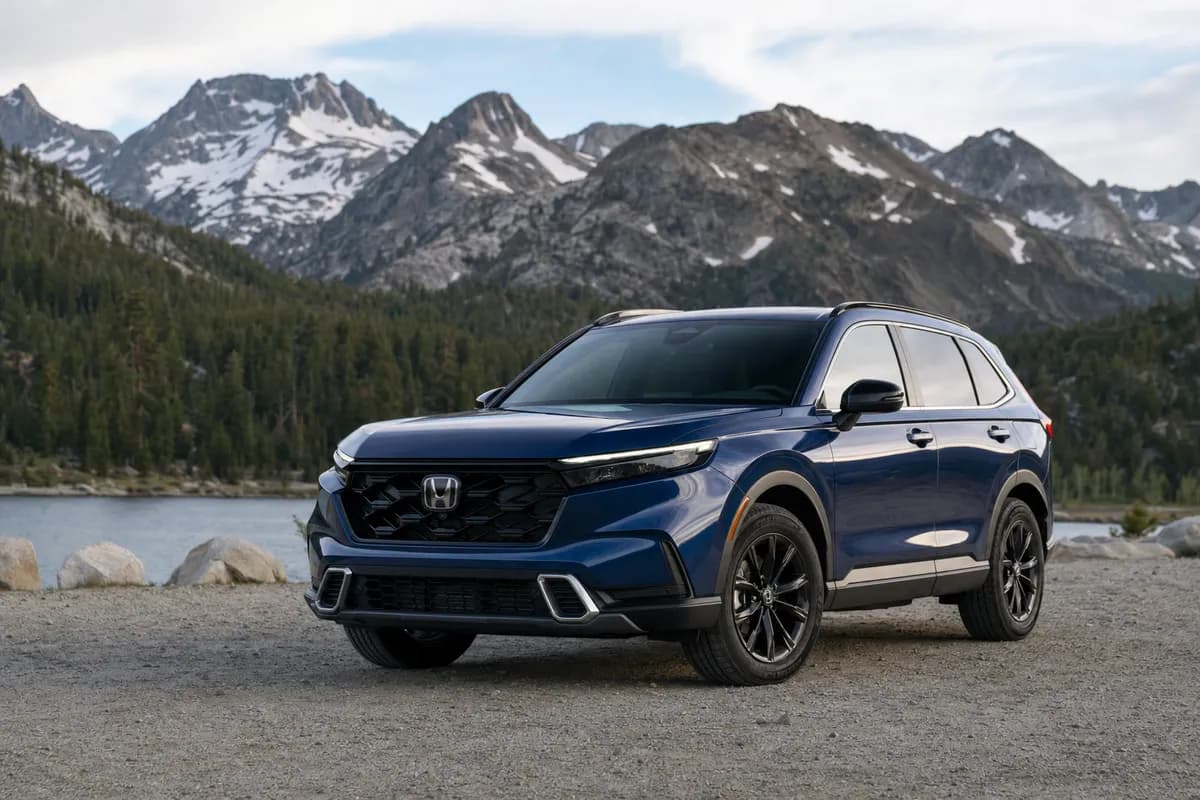
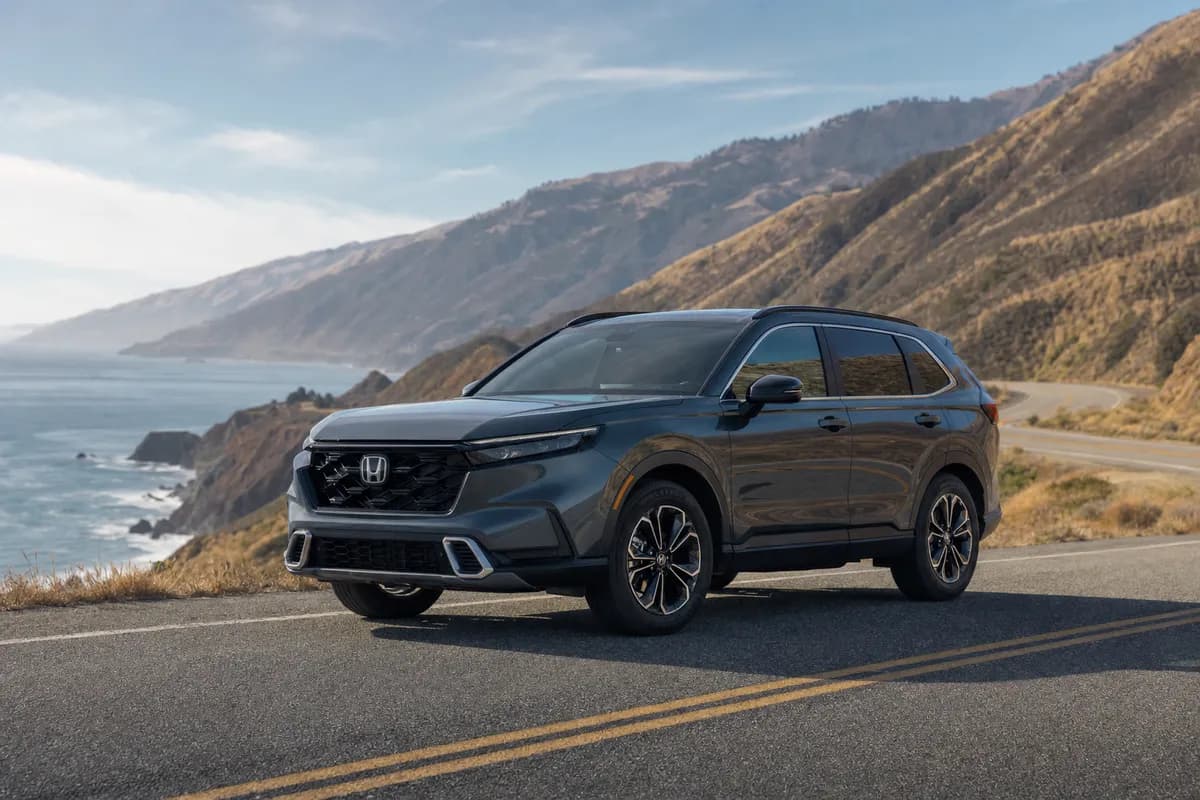
Honda’s all-new CR-V Plug-in Hybrid is not the loudest entry in the electrified SUV market, and that may be exactly why it matters. In a segment crowded with high-output plug-in hybrids chasing headline acceleration figures, Honda has taken a more measured route: useful electric…
Honda’s all-new CR-V Plug-in Hybrid is not the loudest entry in the electrified SUV market, and that may be exactly why it matters. In a segment crowded with high-output plug-in hybrids chasing headline acceleration figures, Honda has taken a more measured route: useful electric range, familiar SUV practicality, strong safety technology, and a powertrain designed to behave like an EV in daily driving without abandoning long-distance flexibility.
A Plug-in CR-V Built Around Real-World Use
The latest Honda CR-V marks a significant shift for the nameplate in Europe, where the sixth-generation model is offered with both e:HEV full hybrid and e:PHEV plug-in hybrid powertrains. The plug-in version is the important one here. It is the first CR-V PHEV in the European line-up and gives Honda a direct answer to plug-in hybrid versions of the Toyota RAV4, Hyundai Tucson, Kia Sportage, Ford Kuga and Mazda CX-60.
At the centre of the CR-V e:PHEV is Honda’s familiar 2.0-litre Atkinson-cycle petrol engine, paired with a two-motor hybrid system and a 17.7 kWh lithium-ion battery. Total system output is rated at 184 PS, with 335 Nm of torque from the electric drive motor. The plug-in CR-V is front-wheel drive, while the regular e:HEV hybrid can be specified with all-wheel drive in some markets.
Honda quotes an electric-only range of up to 82 km on the WLTP cycle, depending on specification and conditions. That figure is central to the car’s appeal. It means many owners could complete a normal commute, school run or local shopping trip without waking the petrol engine, provided they charge regularly. On a 6.8 kW AC charger, the battery can be replenished in around 2.5 hours.
Those numbers do not make the CR-V e:PHEV the most powerful plug-in SUV in its class. Toyota’s RAV4 Plug-in Hybrid offers 306 hp and all-wheel drive, while the Hyundai Tucson Plug-in Hybrid and Kia Sportage Plug-in Hybrid both deliver 265 PS with all-wheel-drive layouts. But Honda’s emphasis is different. The CR-V is tuned to feel calm, linear and electric-first, rather than overtly sporty.
That positioning is important. Plug-in hybrid buyers are increasingly split between two groups: those who want performance and tax advantages, and those who genuinely want to reduce fuel use without committing to a battery-electric vehicle. Honda is clearly aiming at the second group.
Why Honda’s e:PHEV System Feels Different
Honda’s hybrid strategy has long been based around electric drive rather than a conventional gearbox-led layout. In most everyday conditions, the petrol engine does not drive the wheels directly. Instead, it operates as a generator, supplying energy to the electric motor or battery. At higher cruising speeds, a clutch can connect the engine directly to the wheels when that is the most efficient option.
In the CR-V Plug-in Hybrid, that architecture is particularly well suited to urban and suburban driving. The car can run as a pure EV when the battery has charge. When the battery is depleted, it behaves more like Honda’s e:HEV full hybrid, automatically switching between EV Drive, Hybrid Drive and Engine Drive depending on speed, load and efficiency requirements.
The advantage is consistency. Many plug-in hybrids can feel like two separate vehicles: smooth and refined when running on electricity, then busier and less polished once the engine joins in. Honda’s system is designed to blur that transition. The driver does not need to manage modes constantly, and the power delivery remains closer to an EV than a traditional automatic SUV.
That said, the CR-V e:PHEV is not intended to be a substitute for a performance SUV. Its 0-100 km/h time sits in the everyday family-car bracket rather than the fast-lane category. The benefit is refinement and efficiency, not drama. For a family SUV, that is a sensible trade-off.
Honda also deserves credit for preserving the CR-V’s usability. Plug-in hybrids often lose boot space or packaging flexibility because of their larger battery packs. The CR-V e:PHEV remains a practical five-seat SUV with a broad cabin, good rear legroom and a usable cargo area. It does not offer seven seats, but neither do most direct plug-in rivals in this size and price band.
How It Compares With Key Rivals
The plug-in hybrid SUV market is now one of the most competitive parts of the mainstream car industry. Honda is not entering an empty space. The Toyota RAV4 Plug-in Hybrid remains one of the strongest benchmarks, combining long electric range, strong performance and Toyota’s hybrid reputation. It uses an 18.1 kWh battery and offers up to around 75 km of WLTP electric range, depending on market and specification.
On paper, the Honda’s 82 km WLTP figure gives it a slight advantage in electric range. The Toyota, however, has a clear performance advantage and offers all-wheel drive. For buyers who tow regularly, live in areas with poor winter weather or simply want more traction, the RAV4’s setup may be more compelling.
The Hyundai Tucson Plug-in Hybrid and Kia Sportage Plug-in Hybrid are also formidable alternatives. Both use a 1.6-litre turbocharged petrol engine with an electric motor and a 13.8 kWh battery, producing 265 PS. Their WLTP electric range is typically around 60 km, depending on wheel size and specification. They offer sharper pricing in some markets, broad equipment levels and long warranties, making them difficult to ignore.
The Ford Kuga Plug-in Hybrid has been one of Europe’s best-selling PHEVs, helped by competitive pricing and a strong company-car case. Its electric range is competitive, and the latest versions have improved technology and efficiency. The Mazda CX-60 PHEV, meanwhile, moves further upmarket with 327 PS, rear-biased all-wheel drive and a larger body, but it is heavier and positioned as a more premium product.
Against that field, the CR-V e:PHEV’s strongest cards are electric range, cabin quality, predictable road manners and Honda’s reputation for long-term durability. Its weakest point is the absence of all-wheel drive on the plug-in version. That decision keeps complexity down but limits its appeal in markets where SUV buyers expect four driven wheels.
- Honda CR-V e:PHEV: 2.0-litre petrol-electric system, 17.7 kWh battery, up to 82 km WLTP electric range, front-wheel drive.
- Toyota RAV4 Plug-in Hybrid: 306 hp, 18.1 kWh battery, up to around 75 km WLTP electric range, all-wheel drive.
- Hyundai Tucson PHEV: 265 PS, 13.8 kWh battery, around 60 km WLTP electric range, all-wheel drive.
- Kia Sportage PHEV: 265 PS, 13.8 kWh battery, around 60 km WLTP electric range, all-wheel drive.
- Ford Kuga PHEV: strong company-car appeal, competitive electric range, value-led positioning.
Safety, Technology and the Bigger SUV Picture
The CR-V has always traded on sensible strengths: visibility, comfort, space and ease of use. The new plug-in model adds a stronger technology package without turning the cabin into a screen-first experiment. That matters because many buyers in this class are moving out of older diesel SUVs or conventional hybrids and want electrification without a steep learning curve.
The latest CR-V features Honda Sensing 360 on higher specifications in some markets, expanding the driver-assistance suite with wider sensing capability around the vehicle. Depending on trim, systems can include adaptive cruise control, lane-keeping assistance, traffic sign recognition, blind-spot monitoring, collision mitigation braking and cross-traffic alerts. These systems are now expected in a family SUV, but Honda’s calibration tends to prioritise smooth intervention rather than aggressive correction.
The interior follows the same approach. Honda has moved its newest cabins toward cleaner horizontal layouts, physical climate controls and straightforward infotainment menus. The CR-V is not trying to outdo premium brands for screen size. Instead, it focuses on ergonomics, seating comfort and storage. For an SUV likely to be used as a family workhorse, that is more valuable than novelty.
The wider context is equally important. Plug-in hybrids are under pressure. Regulators in Europe are paying closer attention to real-world emissions because many PHEVs deliver impressive official economy only when regularly charged. Company-car drivers and private owners who treat them like ordinary petrol cars can see fuel use rise sharply once the battery is depleted.
That is why Honda’s long electric range and relatively quick AC charging are not just technical details. They make it more likely that owners will actually use the CR-V as intended. A plug-in hybrid with 30 or 40 km of real-world range can easily fall short on a daily commute. A model with a WLTP figure above 80 km gives drivers more margin in winter, at motorway speeds and with passengers aboard.
Still, the CR-V e:PHEV is only as efficient as the owner’s charging habits. For households without off-street parking or reliable access to charging, the standard CR-V e:HEV hybrid may be the more rational choice. It requires no plugging in and still delivers strong urban efficiency. For those who can charge at home or work, the plug-in version offers a meaningful step toward electric driving without the range anxiety or route planning that can still concern some buyers.
What It Means for Honda’s Electrification Strategy
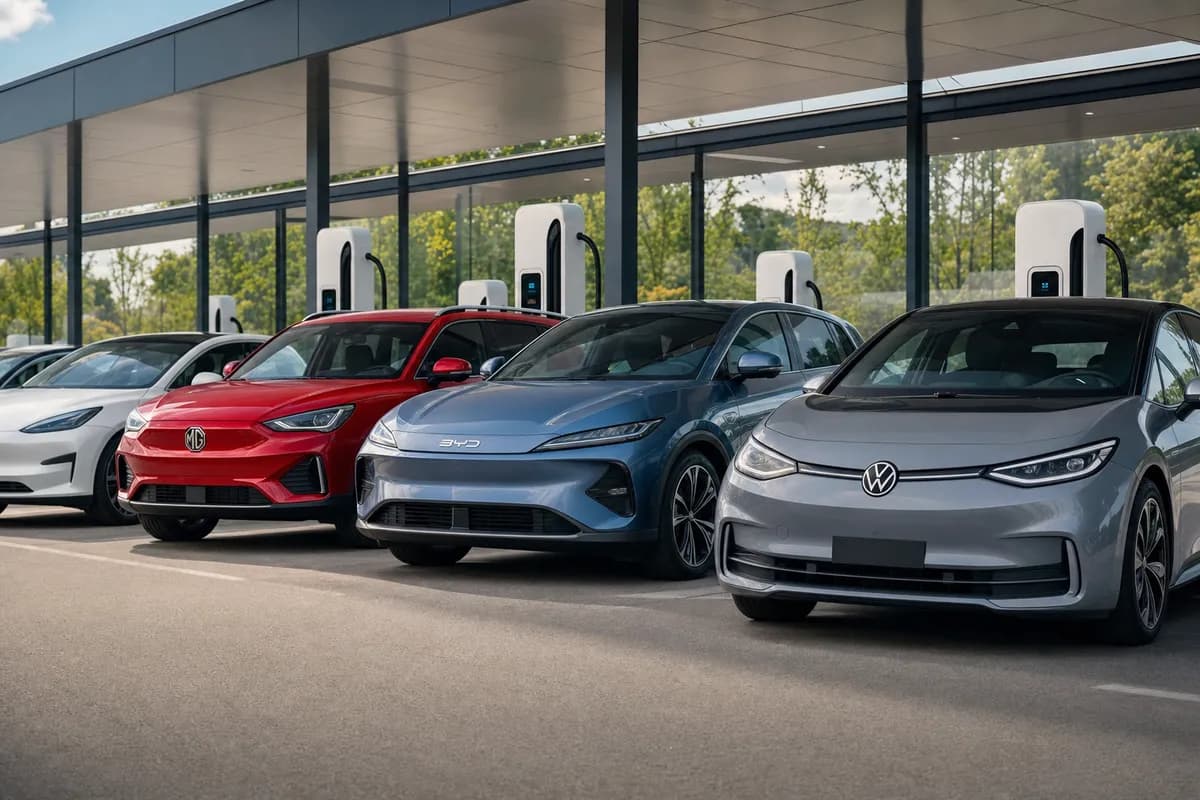
Honda’s electrification strategy has been more cautious than some rivals. In Europe, the company now sells only electrified mainstream passenger cars, but its battery-electric roll-out has been selective. The Honda e city car was distinctive but limited in range and market reach. The e:Ny1 electric SUV moved Honda into a more mainstream EV segment, but it faces intense competition from Hyundai, Kia, Volkswagen, Tesla, Renault and Chinese brands such as BYD and MG.
That makes the CR-V Plug-in Hybrid strategically useful. It gives Honda a bridge product for buyers who are not ready to go fully electric but want most daily journeys to be battery-powered. It also supports Honda’s broader move toward zero-emission vehicles without depending entirely on BEV adoption rates, which vary widely by country, charging access and incentive policy.
There is also a brand-specific point. Honda built much of its modern reputation on clever powertrains: VTEC petrol engines, compact hybrids, efficient packaging and mechanical durability. The CR-V e:PHEV fits that tradition more convincingly than a simple compliance model would. It is not a plug-in system added as an afterthought. It is a powertrain that suits Honda’s engineering identity: efficient, smooth and technically understated.
The challenge is commercial. Plug-in hybrids are expensive to develop and manufacture because they carry both a combustion engine and a relatively large battery. They are heavier than full hybrids and more complex than EVs. As battery prices fall and charging networks improve, the long-term case for PHEVs will narrow. Honda therefore needs the CR-V e:PHEV to succeed in the near term while it accelerates its next generation of fully electric SUVs.
Verdict: A Sensible Benchmark, Not a Showy One
The Honda CR-V Plug-in Hybrid sets a benchmark in the way that matters most for family SUV buyers: it makes electrified driving easy to live with. Its headline figures are not about outright speed. They are about an 82 km WLTP electric range, short AC charging time, a spacious cabin, mature safety technology and a hybrid system that remains refined even when the battery is depleted.
It is not perfect. The lack of all-wheel drive on the plug-in model will push some buyers toward the Toyota RAV4 Plug-in Hybrid, Hyundai Tucson PHEV or Kia Sportage PHEV. Pricing will also be critical, because plug-in hybrids must justify their premium over conventional hybrids and increasingly affordable EVs.
But as a template for the next phase of mainstream SUVs, the CR-V e:PHEV is convincing. It recognises that many drivers want electric running for daily life, petrol flexibility for long trips and no major compromise in space or usability. That may not be revolutionary, but it is exactly the kind of practical electrification the SUV market needs now.
Affiliate disclosure: This article contains affiliate links. RevvedUpCars may earn a small commission on qualifying purchases at no extra cost to you.