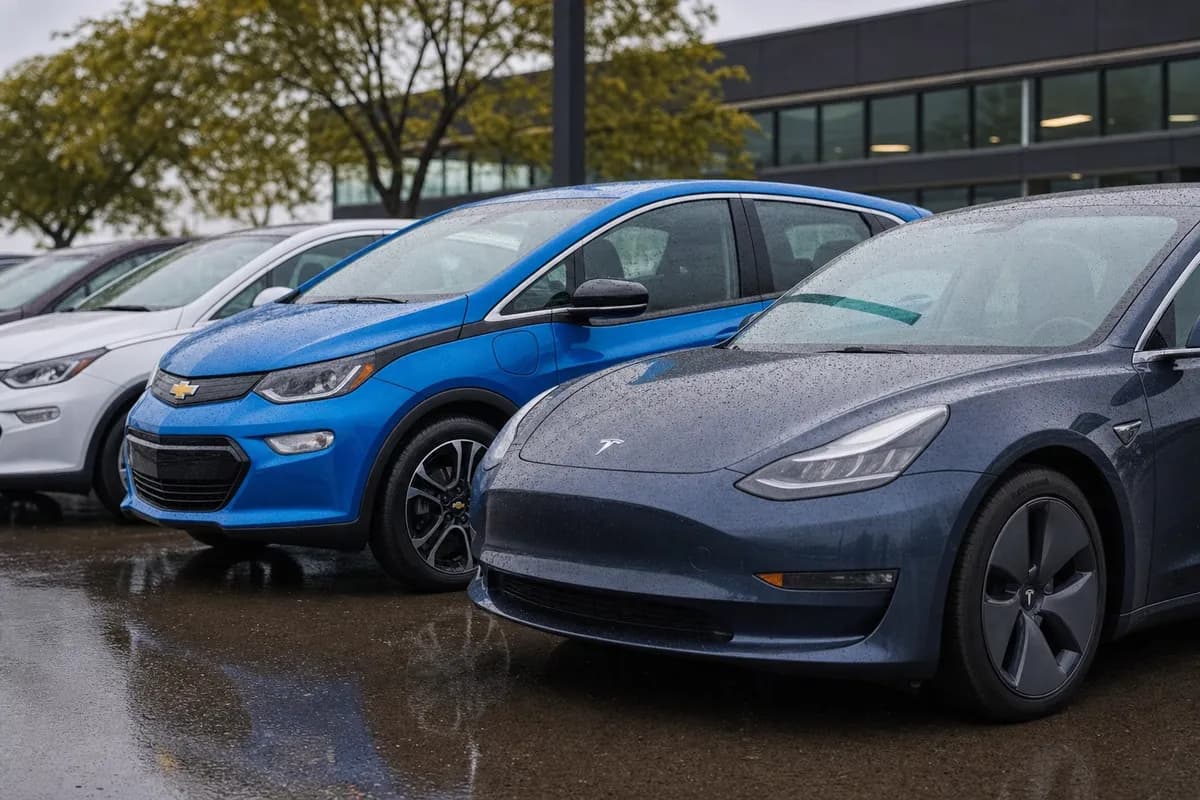
General Motors says it plans to sell only zero-emissions new light-duty vehicles by 2035, setting one of the most consequential deadlines yet for the Detroit automaker’s shift away from gasoline and diesel power.
GM has framed the 2035 target as part of a broader sustainability strategy. The company has said it intends to achieve carbon neutrality in global products and operations by 2040, a goal that goes beyond the vehicles themselves and reaches into manufacturing, energy sourcing, supply chains and materials.
For consumers, the headline is straightforward: GM intends for its showrooms to look very different by 2035. Gasoline-powered versions of today’s top-selling nameplates may still define the company’s sales mix in the near term, but the long-term direction is now clearly electric.
The key distinction is that GM’s target applies to new light-duty vehicles. Existing gasoline vehicles will remain on the road for many years after 2035, and commercial, heavy-duty and specialty applications may follow different timelines depending on technology, regulation and customer demand. Even so, the pledge marks a major strategic pivot for a company whose modern business has been built around internal-combustion trucks and SUVs.
Why This Matters for Chevrolet, GMC, Cadillac and Buick
GM’s shift is not theoretical. The company has already started rolling out a broad EV portfolio across multiple price points and vehicle segments, with particular emphasis on high-volume categories such as crossovers and pickups.
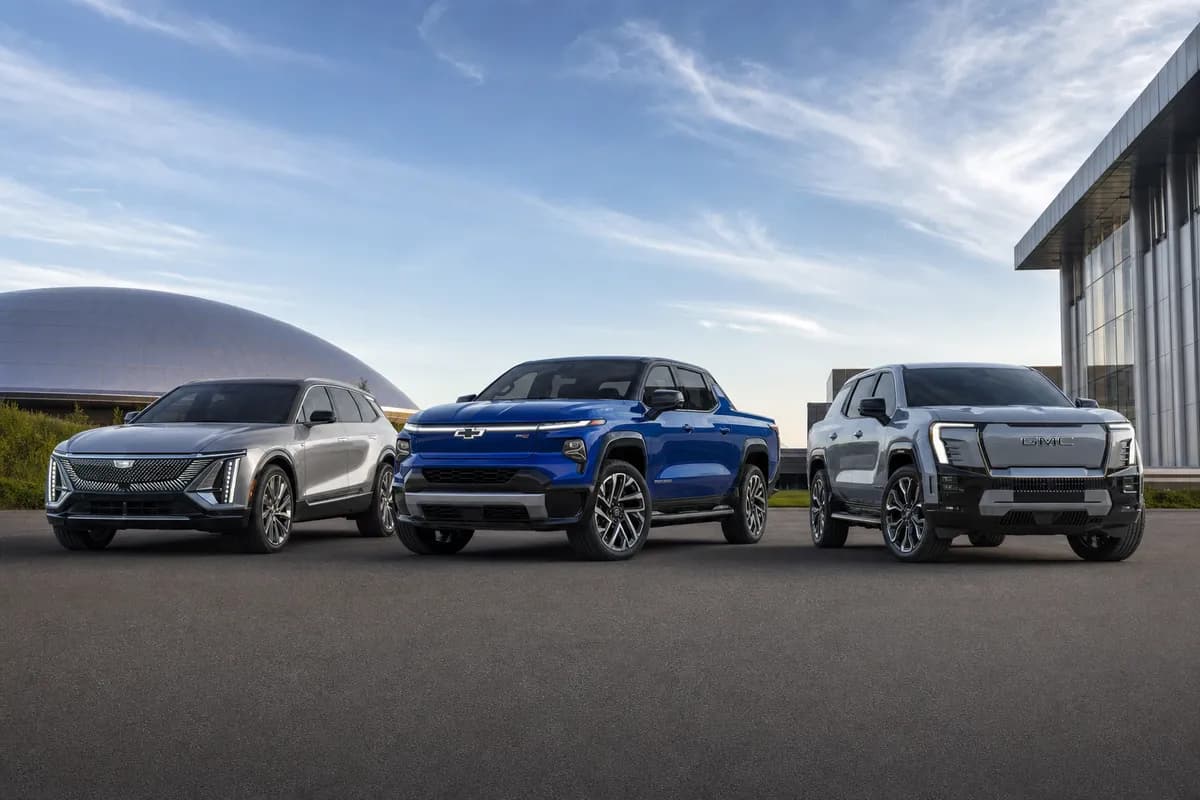
Chevrolet is central to the plan. The brand has introduced the Chevrolet Equinox EV, positioned as a more attainable compact electric SUV, and the Chevrolet Blazer EV, a larger, more performance-oriented crossover. The Chevrolet Silverado EV brings battery-electric power into the full-size pickup segment, where GM competes directly with the Ford F-150, Ram 1500 and a growing number of electric challengers.
The Equinox EV is especially important because affordability will determine whether GM can move beyond early adopters. The electric market cannot be built solely on luxury SUVs and six-figure pickups. To hit a 2035 target, GM needs high-volume EVs that reach mainstream buyers, particularly in the compact crossover segment that has replaced midsize sedans as the heart of the U.S. market.
Cadillac is moving faster than any other GM brand toward an electric identity. The Cadillac Lyriq has become the brand’s first major Ultium-based EV, while the Cadillac Escalade IQ brings the electric strategy to one of the most recognizable luxury SUV nameplates in the country. Cadillac has also shown additional electric models, including the Optiq and Vistiq, aimed at expanding coverage across luxury SUV segments.
GMC, meanwhile, has used electrification to reinforce its premium truck and SUV image. The GMC Hummer EV launched as a high-profile technology showcase, offering extreme output, off-road capability and features such as four-wheel steering. The GMC Sierra EV is more strategically important because it moves the brand’s core pickup formula into the electric era.
Buick’s EV path has been less visible in the U.S. than Cadillac’s or Chevrolet’s, but the brand has already previewed future electric styling through concepts and has used the Electra name in global markets. Buick’s role will be particularly important in China, historically one of GM’s most significant international markets, where EV adoption is moving quickly and domestic competitors are applying heavy pressure.
GM’s portfolio approach matters because no single model can carry the transition. Tesla built the modern EV market with a concentrated lineup, but legacy automakers must electrify entire brand families while keeping existing customers engaged. For GM, that means building electric replacements or alternatives for crossovers, SUVs, pickups, luxury models and commercial vehicles without undermining the profitable gasoline models that still fund the transition.
The Technology Behind the Target
GM’s electric plan is built around its Ultium battery and vehicle architecture, a modular platform designed to support everything from compact crossovers to large trucks. The idea is to reduce complexity by using shared battery modules, motors, electronics and software across many models and brands.
That flexibility is critical. A full-size electric pickup requires far more battery capacity than a compact SUV, while a luxury EV needs different performance, refinement and technology priorities than a fleet-focused commercial vehicle. By using a common architecture, GM aims to lower costs over time while giving each brand enough room to create distinct products.
Battery production is another major piece of the plan. GM has invested heavily in U.S. battery manufacturing through joint ventures and supply agreements, seeking to localize production and qualify more vehicles for federal incentives where possible. Domestic battery sourcing has become increasingly important under U.S. rules that tie consumer tax credits to North American assembly, battery component sourcing and critical mineral requirements.
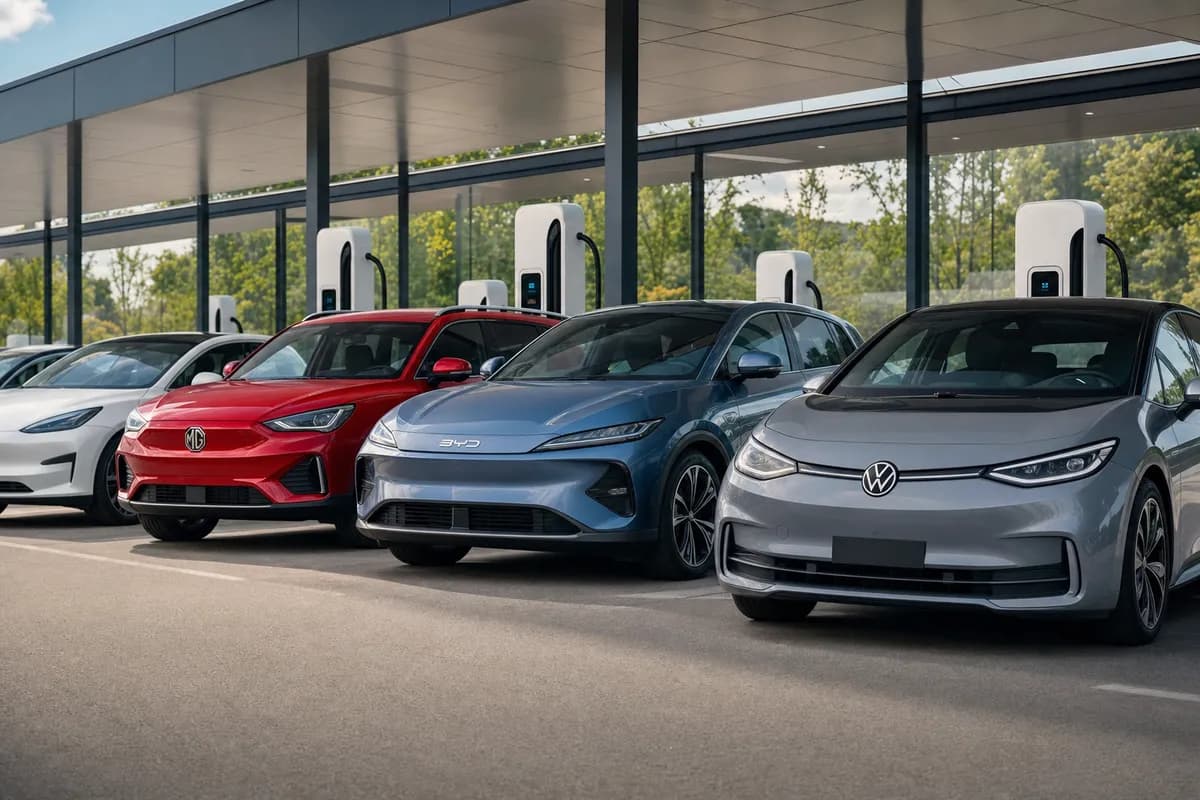
Charging access will also determine whether GM can make the 2035 transition credible. The company has announced partnerships and charging initiatives intended to expand public charging, improve route planning and simplify payment. GM has also moved to adopt the North American Charging Standard, giving future GM EV drivers access to a broader charging network that includes Tesla Supercharger locations as compatibility expands.
Software is another major battleground. Electric vehicles rely more heavily on integrated digital systems for battery management, charging, driver-assistance features, infotainment and over-the-air updates. GM’s ability to deliver reliable software will be just as important as its ability to build motors and battery packs at scale. Recent industry experience has shown that EV launches can be slowed not only by hardware constraints but also by software delays and quality issues.
There is also the question of chemistry and cost. Battery prices have fallen significantly over the past decade, but volatility in lithium, nickel, cobalt and graphite markets can still affect vehicle pricing. GM, like other automakers, is working to reduce cost per kilowatt-hour, diversify supply chains and eventually introduce more affordable battery chemistries in some applications. Without lower battery costs, mass-market EV profitability will remain difficult.
GM’s 2035 Goal in the Wider Industry Race
GM is not moving in isolation. The entire global auto industry is under pressure from regulation, competition and changing consumer expectations. Governments in the U.S., Europe and China have tightened emissions rules, expanded EV incentives and set timelines that make long-term reliance on gasoline engines increasingly difficult.
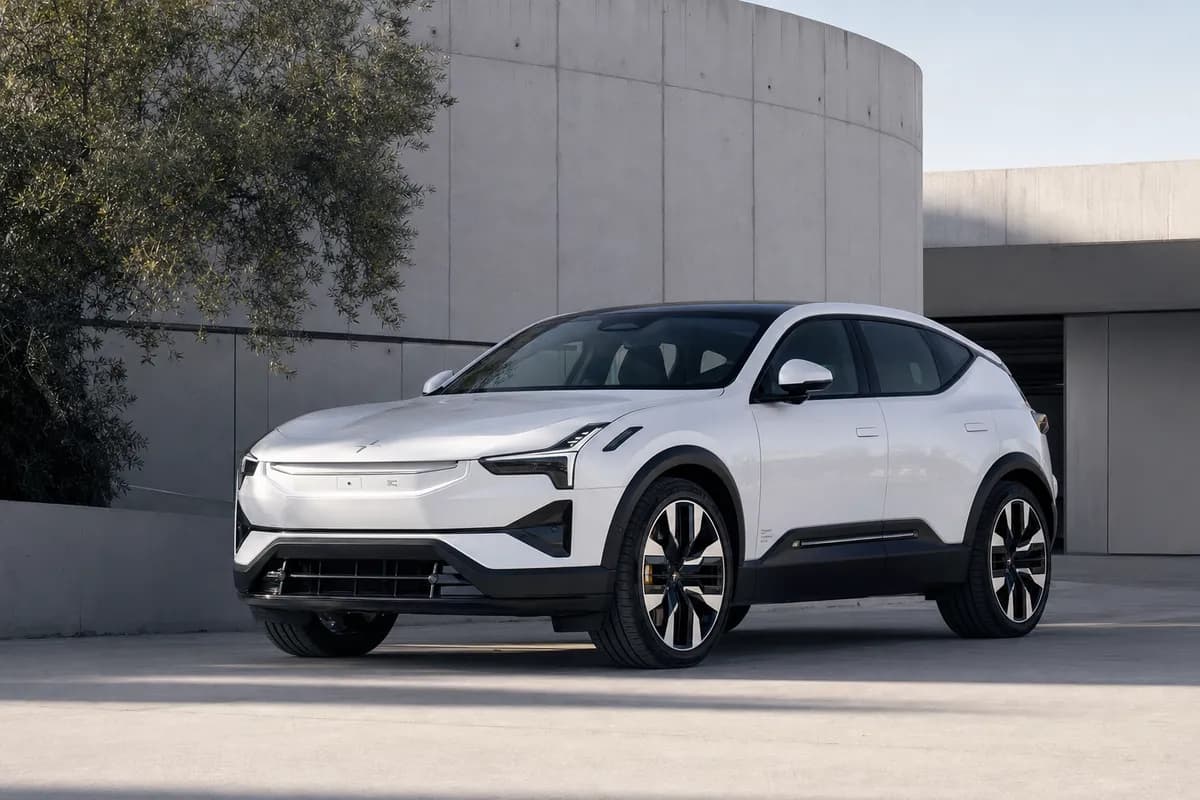
Several automakers have already announced aggressive electrification plans. Volvo has targeted an all-electric lineup by 2030. Jaguar has been pursuing a luxury EV repositioning. Mercedes-Benz, BMW, Volkswagen, Hyundai, Kia, Ford, Stellantis and Toyota are all investing billions in electrification, though their timelines and strategies differ. Tesla remains the benchmark for EV scale and profitability, even as legacy manufacturers try to close the gap.
Compared with some rivals, GM’s 2035 target is ambitious but not reckless. It gives the company more than a decade to manage the transition, build battery capacity, develop affordable vehicles and adjust to consumer demand. At the same time, it sets a clear endpoint for the internal-combustion era in GM’s light-duty lineup.
The challenge is that the EV market is not growing in a straight line. Demand has expanded rapidly from early levels, but growth rates have varied by region and price segment. Some buyers remain concerned about charging access, cold-weather range, towing range, purchase price and battery longevity. Dealers also need training, tools and infrastructure to sell and service EVs effectively.
Pickup trucks highlight the difficulty. The Chevrolet Silverado EV and GMC Sierra EV give GM credible electric entries in a key segment, but truck buyers are demanding. Many use their vehicles for towing, hauling, long-distance driving and work applications where charging time and range under load matter. Electric trucks can deliver strong torque, quick acceleration and useful onboard power, but the real-world use case is more complex than it is for a commuter crossover.
There is also a competitive risk from Chinese automakers, particularly in global markets. Companies such as BYD have scaled EV production quickly and are pressuring established manufacturers with lower-cost models, advanced battery technology and rapid product cycles. GM’s China business has historically been a major profit center, but the market has shifted sharply toward domestic EV brands. GM’s 2035 target must therefore be understood not only as an environmental commitment but also as a competitive necessity.
Regulation may help push the market toward GM’s goal, but it cannot solve every problem. Automakers still need vehicles people want to buy, priced where people can afford them, supported by charging infrastructure that works. The winners will be companies that make EV ownership feel normal rather than experimental.
What Could Slow the Plan
GM’s 2035 deadline is clear, but the path to get there is complicated. The biggest risk is execution. Developing an EV is one challenge; launching dozens of them across multiple brands, factories and markets is another.
Several factors could affect the pace of GM’s transition:
- Battery supply: GM needs enough cells at competitive cost to support high-volume EV production. Any delay in battery plants, raw material sourcing or component supply could slow rollout plans.
- Charging infrastructure: Public charging remains uneven, especially outside major metro areas and along rural routes. Reliability and availability must improve for mainstream buyers to feel comfortable switching.
- Affordability: EVs remain expensive in many segments. GM needs lower-cost models and competitive lease or finance options to reach mass-market households.
- Dealer readiness: GM’s franchise dealer network must be prepared to educate customers, install charging support, service high-voltage systems and handle EV-specific ownership questions.
- Consumer demand: The transition depends on buyers accepting EVs not only as second cars or luxury purchases, but as primary family vehicles, work trucks and long-distance transportation.
- Policy uncertainty: Tax credits, emissions rules and trade regulations can change with political cycles, complicating long-term product planning.
GM also has to manage the financial balancing act. Gasoline trucks and SUVs generate the profits that fund EV development. Moving too slowly risks falling behind competitors and regulators; moving too quickly risks overbuilding EV capacity before demand is ready. The next several years will test whether GM can phase the transition without stranding investment on either side.
Another important issue is lifecycle emissions. EVs produce no tailpipe emissions, but their environmental impact depends on how electricity is generated, how batteries are produced and how materials are sourced and recycled. GM’s carbon-neutrality pledge will require continued work on renewable energy, battery recycling, lower-carbon manufacturing and responsible mineral sourcing.
That is why the 2035 goal should be viewed as a milestone rather than a finish line. Eliminating tailpipe emissions from new light-duty vehicles would be a major step, but the broader decarbonization of transportation requires a cleaner grid, better charging access, more efficient vehicles and a mature recycling ecosystem.
Verdict: A Defining Bet on the Post-Gasoline Era
GM’s plan for a fully electric light-duty future by 2035 is one of the clearest signals yet that the internal-combustion engine’s dominance is entering its final phase at America’s largest legacy automakers. This is not a niche EV experiment or a compliance program. It is a company-wide strategic bet touching product development, manufacturing, supply chains, software, dealers and brand identity.
The announcement matters because GM is not only promising more electric cars. It is preparing to electrify the kinds of vehicles that define the U.S. market: pickup trucks, family crossovers, large SUVs and luxury models. If GM can make those vehicles practical, profitable and attainable, the 2035 target becomes credible. If battery costs remain high, charging remains unreliable or mainstream buyers hesitate, the timeline becomes much harder.
The most important point is that GM’s commitment does not instantly transform the market. Gasoline vehicles will remain on sale for years, and millions will stay on the road long after 2035. But the direction of travel is now unmistakable. GM is telling suppliers, dealers, investors and customers that its long-term future is electric.
For an automaker built on V8 trucks, family SUVs and mass-market gasoline transportation, that is a historic shift. The next decade will determine whether GM can turn a bold deadline into a durable competitive advantage.
Affiliate disclosure: This article contains affiliate links. RevvedUpCars may earn a small commission on qualifying purchases at no extra cost to you.