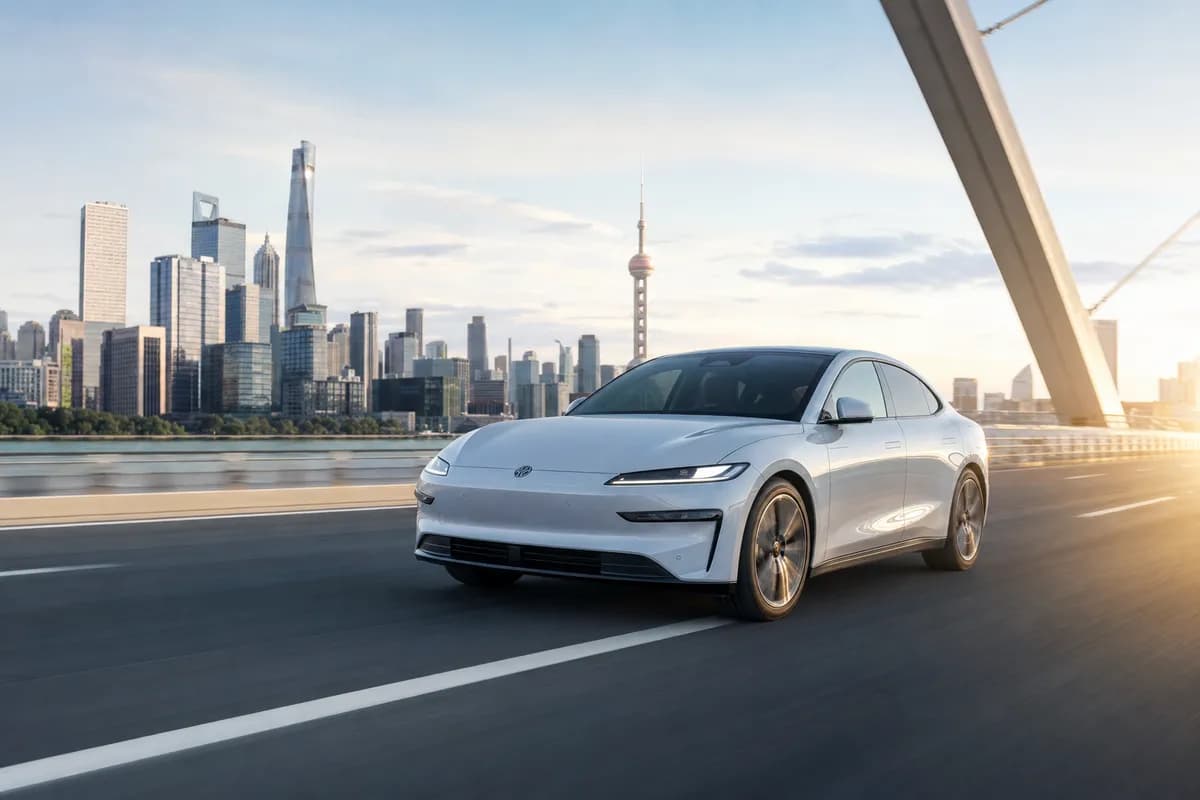
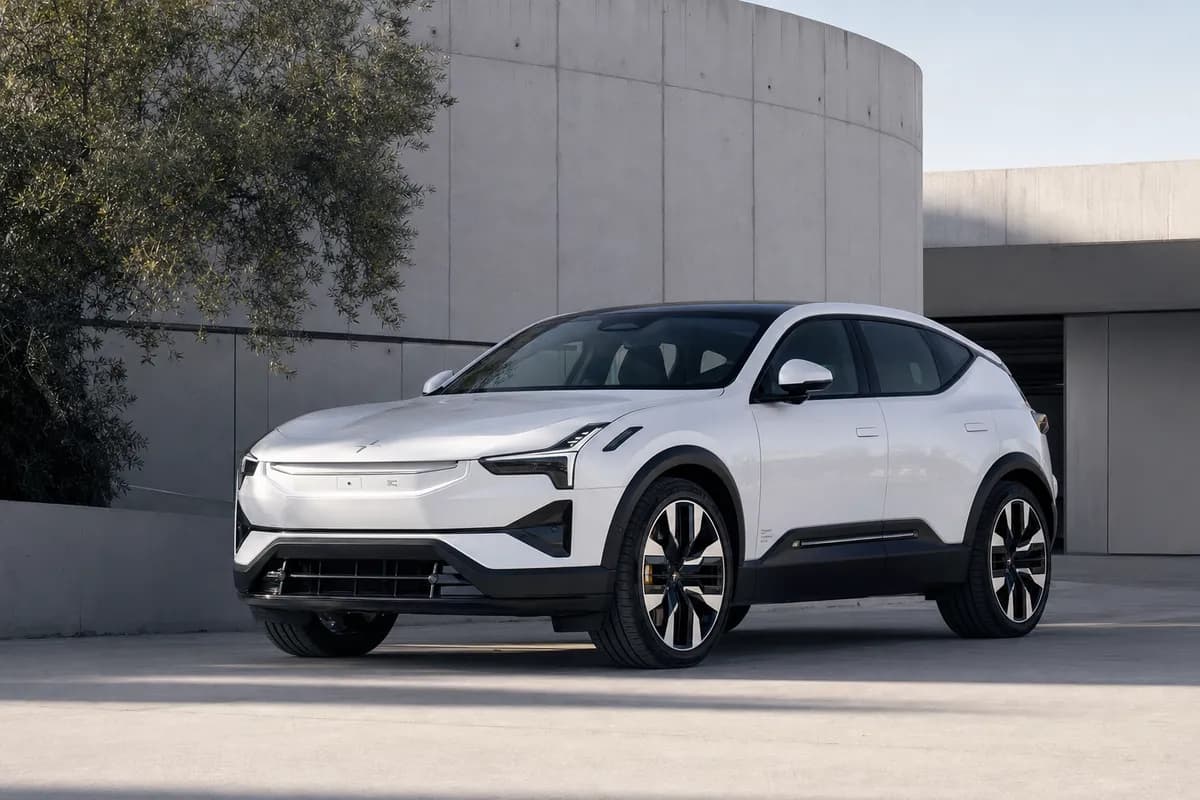
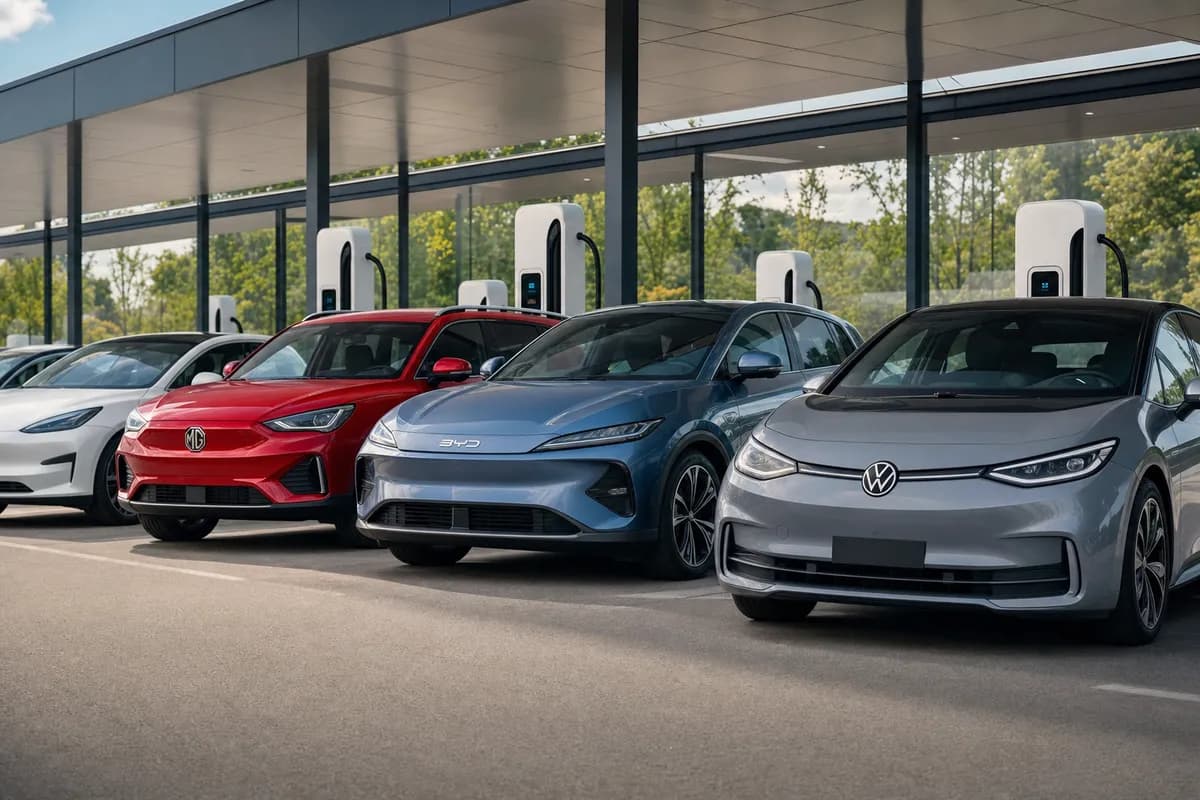
China’s latest EV subsidy push is not a simple return to the blank-check incentives that built the country’s electric-car industry. It is more targeted, more strategic and, in global terms, potentially more disruptive.
- Purchase-tax relief: NEVs remain exempt from China’s 10% vehicle purchase tax through the end of 2025, with the exemption capped at 30,000 yuan per vehicle. From 2026 through 2027, the policy is scheduled to step down to a 50% reduction, capped at 15,000 yuan.
- Trade-in subsidies: Consumers scrapping qualifying older combustion cars or older NEVs can receive a subsidy when buying a new vehicle, with higher support for NEVs than for gasoline cars. In the expanded version of the program, NEV buyers can receive up to 20,000 yuan, roughly $2,750.
- Local support: Provinces and cities continue to add their own incentives, including replacement vouchers, charging support, registration benefits and, in some cities, continued advantages around license plates.
That combination matters because China’s EV market has moved beyond its early-adopter phase. Incentives are no longer designed only to persuade buyers that EVs work. They are now designed to keep replacement demand strong, push older high-emissions vehicles off the road and prevent a sharp slowdown in a sector that has become central to China’s industrial policy.
For most mainstream EVs, the purchase-tax exemption is meaningful. A 150,000-yuan electric crossover can effectively carry a tax advantage of about 15,000 yuan compared with an equivalent gasoline vehicle. Add a trade-in bonus and local support, and the consumer-facing discount can be large enough to move a purchase forward by months.
A Demand Floor For The World’s Largest EV Market
China is already the center of the global EV industry. According to the China Association of Automobile Manufacturers, Chinese sales of new-energy vehicles reached about 9.5 million units in 2023, up nearly 38% year over year. That represented roughly one-third of all new vehicles sold in the country. Globally, China accounted for about 60% of electric-car sales in 2023, according to the International Energy Agency.
Those numbers explain why even a domestic Chinese subsidy can reshape global markets. When China changes the pace of EV adoption, it changes demand for batteries, lithium iron phosphate cells, power electronics, charging hardware and vehicle exports.
The new incentives are particularly helpful to mass-market models rather than luxury EVs. The tax cap means the full benefit is most valuable below roughly 300,000 yuan, which is where the highest-volume Chinese EVs compete. That includes models such as the BYD Dolphin, BYD Yuan Plus, also sold overseas as the Atto 3, BYD Seagull, Aion Y, Wuling Bingo, Geely Galaxy E5, Changan Deepal S07 and Tesla Model 3 and Model Y.
BYD is the clearest beneficiary. The company has built a broad lineup that spans inexpensive city EVs, plug-in hybrid sedans and family crossovers. The BYD Seagull has been priced in China from under 80,000 yuan, while the Dolphin and Yuan Plus sit in the heart of the market. The company’s plug-in hybrids, including the Qin and Song families, also benefit because China counts them as NEVs.
Tesla also gains from a stronger Chinese market, although in a different way. The Model Y remains one of China’s best-selling premium electric crossovers, and the Shanghai plant is Tesla’s largest global export hub. A stronger domestic order book can support factory utilization, but Tesla also faces more pressure because Chinese rivals are using scale and subsidies to hold prices down.
The key global effect is not that China is making EVs cheap overnight. It is that China is reinforcing the price benchmark for what a competitive EV should cost.
That benchmark is becoming uncomfortable for foreign automakers. In China, buyers can find credible electric hatchbacks, sedans and crossovers at prices that remain difficult to match in Europe or North America. The difference is not only subsidies. It is also lower battery costs, dense supplier networks, faster model cycles and intense domestic competition.
Why The Impact Will Spill Into Export Markets
China’s EV subsidies are aimed at domestic buyers, but their effects do not stop at the border. A stronger home market gives Chinese automakers more volume, and volume lowers cost. That is especially important in EVs, where battery procurement, software development, electric-drive manufacturing and platform sharing reward scale.
China exported about 4.9 million vehicles in 2023, overtaking Japan as the world’s largest auto exporter by volume. NEV exports reached roughly 1.2 million units. Those exports include Chinese brands such as BYD, SAIC’s MG, Chery, Great Wall, Nio, Xpeng and Geely, as well as China-built vehicles from global brands including Tesla, Volvo, Polestar and BMW.
Subsidies can influence that export machine in two ways. In the short term, stronger domestic demand can absorb some production that might otherwise be pushed overseas. In the medium term, however, the more important effect is cost. If Chinese plants run at higher utilization and suppliers receive steadier orders, Chinese automakers can price more aggressively abroad while still protecting margins, or at least limiting losses.
That is already visible in model comparisons. The BYD Atto 3 is a mainstream compact electric crossover in Europe, Australia and Southeast Asia, but its Chinese-market sibling, the Yuan Plus, sells at a much lower price at home. The MG4, built by SAIC, has become one of the most credible lower-cost EVs in Europe, undercutting many established rivals. The BYD Dolphin competes directly with compact hatchbacks that European brands have struggled to electrify profitably.
The price gap is not caused by Chinese subsidies alone. Shipping, tariffs, dealer margins, homologation costs and value-added taxes all raise export prices. But China’s policy support helps sustain the industrial base that makes those prices possible.
Battery supply is another channel. Chinese companies dominate key parts of the EV supply chain. CATL and BYD are among the world’s largest battery manufacturers, while Chinese suppliers are leaders in lithium iron phosphate, or LFP, chemistry. LFP batteries are cheaper than nickel-rich chemistries, avoid cobalt and nickel, and have become the default choice for many affordable EVs.
When subsidies keep Chinese EV demand high, they also keep demand strong for LFP cells, battery management systems, electric motors and inverters. That supports further cost reductions. Western automakers, including Ford, Tesla, Volkswagen, Renault and Stellantis, are already trying to use more LFP cells in entry-level EVs. China’s scale makes that transition faster and cheaper, even when geopolitical concerns complicate sourcing.
Tariffs And Trade Tensions Will Intensify
The global reaction to China’s EV rise is already underway. The United States has moved to sharply increase tariffs on Chinese EVs, effectively keeping most China-built electric cars out of the American retail market. The European Union has pursued countervailing duties after investigating whether Chinese EVs benefit from unfair state support. Other markets, including Turkey and Brazil, have also reviewed or adjusted trade measures as Chinese exports grow.
New or expanded subsidies will reinforce those concerns. From Beijing’s perspective, the policies support consumers, reduce emissions and stabilize a strategic industry. From Washington, Brussels and other capitals, they can look like another layer of state support for companies that are already highly competitive.
That does not mean Chinese EVs will simply flood every market. Tariffs, local safety rules, shipping constraints, brand recognition and dealer networks still matter. A Chinese EV that costs 100,000 yuan at home does not land in Europe or Latin America at the equivalent of $14,000. Taxes and compliance costs quickly change the math.
But the pressure is real. European automakers are especially exposed because Europe remains a large EV market with higher average transaction prices than China. Volkswagen, Renault, Stellantis and Hyundai-Kia all need affordable EVs below the price of today’s mainstream crossovers. Models such as the Renault 5 E-Tech, Citroen e-C3, Volkswagen ID.2all concept and Fiat Grande Panda are direct responses to that pressure.
Chinese companies are also adapting. BYD is building or planning production in markets including Hungary, Thailand and Brazil. Chery has moved to assemble vehicles in Spain through a partnership. SAIC, Geely and Great Wall have all explored deeper regional production strategies. Local manufacturing can reduce tariff exposure, improve political acceptance and help automakers qualify for local incentives.
This is where China’s subsidies may have a second-order effect. If domestic support helps Chinese automakers remain profitable and cash-rich, they can fund overseas factories, marketing and dealer expansion. That turns a domestic subsidy into a global competitive tool, even if the subsidy itself is not paid on exported cars.
Lower Prices For Consumers, Tougher Margins For Automakers
For consumers, the likely global effect is positive but uneven. Chinese subsidies will not automatically make EVs cheaper in every market, but they will keep pressure on prices. Automakers selling $40,000 compact electric crossovers will have to explain why lower-cost Chinese alternatives offer similar range, equipment and charging capability.
That pressure is already shaping product planning. Tesla has repeatedly used price cuts to defend volume. Volkswagen is trying to reduce EV costs through new platforms and partnerships, including its China-focused cooperation with Xpeng. Stellantis has taken a stake in Leapmotor and is using the Leapmotor International joint venture to sell lower-cost Chinese EVs outside China. Renault is pushing smaller, cheaper EVs. General Motors is leaning on models such as the Chevrolet Equinox EV to bring prices down in North America.
The difficult part is profitability. Chinese automakers are not all making healthy profits. Many are caught in a brutal domestic price war. Nio and Xpeng have spent heavily on technology and sales networks. Smaller brands remain vulnerable. Even BYD, the strongest Chinese player by scale, uses vertical integration and high volume to protect margins in a market where prices move quickly.
Subsidies can cushion that environment, but they do not eliminate overcapacity. China has more EV brands and more factories than its market can comfortably support. If incentives keep demand rising, they buy time. If demand still slows, the weakest players will either consolidate, pivot to exports or disappear.
That is important for global markets because not every Chinese EV company will become a global champion. The likely winners are the companies with scale, export discipline, strong battery supply and credible aftersales support. BYD, SAIC’s MG, Geely-linked brands, Chery and a handful of technology-led players are better positioned than smaller brands that rely mainly on low prices.
For legacy automakers, the message is clear: the era of treating affordable EVs as a future problem is over. China’s subsidies make the world’s most competitive EV market even more competitive. That will lower the global price ceiling for mainstream electric cars, even in regions that restrict Chinese imports.
Verdict: China’s Subsidies Will Accelerate The Global EV Price Reset
China’s new EV subsidies should not be seen as a one-dimensional export weapon. Their immediate purpose is domestic: keep buyers in the market, encourage replacement of older vehicles, support NEV penetration and stabilize a strategic manufacturing sector.
But because China is the world’s largest EV market, domestic policy has global consequences. The incentives strengthen demand for Chinese EVs, support battery scale, help automakers absorb price cuts and reinforce China’s position as the global benchmark for affordable electric mobility.
The biggest impact will be felt in three areas: lower global EV price expectations, more trade friction and faster localization by Chinese automakers. Consumers may benefit from better-equipped, cheaper EVs. Automakers will face thinner margins and a tougher fight in the mass market. Governments will continue to balance climate goals against industrial policy and job protection.
The bottom line is straightforward: China’s subsidies will not decide the global EV race by themselves, but they will accelerate it. Any automaker planning to compete in the next generation of electric vehicles now has to measure itself against a Chinese market where scale, subsidies and ruthless price competition are working together.
Affiliate disclosure: This article contains affiliate links. RevvedUpCars may earn a small commission on qualifying purchases at no extra cost to you.