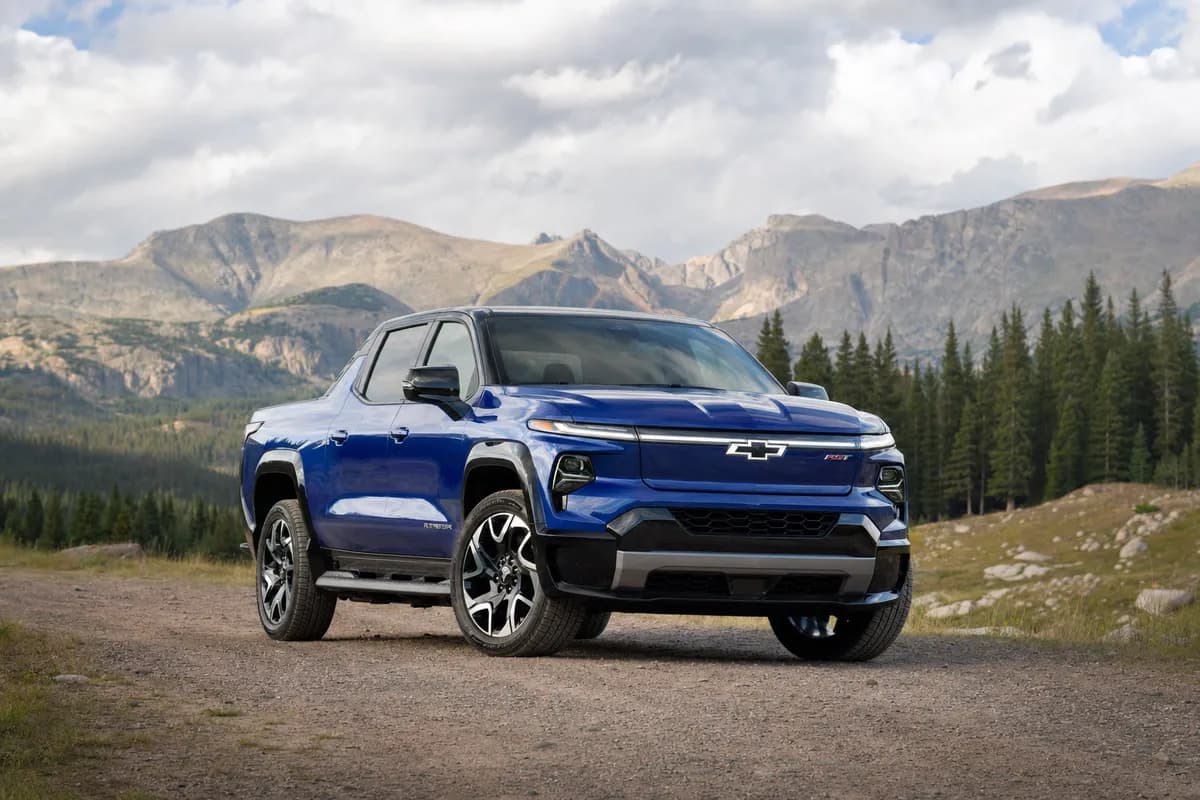
Chevrolet’s Silverado EV is not just another electric pickup entering a crowded novelty segment. It is General Motors’ most direct attempt to electrify one of the most important profit centers in the U.S. auto industry: the full-size truck.
Chevrolet’s Silverado EV is not just another electric pickup entering a crowded novelty segment. It is General Motors’ most direct attempt to electrify one of the most important profit centers in the U.S. auto industry: the full-size truck. With up to 492 miles of EPA-estimated range in Work Truck form, available fast charging at up to 350 kW, and a lineup that now stretches from fleet-focused WT models to high-output RST trims, the Silverado EV gives Chevrolet a credible answer to Ford’s F-150 Lightning, Rivian’s R1T, Tesla’s Cybertruck, and its own GMC Sierra EV sibling. More importantly, it tests whether mainstream truck buyers are ready to treat electric pickups as tools, not statements.
A Silverado in name, but not in engineering
The first thing to understand about the Chevrolet Silverado EV is that it is not an electric version of the gasoline Silverado 1500. It does not simply swap an internal-combustion powertrain for batteries and motors. Instead, it rides on GM’s Ultium electric-vehicle architecture, the same broad family of components used for vehicles such as the GMC Hummer EV, Cadillac Lyriq, Chevrolet Equinox EV, and GMC Sierra EV.
That distinction matters. Traditional full-size pickups are body-on-frame vehicles built around engines, transmissions, driveshafts, axles, and fuel tanks. The Silverado EV uses a large battery pack integrated into the vehicle structure, with electric motors providing all-wheel drive on most trims. That layout gives Chevrolet more freedom in packaging, ride tuning, and cargo design than a converted gasoline truck would allow.
The result is a truck with familiar Silverado cues but a different mission. The Silverado EV offers an eTrunk front storage compartment, independent front and rear suspension, available four-wheel steering, and the brand’s Multi-Flex Midgate, which allows the rear cabin wall to open into the bed for longer cargo. With the Multi-Flex Tailgate and Midgate configured, Chevrolet says the truck can accommodate items up to roughly 10 feet 10 inches long.
That is a clear advantage over many conventional pickups, where the engine bay is fixed space and the cab-bed boundary is permanent. It also gives Chevrolet a way to frame the Silverado EV not as a compromise, but as a truck with different utility. For contractors, municipal fleets, outdoor users, and buyers who routinely haul bulky rather than extremely heavy items, that flexibility could be more meaningful than peak horsepower.
At the same time, this is still a large, expensive, battery-heavy truck. The Silverado EV’s biggest-range versions use very large battery packs, which help deliver impressive range but add mass and cost. That is the trade-off shaping the entire electric truck market: buyers want range that feels normal by gasoline-truck standards, but delivering it in a full-size pickup requires more battery than in a sedan or compact SUV.
Range is the Silverado EV’s strongest argument
Range has been the biggest weakness for electric pickups, especially when towing or traveling long distances in cold weather. Chevrolet has attacked that concern directly. For the 2025 model year, the Silverado EV Work Truck lineup includes a Standard Range version rated at an EPA-estimated 286 miles, an Extended Range version rated at 422 miles, and a Max Range version rated at up to 492 miles. That top figure is one of the most important numbers in the segment.
For comparison, the Ford F-150 Lightning has been rated at up to about 320 miles of EPA-estimated range in extended-range configurations. The Rivian R1T can reach more than 400 miles in certain Max battery versions, depending on wheels and configuration. Tesla’s Cybertruck launched with EPA ratings around the low-300-mile range for all-wheel-drive and Cyberbeast versions, with a range-extender concept intended to push it higher at the expense of bed space.
On paper, that gives Chevrolet a range advantage where it counts most: mainstream confidence. Truck buyers are often less forgiving than car buyers because they use their vehicles for work, travel, towing, and unpredictable trips. A 250-mile EV pickup may be workable for local duty, but it can feel limiting once payload, terrain, weather, and charging gaps enter the picture. A 400- to nearly 500-mile rating changes the conversation, even if real-world use varies.
The Silverado EV also supports DC fast charging at up to 350 kW on compatible chargers. Chevrolet has said the truck can add roughly 100 miles of range in about 10 minutes under ideal conditions. That does not make charging identical to refueling a gasoline truck, but it narrows the usability gap for drivers who have access to high-power public charging.
Still, the range headline needs context. Electric pickups consume a lot of energy at highway speeds because of their size, weight, and aerodynamic profile. Add a trailer, and efficiency can fall sharply. That is not a Chevrolet-only issue; it affects every electric truck currently on sale. A Silverado EV that looks dominant in an EPA city-highway test can still require careful planning when towing a large camper, horse trailer, or enclosed work trailer over long distances.
That means the Silverado EV’s best early use cases are clear: fleet routes with depot charging, commuters who need truck capability but rarely tow long distances, contractors working within a known radius, and households that can charge at home. For those buyers, the long-range versions could make the truck feel less like an experiment and more like a practical replacement.
Chevrolet is targeting fleets before the heart of retail truck country
Chevrolet’s rollout strategy says a lot about how GM views the electric truck market. The first Silverado EV deliveries focused on the Work Truck, or WT, aimed at commercial and fleet customers rather than retail buyers chasing luxury features. That was not accidental. Fleets are often better positioned to adopt electric trucks because they can calculate total cost of ownership, install charging infrastructure, and assign vehicles to predictable routes.
For a utility company, city department, delivery operation, or maintenance fleet, the appeal is not just lower tailpipe emissions. Electric trucks can reduce fuel costs, require less routine maintenance, and provide exportable power for tools and job sites. The Silverado EV supports onboard power capability, and like the F-150 Lightning, it can be part of a broader strategy to turn the vehicle into a mobile energy asset.
That fleet-first approach also helps Chevrolet build credibility. Pickup buyers are notoriously skeptical of technology that sounds good in a showroom but fails on a job site. If the Silverado EV proves durable in municipal, construction, and commercial service, that will do more for its reputation than any launch campaign.
The consumer side of the lineup is where Chevrolet is trying to broaden appeal. The LT trim brings the Silverado EV closer to a conventional retail truck, while the RST serves as the high-output, feature-heavy version. The RST has been advertised with up to 754 horsepower and 785 lb-ft of torque in Wide Open Watts mode, with a claimed 0-60 mph time of under 4.5 seconds. Those numbers would have seemed absurd for a factory pickup not long ago.
But speed is not the central story. Electric motors make high performance relatively easy. The harder task is convincing a Silverado buyer that the electric version can handle daily life without forcing unwanted compromises. That is why the WT’s range, charging capability, bed flexibility, and towing ratings matter more than its acceleration.
Depending on configuration, the Silverado EV offers towing ratings up to the 10,000- to 12,500-pound range and payload ratings that vary by trim. Those figures put it in the useful zone for many half-ton pickup owners, although heavy-duty diesel buyers will not see it as a replacement. Chevrolet is not electrifying the entire truck universe in one move. It is starting with the high-volume light-duty space where many owners use trucks as daily drivers, work platforms, family vehicles, and recreational haulers.
The competitive pressure on Ford, Tesla, Rivian, and GM itself
The Silverado EV lands in a segment that has developed quickly but unevenly. Ford moved first among the Detroit truck leaders with the F-150 Lightning, and that decision gave it an early advantage in consumer awareness, fleet experience, and dealer familiarity. The Lightning’s strengths are its conventional F-150 shape, usable front trunk, available home backup power, and relatively straightforward learning curve for truck owners.
Chevrolet’s counter is range and packaging. The Silverado EV does not look or function exactly like a gasoline Silverado, but it offers longer range in top configurations and cargo flexibility that a traditional pickup layout cannot match. For buyers who were interested in the Lightning but worried about road-trip range, Chevrolet now has a direct answer.
Rivian occupies a different position. The R1T is smaller, more premium, and more adventure-oriented than the Silverado EV. It has strong off-road capability, clever storage, and polished software, but it is not a direct substitute for a full-size work truck. Chevrolet’s dealer network and fleet relationships give it an advantage with traditional truck buyers, while Rivian retains an edge with early adopters and outdoor-lifestyle customers who want something less conventional.
Tesla’s Cybertruck is the segment’s wild card. It has enormous visibility, stainless-steel styling, and Tesla’s charging and software ecosystem. But its polarizing design limits its appeal among traditional pickup owners, and its real-world pricing and configuration strategy have shifted since launch. The Cybertruck may win attention, but Chevrolet is aiming at a broader base: buyers who already understand what a Silverado is supposed to do.
GM is also competing with itself. The GMC Sierra EV shares the Ultium foundation but is positioned more upmarket, particularly in Denali form. That mirrors the relationship between gasoline Silverado and Sierra models, where Chevrolet carries the broader volume mission and GMC leans premium. The challenge for GM is to keep enough separation between the two electric trucks while scaling production, managing battery supply, and keeping transaction prices from drifting beyond what mainstream buyers will accept.
Price is the unresolved battleground. Electric trucks remain expensive compared with many gasoline half-ton pickups, especially once buyers want long-range batteries. Some Silverado EV configurations may qualify for the federal clean vehicle tax credit when priced below the pickup MSRP cap and when the buyer meets eligibility rules, but incentives alone cannot carry the segment. For electric trucks to move beyond early adopters and fleets, automakers need to reduce battery costs, offer more trims, and give dealers the training to sell capability rather than novelty.
What the Silverado EV changes — and what it does not
The Silverado EV changes the truck market by making long-range electric pickup capability a mainstream-brand proposition. Chevrolet is not a startup. It is not selling a niche lifestyle vehicle. It is putting an electric powertrain under one of the most recognized truck names in America, backed by a national dealer network and GM’s manufacturing scale.
That matters because full-size pickups are central to U.S. automaker profits. The Chevrolet Silverado, Ford F-Series, GMC Sierra, and Ram pickups collectively account for huge sales volumes and even larger margins. If electric vehicles are going to reshape the American market, they eventually have to work in this segment. Compact crossovers and luxury sedans can move the technology forward, but pickups determine whether electrification reaches the heart of the industry.
The Silverado EV also pushes competitors to improve. Ford will need to keep extending Lightning range, refining pricing, and expanding charging access. Ram’s upcoming electric and range-extended truck strategy will be judged against Chevrolet’s battery-electric range claims. Tesla will have to prove the Cybertruck is more than a high-profile specialty product. Rivian will continue to refine its premium adventure niche while preparing for broader-market vehicles.
Yet the Silverado EV does not solve every problem facing electric trucks. Public charging reliability remains inconsistent, especially for large vehicles towing trailers. Fast-charging sites are not always designed with pull-through spaces. Cold-weather efficiency losses still matter. Repair costs and insurance rates for large EVs remain concerns. Battery supply chains, resale values, and long-term durability under heavy commercial use will take years to fully assess.
There is also a cultural hurdle. Many truck owners are not opposed to electric power on principle; they are opposed to being told a new technology is better before it proves itself. The Silverado EV has to earn trust through capability, uptime, and cost discipline. Range numbers open the door. Work performance keeps it open.
Verdict: a serious electric truck, not a market takeover
The Chevrolet Silverado EV is one of the most important electric pickups yet because it addresses the segment’s biggest barrier: confidence. Its strongest versions offer the kind of range that can make EV ownership feel realistic for truck buyers who drive long distances, carry gear, and do not want to plan every day around a charger. Its fleet-oriented WT models give Chevrolet a practical path into commercial use, while the LT and RST trims show how electric trucks can move into mainstream and premium retail territory.
But this is not the moment electric pickups take over the truck market. Gasoline and diesel trucks still offer lower upfront prices in many configurations, faster refueling, established towing routines, and deep buyer loyalty. For heavy towing over long distances, conventional powertrains remain the easier choice. For buyers without home or depot charging, the Silverado EV’s advantages are harder to unlock.
The real significance is more measured: Chevrolet has made the electric full-size pickup credible. The Silverado EV gives GM a serious entry in a category that will define the next decade of American truck competition. It will not convert every Silverado owner, and it does not need to. If it proves reliable, useful, and economically sensible for fleets and early retail buyers, it will push the entire truck market toward electrification faster than any concept vehicle or performance stunt could.
For now, the Silverado EV is best understood as a turning point, not an endpoint. It shows that electric trucks can deliver range, power, and utility in a familiar full-size format. The next test is whether Chevrolet can build enough of them, price them competitively, and convince truck buyers that the electric Silverado is not just different — it is dependable.
Affiliate disclosure: This article contains affiliate links. RevvedUpCars may earn a small commission on qualifying purchases at no extra cost to you.