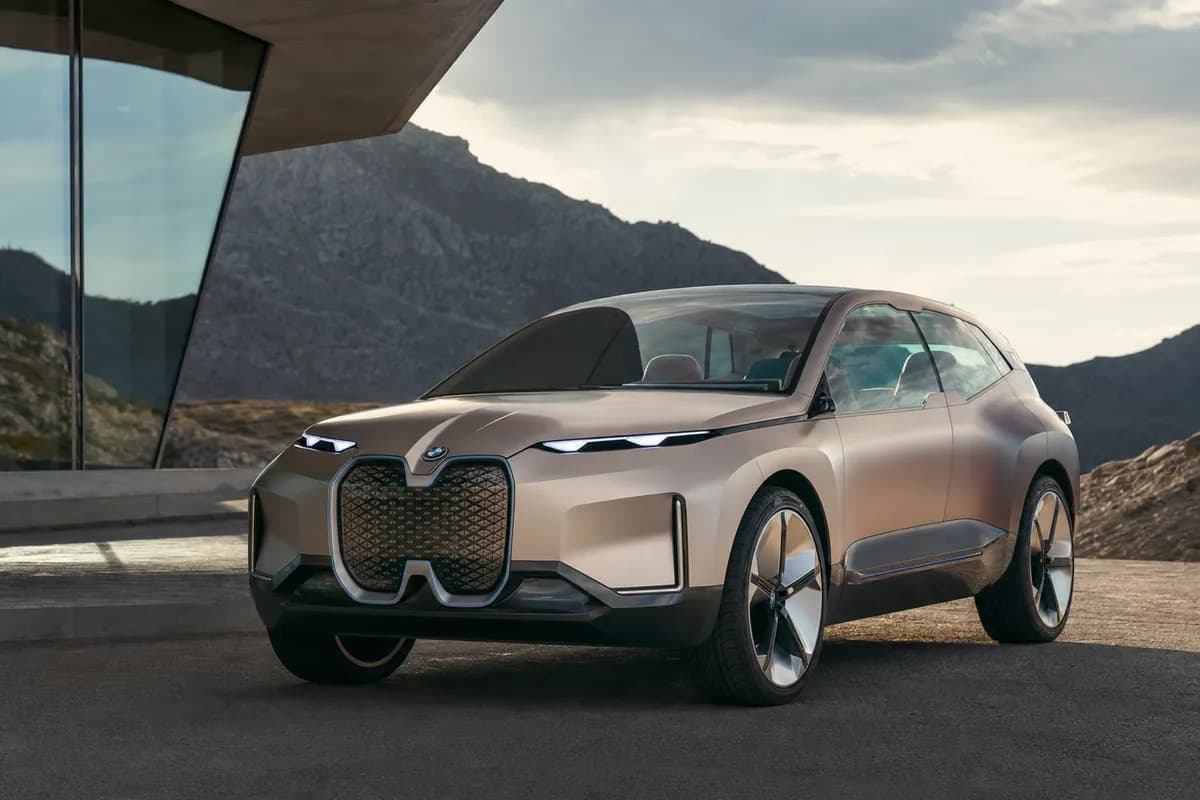
BMW’s iNEXT was never just a concept car. It was BMW’s public stake in the ground for what the next era of premium mobility would look like: electric, software-defined, connected and increasingly automated.
BMW’s iNEXT was never just a concept car. It was BMW’s public stake in the ground for what the next era of premium mobility would look like: electric, software-defined, connected and increasingly automated. First shown as the BMW Vision iNEXT in 2018, the project eventually became the production BMW iX, a large electric SUV that now sits as one of the brand’s most important technology flagships. The promise was bold, but the real story is more nuanced: iNEXT did not deliver a fully autonomous BMW, because no mainstream luxury car has. What it did deliver was a clearer roadmap for how BMW intends to move from driver assistance toward conditional automation without abandoning the idea that a BMW should still be enjoyable to drive.
From Vision iNEXT to BMW iX
BMW introduced the Vision iNEXT as a rolling preview of its future product strategy. The timing mattered. Tesla had already forced legacy automakers to take electric cars seriously, Mercedes-Benz was pushing luxury tech deeper into the cabin, and the industry was talking openly about autonomous vehicles as if robotaxis were just around the corner.
BMW’s answer was deliberately broad. The iNEXT concept combined an electric drivetrain, a lounge-like interior, advanced connectivity, artificial intelligence and automated-driving capability. It was not a traditional auto-show styling exercise. It was a message to investors, regulators and customers that BMW saw the next premium car as a platform for computing as much as a platform for driving.
The production result was the BMW iX, launched in Europe in 2021 and in the United States for the 2022 model year. It kept much of the concept’s strategic intent, even if the more theatrical elements were toned down for the showroom. The iX adopted a dedicated EV architecture, a minimalist interior, a curved digital display, over-the-air software capability and one of BMW’s most advanced driver-assistance packages.
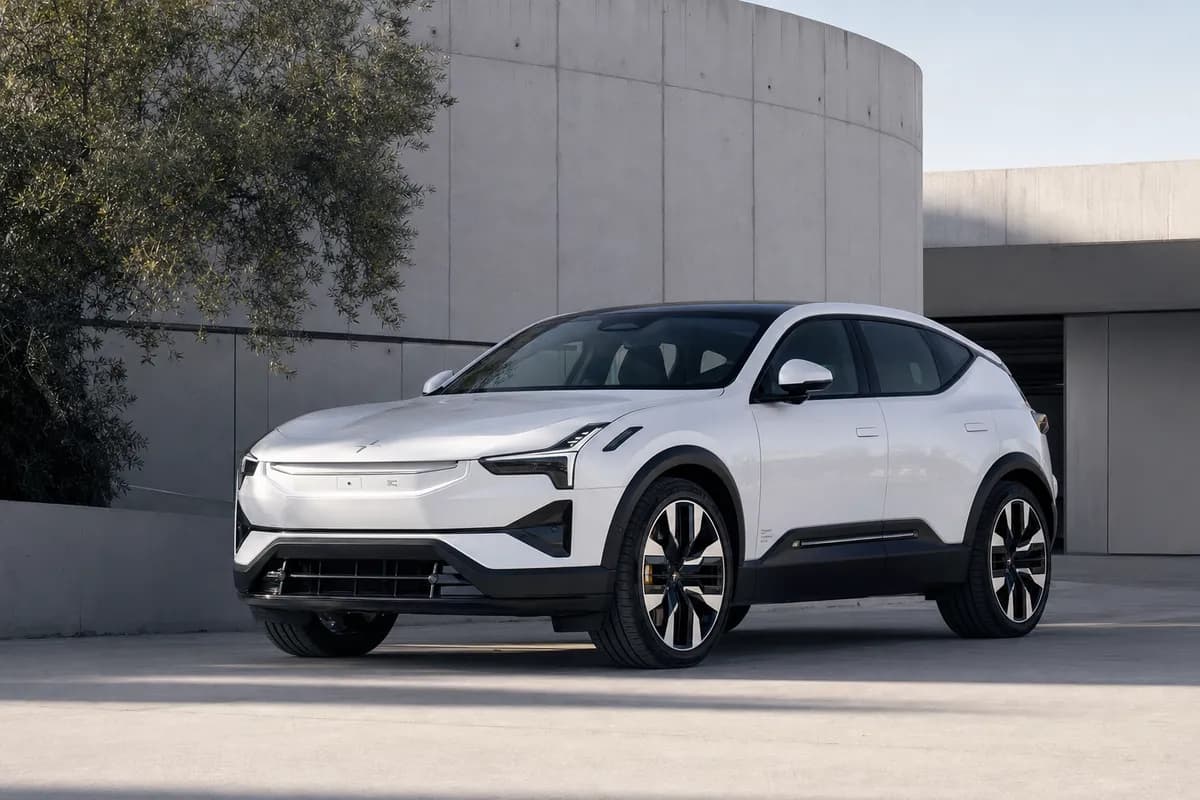
In practical terms, the iX gave BMW a rival for the Tesla Model X, Mercedes-Benz EQE SUV and EQS SUV, Audi Q8 e-tron, and later the Polestar 3. It also gave BMW a real-world testbed for technologies originally bundled under the iNEXT label.
Key production specifications underline why the iX became the natural home for the iNEXT vision:
- BMW iX xDrive50: dual-motor all-wheel drive, 516 hp, a 111.5-kWh gross battery pack, and an EPA range of up to about 324 miles depending on wheel and tire configuration.
- BMW iX M60: dual-motor all-wheel drive with up to 610 hp in launch-control mode, aimed more at performance buyers than maximum efficiency.
- Fast charging: peak DC charging of up to 195 kW on the iX xDrive50, allowing a 10 to 80 percent charge in roughly 35 minutes under ideal conditions.
- Cabin technology: BMW’s Curved Display, iDrive 8 and later software updates, a hexagonal steering wheel and extensive use of recycled and responsibly sourced materials.
That combination made the iX less of a conventional SUV and more of a technology demonstrator customers could actually buy. It was BMW’s way of turning iNEXT from a future-facing concept into a premium EV with a business case.
The Autonomous-Driving Promise, Defined More Carefully
The most futuristic part of iNEXT was its autonomous-driving pitch. The concept used two main driving modes: Boost, where the driver remained fully engaged, and Ease, where the vehicle would take over more of the driving task and the cabin would become a more relaxed social space. It was an elegant way to describe the tension at the center of modern BMW: performance and automation are not opposites, but they do ask different things from the car.
In production, that idea has translated into advanced driver assistance rather than true self-driving. The BMW iX offers systems such as adaptive cruise control, lane-centering assistance, lane-change assistance, traffic-jam support, parking assistance and, in some markets and model years, hands-free highway driving under BMW’s Highway Assistant branding. These features can reduce fatigue, especially on long motorway journeys, but they remain supervised systems.
That distinction is essential. Under the SAE automation scale, most systems available today in passenger cars are Level 2. The car can control steering and speed at the same time, but the driver must monitor the road and remain responsible at all times. Tesla Autopilot and Full Self-Driving Supervised, General Motors Super Cruise, Ford BlueCruise and BMW Highway Assistant all fall into this broad category, though their operating domains and driver-monitoring strategies differ.
Level 3 is different. At Level 3, the vehicle can perform the driving task in a defined situation, and the driver is allowed to stop actively monitoring the road, though they must be ready to take back control when requested. This is where regulation, liability and system validation become much harder.
BMW has moved into Level 3 cautiously. Its Personal Pilot L3 system has been introduced on the 7 Series in Germany, allowing conditional automated driving at speeds up to 60 km/h, or about 37 mph, in specific traffic conditions on approved roads. Mercedes-Benz has also deployed Drive Pilot, including limited approval in parts of the U.S., making it one of the first automakers to offer a certified Level 3 system to customers.
The iX, despite its iNEXT roots, is not a broad Level 3 autonomous vehicle. That is not a failure so much as a reflection of where the industry actually stands. The leap from a capable Level 2 highway assistant to a legally accountable Level 3 system is far larger than a software update and a marketing name.
The iNEXT vision was less about a single car driving itself everywhere and more about BMW building the hardware, software and customer experience needed for a gradual move toward automation.
Hardware, Software and the Reality Check
The production BMW iX carries a sophisticated sensor and computing package by current consumer-vehicle standards. Depending on market and configuration, it uses cameras, radar sensors and ultrasonic sensors to support its driver-assistance and parking functions. BMW has also emphasized increased onboard computing power and the ability to process far more sensor data than earlier models.
That matters because automated driving is not simply a matter of adding a camera and writing smarter code. A credible system needs perception, prediction, decision-making, redundancy, driver monitoring, mapping, cybersecurity and a safe fallback strategy. It must work not just on a clear day on a well-marked road, but in poor weather, construction zones, unusual traffic behavior and edge cases that human drivers handle through judgment and experience.
BMW’s approach has generally been more conservative than Tesla’s and less aggressive in public messaging. Tesla has leaned heavily on camera-based automation and rapid software iteration, while BMW has favored defined operating domains, robust driver monitoring and incremental deployment. Mercedes has gone further in certified Level 3, but only under tightly constrained conditions.
This conservatism has advantages. It lowers the risk of customers misunderstanding the system. It also aligns with how regulators are treating automated driving: cautiously, with increasing scrutiny on how systems are named, monitored and limited. The downside is that BMW’s progress can appear less dramatic than rivals that make louder claims.
The iX also shows the limits of early “future-proof” language in the auto industry. Several manufacturers suggested in the late 2010s that vehicles would ship with hardware ready for high-level autonomy, pending future software activation. In practice, sensor requirements, computing platforms and regulatory expectations have evolved quickly. A car engineered in one cycle may not be suitable for a higher automation level several years later without significant changes.
BMW appears to have absorbed that lesson. Its next major EV phase, the Neue Klasse family beginning in the middle of the decade, is being positioned around a more advanced electronics architecture, updated software stack and deeper integration of driver-assistance functions. BMW has partnered with companies including Qualcomm and Arriver for future automated-driving platforms, while also continuing to develop its own user experience and vehicle control systems.
That makes the iX an important bridge. It is not the endpoint for BMW autonomy. It is the product that moved the company from concept rhetoric into real electric, connected and partially automated luxury vehicles at scale.
Why iNEXT Still Matters
The iNEXT program matters because it forced BMW to consolidate several future-facing priorities into one vehicle line. Before the iX, BMW’s electric strategy was split between the innovative but niche i3, the plug-in hybrid i8 and electrified versions of conventional models. The iX gave the brand a purpose-built premium EV that could compete globally and carry advanced software features without looking like an experiment.
It also helped redefine what a BMW flagship can be. Traditionally, BMW’s technology leadership was expressed through the 7 Series: engines, chassis systems, infotainment, lighting and luxury features. With the iX, BMW shifted much of that conversation to an electric SUV, reflecting the market’s move toward high-riding vehicles and the need to package large batteries efficiently.
There is also a sustainability angle, though it should not be overstated. The iX uses an aluminum spaceframe and carbon-fiber-reinforced plastic elements, and BMW has promoted the use of recycled materials, renewable energy in production and reduced use of rare earths in the current-generation electric motors. These are meaningful steps, particularly in a large EV where battery production has a significant carbon footprint. Still, the iX is a heavy luxury SUV, not a minimalist environmental solution. Its sustainability case depends on long service life, clean electricity and responsible supply chains as much as on material choices.
Against competitors, the iX occupies a distinct position. The Tesla Model X remains stronger on charging-network integration and brand association with software-led EVs, though its interior execution and driver-assistance messaging have divided buyers. The Mercedes EQS SUV leans harder into traditional luxury and offers a more comfort-oriented experience. The Audi Q8 e-tron is more conventional and less radical, but also easier for some customers to accept. The BMW iX sits between them: more expressive than the Audi, less opulent than the Mercedes, and more traditional in driver engagement than the Tesla.
For autonomous-driving development, that middle ground is important. BMW is not trying to turn the iX into a driverless shuttle. It is trying to make automated assistance feel premium, predictable and integrated into the brand’s core promise. That includes how the system hands control back to the driver, how clearly it communicates its limits and how naturally it fits into daily driving.
Verdict: A Vision Partly Delivered, and Still Unfinished
BMW’s iNEXT was a futuristic vision for autonomous driving, but the production reality is best understood as an important step rather than a finished destination. The iX delivers the electric platform, digital cabin, connected services and advanced driver assistance that the concept previewed. It does not deliver full autonomy, and BMW is wise not to pretend otherwise.
That restraint is increasingly valuable. The autonomous-vehicle timeline has stretched far beyond the optimistic forecasts of the late 2010s. Technical complexity, regulation, insurance, infrastructure and public trust have all slowed deployment. In that environment, the most credible automakers are the ones that separate near-term driver assistance from genuine automated driving.
The iX shows BMW’s strengths and limitations. It proves the company can build a distinctive, long-range premium EV with serious computing capability and a more sustainable material strategy. It also shows that the path to autonomy will be incremental, expensive and tightly regulated. The real successor to the iNEXT idea may not be a single model, but a family of software-defined BMWs that arrive with more capable hardware, clearer operating domains and better integration between human and machine control.
For now, the BMW iNEXT story is not about a car that made the driver obsolete. It is about a brand preparing for a future in which driving becomes optional in some situations, assisted in many others and still rewarding when the road is worth taking yourself. That may be less sensational than the original autonomous dream, but it is far closer to the future buyers can actually use.
Affiliate disclosure: This article contains affiliate links. RevvedUpCars may earn a small commission on qualifying purchases at no extra cost to you.