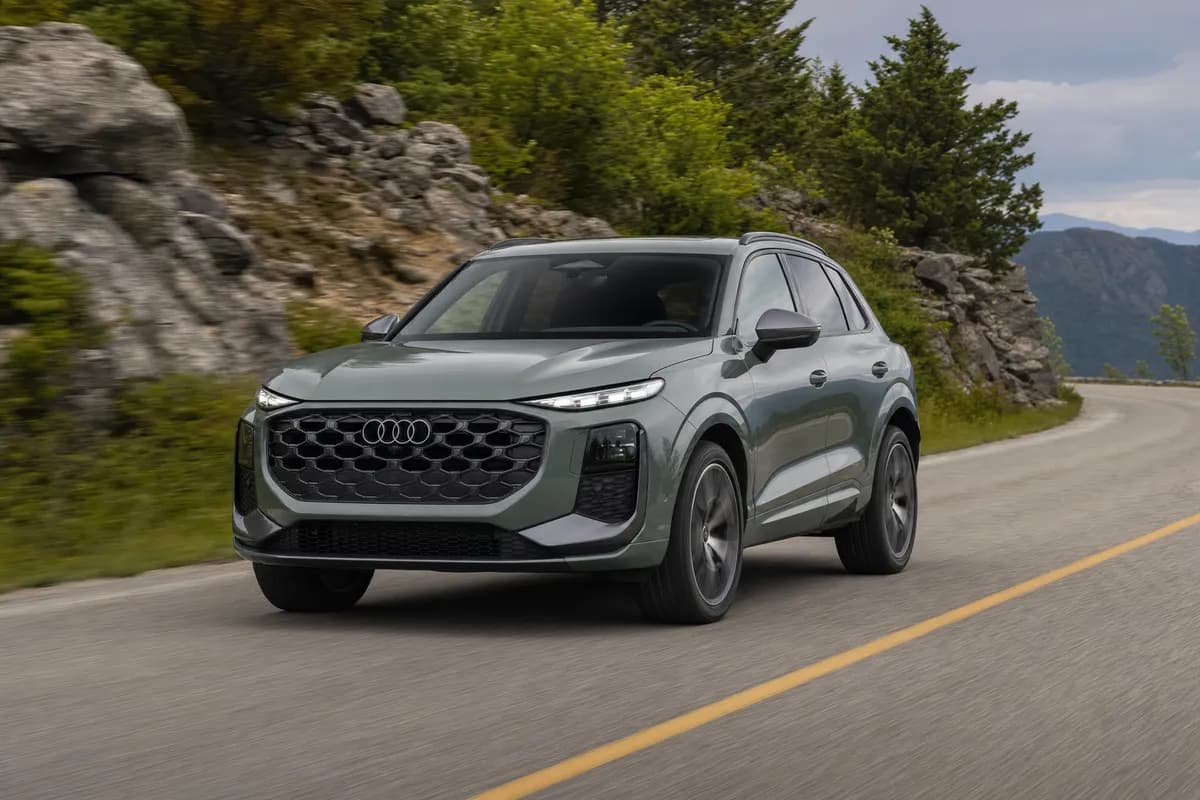
The 2026 Toyota RAV4 PHEV GR Sport adds sharper handling and bold styling—can it outpace rivals on EV range and real family drives?
Toyota’s old RAV4 Prime was already the plug-in hybrid family SUV to beat. Now the 2026 Toyota RAV4 PHEV GR Sport turns up wearing a track-jacket and asks an obvious question: can sharper handling and fresh styling make the class benchmark even harder to catch?
After a first drive, the answer is mostly yes. But this isn’t a simple victory lap, because the Mazda CX-70 PHEV fights back with premium-road-trip polish, and the Mitsubishi Outlander PHEV remains the practical oddball with real third-row flexibility in the broader family-SUV conversation.
A Familiar Formula, Sharpened for 2026
The big story is that Toyota has expanded the 2026 RAV4 plug-in hybrid lineup instead of treating the PHEV as a one-trim science project. That matters, because plug-in hybrids are no longer niche compliance cars. For many buyers, they are the sweet spot between a conventional hybrid and a full EV.
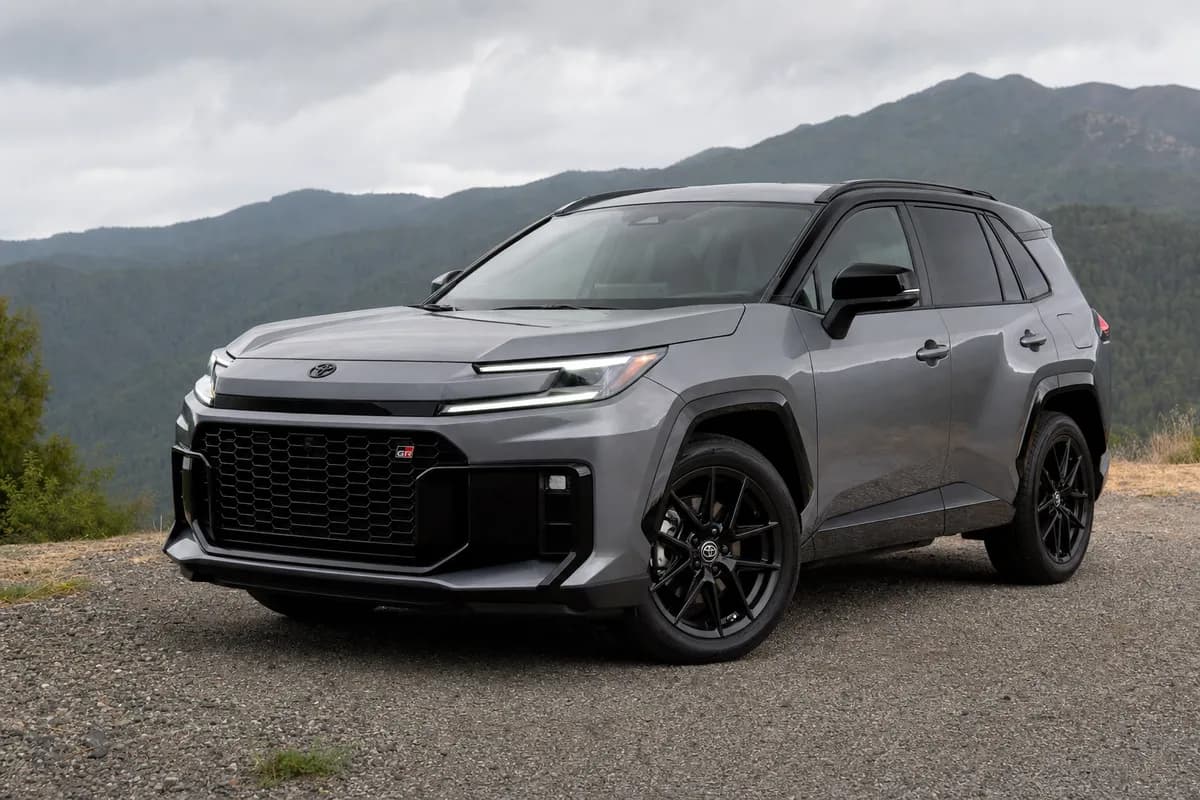
The 2026 Toyota RAV4 PHEV GR Sport sits at the spicy end of the range. It keeps the basic hardware that made the previous RAV4 Prime so effective: a 2.5-liter four-cylinder, dual electric motors for standard all-wheel drive, and a battery pack large enough to deliver genuine EV commuting range rather than token electric operation.
Toyota quotes a combined system output in the same ballpark as before, roughly 300-plus horsepower, and performance still feels properly quick for a compact family SUV. Expect 0-60 mph in the high-5-second range, which is enough to embarrass a surprising number of “sporty” gas crossovers. That remains one of the RAV4 PHEV’s killer tricks.
What GR Sport adds is not extra power so much as attitude. You get firmer chassis tuning, more aggressive wheel-and-tire fitment, sharper steering calibration, and styling tweaks that stop short of parody. That is the right call, because nothing ruins a family SUV faster than pretending it is a Nürburgring refugee.
Performance: Quick, Clean, and Less Floppy Than Before
Put your foot down and the RAV4 PHEV GR Sport still delivers the instant electric shove that makes plug-in hybrids feel faster than their spec sheets. Around town, it leaps into gaps with almost EV-like smoothness. On a back road, it has enough midrange punch to make passing feel hilariously easy.
The biggest improvement is body control. Earlier RAV4 plug-in models were fast but never especially graceful, leaning on their powertrain to distract from a chassis that could feel a bit earnest and top-heavy when pushed. The GR Sport trim tightens that up.
It still is not a hot hatch on stilts. But turn-in is cleaner, roll is better contained, and the steering now gives you enough confidence to place the nose accurately rather than vaguely suggesting a direction and hoping the suspension sorts itself out.
Against its key rivals, Toyota still wins the straight-line argument.
- Toyota RAV4 PHEV GR Sport: roughly 300+ hp, 0-60 mph around 5.7 seconds
- Mazda CX-70 PHEV: 323 hp, 0-60 mph typically in the low-6-second range
- Mitsubishi Outlander PHEV: 248 hp, 0-60 mph around 7 seconds or a bit more
The Mazda has plenty of punch, but it carries more weight and feels more like a long-legged GT than an eager crossover. The Mitsubishi is competent, quiet, and easygoing, but fast it is not. If outright pace matters, the Toyota remains the class’s blunt instrument, now with slightly finer handling.
EV Range and Efficiency: Still the Segment’s Real Power Move
Here is where Toyota’s advantage becomes more meaningful than a flashy acceleration number. A plug-in hybrid lives or dies on electric range, because that determines whether you actually drive it like an EV during the week or just drag around a battery you rarely use.
The Toyota RAV4 plug-in hybrid review story has long been built on this point, and the 2026 version keeps that strength intact. Expect EV range in the low-40-mile neighborhood, which keeps Toyota right at the sharp end of the segment.
The Mazda CX-70 PHEV manages about 26 miles of EV range. The Mitsubishi Outlander PHEV lands at about 38 miles. Those are not bad numbers, but Toyota’s edge is the difference between handling a typical suburban round trip entirely on electricity and firing the gas engine before dinner.
- RAV4 PHEV GR Sport: about 42 miles EV range
- Outlander PHEV: about 38 miles EV range
- CX-70 PHEV: about 26 miles EV range
That gap matters in the real world. If your commute is under 35 miles, the Toyota and Mitsubishi can behave like honest electric cars most weekdays. The Mazda, despite its premium aspirations and strong power output, asks more frequent gasoline involvement. For shoppers chasing low running costs, that is a miss.
Charge times are also family-life relevant rather than brochure fluff. On Level 2 home charging, these SUVs can refill overnight without drama. That means the Toyota fits neatly into normal routines, which is exactly what the best plug-in hybrid SUV 2026 contender should do.
Family Use: Toyota Nails the Basics, But Rivals Have Their Angles
The RAV4’s enduring success comes from one brutally simple fact: it is easy to live with. Visibility is good, controls are straightforward, rear-seat space is usable for actual adults, and the cargo area is square enough for strollers, grocery runs, sports gear, and the rest of family life’s clutter.
The GR Sport trim does not ruin that with absurdly stiff suspension or fashion-victim ergonomics. Ride quality is firmer than a regular RAV4 PHEV, yes, but not punishing. It still absorbs broken pavement with enough compliance to keep complaints from the second row to a minimum.
Against its rivals, though, each one has a different family pitch.
- RAV4 PHEV GR Sport: best blend of speed, EV range, and efficient packaging
- Mazda CX-70 PHEV: richest cabin feel, more upscale design, strong towing attitude
- Mitsubishi Outlander PHEV: solid packaging, calm road manners, useful value play
The Mazda CX-70 PHEV comparison is especially interesting because Mazda aims higher emotionally. Its cabin looks and feels more expensive, and its rear-drive-biased platform gives it a more mature, premium character on the highway. But it is also bigger, heavier, and less efficient where a PHEV is supposed to shine.
The Mitsubishi Outlander PHEV vs RAV4 matchup is less glamorous but more practical. The Mitsubishi rides nicely, has a thoughtfully designed cabin, and feels engineered by adults who understand school-run duty. Still, the Toyota is quicker, usually more efficient in EV use, and less compromised by its own ambition.
If you are shopping for one car to do everything, Toyota’s packaging remains hard to fault. No gimmicks, no weird interfaces, no premium-brand pricing fantasy. Just competence with a powertrain that still feels one generation ahead of much of the field.
Verdict: The Benchmark Gets a Tracksuit, Not a Personality Crisis
The 2026 Toyota RAV4 PHEV GR Sport does not reinvent the formula. It simply improves the bits that needed sharpening while keeping the core strengths that made the RAV4 Prime such a weapon: real EV range, genuinely quick acceleration, standard all-wheel drive, and everyday usability that never feels overthought.
That makes it the one to beat in this class. The Mazda CX-70 PHEV is the better pick if you want a more premium cabin and a smoother, more sophisticated cruising character. The Mitsubishi Outlander PHEV deserves a look if value and family-friendly calm matter more than speed.
But if you want the most complete answer to the plug-in family SUV brief, Toyota still has it. The GR Sport trim adds just enough athleticism to make the RAV4 more enjoyable without sabotaging the reason people buy it in the first place.
Final verdict: The RAV4 PHEV GR Sport is not the most luxurious plug-in SUV, and it is not the cheapest. It is, however, the smartest all-rounder here. For buyers asking which model has the best mix of performance, EV range, and family usability, the answer is still Toyota.
Affiliate disclosure: This article contains affiliate links. RevvedUpCars may earn a small commission on qualifying purchases at no extra cost to you.