Mazda sharpens the CX-5 with a new chassis, a more upscale cabin, and a hybrid push. Can it finally outpace the CR-V Hybrid and RAV4?
The compact SUV class is where good intentions go to die. Every brand claims “premium feel,” “class-leading efficiency,” and “engaging dynamics,” then hands you another gray appliance. The 2026 Mazda CX-5 first drive suggests Mazda may finally have the hardware to back up the pitch.
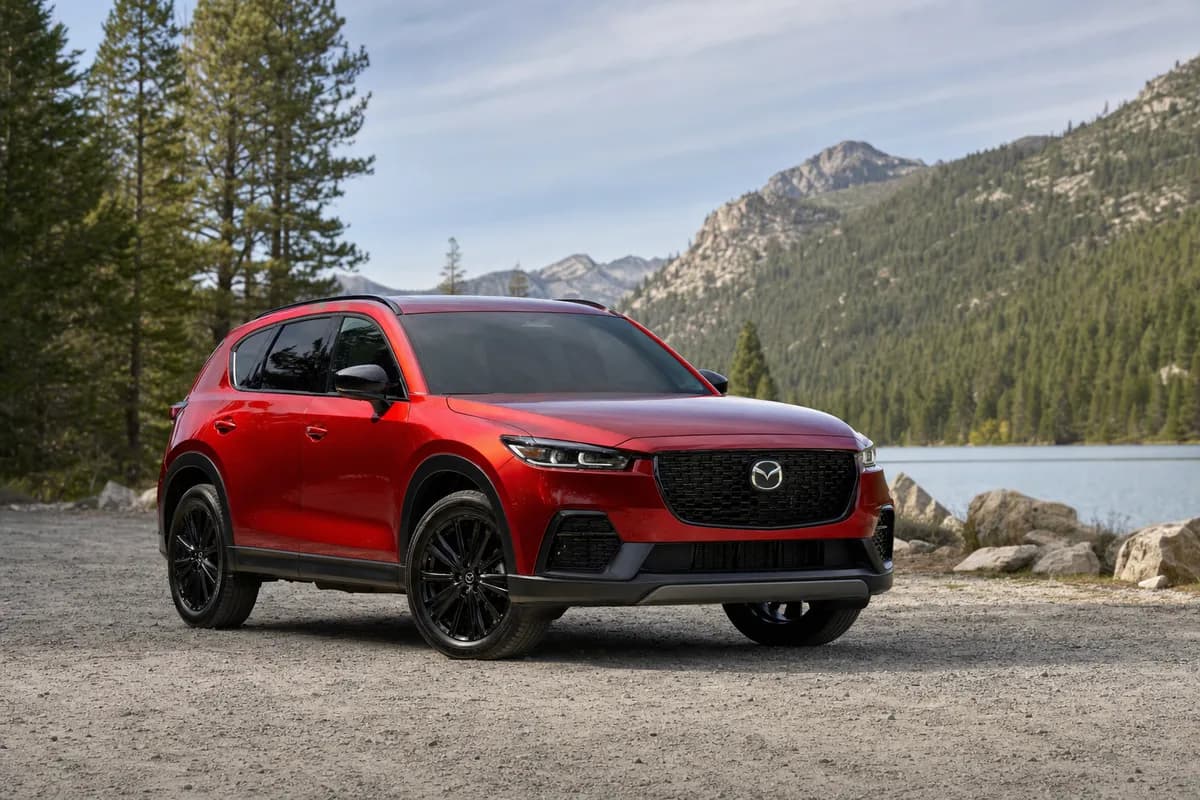
That matters because this is Mazda’s bestseller, and because the targets are brutally clear: the Honda CR-V Hybrid and Toyota RAV4 Hybrid. Both have spent years owning the sensible middle of the market. Mazda’s redesigned CX-5 arrives with a sharper chassis, richer cabin, and long-awaited hybrid option to challenge them where it counts.
A Redesign That Fixes the Old CX-5’s Biggest Problem
The old CX-5 was handsome, athletic, and increasingly outgunned. It drove better than most rivals, but it was tighter inside, thirstier in upper trims, and starting to feel like the well-dressed veteran at a party full of younger overachievers. For 2026, Mazda has finally gone after the fundamentals.
The new CX-5 rides on a substantially revised architecture with a longer wheelbase, a stiffer body structure, and retuned suspension geometry. Mazda says torsional rigidity is up, and you can feel it immediately on rough pavement. The body settles faster after impacts, the steering response is cleaner off-center, and the whole thing feels less busy than before.
Dimensionally, this redesign matters more than the styling. The CX-5 grows where it needed to: rear-seat room and cargo space. Mazda hasn’t turned it into a boxy hauler, but the new packaging closes the gap to the CR-V and RAV4 enough that you no longer dismiss it the second a rear-facing child seat enters the chat.
- What’s improved for 2026: longer wheelbase, stiffer structure, revised suspension, more rear legroom, and expanded cargo area
- What remains Mazda-like: sleek proportions, lower seating position, and road manners that still favor drivers over spreadsheet worshippers
- Why it matters: the old CX-5 was often the enthusiast’s pick but not the family’s default choice
Stylistically, Mazda hasn’t gone full origami like some rivals. The new sheetmetal is cleaner, wider-looking, and more mature. It still looks expensive without trying too hard, which is more than I can say for parts of the current RAV4 lineup that resemble tactical camping gear.
The Hybrid Finally Arrives, and It’s the Version That Matters
If you’re searching for a Mazda CX-5 hybrid review, here’s the short version: Mazda knew it could not stroll back into this fight with another pretty, mildly efficient crossover. The hybrid is the headline. And yes, it transforms the CX-5’s relevance overnight.
Mazda’s new hybrid setup pairs a 2.5-liter four-cylinder with an electric motor system and battery pack aimed squarely at the class leaders. Expect combined output around the low- to mid-220-hp range, depending on trim and market configuration, with front- and all-wheel-drive availability. More important than the power figure is the fuel economy target: roughly 38 to 40 mpg combined in mainstream trims.
That puts the 2026 CX-5 directly into the same conversation as the Honda CR-V Hybrid, rated at up to 40 mpg combined, and the Toyota RAV4 Hybrid, which lands around 39 to 40 mpg combined depending on spec. In other words, Mazda is no longer asking buyers to sacrifice efficiency for style and steering feel. About time.
On the road, the hybrid powertrain is smoother than some early Mazda electrification efforts and less droney than many CVT-heavy competitors. Throttle response is crisp in urban driving, where the electric assist fills the low-speed torque gap. It doesn’t feel fast in the hot-hatch sense, but it feels stout, and that is exactly what buyers in this class actually use.
- Estimated 2026 Mazda CX-5 Hybrid: ~220+ hp, ~38-40 mpg combined
- Honda CR-V Hybrid: 204 hp, up to 40 mpg combined
- Toyota RAV4 Hybrid: 219 hp, about 39-40 mpg combined
The non-hybrid models will still matter for entry pricing, but let’s not kid ourselves. The hybrid is the one Mazda needed. If pricing stays competitive, it becomes the trim that turns admiration into actual sales.
Still the Driver’s Choice? Mostly, Yes
Mazda has built its modern reputation on making normal cars feel a little less normal. The 2026 CX-5 keeps that tradition alive. It turns in with more precision than a CR-V, carries its weight more naturally than a RAV4, and resists the floaty, disconnected nonsense that infects too many family crossovers.
The steering is a particular win. It has real linearity and believable weighting, not the video-game approximation you get in some rivals. Through a series of quick transitions, the CX-5 feels tied down and cooperative, with less roll and fewer secondary body motions than the segment average.
Ride quality is improved too, which matters because Mazda sometimes confuses “sporty” with “busy.” Here, the damping is better judged. Sharp edges are rounded off without dissolving the car’s sense of control, and highway refinement is stronger thanks to lower road and wind noise.
Against the 2026 Mazda CX-5 vs Honda CR-V Hybrid question, the Honda still has the airier cabin and the easier family-first personality. But the Mazda is the one you’d choose if you care how a steering wheel feels in your hands. Against the 2026 Mazda CX-5 vs Toyota RAV4 debate, the Mazda is plainly more polished and less agricultural from behind the wheel.
The Cabin Finally Matches the Price Tag
Mazda interiors have long punched above their badge, but the 2026 CX-5 takes a real step forward. Materials look richer, switchgear feels more expensive, and the layout is cleaner without chasing touchscreen minimalism for its own sake. Blessedly, there are still proper physical controls where they matter.
The infotainment system is larger, quicker, and easier to parse than Mazda’s old setup. Wireless Apple CarPlay and Android Auto are standard, and upper trims add a premium audio system, larger digital instrumentation, and a broader suite of connected services. Mazda’s interface still leans slightly conservative, but I’ll take “conservative and easy” over “futuristic and infuriating” every day of the week.
Rear-seat space is improved enough to change the ownership conversation. Adults fit more comfortably, and the cargo hold is finally competitive rather than apologetic. The CR-V still likely holds the edge for outright packaging cleverness, but the Mazda no longer feels like the stylish option you outgrow after one Costco run.
- CX-5 interior strengths: material quality, seat comfort, physical controls, quieter cabin
- CR-V Hybrid strengths: roomier rear seat, practical storage, airy feel
- RAV4 strengths: durable usability, straightforward controls, proven hybrid reputation
Safety tech also looks up to class standards, with adaptive cruise control, lane-keeping assistance, blind-spot monitoring, and automated emergency braking expected across the lineup. That’s not a brag in 2026. It’s table stakes. Mazda appears to understand that now.
Verdict: Is This the Best Compact SUV of 2026?
The new CX-5 is the most complete compact SUV Mazda has built in years. It is more spacious, more refined, and finally efficient enough in hybrid form to stop losing by default. Most important, it has achieved that without sanding off the dynamic character that made the old one likable.
Does it beat the segment leaders outright? Not automatically. The Honda CR-V Hybrid remains the rational all-rounder, with superb packaging and an easygoing demeanor. The Toyota RAV4 still brings bulletproof market confidence, strong resale, and a hybrid system buyers already trust.
But here’s the real shift: Mazda has moved from “interesting alternative” to “legitimate front-runner.” If final pricing lands within striking distance of a well-equipped CR-V Hybrid and RAV4 Hybrid, the 2026 CX-5 becomes the one to buy for people who want premium flavor and genuine road manners without giving up efficiency.
So, is the best compact SUV 2026 fight suddenly tighter? Absolutely. The 2026 CX-5 doesn’t just look sharper. It thinks sharper, rides better, and finally brings the hybrid credentials this badge needed years ago. For once, Mazda’s sales pitch and the product are speaking the same language.
Bottom line: The 2026 Mazda CX-5 is no longer the compact SUV you choose with your heart and justify with caveats. In hybrid form, it’s the one you can choose with your head too — and that makes the CR-V Hybrid and RAV4 earn their keep.
Affiliate disclosure: This article contains affiliate links. RevvedUpCars may earn a small commission on qualifying purchases at no extra cost to you.