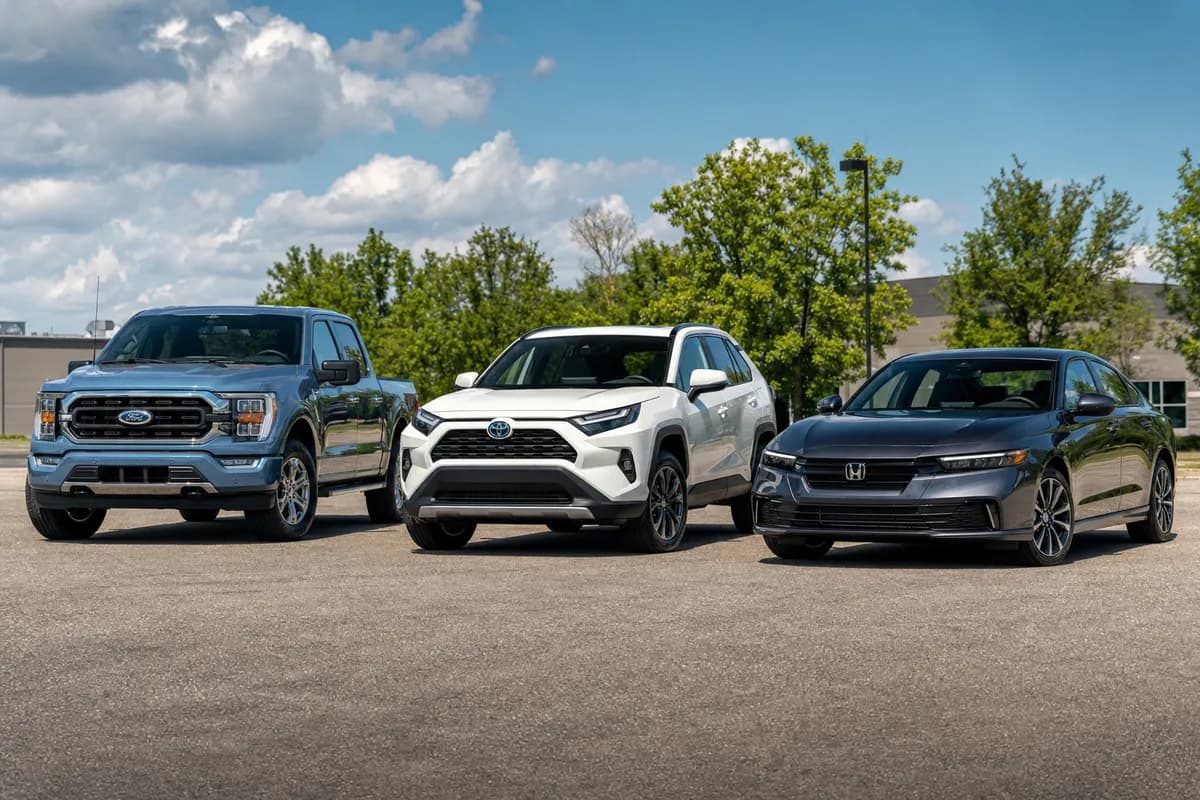
Car recalls were impossible to ignore in 2023, and three of the industry’s biggest names — Ford, Toyota, and Honda — were repeatedly in the spotlight.
Car recalls were impossible to ignore in 2023, and three of the industry’s biggest names — Ford, Toyota, and Honda — were repeatedly in the spotlight. The year’s recall activity exposed familiar pressure points across the modern car business: complex electronics, aging component designs, supplier quality issues, and the challenge of managing millions of vehicles after they leave the factory. For owners, the takeaway is straightforward: a recall is not just paperwork. It is a safety action, and in several major 2023 campaigns the risks included engine stalls, fire hazards, braking problems, airbag concerns, and rearview camera failures.
The 2023 Recall Landscape: More Software, More Sensors, More Scrutiny
Recalls are not new, but the nature of them is changing. Vehicles now depend on camera systems, electronic parking brakes, hybrid drivetrains, advanced driver-assistance features, and increasingly integrated electrical architectures. That complexity can improve safety and efficiency, but it also creates more points of failure.
In 2023, the National Highway Traffic Safety Administration’s recall records showed high activity across the industry, with Ford again among the manufacturers issuing the most U.S. recall campaigns. Honda had one of the year’s largest single safety actions with a fuel pump recall affecting about 2.54 million U.S. vehicles. Toyota, typically known for conservative engineering and strong reliability scores, also faced major campaigns involving RAV4 battery retention, Highlander exterior trim, and Tundra fuel lines.
The numbers matter, but they need context. A manufacturer with more recalls is not automatically building unsafe vehicles, and a company with fewer campaigns is not automatically better. Recall totals are shaped by vehicle volume, platform sharing, supplier commonality, and how aggressively a company identifies and reports problems. What matters most is the severity of the defect, the number of vehicles involved, the speed of the remedy, and whether owners actually get the repair completed.
Bottom line: 2023 was not defined by one catastrophic industry-wide defect. It was defined by the scale of modern vehicle complexity — and by how quickly manufacturers could identify, communicate, and fix problems across millions of cars, trucks, and SUVs.
Ford: High Recall Volume and Persistent Quality Pressure
Ford entered 2023 already under scrutiny for recall volume, and the year did little to ease that pressure. According to federal recall data, Ford issued dozens of U.S. recall campaigns in 2023, affecting millions of vehicles. The company’s recall activity covered a wide range of products, from older sedans such as the Fusion and Lincoln MKZ to high-volume trucks and SUVs including the F-150, Explorer, Escape, Bronco Sport, Maverick, and Lincoln models.
Brake hoses on Ford Fusion and Lincoln MKZ
One of Ford’s largest 2023 recalls involved approximately 1.28 million 2013-2018 Ford Fusion and Lincoln MKZ sedans. The issue centered on front brake jounce hoses that could rupture prematurely. A ruptured brake hose can lead to brake fluid loss and increased stopping distance, raising the risk of a crash.
This recall stood out because it involved a core mechanical safety system rather than an infotainment glitch or software calibration. It also affected vehicles that were no longer in production, underscoring an important point: recall risk does not end when a model leaves the showroom. Owners of older vehicles may be less likely to visit a dealer regularly, making recall completion harder.
F-150 electric parking brake concerns
Ford also recalled about 870,000 2021-2023 F-150 pickups over a potential problem with the electric parking brake. In affected trucks, wiring damage could cause the parking brake to activate unexpectedly. The F-150 is America’s best-selling vehicle line, so even a targeted defect can quickly become a major recall when it involves a high-volume platform.
For Ford, this kind of issue is especially sensitive. The F-Series is central to the company’s profits and brand identity. A recall involving unexpected braking behavior does not just create repair logistics; it also tests customer confidence in a truck marketed for work, towing, and daily dependability.
Rearview cameras, rollaway risk, and hybrid fire concerns
Ford’s 2023 recall list also included camera-related defects and drivetrain-related safety issues. Several Ford and Lincoln vehicles were recalled over rearview camera image failures, a category that has become increasingly common as federal rules require backup cameras and automakers integrate more digital displays.
The company also recalled certain 2020-2022 Ford Explorer models over a rear axle mounting bolt issue that could lead to a loss of drive power or vehicle rollaway if the parking brake was not applied. In another campaign, Ford recalled certain hybrid models, including versions of the Ford Escape, Maverick, and Lincoln Corsair, because engine failure could release oil and fuel vapor, increasing fire risk.
Ford has publicly acknowledged quality as a business challenge in recent years, and recalls are part of that larger story. The company has been trying to reduce warranty costs and improve launch quality, but the 2023 recall record showed how difficult that turnaround can be when a manufacturer sells high volumes across trucks, SUVs, hybrids, EVs, and commercial vehicles.
Toyota: Reliability Reputation Meets High-Volume Safety Campaigns
Toyota’s 2023 recall activity attracted attention because it cut across some of the company’s most trusted nameplates. Toyota remains one of the strongest brands for long-term reliability, but 2023 was a reminder that even conservative engineering cultures are not immune to large safety campaigns.
RAV4 battery fire risk
The most significant Toyota recall of the year involved about 1.85 million 2013-2018 Toyota RAV4 SUVs in the United States. The issue involved the 12-volt battery. If a replacement battery with certain dimensions was installed and not properly secured, it could move during aggressive driving. That movement could allow the positive battery terminal to contact the hold-down clamp and cause a short circuit, increasing the risk of fire.
This was not a defect in the RAV4’s hybrid system or a high-voltage battery issue. It was a conventional 12-volt battery retention problem. That distinction matters because it shows how ordinary service items can become safety risks when vehicle design, replacement parts, and real-world maintenance practices intersect.
The RAV4 is one of Toyota’s most important vehicles globally and a top seller in the United States. A recall of this size affects a large owner base, many of whom bought the RAV4 specifically for durability and low running costs. Toyota’s remedy focused on improving battery retention hardware to reduce the risk of movement and shorting.
Highlander bumper cover recall
Toyota also recalled roughly 751,000 2020-2023 Highlander and Highlander Hybrid SUVs in the U.S. because tabs securing the front lower bumper cover could detach. If the bumper cover came loose while driving, it could become a road hazard and increase crash risk for other motorists.
On paper, exterior trim may sound less serious than brakes or airbags. In practice, detached parts at highway speed can create dangerous debris. The Highlander is a family-focused three-row SUV, and the recall affected both gasoline and hybrid variants, illustrating how shared body structures can spread a defect across multiple powertrain versions.
Tundra fuel line and other Toyota issues
Toyota’s redesigned Tundra also faced recall attention in 2023. Certain 2022-2023 Tundra and Tundra Hybrid models were recalled because a fuel tube could rub against a brake line and develop a leak. A fuel leak near an ignition source increases fire risk, making this a high-priority repair.
The Tundra is particularly important because Toyota redesigned the truck to compete more directly with full-size pickups from Ford, General Motors, and Ram. Launching a new full-size truck platform is a major engineering challenge, and early recalls can shape buyer perceptions, especially in a segment where owners prize durability and towing confidence.
Toyota also had smaller 2023 campaigns involving other models and systems, including airbag-related concerns in some vehicles. Taken together, the company’s recall year was not a collapse in quality, but it did show that Toyota’s scale and platform sharing can turn specific component issues into large owner notifications.
Honda: Massive Fuel Pump Recall Defines the Year
Honda’s biggest 2023 recall was one of the most consequential safety campaigns of the year. In December, Honda recalled about 2.54 million U.S. vehicles because of a defective fuel pump impeller that could deform and cause the fuel pump to fail. If the fuel pump stops working, the engine can stall while driving, increasing crash risk.
The recall affected a broad range of Honda and Acura models, including versions of the Honda Accord, Civic, CR-V, HR-V, Fit, Insight, Odyssey, Passport, Pilot, and Ridgeline, as well as Acura ILX, MDX, RDX, RLX, TLX, and NSX models. Model years varied by vehicle, but many affected vehicles were from the 2017-2020 period.
This campaign was tied to fuel pump components supplied by Denso, a major supplier whose pump issue affected multiple automakers over several years. That supplier connection is important. Modern automakers rely on global supplier networks, and a component-level defect can spread across brands, models, and continents. The badge on the grille may be Honda or Acura, but the root cause may sit deeper in the supply chain.
Why the Honda fuel pump recall matters
Engine stall recalls are serious because they can happen without much warning and may leave drivers without power in traffic. Even if steering and braking assist remain partially available, a stalled vehicle on a highway or at an intersection can create immediate danger.
Honda’s fuel pump recall also mattered because of its scale. A 2.54 million-vehicle U.S. campaign puts pressure on parts availability, dealer scheduling, and owner communication. Large recalls are rarely fixed overnight. Manufacturers typically phase repairs as replacement parts become available, which means some owners may receive an interim notice before the final remedy is ready.
Rearview camera and seat belt campaigns
Honda also had other notable 2023 recalls. One campaign covered about 1.2 million vehicles, including certain Honda Odyssey, Passport, and Pilot models, for a rearview camera image that could fail to display. Backup camera reliability has become a recurring issue industry-wide as vehicles depend more heavily on digital displays, wiring harnesses, and camera modules.
Another Honda recall involved roughly 448,000 vehicles over front seat belt buckle concerns. A seat belt that does not latch properly is a direct safety issue and one of the clearest examples of why recall notices should not be ignored. Seat belts remain the most important crash protection system in any vehicle, regardless of how advanced its driver-assistance technology may be.
For Honda, the 2023 recall story was less about frequent small campaigns and more about the impact of a few very large safety actions. The fuel pump recall, in particular, reached deep into Honda’s mainstream lineup and Acura’s premium models, making it one of the year’s defining recall events.
What Owners Should Do: Check, Schedule, and Follow Through
The most important step for owners is simple: check the vehicle identification number. Recall eligibility is VIN-specific, not just model-specific. Two vehicles from the same model year can have different recall status depending on production date, plant, parts batch, and configuration.
- Use the VIN: Check the 17-character vehicle identification number through the NHTSA recall database or the manufacturer’s owner website.
- Do not assume a used car is fixed: Recalls follow the vehicle, not the owner. A used Ford, Toyota, Honda, or Acura may have open recalls even if it was sold by a dealer.
- Call the dealer early: Large recalls can strain parts supply. Scheduling ahead matters, especially for fuel pump, brake, battery, or airbag-related repairs.
- Keep recall letters: Manufacturer notices include campaign numbers, symptoms, remedy details, and instructions if parts are not yet available.
- Take warning signs seriously: Brake pedal changes, fuel smell, engine stalling, electrical faults, camera failures, or seat belt latch problems should be inspected promptly.
Recall repairs are generally performed at no charge by franchised dealers. Owners do not need to be the original buyer, and the vehicle does not need to be under warranty. In some cases, owners who previously paid for a related repair may be eligible for reimbursement, depending on the campaign terms and documentation.
The challenge is recall completion. Millions of vehicles remain unrepaired each year because owners move, miss notices, delay appointments, or assume the issue does not apply to them. That is a mistake. A recall notice means the manufacturer and federal safety regulators have identified a defect significant enough to require action.
Verdict: 2023 Was a Warning About Scale, Not Just Quality
Ford, Toyota, and Honda each faced different recall narratives in 2023. Ford’s issue was volume and breadth, with campaigns spread across trucks, SUVs, hybrids, sedans, and Lincoln models. Toyota’s year showed that even a reliability leader can face large safety actions when high-volume vehicles such as the RAV4 and Highlander are involved. Honda’s year was dominated by the massive fuel pump recall, a supplier-linked defect that affected millions of mainstream and luxury-brand vehicles.
The common thread is scale. Automakers now build vehicles with more electronics, more shared components, and more supplier-dependent systems than ever before. That can make cars safer, cleaner, and more capable, but it also means a single defect can affect hundreds of thousands or even millions of vehicles.
For buyers, recalls should be part of the ownership equation, not a reason to panic. A strong manufacturer is not one that never issues recalls; it is one that detects defects quickly, communicates clearly, supplies parts efficiently, and completes repairs. In 2023, Ford, Toyota, and Honda all had to prove that after the sale, safety support is just as important as the original engineering.
The practical verdict is clear: if you own a 2013-2018 Ford Fusion, 2021-2023 Ford F-150, 2013-2018 Toyota RAV4, 2020-2023 Toyota Highlander, 2022-2023 Toyota Tundra, or a late-2010s Honda or Acura covered by the fuel pump campaign, check your VIN and book the repair. Recalls are only effective when they move from the database to the service bay.
Affiliate disclosure: This article contains affiliate links. RevvedUpCars may earn a small commission on qualifying purchases at no extra cost to you.