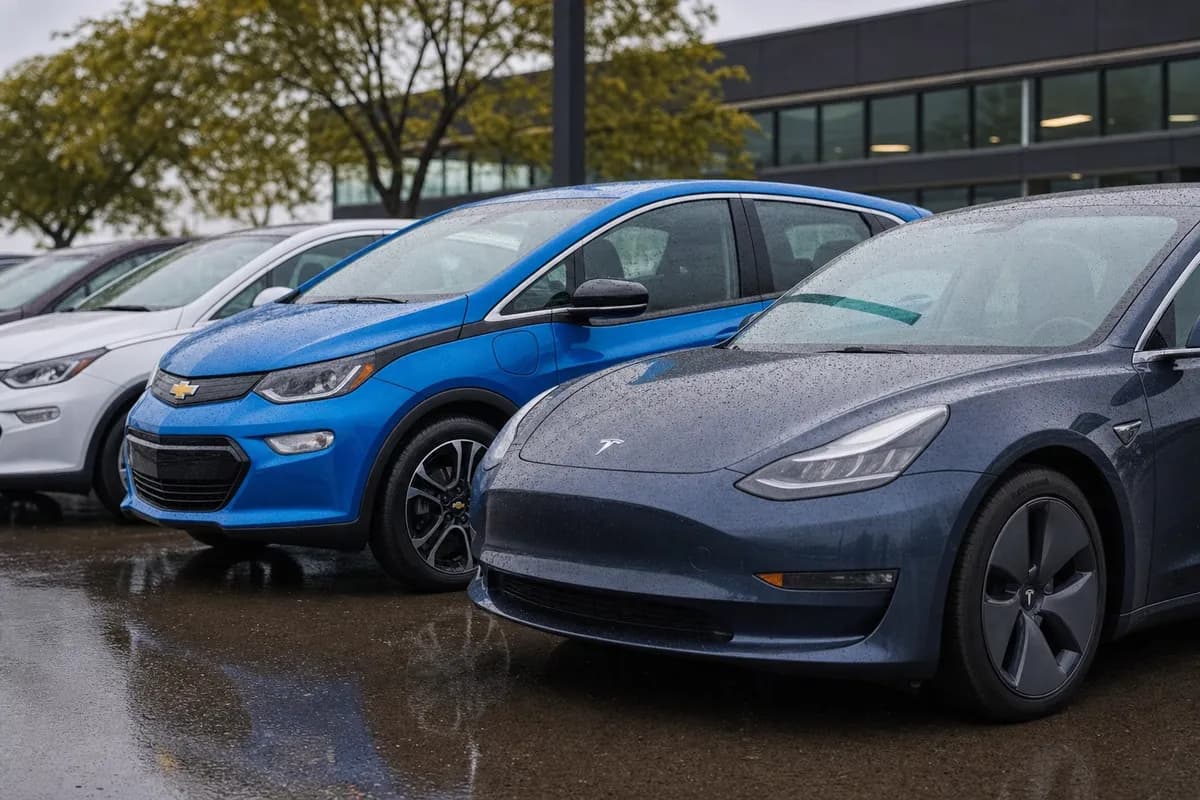
The auto industry enters 2023 with a rare mix of momentum and uncertainty. Electric vehicles are moving from early-adopter curiosities to mainstream showroom products, but high battery costs, rising interest rates, uneven charging access, and supply-chain constraints will shape…
In 2023, the question is not whether EV sales will rise. They almost certainly will. The more important question is whether automakers can build enough of the right models at prices buyers can absorb.
The product pipeline is stronger than ever. The Hyundai Ioniq 6 brings a sleek, efficient sedan shape to a market dominated by crossovers, with EPA range estimates reaching up to 361 miles in its most efficient configuration. The Kia EV9, expected to become one of the first three-row electric SUVs from a mainstream brand, will target families that have so far had few non-luxury options. The Chevrolet Equinox EV is especially important because General Motors has positioned it as a more affordable mass-market electric crossover, with pricing initially targeted around the $30,000 mark, though final transaction prices will depend on trims and incentives.
Pickup buyers will also see more electric choices. The Ford F-150 Lightning entered 2023 with strong demand but production constraints, while the Chevrolet Silverado EV and GMC Sierra EV are set to expand GM’s electric truck lineup. The Ram 1500 REV, previewed for the market, signals that Stellantis does not intend to leave the segment to Ford and GM. These trucks matter because pickups are among the most profitable vehicles in North America, and electrifying them is essential if legacy automakers want to protect their strongest franchises.
But EV expansion will not be smooth. Battery raw materials remain a major cost concern. Lithium carbonate prices surged in 2022, and although prices may ease as new supply comes online, battery packs remain expensive relative to internal-combustion powertrains. That cost pressure is one reason affordable EVs remain limited. The Nissan Leaf and Chevrolet Bolt EV have been among the lowest-priced electric cars in the U.S., but the Bolt’s future is changing as GM transitions to its Ultium platform, and the Leaf faces competition from newer, longer-range models.
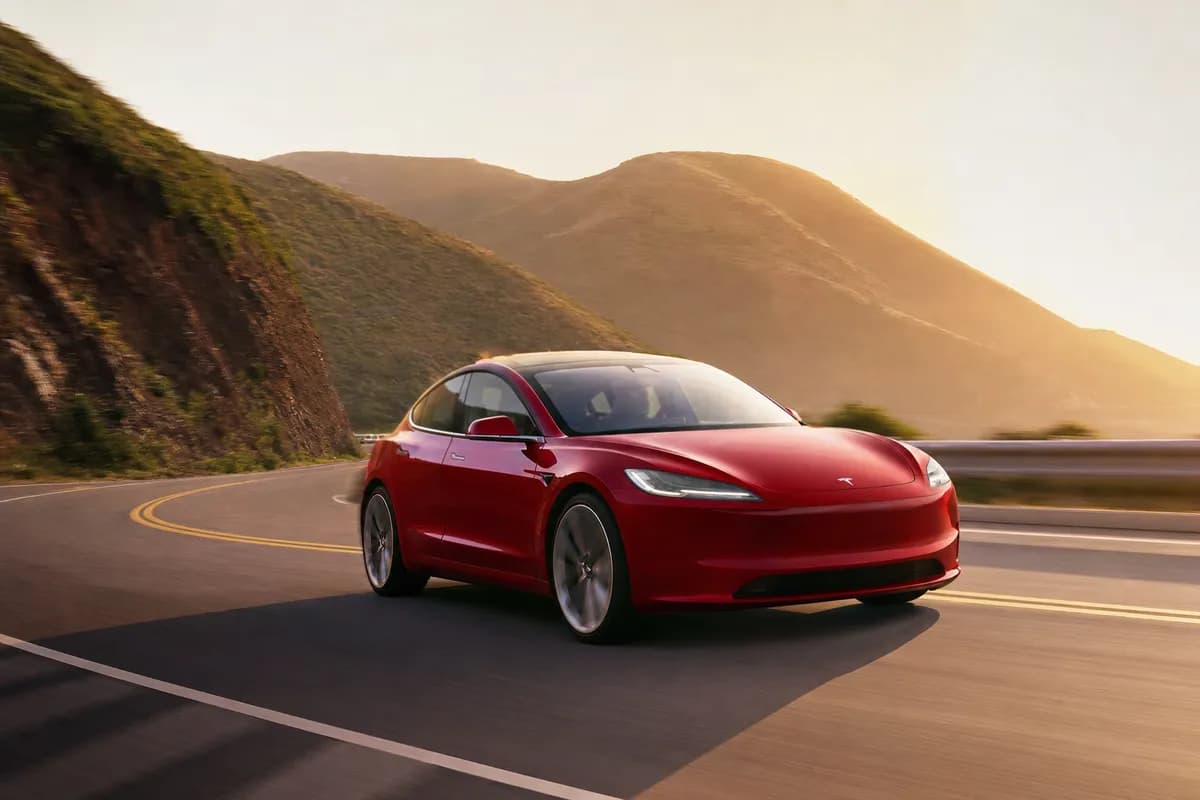
Tesla will remain the company to watch. The Model Y and Model 3 continue to set the benchmark for EV volume, software integration, charging convenience, and efficiency. However, Tesla faces more pressure than before from Hyundai, Kia, Ford, GM, Volkswagen, and premium brands such as BMW, Mercedes-Benz, and Audi. Price cuts, delivery times, and eligibility for federal incentives will play a larger role in Tesla’s 2023 strategy than in earlier years when demand appeared almost unlimited.
Incentives, Regulations, and Charging Will Shape Buyer Decisions
Policy will be one of the most important automotive stories of 2023. In the U.S., the Inflation Reduction Act reshapes the federal EV tax credit by tying eligibility to final assembly location, battery component sourcing, and critical mineral requirements. The headline figure remains up to $7,500, but not every EV qualifies, and the rules are more complicated than the old system.
That complexity will influence both shoppers and automakers. Models assembled in North America have an advantage, which helps vehicles such as the Ford Mustang Mach-E, F-150 Lightning, Cadillac Lyriq, Chevrolet Bolt EV, and Tesla Model Y, depending on trim, price caps, battery rules, and federal guidance. Imported EVs from brands such as Hyundai, Kia, Genesis, and some European manufacturers may face challenges unless leased, since leasing can qualify under separate commercial vehicle provisions.
Automakers are already adjusting. Hyundai Motor Group has accelerated U.S. EV manufacturing plans, including its large Georgia plant, while battery joint ventures have become central to long-term strategy. GM is working with LG Energy Solution through Ultium Cells. Ford is investing in battery plants in Kentucky and Tennessee. Toyota, long cautious on battery-electric vehicles, is increasing battery investment in North Carolina while still emphasizing hybrids and plug-in hybrids.
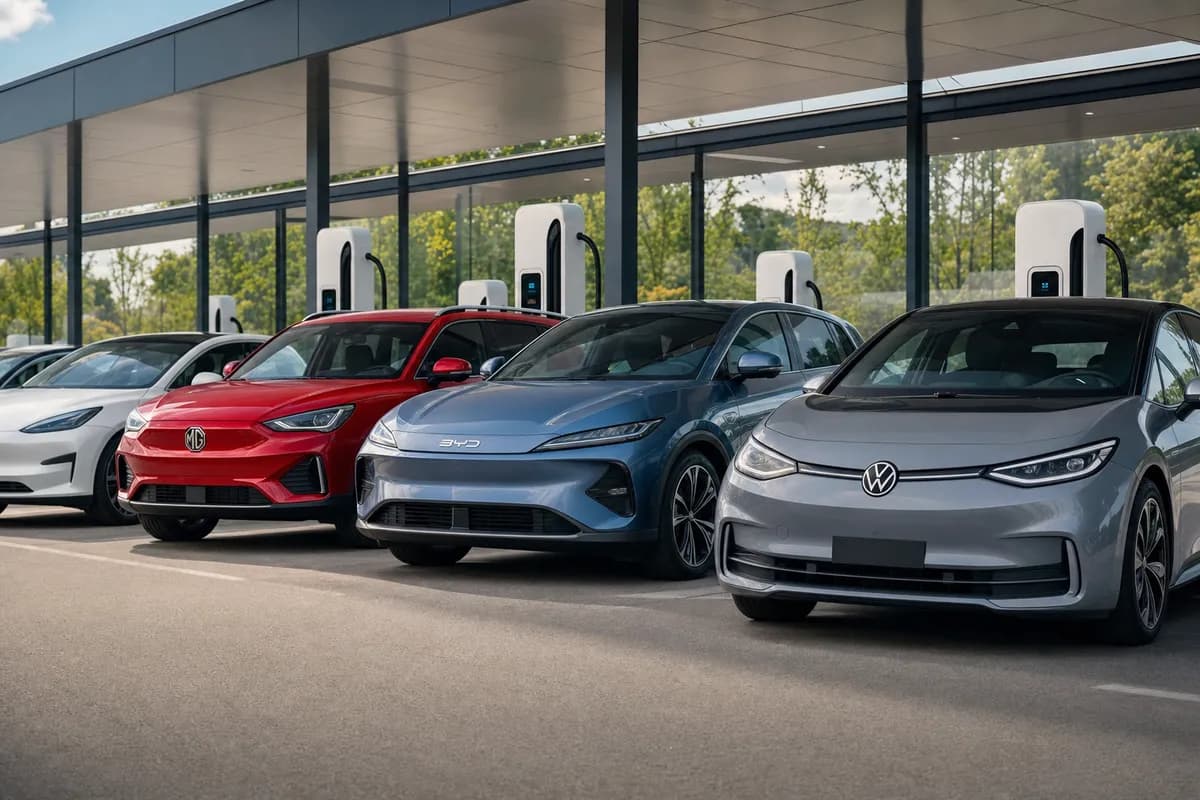
Charging infrastructure remains the other major factor. Public fast charging is improving, but reliability is inconsistent outside Tesla’s Supercharger network. For buyers who can charge at home, EV ownership can be simple and cost-effective. For apartment dwellers, rural drivers, and long-distance travelers, charging can still be a barrier.
Expect 2023 to bring more investment but not an immediate fix. The U.S. National Electric Vehicle Infrastructure program is directing billions of dollars toward highway fast-charging corridors, but permitting, utility upgrades, site construction, and charger maintenance take time. The most visible improvements may come first along major interstates and in states with strong EV adoption, while gaps will remain in less populated areas.
For automakers, charging partnerships will become a competitive differentiator. Range figures matter, but charging speed, network access, route planning, and charger uptime increasingly define the ownership experience. A vehicle capable of 200-kW or 250-kW charging is only as useful as the infrastructure available to support it. That gives companies with well-developed charging ecosystems an advantage and puts pressure on public networks to improve reliability.
Hybrids and Efficient Gas Models Stay Relevant
EVs will dominate headlines, but hybrids may quietly be one of the most important market segments of 2023. High fuel prices in 2022 reminded buyers that efficiency still matters, and hybrids offer a lower-risk path for drivers who are not ready for a battery-electric vehicle.
Toyota remains the leader here. The Toyota Prius enters a new generation for 2023 with sharper styling, more power, and an estimated combined fuel economy of up to 57 mpg in certain trims. That is a meaningful repositioning for a car that had become synonymous with efficiency but not excitement. The Prius Prime plug-in hybrid also gains more performance and electric driving range, making it more competitive with both traditional hybrids and entry-level EVs.
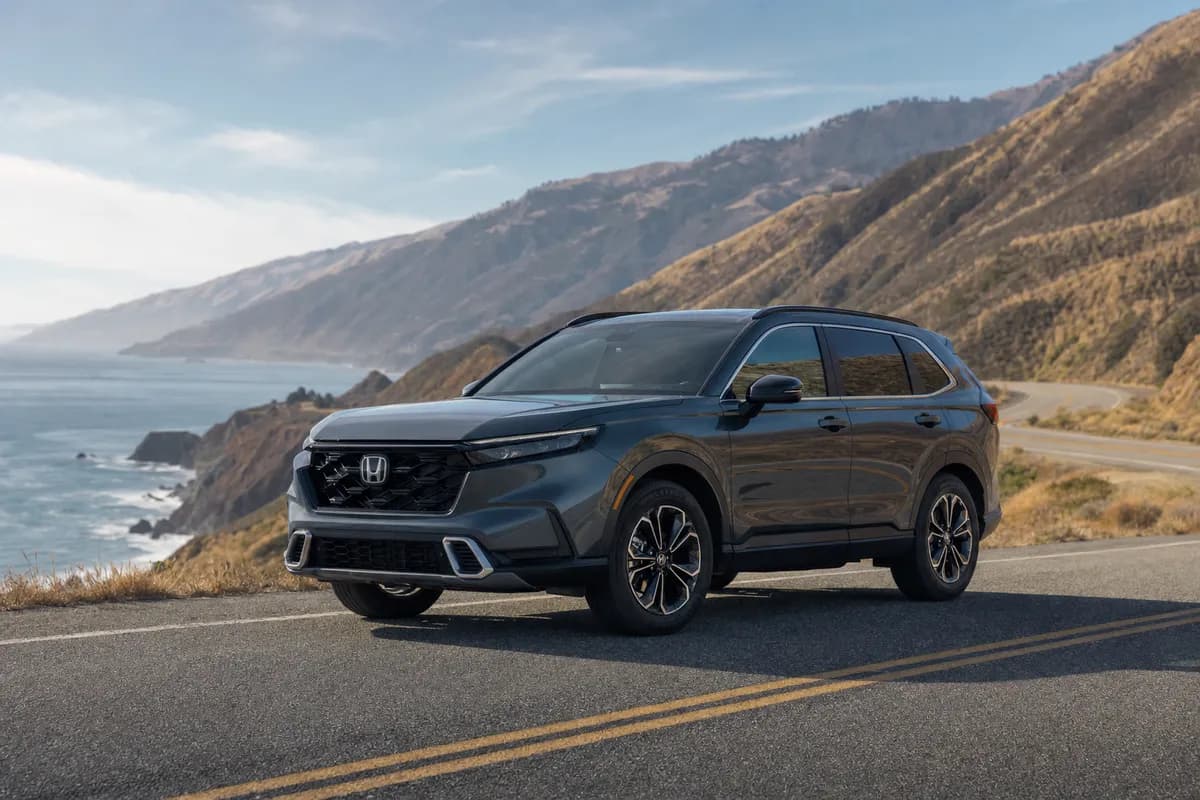
The Toyota RAV4 Hybrid and RAV4 Prime remain critical products because compact SUVs are the center of the U.S. market. The RAV4 Prime’s combination of strong acceleration, practical size, and useful electric-only range has kept demand high. Honda is also leaning harder into hybrids, with the CR-V Hybrid and Accord Hybrid positioned as key volume models rather than niche variants.
Hybrids are not just a bridge technology for consumers. They also help automakers meet emissions rules while battery supply remains constrained. A single large EV battery pack can require enough cells to build multiple hybrids. In a market where battery materials and production capacity are limited, spreading electrification across more vehicles can produce near-term emissions benefits.
That does not mean hybrids are a substitute for full electrification. Regulations in California, the European Union, and other major markets are moving toward zero-emission vehicle targets that conventional hybrids cannot meet over the long term. But in 2023, hybrids will remain relevant because they solve immediate problems: lower fuel use, no charging requirement, familiar ownership, and usually lower upfront cost than an EV.
Gasoline vehicles are also getting better. Turbocharged four-cylinder engines, eight-, nine-, and 10-speed automatic transmissions, mild-hybrid systems, and improved aerodynamics are helping automakers squeeze more efficiency from combustion platforms. Still, the long-term investment trend is unmistakable. New internal-combustion platforms will become less common as automakers direct capital toward EV architectures, battery plants, software, and charging partnerships.
Prices, Inventory, and Affordability Remain the Market’s Weak Points
The biggest challenge for the 2023 auto market may not be technology. It may be affordability.
New-vehicle prices climbed sharply during the pandemic as supply shortages collided with strong demand. Average transaction prices in the U.S. reached roughly $49,000 in late 2022, according to industry data from Kelley Blue Book, far above pre-pandemic norms. At the same time, rising interest rates increased monthly payments, making even modest price increases harder for buyers to absorb.
Inventory should improve in 2023, but it is unlikely to return fully to the pre-2020 pattern of overflowing dealer lots and heavy discounts. Automakers learned that leaner inventory can support pricing discipline and reduce incentive spending. Dealers may not love every part of that shift, and consumers certainly miss the bargains, but manufacturers have little reason to flood the market if they can maintain margins with fewer vehicles.
The semiconductor shortage is easing, not disappearing. Automakers have redesigned some supply chains, secured longer-term chip agreements, and prioritized high-margin models such as trucks, SUVs, and luxury vehicles. But modern vehicles require hundreds or thousands of chips, and disruptions can still ripple through production. Even if supply improves, the mix of available vehicles may remain skewed toward more expensive trims.
That creates a difficult environment for entry-level buyers. Subcompact cars have largely disappeared from the U.S. market, and affordable sedans are less common than they once were. The Nissan Versa, Kia Rio, Hyundai Elantra, Toyota Corolla, and Honda Civic remain important because they offer relatively attainable new-car options, but many shoppers who once bought new may turn to used vehicles instead.
The used-car market should be more stable than it was during the extreme price spikes of 2021 and early 2022, but affordability will still be strained. Higher loan rates affect used buyers as well, and a shortage of off-lease vehicles from the pandemic production years may limit supply. Certified pre-owned vehicles could become more attractive for buyers seeking warranty protection without paying new-car prices.
For automakers, this raises a strategic risk. If the industry moves too quickly toward expensive EVs and premium SUVs, it may leave budget-conscious buyers behind. The winners in 2023 will not only be the companies with the most advanced technology. They will be the companies that can build desirable vehicles at prices mainstream buyers can actually finance.
Software, Safety Tech, and Automation Face a Reality Check
Software-defined vehicles will be another major theme in 2023, but the industry is entering a more sober phase. Automakers increasingly want vehicles to be updatable, connected, and capable of generating recurring revenue through subscriptions and digital services. Over-the-air updates can fix bugs, improve features, and reduce some service visits. But customers are wary of paying monthly fees for functions that used to be included in the purchase price.
BMW faced backlash over heated-seat subscriptions in some markets, showing the limits of consumer tolerance. General Motors, Ford, Mercedes-Benz, Tesla, and others are all exploring software revenue, but the value proposition has to be clear. Charging for advanced navigation, hands-free driving capability, performance upgrades, or fleet tools is one thing. Charging repeatedly for basic comfort features is harder to defend.
Driver-assistance technology will also remain under scrutiny. Systems such as GM Super Cruise, Ford BlueCruise, Mercedes-Benz Drive Pilot, and Tesla Autopilot or Full Self-Driving Beta vary widely in capability, operating conditions, and driver-monitoring requirements. The terminology can confuse consumers, especially when marketing language suggests more autonomy than the systems actually provide.
In 2023, expect regulators to pay closer attention to crash reporting, driver monitoring, and how automated-driving features are described. The National Highway Traffic Safety Administration has already required reporting for crashes involving advanced driver-assistance systems, giving regulators and the public more data on real-world performance. That scrutiny is necessary. These systems can reduce fatigue and improve safety when used correctly, but they are not a replacement for an attentive driver.
On the safety front, automatic emergency braking, lane-keeping assistance, blind-spot monitoring, rear cross-traffic alert, and adaptive cruise control are becoming more common across mainstream models. The next step is consistency. A well-tuned system can feel natural and confidence-inspiring; a poorly calibrated one can be intrusive or unreliable. Automakers that treat software and human-machine interface design as core engineering disciplines will have an advantage.
Verdict: 2023 Will Reward Execution, Not Announcements
The defining automotive trend of 2023 will be the move from ambition to delivery. Nearly every major automaker now has an electrification plan, a battery strategy, a software roadmap, and a sustainability message. Those are no longer differentiators by themselves. The difference will be whether companies can build vehicles on time, price them realistically, support them with reliable charging and service networks, and maintain quality as technology becomes more complex.
EVs will gain market share, but adoption will be uneven. Hybrids will remain highly relevant, especially for buyers who want lower fuel costs without changing their driving habits. Vehicle prices will stay under pressure from interest rates and expensive technology. Charging infrastructure will improve, but not fast enough to eliminate range anxiety for all drivers. Software will become more important, but consumers will push back against subscriptions that feel like nickel-and-diming.
For shoppers, the best approach in 2023 is practical rather than ideological. An EV makes strong sense for drivers with home charging, predictable routes, and access to incentives. A hybrid may be the smarter choice for high-mileage drivers without reliable charging. A fuel-efficient gasoline vehicle can still be a rational buy if the price is right and the ownership costs are manageable.
For the industry, 2023 is a transition year with real consequences. The companies that succeed will be those that balance future investment with present-day affordability, quality, and customer trust. The electric era is arriving, but it will not arrive evenly, and it will not excuse weak execution. That is the central lesson for the year ahead: the auto industry is revving up, but the race will be won by discipline as much as speed.
Affiliate disclosure: This article contains affiliate links. RevvedUpCars may earn a small commission on qualifying purchases at no extra cost to you.